• Skip to main content
EuroSTAR 2027 - Sign up for early access

EuroSTAR Conference

Europe's Largest Software Testing Conference.

  • Programme
    • Call for Speakers
    • 2026 Programme
    • Community Hub
    • Awards
  • Attend
    • Why Attend
    • Bring your Team
    • Testimonials
  • Sponsor
    • Sponsor Opportunities
    • Sponsor Testimonials
  • About
    • About Us
    • Our Timeline
    • FAQ
    • Blog
    • Organisations
    • Contact Us
  • Book Now

2022

3 methods of test book testing

July 4, 2022 by Fiona Nic Dhonnacha

Thanks to UNGUESS for providing us with this blog post.

How do you choose the right methods of test book testing? What are the possible methods? Let’s explore all the alternatives.

When it comes to functional testing, there are multiple options to choose from. Which option is right for your business will depend on the type of software you want to test, your target audience, and your overall testing goals. With that in mind, let’s explore the three possible methods of test book testing.

What is a test book?

Functional testing validates software against the functional requirements or specifications. Each company has unique goals they want to achieve with their software, and functional testing is an excellent way to determine whether you’re meeting those goals. A test book is simply the list of test cases that will be executed during functional testing. The test cases are designed with your specific software in mind. For example, if shopping giant Amazon wanted to test the functionality of its search function, they (or an external company on its behalf) would develop the test cases from the ground up. The test cases would be specific to the website’s design, the available filters, the shopping cart process, and so on.

The key benefit of functional testing is that it helps you close the gap between how your software should work and how it actually works. Sometimes software seems logical to the people who create it but creates confusion for end-users. And sometimes, the software simply doesn’t work as intended and needs to be reworked.

The 3 methods of test book testing

1.  Crowd testing

Crowd testing, sometimes called crowdsourced testing, tests usability, functionality and user-friendliness under real-world conditions.

Crowdsourced testing is a manual approach to software testing. Testers are real professionals who get involved only for the testing process, meaning they get paid by project and performance instead of being full-time employees.

 The Benefits of Crowd Testing

  • Real-world conditions: It allows you to test the software’s functionality using real end-users in real-world conditions. Due to the large number of users, you can test functionality at any time of any day.
  • A wealth of testing data: Crowd testers use their real devices and operate different operating systems, browsers, and other native software. This makes the testing data rich, both in terms of diversity of feedback and high coverage.
  • Fast, unbiased reporting: Testers give feedback on the go, which means you get a constant stream of valuable feedback. Additionally, while all competent testers must be impartial, crowd testers have a distinct advantage in this area. They have no stake in the success of your software, so their feedback is guaranteed to be honest. Honest feedback is critical when creating highly functional and user-friendly apps.
  • Target demographics: You can source crowd testers from a vast range of demographic criteria, including age, gender, profession, income level, hobbies, and more. Crowd testing is an excellent way to see how well your target audience perceives your software. This aspect is extremely important in UX Testing.

 In UNGUESS, we have created a vast community of testers (over 20,000 in Italy, our main market, and we can reach over 250,000 worldwide). Since they are highly profiled, we can select professional testers and/ or real users of your product. Our Customer Success Managers (CSM) write the test cases for the test book specifically aimed at testing our clients’ software. Testers submit the bugs they find and the CSM approves them only if they are unique and in scope. Our clients’ Dev team can receive an export of all the bugs, or can use a bug tracking tool integration.

2.   Test automation

In automated functional testing, a computer runs the functional testing for you using tools and scripts. Typically, the software is categorised into distinct areas of functionality, and a script is designed to test the functionality in a series of steps. For each step, pre-selected elements of the UI are interacted with. For example, the automated test software might fill in a text box, select a dropdown option, or push a button. After running the automated test, you can check the results to compare them with what should have happened.

At AppQuality, for example, we have a range of tools we can leverage for our clients’ test automation, depending on their specific software specifications. As for specifics, we often use Robot Framework – a robust open-source automation framework with a rich ecosystem of libraries and tools (we have talked about it here) and Seleniumlibrary (or other libraries). Again, this is just an example as we use different tools and frameworks depending on our clients’ necessities.

The benefits of automated functional testing

  • 24/7: A computer runs automated testing, so you’re not restricted by human testers who need to take breaks, sleep, or only work set hours.
  • Faster: Without having to rely on people (unless writing the code for the test Automation is necessary), you can execute your tests much quicker. On average, automated testing is 70% faster than manual testing—faster testing results in an early time to market for your application. Warning: with Test Automation you can only find what you are looking for. Nothing out of your path can be found.
  • Improves accuracy: When you eliminate humans, you also eliminate human error. Any errors can reduce the accuracy and reliability of your results.
  • Cost-efficient: Automated testing is often significantly cheaper than manual testing.
  • Ensures consistency: Automated testing can be repeated as you make improvements and tweaks to your software. This promotes consistency across every stage of your functional testing, making it much easier to compare the results of multiple tests objectively.

3.   FTE (Full Time Equivalent)

FTE (Full-Time Equivalent) or Third-party Test Factories can mean one of two things in the testing world:

  • The company hires a top tester who writes the entire test book and then executes the tests on the application, website, or other software.
  • The company writes the test book, and the tester runs the test cases for them.

FTE offers a high level of flexibility and allows companies to engage with the testing process in the way that best suits your company. Many companies don’t have the time or resources (skilled testers) to develop the test cases themselves and benefit from the help of an outside party for a short amount of time. Other companies have a clear idea of the tests they want to run but want an impartial expert tester to execute the test cases.

To learn more about FTE or Third-party Test Factories, see how it works and the possible results, read this article and the case study of buddybank.

The benefits of third-party test factories in functional testing

  • Objectivity: Testers are fair and unbiased in reporting their results. This can be difficult to achieve with in-house testing because employees have a vested interest in the software – they might overlook negative aspects of the functionality to appease senior management.
  • Specialisation: Testers have formal training and certifications in testing related disciplines. They have a deep knowledge of testing methodologies, best practices, and appropriate tools. They bring a level of professionalism to the table that results in highly accurate, fast, and reliable results.
  • Risk reduction: Introducing a third party can help reduce the risks associated with functional software testing. Testers can spot blind spots or errors in your software that you might otherwise miss.
     

Which method of test book testing should you use? 

It is impossible to answer that question out of the blue. It is crucial to understand the context, the goals, the available resources, tools and stage of development.

UNGUESS offers a Crowd testing platform (together with tens of thousands of testers), Test Automation technologies and knowledge and even the Body Rental approach.

If you want to know which method is the most suitable for your product, contact us and schedule a short call with our experts.

UNGUESS is an exhibitor at EuroSTAR 2022.
Filed Under: EuroSTAR Conference, Software Testing Tagged With: 2022

Talking to developers about testing

June 21, 2022 by Fiona Nic Dhonnacha

Thanks to PractiTest for providing us with this blog post:

Let’s start by reminding ourselves why we need to talk with developers about testing.

According to the 2022 State of Testing report by PractiTest and Tea-time with testers, 86% of organizations now report working in an Agile or Agile-like approach. Close to 40% of organizations are working in DevOps methodology. And while the more traditional Waterfall approach is still practiced at 17% of organizations, it continues to decline.

This means that the traditional testing roles and teams, as we used to know them, are gradually disappearing, and instead, testing is becoming the responsibility of an entire agile team that also includes developers. Hence, it is of no surprise that in 77% of organizations testing is executed by testers and non-testers alike.

This shift often encounters resistance from developers with various claims about lack of knowledge on how to test, being too busy to do so, the perception that it’s a waste of their expensive time, or simply lack of desire to do so.

In order to help you bring everyone on board with the concept of product quality being the team’s responsibility we have prepared a 5 steps guide to help you:

Talking to developers about testing - communication

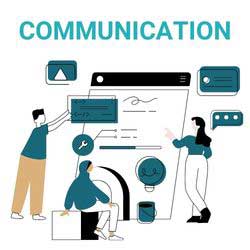
1. Communication

The business environment is no different than others: when it comes to human interaction, communication is the basis for a successful relationship. In order to get everyone on board, you need to start with making people understand that performing testing is not a punishment, but rather a contribution to the company’s bottom line, due to the ability to deliver faster with higher quality that will meet customers’ expectations. It requires executive sponsorship, to support the required change both in culture and in methodology.

Communication is a two-way channel, and as a result, it’s also about listening, understanding, and addressing the developers’ concerns. Pay close attention to the developers’ feedback and take it into account in order to maintain an open communication environment.

Talking to developers about testing - coaching and mentoring

2. Coaching & Mentoring

One potential reason for people to object to a change, is their fear of dealing with the unknown and the concern of not excelling in their performance. That’s why we need to dedicate time and effort to guide developers with essential information about testing. We need to convey to developers that testing is not ‘simple’ work. We want them to understand the software testing process, implement test management platform usage, and so forth.

In addition, invest some time in short pre & post briefing sessions. These meetings should include the developer of the tested feature, the testing developer, and a product team member. By doing so, we will bring a better understanding and efficiency to the process.

3. Shift left

Adopting Agile and DevOps methodologies has also created a shift in what is tested and when. We see a major shift left with the introduction of Behavior Driven Development (BDD) support and Test-Driven Development (TDD).

  • BDD/TDD are approaches that are focused on shift left. It aligns people and generates most of the tests before the testing is actually performed. Mistakenly, the common thinking is it’s used only for automation, but it can also be applied in manual testing.
  • Testing as a part of the user story – this means that user stories should also include testing elements.
  • Personas – a representation of the typical users that are going to make use of our development and their characteristics. For example, in an application that aims for the elderly, we need to think about them when creating the scenarios.
  • Testing sessions during development – you can have pair testing and have sessions while features are being written. It doesn’t have to be completely built to be shifted left.
  • Dashboard for unit/integration – include in your dashboard unit/integration test results like any other testing. This will place developers’ unit/integration tests at the same level as tests executed by testers.
  • Stability – the features shouldn’t be stable only before the release, it should be stable all the time. It is very important, it signals developers that they are already testing if they open their eyes.

4. Other testing

Sometimes it is easier for developers to relate to testing which isn’t the main core of the functional testing. The easiest way to use the “other testing” is simply to ask the developers and use their own ideas. It’s significantly easier to implement your ideas instead of someone else’s. We can also use developers’ knowledge to improve our automation framework and make the testing process closer to their hearts.

Specialized testing is another great way to leverage our developers’ knowledge to contribute to the testing efforts. Testing types like security, chaos, and performance are simpler to developers than testers. Developers would have a strong motivation to execute those specific specialized tests.

Talking to developers about testing - transparency and visibility

5. Transparency & Visibility

This is extremely important, and yet, it is amazing to see how often this is left aside. Transparency and visibility have a massive added value when we involve different people in the process.

  • End-to-end dashboards – if you are going to have multiple testing types such as unit tests, functional testing, and integration tests, you should have everything in the same place and give the same legitimacy to all tests. The moment you see that “my tests” are also included in the dashboards, that’s when you understand the importance of the tasks and your contribution to the mutual goal.
  • Count every test I have – regardless of the type or complexity.
  • Add testing to standups – a lot of time people do talk about testing in standups but we leave it to the last minute and don’t talk about challenges other than sharing ongoing activities.
  • Celebrate achievements – even in testing, if we have a developer that found a show stopper it is important to celebrate that because it has a positive effect on the staff members.
  • Testing retrospective – especially when a bug slipped and was found in production, it has a lot of value when we learn from it. Our victories and errors are equally important and valuable.

Summary

In conclusion, with most organizations working in an Agile or Agile-like environment, the software testing process is no longer exclusively assigned to testers, and other staff members like developers are taking part in the testing process. Developers have great expertise and in-depth knowledge that could substantially contribute to testing efforts. Therefore, you should follow the 5 steps mentioned above in order to effectively make them an integral part of the testing process.

Practitest is an exhibitor at EuroSTAR 2022.
Author

Joel Montvelisky, Co-Founder and Chief Solution Architect at PractiTest.

Joel Montvelisky, Co-Founder and Chief Solution Architect at PractiTest.

Joel has been in testing and QA since 1997, working as a tester, QA Manager and Director, and a Consultant for companies in Israel, the US and the EU. Joel is a Forbes council member, a blogger and is constantly imparting webinars on a number of testing and Quality Related topics. In addition, Joel is the founder and Chair of the OnlineTestConf, the co-founder of the State of Testing survey and report and a Director at the Association of Software Testing.

Filed Under: Software Testing Tagged With: 2022, EuroSTAR Conference

Be A EuroSTAR Volunteer

March 29, 2022 by Ronan Healy

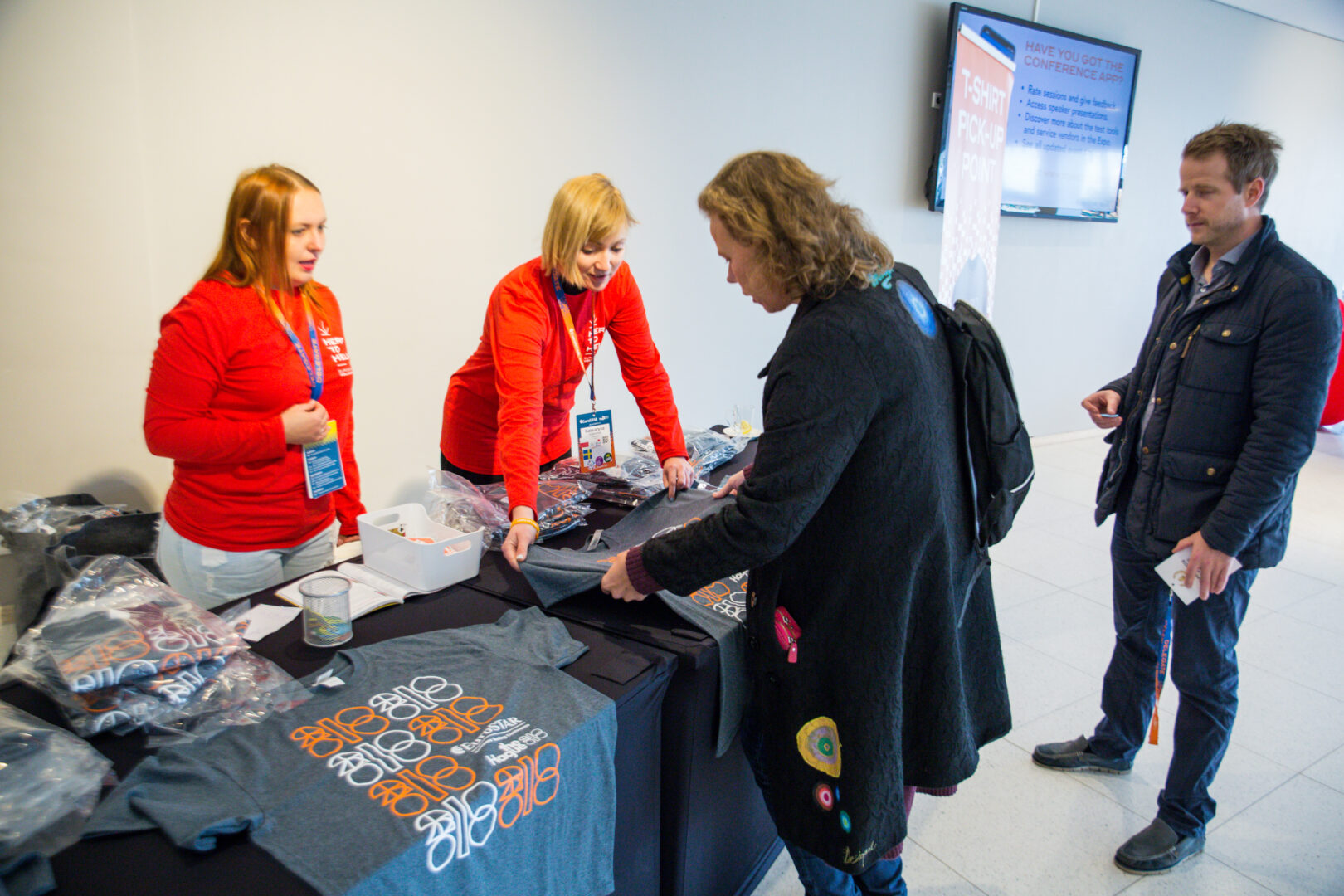
The EuroSTAR Volunteer programme is back. Along with out live event, we are delighted to welcome back our volunteers for the EuroSTAR 2022 Conference.

Taking place from 7-10 June in Copenhagen, the EuroSTAR Conference will take place in the Bella Centre. With over 70 sessions, exhibition space and social events taking place, there is lots to see and be part of at the event. So let’s take a look at the roles you can be part of at the event.

Huddle

The Huddle is the home of the “corridor talks” at EuroSTAR. Located in the heart of the Exhibition space, the Huddle is home to lots of events across the Conference.

A scene from the Huddle in 2019

At the Huddle you will find activities like Couch Sessions, 1st Timers welcome, Games and Giveaways, the famous Soapbox sessions and lots more. You should volunteer for this area if you like engaging with people, sharing knowledge and sharing experiences.

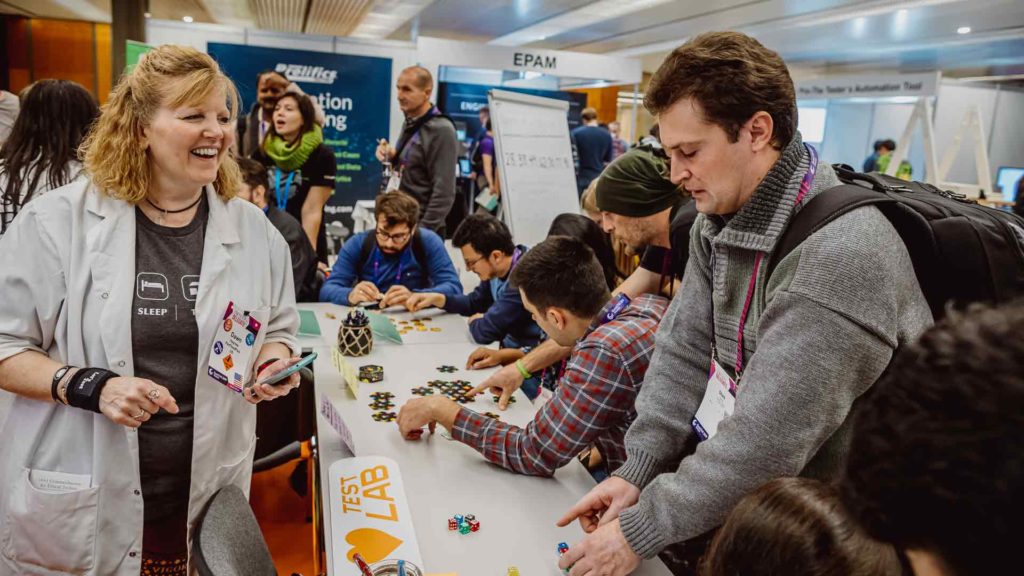
Test Lab

The Test Lab is the home of Testing at the Conference. Growing stronger after 14 years in existence, the Test Lab is led by our Lab facilitators each year who set the challenges for delegates.

Test Lab at EuroSTAR 2019

If you like the challenge of figuring out puzzles and testing robots, and other testing challenges, then this is a place for you.

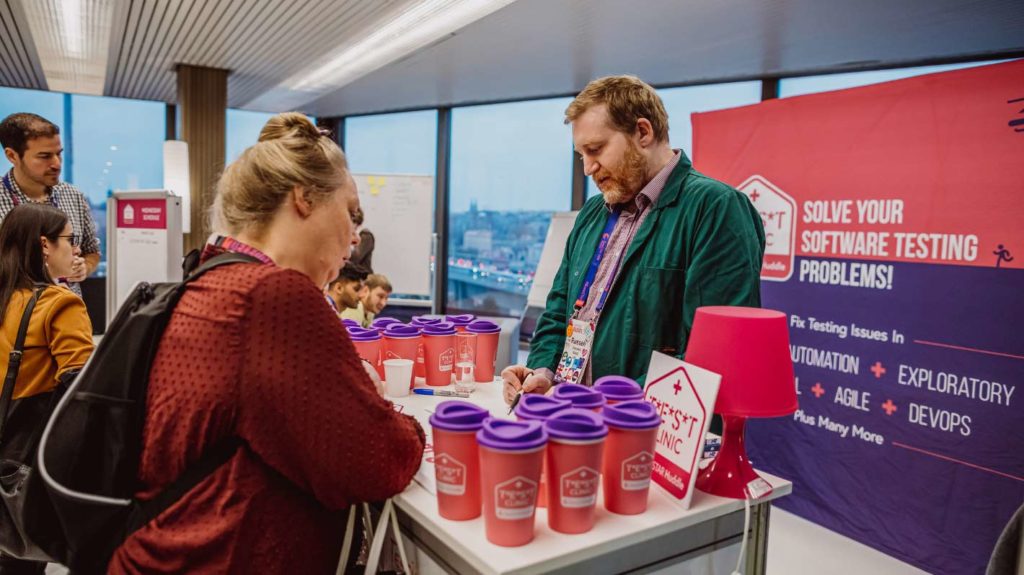
Test Clinic

The Doctors of the Test Clinic are at the Conference to solve the problems of all delegates at the Conference. They are experts in their area of testing helping testers with the issues that they have.

Test Clinic doctor at EuroSTAR 2019 helping an attendee

You should apply for the Test Clinic if you are very knowledgeable in testing, or a particular area of testing. If you love helping others out and solving problems for testers, then this role is for you.

Cadets

The EuroSTAR Cadets get involved in every aspect of the Conference. They are in the exhibition space, directing delegates to rooms, helping out in the tutorials or being part of the EuroSTAR team.

Anyone who would like to apply for the Cadets, should be interested in being part of the whole Conference experience and doesn’t mind adopting to different roles throughout the day.

As part of the Volunteer roles, you will have access to the event with the opportunity to attend sessions. Catering will be provided throughout the week. You will get to be part of a great team and experience the Conference from a new perspective.

You can apply to volunteer at EuroSTAR 2022 here.

Filed Under: EuroSTAR Conference Tagged With: 2022, EuroSTAR Conference

EuroSTAR is celebrating 30 years of software testing

January 26, 2022 by Fiona Nic Dhonnacha

EuroSTAR Conference is celebrating 30 years of software testing this year – that’s three decades of the testing community gathering to spark ideas, learn, and thrive. For 2022, we’re back in-person, in Copenhagen, 7-10 June 2022.

A big thank you goes to the 2022 Programme Committee, who have curated a four-day extravaganza of learning, excellence, and leadership in testing: Programme Chair Graham Freeburn (U.K.), Sue Atkins (U.K.), Morten Hougaard (Denmark), Bart Knaack (Netherlands), and Tone Molyneux (Norway).

Keynotes to inspire

This year’s programme features 5 keynote speakers that are driving testing forward with innovations in their field. Smita Mishra (India) talks about testing software for the next economy. Rikard Edgren (Sweden) shows how to generate a good understanding of testing through continuous learning. Michael Bolton (Canada) shares insights on testing through digital transformation. Nancy Kelln (Canada) explores shifting testing to new methods. Alex Schladebeck (Germany) talks about the future of testing, and how it will shape teams and testers’ work. You’ll walk away with a notebook packed with inspiration.

Dive into expert tutorials

Our 10 interactive tutorials cover wide ranging topics, from agile to strategy, new technologies, DevOps and lots more. Expert trainers include James Lyndsay, Rik Marselis, Anne Kramer, Gáspár Nagy, Emma Lilliestam & Hanna Schlander. The in-depth sessions will ensure you leave with lots of learnings and actionable outcomes for your work.

Track talks to refresh your learning

Choose from 55 track talks cover everything from testing techniques to test management, skills development, challenges and more. EuroSTAR 2022 track talk speakers include testing legends and superstars Dorothy Graham, Michaël Pilaeten, Ard Kramer, Andrea Jensen, Kristoffer Nordström, and Isabel Evans.

Re-connect with the testing community

Of course, with nonstop networking, there’s plenty of opportunities to strike up conversations with your fellow software testers outside of the talks. Meet new friends over coffee, lunch breaks, and during evening social events. You’ve also got access to the largest software testing expo in Europe! Check out the latest software testing tools and be in with a chance to win some cool swag and prizes…

Join us in celebrating 30 years of software testing: Book by 28th February and save 20% on single conference tickets. Or, bring your whole testing team and save up to 43%. That’s the best value software testing training you’ll get all year.

Filed Under: EuroSTAR Conference Tagged With: 2022

  • Code of Conduct
  • Privacy Policy
  • T&C
  • Media Partners
  • Contact Us

part of the