Winning a Best Tutorial Award at EuroSTAR is a remarkable achievement. Winning it twice in a row is something even rarer. In this personal reflection, Rahul Parwal shares the story behind his award-winning tutorial at EuroSTAR 2026, the preparation that went into it, the community that helped shape it, and the lessons learned from delivering it on one of software testing’s biggest stages.
Last year I wrote about rejection.
Three years of it. Proposal after proposal. Then one yes, and a trophy from Edinburgh.
This year is a different post. I won it again, and now I have to explain to people how this award is really given.
Best Tutorial at EuroSTAR isn’t handed out by a panel. It comes out of the feedback forms. Delegates score the session they sat in, EuroSTAR adds it up, highest average wins. You can’t run a public campaign for it. You can’t network your way into it. You definitely can’t plan for it.
So no, I didn’t win it twice because I just got better at presenting.
I won it because people I know spent their evenings pulling my material apart before EuroSTAR and my EuroSTAR attendees ever saw it.
Before any of it, a flight problem
15 June 2026. First tutorial slot of the conference, 09:00, Nova Spektrum, Oslo.
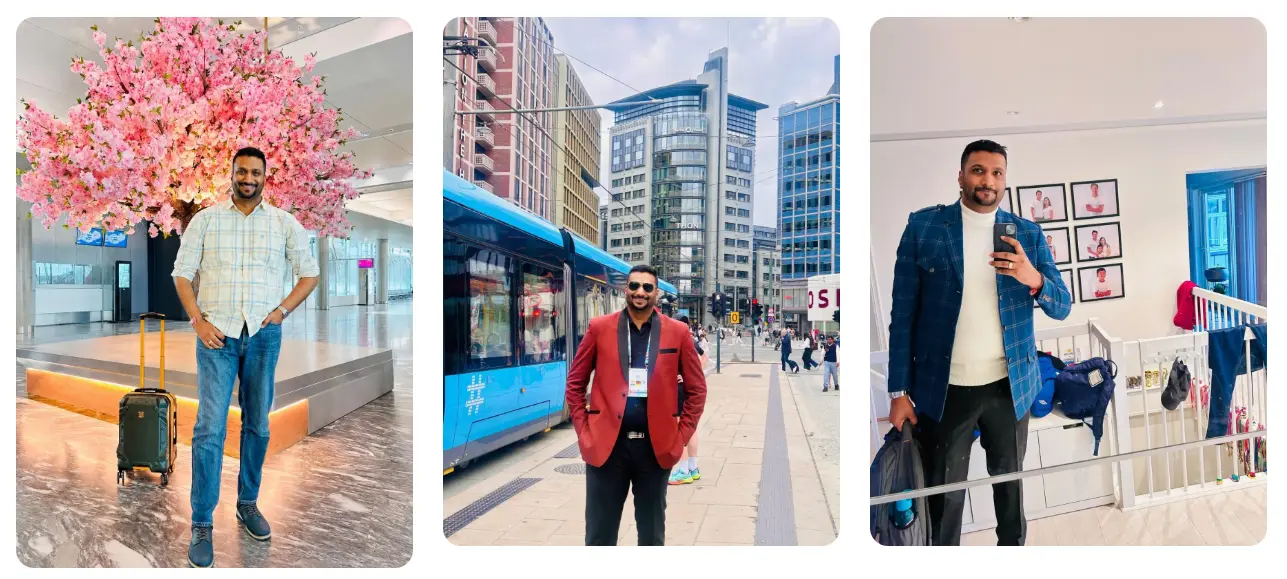
Flights out of India got complicated in the weeks before due to the war between the USA and Iran. Middle East airspace was disrupted, route options thinned out fast. The only itinerary I could get landed me in Oslo late at night on the 14th.
Late night on the 14th. Teaching at nine in the morning on the 15th.
So I wrote and asked whether the session could move to the afternoon:
Due to the current situation in the Middle East, flight options from India have been severely limited. The only viable itinerary available to me arrives in Norway late at night on 14 June. Earlier flights that would allow arrival by the morning of 14 June are not available. As my tutorial is scheduled on 15 June, this creates a very tight turnaround and insufficient rest time if I keep the morning slot.
Would it be possible to move my workshop to an afternoon slot on 15 June?
It couldn’t move. EuroSTAR runs on a tight schedule. Rooms, tracks, catering, a thousand people moving on a published schedule. Shift one tutorial and five other things shift. Fair enough. I’d have given the same answer.
But it left me with a problem I’d never had to solve before.
I realised I have to balance my energy a lot better this time. That was a lesson for me. A big lesson, and a big mindset shift for me as a speaker.
For years I’ve treated talk prep as content prep. Slides, activities, timing, handouts, backups, etc. My material was finished weeks earlier. What I had never once planned was me. A half-day interactive tutorial doesn’t run on slides, it runs on whoever is facilitating it. Four hours of reading a room, moving between tables, changing the plan mid-exercise. You can’t fake that at nine in the morning after a night flight.
So I prepped that instead of the deck. Sleep, food, what I said yes to in the days before, and how I spent the hours between landing and the alarm.
It worked out pretty well. I was energized when I got to the conference.
Five months later
Here’s what nobody sees.
The tutorial was on Context Engineering for Testers. A year earlier, half the room wouldn’t have recognised this phrase.
Five months to build it. Sketching outcomes. Writing activities. Throwing activities away. Rewriting handouts. Then handing all of it to people who would be honest with me.
Anakha VV and Swati Parwal helped me with a lot of my research and slide review. Not a polite skim. This activity is confusing. This section is too long. This instruction reads two ways. Every one of those notes cost me a rewrite and saved me bad moments in Oslo.
Ady Stokes and my MoTaverse members helped me a lot too with day-to-day discussions, slide review, and stuff. Testsigma team and Narain helped with ideas for the playground game
The Jaipur QA Community team, Sparsh & Chitransh, got most of it before EuroSTAR did. I invited themover to my house to sit through this beta run. The whole thing, the activities, everything. They gave me feedback for hours.
Here’s something that I want testers reading this to take away. The room you practise in is the thing. Not the slides.
And the usual names, because they haven’t stopped. Ajay Balamurugadas, who started all of this with one email back in 2022. Michael Bolton and James Bach, whose work I steal from constantly and who I now get to argue with in person. The WhatsApp groups that answer a question at midnight.
15 June, slot one
I landed late at night (around 10 PM), slept a few hours. Not as many as I’d have liked, but enough, which was the entire point of planning it.
Up early. Did what I did in Edinburgh and got to the room before anyone else.
Then I stood in the empty room for a minute.
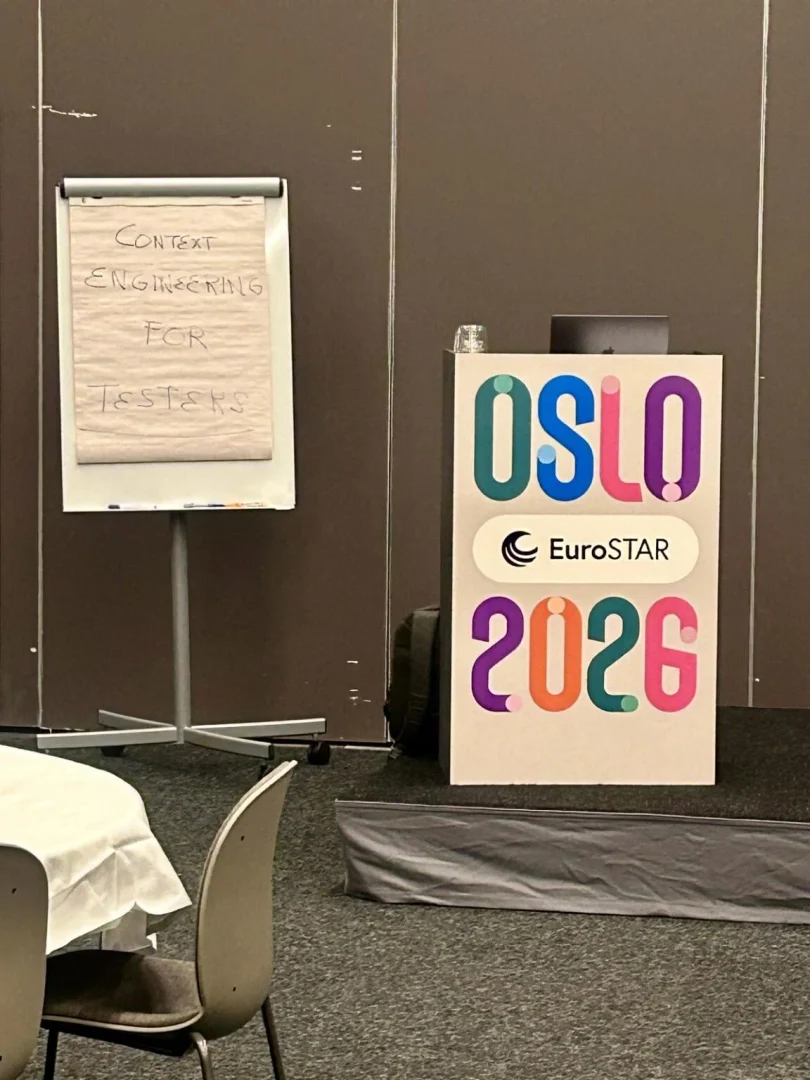
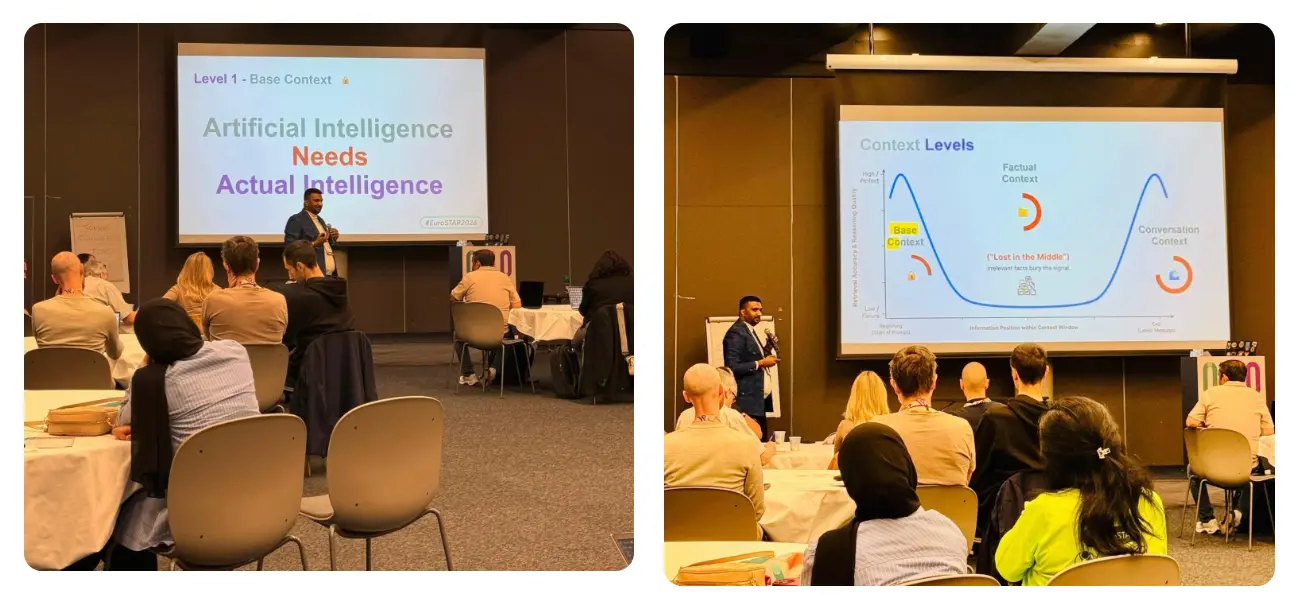
Then the tutorial followed. Some of what we went through:
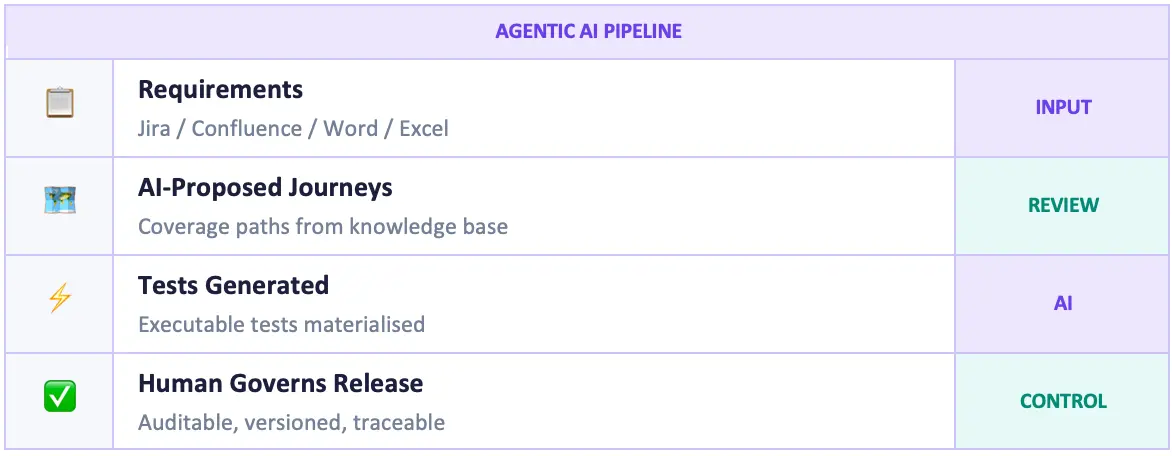
Build your base context once. Set it once and it carries across every conversation and every task. A README for your AI agents. Everyone built their own before we went anywhere near a tool.
Don’t use one model for everything. General, thinking, coding. Different jobs, different costs, different failure modes. Testers who pick per task get better output than testers who pick a favourite and stay loyal to it.
Tacit context. What you know about your product that you’ve never written down anywhere and no model can guess. This turned out to be the part people wanted to talk about most, which I hadn’t expected.
I brought the context playground I’ve been building, too. Small app. You change the context and watch the output change. Several people asked whether they could take it back to their own teams. Yes. That’s what it’s for.
And a game, because there’s always a game.
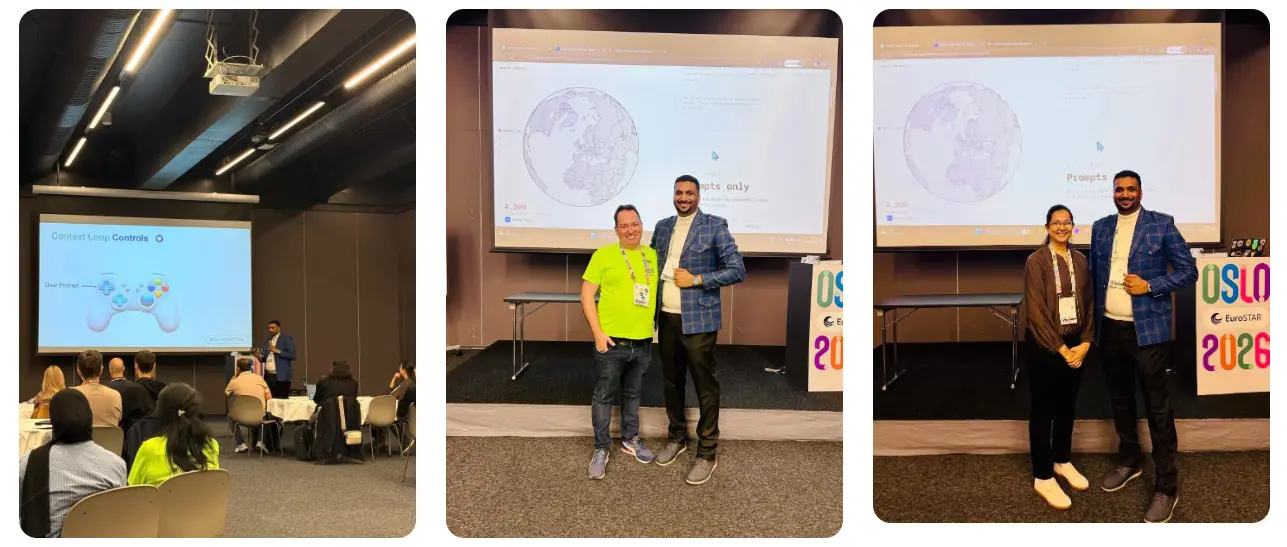
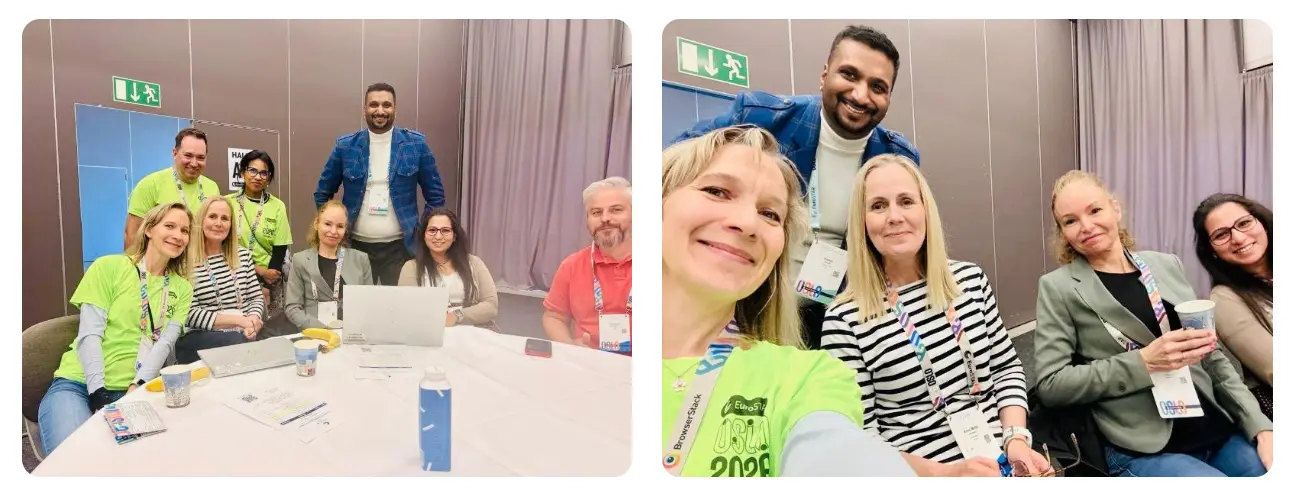
I spent most of the session walking between tables instead of standing at the front. I could just tell whether an exercise is working from ten metres away.
The rest of EuroSTAR
With my tutorial done, the conference got fun.
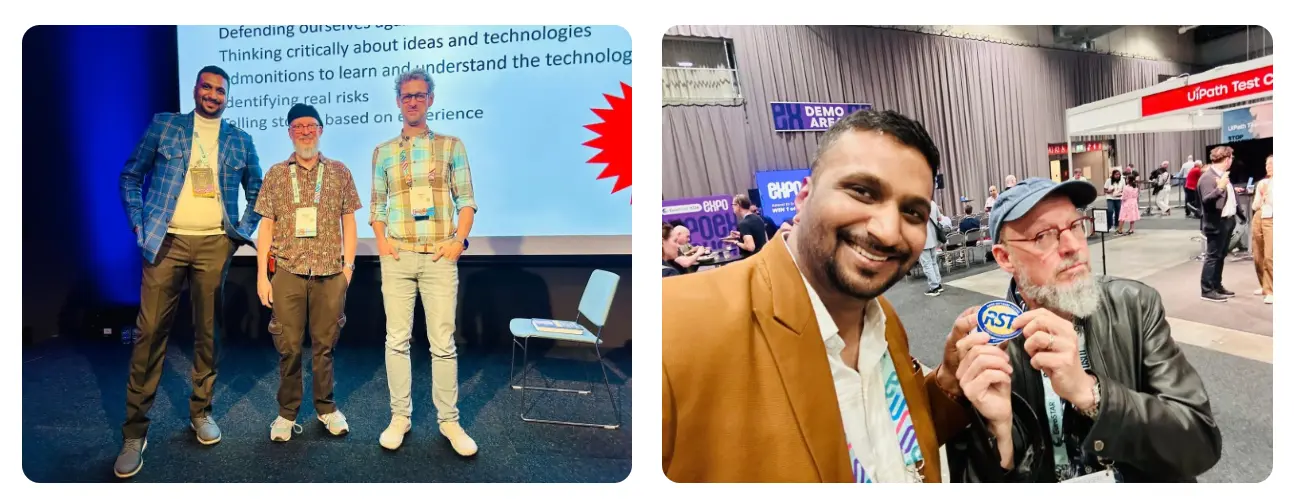
I sat in on Michael Bolton’s session, the one running under “How to test magic!” Defending ourselves against being fooled. Thinking critically about ideas and technologies. Identifying real risks. Telling stories based on experience. I’m still using those notes.
I also got a Rapid Software Testing copy signed by both authors, which I’ve wanted for years.
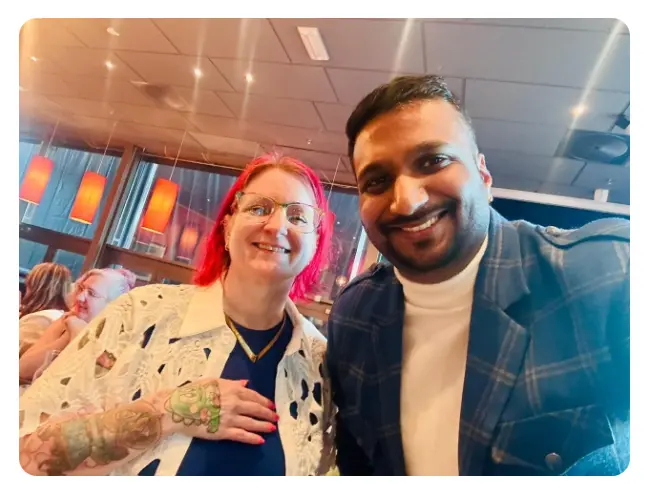
Lena Pejgan and the Would Heu-Risk It? cards.
If you haven’t seen that deck, go and find it. It’s a heuristics card game, and it’s much better than it sounds.
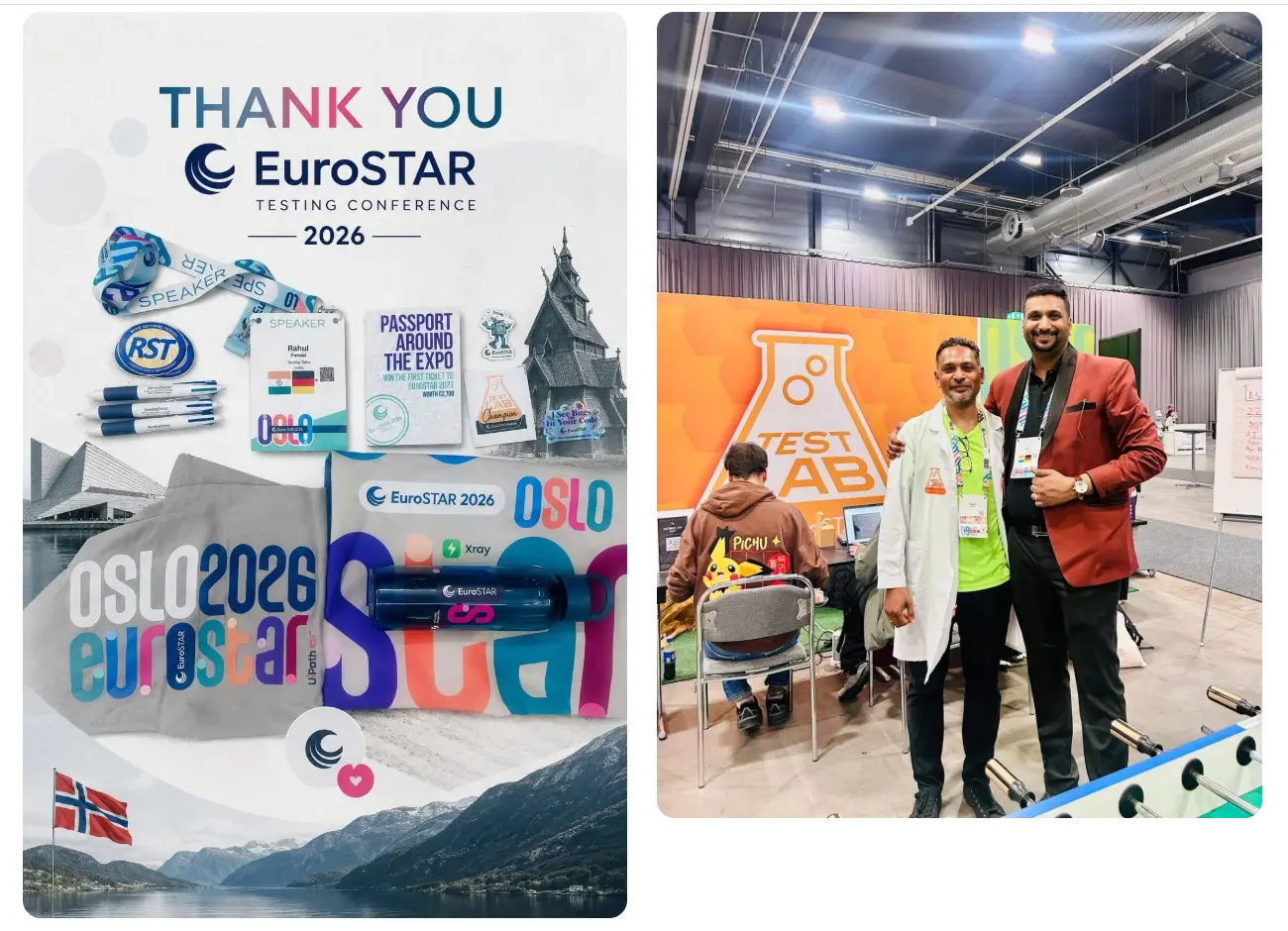
Then the expo floor, which I won’t pretend I approached with dignity. Swag from Accelo, QT Group, SmartBear, SauceLabs and Testsigma. My laptop lid now has a Jaipur QA sticker, an RST sticker, and an Eat Sleep Test sticker competing for space.
Thank you to all of them. For the swag, yes, but more for the booth conversations that were about testing instead of about a demo.
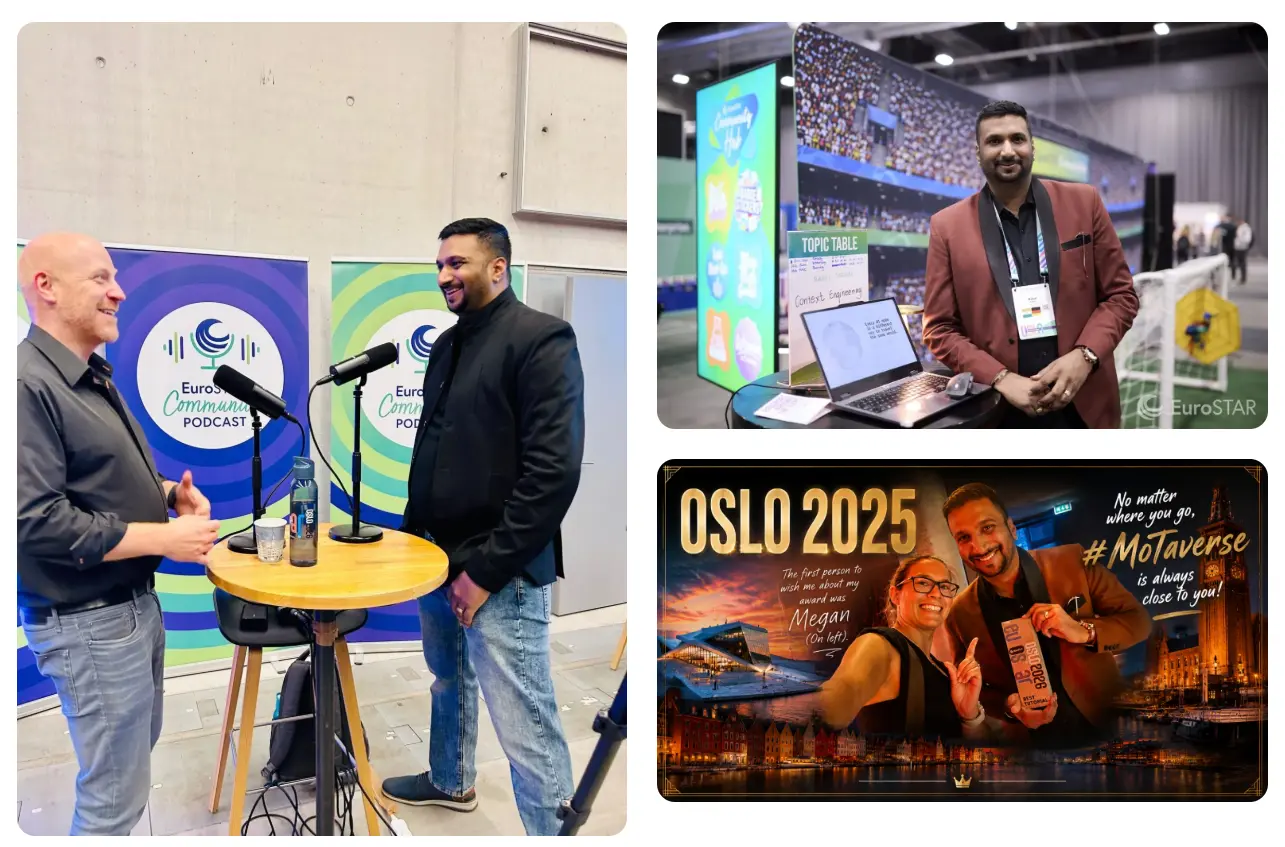
I ran a Topic Table at the Community Hub on context engineering, which is my favourite format at any conference. No slides, no stage. A laptop and whoever wanders over. Some of the sharpest questions I got all week came off that table.
And I recorded an episode of the EuroSTAR Community Podcast in Oslo. That’ll be out soon.
Awards Night
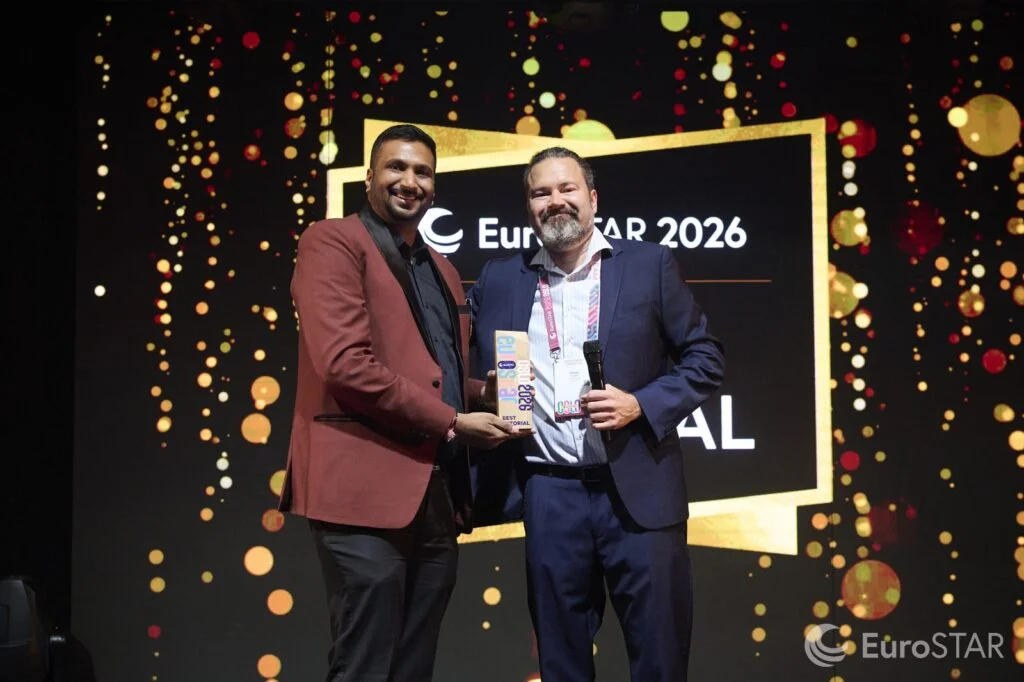
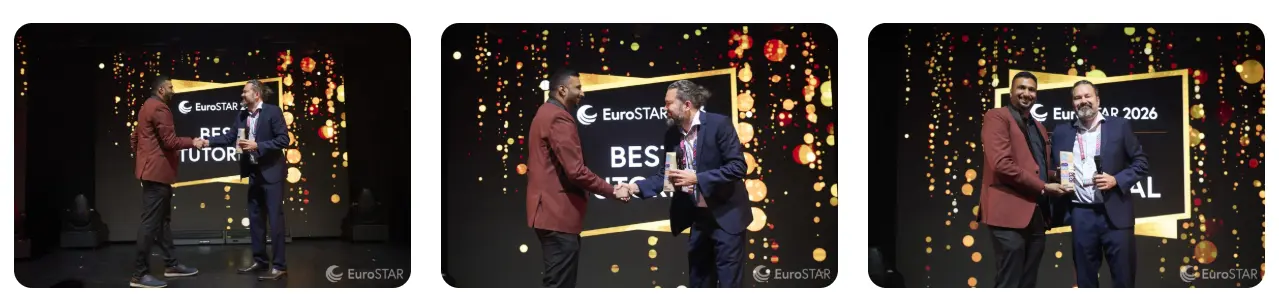
Tanja Vos handed me the first one in Edinburgh. Different stage this time, different city, and I didn’t think it was coming twice.
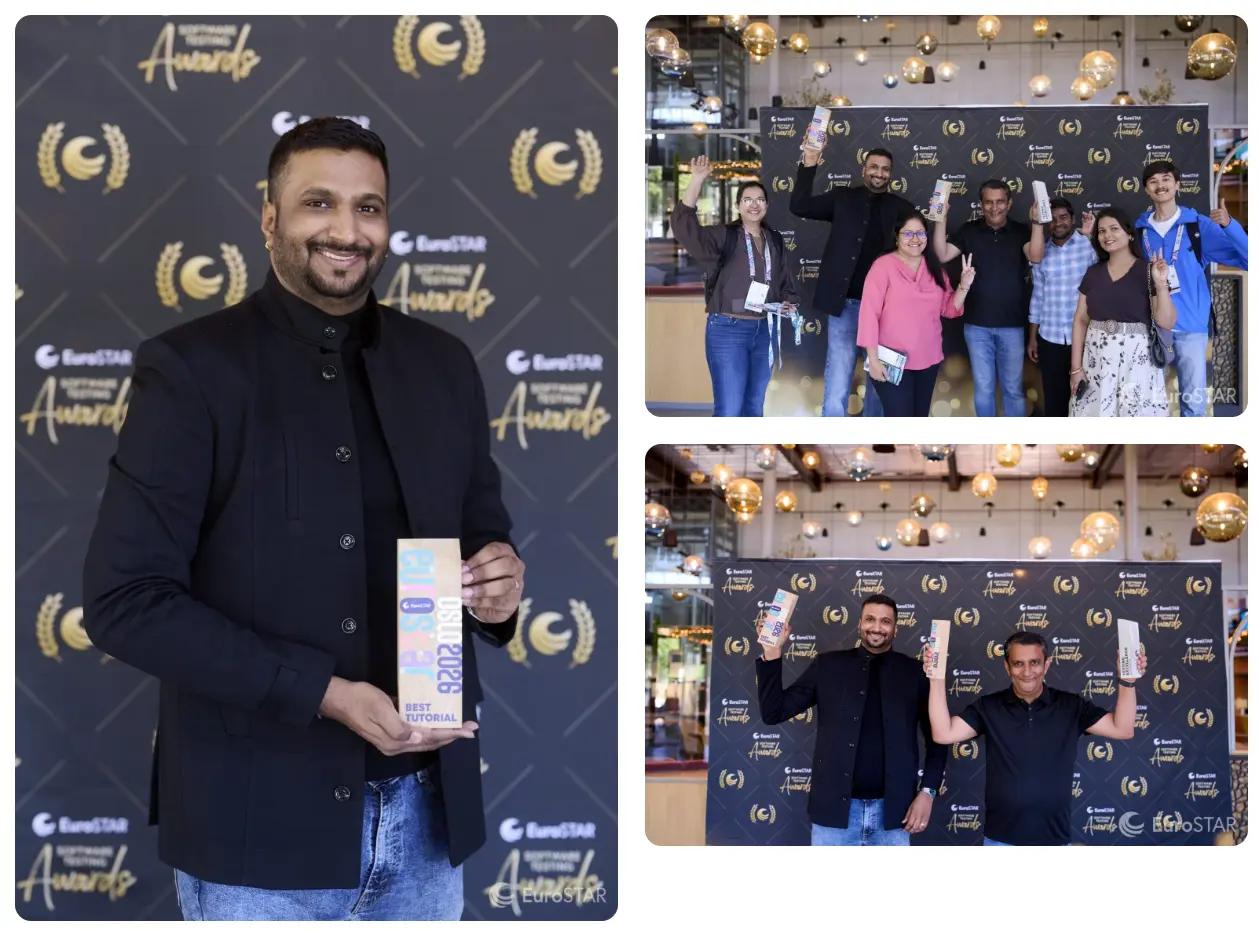
This time, Elmar Jurgens said my name, I stood up, and somewhere between the table and the stage it landed.
Two. In a row.
I’ve looked into it since. People have won Best Tutorial more than once. What I couldn’t find was anyone doing it in consecutive years. Happy to be corrected (email me if you know better), but as far as I can tell that’s a first.
And the reason it means anything to me is what I said at the top. It comes out of the forms. Two years running is two different rooms, in two different countries, with two completely different topics, scoring it the same way on the way out.
I wrote this on LinkedIn the week after and I still mean it:
Awards are never the goal. But they are a good reminder.
A reminder that showing up, sharing what you know, and helping others learn compounds over time.
The scores
A few weeks after Oslo, EuroSTAR sent the feedback through. These are their bands:
| Score | Category |
|---|---|
| 9.00 – 10.00 | Outstanding |
| 8.00 – 8.99 | Excellent |
| 7.00 – 7.99 | Good |
| 6.00 – 6.99 | Average |
| Under 6.00 | Below expected minimum standard |
Tut D — Context Engineering for Testers
- My score: 9.23
- Average tutorial score across the conference: 8.36
I think the coffee worked!!
That was a nine in the morning session on day one, which isn’t the hour when a room’s goodwill runs highest.
What people wrote
Thanks to Siobhan Hunt and the EuroSTAR team for sending the comments through. I’m not pasting all of them. These are the ones I read twice.
For me, this was the highlight of the conference. Rahul has such an energy and connection with the audience, it’s amazing. It was worth to come only for this. The learning playground that he builds is very interesting and something that I will take it to my team as well. Would love to see him again next year for sure. And I hope he gets the Star Award.
Best AI-related training I have attended so far. Excellent tutorial. Wish we would have had more time.
Very thought-provoking session. It changed the way I think about working with AI and made me reflect on how I can improve my own workflows. Practical, relevant, and immediately applicable.
Great mix of talk and activity. I really appreciate the effort that has gone into the app and the option to build on it in our team. Best part for me personally was building MY base context.
Well prepared session with good storyline. I needed it to structure and depict my knowledge and fill the gaps. Great idea of Tacit Context which looks important at the base context level. I’m going to have a session with my team based on this session.
Despite the length of the tutorial, I was never bored for a single second. The combination of practical examples, strong expertise, and energetic presentation style kept the session interesting from start to finish.
It was a very enjoyable session with great content and hands-on exercises. The setup made it easy to engage in conversation with the people at my table. I also really appreciated that Rahul came to each table to check if everyone was all set.
You can’t implement modern testing without context engineering. It was very inspiring and informative to hear how to implement it. And the game that Rahul shared was the cherry on top.
Perfect content, excellent performance, interesting activities and impeccable timing!
Excellent. Eye opening!!
Community wisdom, my edition
Five things I keep repeating, in the order I believe them:
- Local community = all for one and one for all. Your nearest twenty testers matter more than your follower count.
- Meetups break the monotone. Two hours in a room with strangers resets something a year of standups cannot.
- Be consistent. Consistency compounds. Nobody notices unless you are consistent.
- Practice, practice, practice. Nobody walks into a EuroSTAR room cold and does well.
- Community is a human LLM and the X factor. Better context, better feedback, and it cares whether you succeed.
Why I’m writing this
Last year’s post ended with me telling you to submit a proposal. A few of you did, and some of you got in.
This one ends somewhere else.
If you’re building a talk right now, stop polishing slides and go find four people who’ll sit through it and tell you it’s boring. Go for dinner together. Let them see your draft. A room in your home, a public place, a video call with two colleagues who don’t work on your product. Any of it counts.
Then read the feedback afterwards and look for the two comments that sting.
More about EuroSTAR
EuroSTAR is Europe’s premier software testing conference, drawing attendees from 50+ countries. The 2026 edition ran 15–18 June at Nova Spektrum in Oslo, the first time EuroSTAR has been held in Norway, under the theme “Testing at Its Best” with Elmar Juergens as Programme Chair. EuroSTAR 2027 runs 11–14 May 2027, and the CFP is the place to start.
Visit EuroSTAR · My 2025 EuroSTAR story · Talk Cheatsheet · My Talks & Conferences
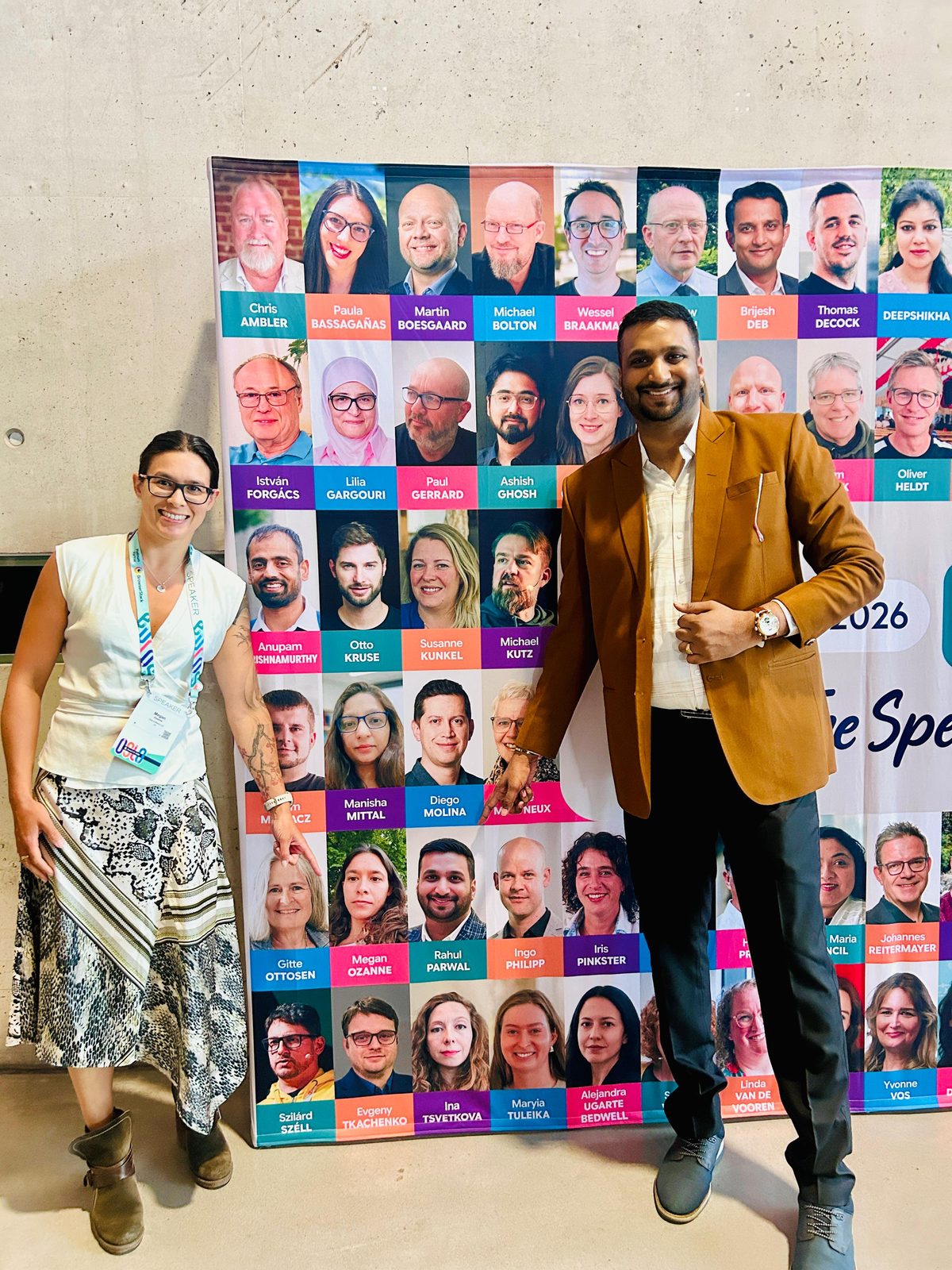
More pics from Oslo
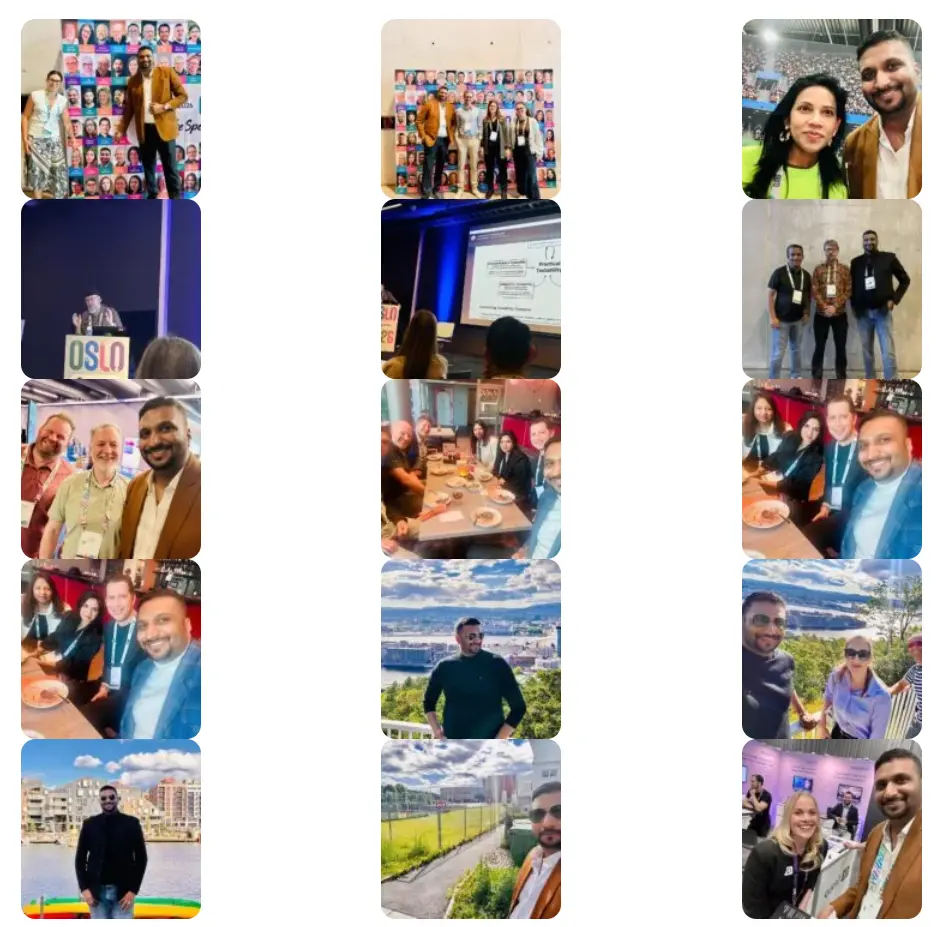
Grateful to the EuroSTAR Conference for creating a platform where testers from around the world can learn, teach and grow together.
Thank you.
Conclusion
Rahul’s story is a reminder that great conference sessions are rarely created in isolation. Behind every successful talk are countless hours of preparation, honest feedback from peers, and a willingness to keep learning and improving. His back-to-back Best Tutorial wins at EuroSTAR demonstrate the impact that community, practice, and persistence can have when combined with a genuine desire to help others learn.
Inspired by Rahul’s journey?
Why not share your own experiences with the testing community? The EuroSTAR 2027 Call for Speakers is now open, with submissions accepted until 30 September 2026.
Whether you’re presenting a hard-earned lesson, a new technique, a case study, or a fresh perspective on quality engineering, this is your opportunity to take the EuroSTAR stage and contribute to the conversation. Learn more and submit your proposal at the EuroSTAR Call for Speakers page.