• Skip to main content
EuroSTAR 2027 - Sign up for early access

EuroSTAR Conference

Europe's Largest Software Testing Conference.

  • Programme
    • Call for Speakers
    • 2026 Programme
    • Community Hub
    • Awards
  • Attend
    • Why Attend
    • Bring your Team
    • Testimonials
  • Sponsor
    • Sponsor Opportunities
    • Sponsor Testimonials
  • About
    • About Us
    • Our Timeline
    • FAQ
    • Blog
    • Organisations
    • Contact Us
  • Book Now

Platinum

Currys achieves 4X faster release cycle with BrowserStack AI-Powered Test Management

April 17, 2026 by Lauren Payne

Introduction

Currys, a leading UK omnichannel retailer, is committed to delivering seamless digital experiences. With a vast online and offline presence, ensuring high-quality software releases is critical. However, fragmented testing, manual test management processes, and limited visibility into testing efforts slowed development cycles. To overcome these challenges, Currys adopted BrowserStack Test Management, resulting in faster releases, improved test coverage, and streamlined quality assurance.

The Challenge

Fragmented testing and limited visibility

When Gregg Ward, Principal Quality Assurance Manager, joined Currys, he found a fragmented testing process. Teams operated in silos, using multiple different tools for testing and Excel spreadsheets stored on individual computers to manage test cases. The lack of a centralized system led to inefficiencies, making collaboration difficult and slowing down issue resolution.

Without real-time visibility, their team spent more time chasing information than solving problems. Gathering data took three times longer than fixing issues, and the deep technical knowledge required made onboarding and collaboration challenging. Testing remained a black box for stakeholders, impacting release cycles and innovation. Test creation was also time-consuming, impacting release cycles and slowing innovation.

“We needed a single source of truth that would provide real-time visibility to everyone involved, from developers to stakeholders. We wanted to standardize transparency and real-time results, and BrowserStack ticked all those boxes,” Gregg says.
The Solution

BrowserStack AI-Powered Test Management

Currys moved to BrowserStack Test Management for its seamless integration, intuitive interface, and AI capabilities. The platform provided a centralized hub for test creation, execution, and tracking, enabling both technical and non-technical users to access critical information effortlessly.

Migrating from legacy systems was a major shift. With 40 years of legacy platforms and over 200,000 test cases in massive Excel files, they were concerned about losing critical data. But BrowserStack supported them every step of the way, providing hands-on assistance. The result? Not a single test case was lost—everything was intact. With BrowserStack’s support, Gregg’s team onboarded 120 users and imported 60,000 test cases from an existing Test Management tool, including a project with 22,000 test cases migrated in under five hours.

“We haven’t lost a single test case. Everything is there. BrowserStack Test Management lets you set up field mappings to match however your legacy test files were structured, and it’s incredibly flexible,” Gregg says. This ensured that Currys’ QA teams could continue their work without disruption, maintaining the integrity of their testing data while benefiting from a more streamlined and efficient test management system.

Having migrated their existing test cases, Currys leveraged BrowserStack’s AI capabilities to accelerate test creation. “We recently introduced BrowserStack AI to our testing teams across all areas of Currys, and the impact was immediate. The increase in coverage was fourfold, but the real advantage was the speed at which we could create test cases directly from our UI, Jira, or Confluence,” Gregg explains. AI-driven automation reduced manual effort and encouraged broader, more innovative test coverage.

The platform’s dashboards and reporting further improved issue detection. “Dashboards in BrowserStack are incredibly useful. They provide an easy-to-follow information path that we can share with stakeholders, making it simple to highlight key insights and zoom into the details when needed.”

With Jira integration enabling two-way visibility, developers and stakeholders could access real-time test session data without switching tools. “With the Jira integration, people can see what test sessions are happening, what’s failed, and the last time a test was run—all from a single ticket,” says Gregg

The Impact

Faster releases, greater confidence, and improved collaboration

With BrowserStack Test Management, Currys transformed its QA efficiency and dramatically increased release cadence. Previously, releases followed a rigid, waterfall-style process, deploying just once per sprint. Now, with AI-driven test management, the team releases up to four times per sprint, with some teams shipping updates every few days.

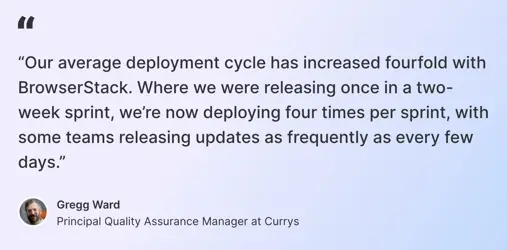
“Our average deployment cycle has increased fourfold with BrowserStack. Where we were releasing once in a two-week sprint, we’re now deploying four times per sprint, with some teams releasing updates as frequently as every few days,” Gregg states.

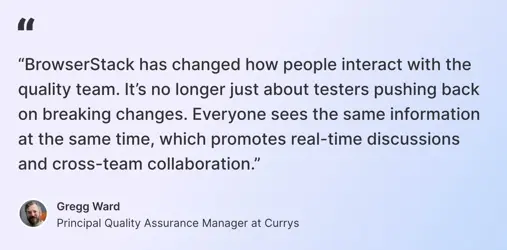
Beyond speed, collaboration and transparency have improved significantly. Teams now have real-time access to testing data, breaking down barriers between QA and development. “BrowserStack has changed how people interact with the quality team. It’s no longer just about testers pushing back on breaking changes. Everyone sees the same information at the same time, which promotes real-time discussions and cross-team collaboration,” Gregg emphasizes.

By consolidating all testing tools into BrowserStack, Currys eliminated inefficiencies caused by fragmented workflows. Previously, test management was scattered across multiple platforms, making it difficult to access real-time insights. Now, with a single source of truth, Currys has streamlined QA, accelerated release cycles, and improved software quality. “It’s a game-changer. Everyone knows where to look for information, everyone understands the quality of what we’re producing, and that’s all thanks to BrowserStack Test Management,” Gregg concludes.
If you would still like to know more, BrowserStack provides AI enabled products and agents across the testing lifecycle. Reach out to us here.

Author

Ankit Jain Senior Director – Product Management, BrowserStack

Ankit is a Senior Director of Product Management, spearheading the fastest growing Test Management and Scanner product lines at BrowserStack. With over 20 years of experience, as a Product Leader, Founder, Investor, and Developer, he has led global teams and driven strategic initiatives, specializing in 0-to-1 development, growth, monetization, and scaling across startups, hyper-growth companies, and public enterprises.

BrowserStack are Platinum Sponsors in EuroSTAR 2026. Join us at EuroSTAR Conference in Oslo 15-18 June 2026.
Filed Under: EuroSTAR Expo, Platinum Tagged With: 2026, EuroSTAR Conference, Expo, software testing tools

Power Up Your Test Automation Practices With AI: Unlock Key Use Cases

April 9, 2024 by Lauren Payne

With the rapid pace of development cycles and the complexity of modern software systems, manual testing alone often can’t meet the demands of quality assurance. This is where test automation comes into play, offering efficiency, accuracy, and scalability. 

However, even with automation, challenges can still arise, such as maintaining test scripts, handling dynamic user interfaces, and detecting subtle defects. Enter AI, a game-changer poised to revolutionize test automation.

By infusing AI and ML into test automation, testers can build better automations faster through supercharged productivity, as well as improve accuracy and time-to-value through combining Generative AI and Specialized AI. Plus, testers can unlock new use cases by building AI-powered automations. 

So, what are some of the top uses for AI and ML in testing that can supercharge your application testing practices?

Deploy an agent that performs testing fully autonomously

An AI-powered agent can seamlessly tackle the challenge of finding critical problems in your applications, as it can interact with an application constantly. Then, the agent can build a model of your application, discover relevant functionality, and find bugs related to performance, stability, and usability. An agent can also aid in creating a resilient object repository while navigating through a target application, gathering reusable controls for future test case development. The potential of AI doesn’t stop there—the agent can then continuously verify and refresh controls within an object repository, enabling self-healing and maintaining automated tests. 

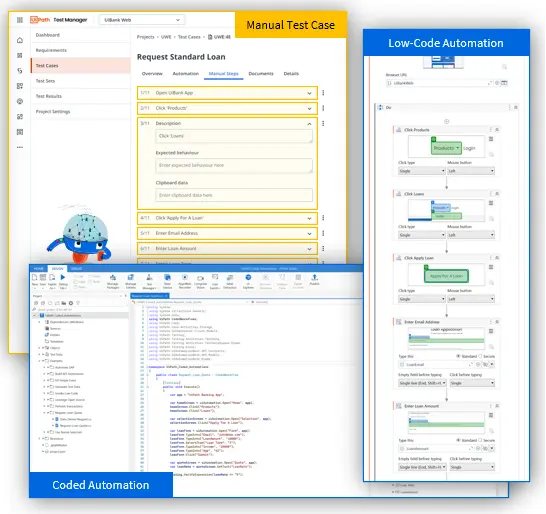
Generate automated low-code and coded tests from step-by-step manual tests

Have manual tests that you want to convert to automated tests? With the power of AI, you can accelerate automation by generating automated low-code and coded tests from manual tests, as well as leverage a flexible automation framework to ensure the resilience of your automated tests. And remember the object repository that your AI-fuelled agent assisted with creating? Equipped with this object repository, you can use AI to consider and smartly reuse any kind of object, such as buttons, tables, and fields.

Create purposeful and complex test data

With AI-infused large language models, you can supercharge your data through enhanced synthetic test data generation for manual and automated test cases. Using AI also enables you to create meaningful test data faster, allowing you to handle intricate data dependencies across multiple test data dimensions.

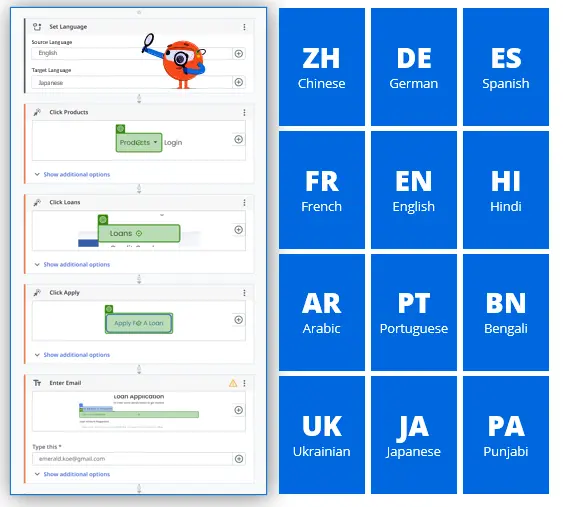
Streamline automated localization testing by leveraging semantic translation

By integrating AI into your test automation practices, you can leverage semantic automation and translation to remove the need for creating separate test cases for each language. The result? Maximized efficiency through seamless automated localization testing. Plus, you can run your automated test cases in different languages, allowing you to expand and scale your testing capabilities globally.

Overall, there’s unlimited potential for AI to supercharge continuous testing across the entire lifecycle—from defining stories, to designing tests, to automating and executing tests, to analyzing results.

UiPath Test Suite for AI-powered test automation

UiPath Test Suite, the resilient testing solution powered by the UiPath Business Automation Platform, offers production-grade, AI-fueled, low-code, no-code, and coding tools so you can automate testing for any technology while still managing testing your way. Later this year, you’ll be able to unlock AI-infused use cases for test automation, such as test generation, coded automations, and test insights, with Autopilot for Test Suite.

Author


Sophie Gustafson, Product Marketing Manager, UiPath Test Suite

Sophie Gustafson has worked at UiPath for two years and is currently a product marketing manager for Test Suite. Sophie has previous experience working in the consulting and tech industries, specializing in content strategy, writing, and marketing.

UiPath is an EXPO Platinum Partner at EuroSTAR 2024, join us in Stockholm.

Filed Under: EuroSTAR Conference, EuroSTAR Expo, Platinum, Sponsor, Test Automation Tagged With: 2024, EuroSTAR Conference, Expo, Test Automation

How to overcome common challenges in Exploratory Testing

February 20, 2024 by Lauren Payne

Exploratory testing involves testing system behaviour under various scenarios, with a predefined goal but no predefined tests. This focus on discovering the unknown makes exploratory testing both powerful and challenging.

“Exploratory testing is a systematic approach for discovering risks using rigorous analysis techniques coupled with testing heuristics.”

-Elisabeth Hendrickson

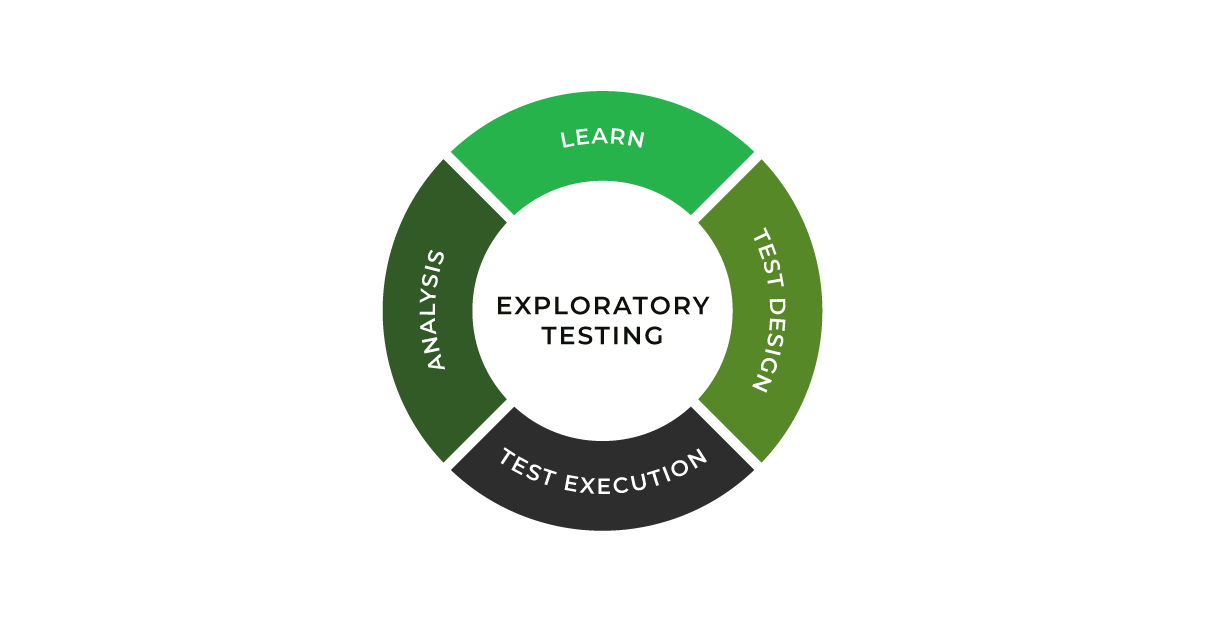
Although exploratory testing (ET) is not a new concept, its significance has increased exponentially in the dynamic field of software development. With its simultaneous learning, test design, and execution processes, ET represents a shift from the traditional, script-based testing methodologies. This approach is particularly beneficial in handling the complexities and unpredictabilities of modern software projects. It prepares testers to actively engage with the software, uncovering potential issues that scripted tests might overlook.

In exploratory testing, catching bugs is an adventure – a journey through the unknown aspects of software, where each test can reveal new insights. In the Agile world with rapid development cycles, exploratory testing stands out as a dynamic and responsive testing strategy, essential for ensuring software quality in a fast-paced environment.

Despite its advantages, exploratory testing has challenges that can interfere with its effectiveness. Testers often encounter hurdles in planning and adapting to newly discovered information, managing frequent context switches, maintaining comprehensive documentation, and effectively measuring the success of their testing efforts. Addressing these challenges is crucial for harnessing the full potential of ET. This blog will explore these common challenges and discuss how the Xray Exploratory App provides innovative solutions, enhancing the exploratory testing process and enabling testers to deliver high-quality results efficiently.

How to overcome challenges with Xray Exploratory App

The Xray Exploratory App proves to be a vital resource for successfully navigating these challenges. The tool supports the unique factors of exploratory testing, empowering testers to optimize their testing strategies while maintaining the flexibility and adaptability that exploratory testing demands. 

Planning and Learning

One of the primary challenges in exploratory testing is the balance between planning and learning. While ET is less structured than traditional testing, it still requires a level of planning to be effective. Xray Exploratory App facilitates one of the measures to counter this challenge and optimize your ET adoption –  session-based test management (SBTM). 

Testers must continuously learn from the software they are testing and adapt their approach accordingly. This requires understanding the project’s goals and the ability to quickly assimilate new information and apply it to testing strategies. One of the elements that helps with gaining the skills and experience is the structure of knowledge sharing. For example, if charters are handled as Jira stories, you get a centralized storage (a library of templates, of sorts) that has good examples which help educate any team member about the system and previous ET efforts.

Context Switching

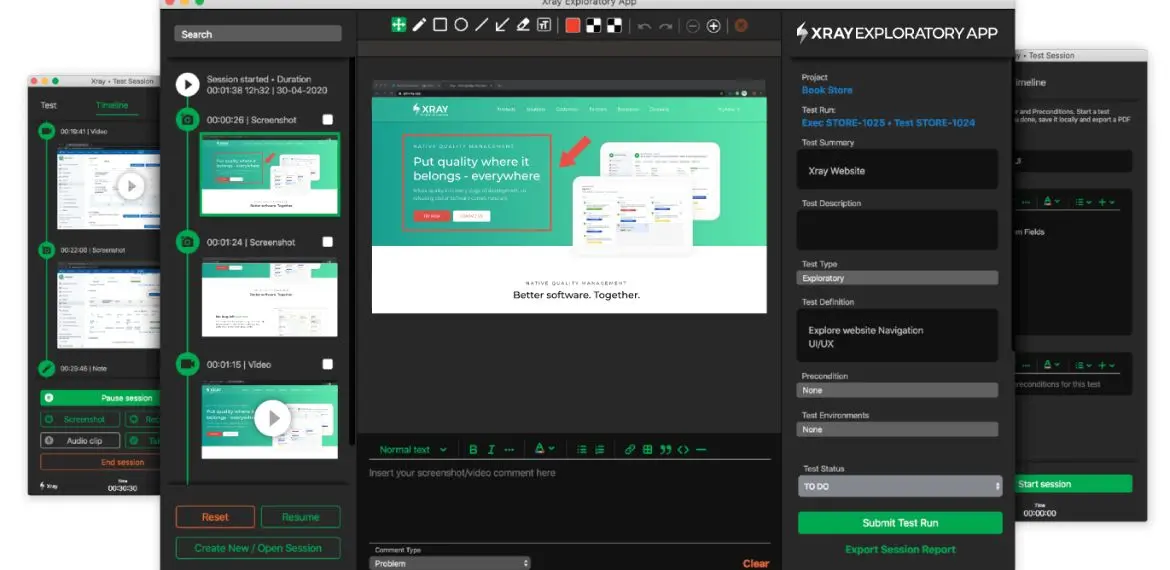
Testers in an exploratory setting often deal with context switches. They must juggle different aspects of the software, switch between various tasks, and respond to new findings in real-time. Managing these switches efficiently is crucial to maintain focus and avoid overlooking critical issues. Beyond common techniques like Pomodoro, you can leverage two key features of Xray Exploratory App – saving sessions locally and editing the detailed Timeline with all your findings.

Proper Documentation

Unlike scripted testing, where documentation is predefined, exploratory testing requires testers to document their findings as they explore. This can be challenging as it requires a balance between detailed documentation and the fluid nature of exploratory testing. Testers need to capture enough information to provide context and enable replication of failure and future test repeatability without getting bogged down in excessive detail.

Xray Exploratory App addresses this challenge with the easily created chronological history of not just text notes but also screenshots, videos, and issues/defects created in Jira during the session (which accelerates the feedback loop).

Reporting and Measuring Success

Another significant challenge in exploratory testing is effectively reporting and measuring success. Traditional testing metrics often do not apply to ET, as its dynamic nature does not lend itself easily to quantitative measurement. Defining meaningful metrics to capture the essence of exploratory testing’s success is crucial for validating its effectiveness and value within the broader testing strategy. In many cases, such definitions would be very company-specific.

The good news – the seamless integration between Xray Exploratory App and Xray/Jira allows you to leverage centralized test management features, such as real-time reporting on several possible metrics (e.g. number of defects, elapsed time). That improves visibility and allows to clearly determine the status of not only exploratory testing, but all testing activities.

For instance, if we want to track defects/issues resulting from exploratory testing, we can see them linked to the test issue in Jira/Xray, which will then allow us to check them in the Traceability report. 

Overall, these challenges, though daunting, are manageable. With the right approach and tools, testers can navigate the complexities of exploratory testing, turning these challenges into opportunities for delivering insightful and thorough software testing.

Future outlook of Exploratory Testing

Exploratory Testing is becoming more acknowledged as an indispensable part of the testing strategy, especially given the limitations of conventional scripted testing. The ability of ET to adapt and respond to the complexities and nuances of modern software development is exceptional. As we look towards the future, several key trends are emerging that are set to shape the landscape of exploratory testing.

Artificial Intelligence (AI)

AI has the potential to significantly transform exploratory testing by automating certain aspects of ideation and, more so, data analysis processes. Leveraging AI in software testing in the correct way can enhance the tester’s capabilities, enabling them to focus on more complex testing scenarios and extract deeper insights from test data. AI can assist in identifying patterns and predicting potential problem areas, making ET more efficient and effective.

Integrations with other tools

The future of exploratory testing will see greater integration with various development, testing, and business analysis tools. This compatibility will streamline the testing process, enabling seamless data flow and communication across platforms. One of the pain points this trend will aim to address is losing time in writing automation scripts as a result of ET. Such integrations will enhance the overall efficiency of the testing process, allowing testers to leverage a wider range of tools and resources during their exploratory sessions more easily.

Enhanced collaboration

As software development becomes more collaborative, exploratory testing also adapts to facilitate better teamwork. Tools like the Xray Exploratory App incorporate features that promote collaboration among testers and between testers and other stakeholders. This collaborative approach ensures a more comprehensive understanding and coverage of the software, leading to better testing outcomes.

Compliance and reporting

Exploratory testing is being used more and more in ensuring compliance, areas like Non-Functional Requirements testing (security and performance), to help find more convoluted flaws and bottlenecks in intricate software systems. The trend is not surprising as the cost of compliance is increasing, both from the customer and the regulatory perspective. 

With the increasing emphasis on compliance and accountability in software development, exploratory testing has to evolve to provide more robust reporting and documentation capabilities. The ability to generate detailed and meaningful reports is essential, and tools like Xray are focusing on enhancing these aspects to meet the growing compliance demands.

The Xray Exploratory App is at the forefront of these changes, continually adapting and evolving to meet the future demands of exploratory testing.

Chart new heights in testing with Xray Exploratory Testing App

Exploratory Testing has become indispensable in our increasingly sophisticated and customer-centric digital landscape. Its importance has expanded across various sectors, including e-commerce, healthcare, and finance, highlighting the universal need for high-quality software experiences. The unique approach of ET, with its focus on discovering the unknown through rigorous analysis and testing heuristics, positions it as a key strategy in addressing the complexities of modern software systems.

The Xray Exploratory App stands out as a vital resource in harnessing the full potential of exploratory testing. The tool enhances the testing process by addressing the everyday challenges of planning, context switching, documentation, and reporting. It enables testers to navigate the intricacies of ET with greater efficiency and effectiveness, ensuring comprehensive coverage and insightful test results.

Explore the capabilities of the Xray Exploratory App and see firsthand how it transforms the exploratory testing experience. Dive into the world of enhanced software testing with Xray and discover the difference it can make in delivering superior software quality.

Author


Ivan Filippov
, Solution Architect for Xray.

Ivan is passionate about test design, collaboration, and process improvement.

Xray is an EXPO Platinum partner at EuroSTAR 2024, join us in Stockholm.

Filed Under: Exploratory Testing, Platinum, Software Testing, Sponsor, Uncategorized Tagged With: 2024, EuroSTAR Conference, Expo, software testing conference, software testing tools

Unlocking Success: Top 7 Trends for Attracting Visitors to Your EXPO Booth in 2024 

January 25, 2024 by Lauren Payne

As we stride into 2024, the landscape of software testing continues to evolve as the EuroSTAR and AutomationSTAR conferences continue to grow, demanding innovative strategies to stand out in the crowd. Here are the top seven trends for 2024 that will redefine how you attract visitors to your booth at Europe’s largest testing software testing conferences this June: 

Clare’s 7 Top Trends To Follow:

1. Interactive Booth Experiences: Engage your audience with interactive experiences. From live product demos to hands-on testing challenges, creating a dynamic and participatory environment at your booth will draw inquisitive minds. 

2. Virtual and Augmented Reality (VR/AR): Embrace the future with VR/AR experiences. Let visitors immerse themselves in solutions your product or service can achieve through virtual or augmented reality, providing a memorable and futuristic encounter. 

3. Killer Swag: Elevate your EXPO booth experience by offering killer swag that not only grabs attention but also leaves a lasting impression. Unique, high-quality swag items act as powerful magnets, drawing attendees to your booth. From trendy wearables to functional gadgets, thoughtful swag creates buzz, fosters engagement, and serves as a tangible reminder of your brand. In a sea of booths, having killer swag sets you apart, turning curious passersby into enthusiastic visitors and potential long-term connections. 

4. Networking Hubs: Transform your booth into a networking hub. Provide comfortable seating, charging stations, and conducive spaces for impromptu meetings. Networking hubs create an inviting atmosphere that encourages meaningful conversations. 

5. Gamification for Engagement: Infuse an element of fun into your booth with gamification. Create interactive games or challenges related to software testing concepts. Attendees love the opportunity to learn while having a good time. Get involved in the annual EXPO prize-giving and display your AMAZING prize on your booth over the 3 days to attract attention and collect leads via the sign up. 

6. Short Demo Sessions: Elevate your booth’s presence by hosting 3–5-minute demo sessions during the networking breaks. Conduct brief, impactful presentations on emerging trends, best practices, or case studies about your products and services. Position your booth as a knowledge hub within the conference. 

7. Social Media Integration: Leverage the power of social media to amplify your booth’s visibility. Follow and use the event-specific hashtags #esconfs and encourage attendees to share their experiences online, and host live Q&A sessions. Utilise social media platforms to foster engagement before, during, and after the conference. 

Embracing these trends ensures your booth becomes a magnetic destination withing the EuroSTAR EXPO, attracting a diverse audience of software testing professionals. Stay ahead of the curve, make lasting impressions, and turn visitors into valuable connections at EuroSTAR in 2024. 

For more information on how EuroSTAR can help you achieve your business goals, check out the EuroSTAR 2024 EXPO brochure or book a call with me.

Clare Burke

EXPO Team, EuroSTAR Conferences

With years of experience and a passion for all things EuroSTAR, Clare has been a driving force behind the success of our EXPO. She’s the wizard behind the EXPO scenes, connecting with exhibitors, soaking up the latest trends, and forging relationships that make the EuroSTAR EXPO a vibrant hub of knowledge and innovation. 

t: +353 91 416 001 
e: clare@eurostarconferences.com 

Filed Under: EuroSTAR Conference, EuroSTAR Expo, Gold, Platinum, Sponsor Tagged With: EuroSTAR Conference, Expo

  • Code of Conduct
  • Privacy Policy
  • T&C
  • Media Partners
  • Contact Us

part of the