• Skip to main content
EuroSTAR 2027 - Sign up for early access

EuroSTAR Conference

Europe's Largest Software Testing Conference.

  • Programme
    • Call for Speakers
    • 2026 Programme
    • Community Hub
    • Awards
  • Attend
    • Why Attend
    • Bring your Team
    • Testimonials
  • Sponsor
    • Sponsor Opportunities
    • Sponsor Testimonials
  • About
    • About Us
    • Our Timeline
    • FAQ
    • Blog
    • Organisations
    • Contact Us
  • Book Now

agile

How 2023 IT Trends Impact Software Testing

March 17, 2023 by Lauren Payne

Thanks to OpenText / MicroFocus for providing us with this blog post.

[Disclaimer: The future described in this article is the author’s personal view and is by no means any indication of OpenText products’ direction.]

Happy 2023 to the community! The beginning of a year is always the time to think big and look into the future. Last year, I wrote about three 2022 trends that’ll change test management, all of which continue to gain momentum. So far, you’ve heard 2023 predictions from analyst firms, consulting firms, and others. Among those trending IT keywords, I picked a few important ones to share with you. These words may not be new. But they have become even more important in today’s challenging business environment. Putting them together, we can see new ways of developing, testing, and measuring software.

Industry Cloud Booms

Gartner defines industry cloud platforms as modular, composable platforms supported by a catalogue of industry-specific packaged business capabilities. Packaged business suites are not new. The ERP suites from SAP, Oracle, and other vendors are well-known examples. Industry cloud platforms offer a rich set of industry-specific capabilities from many vendors and a place to compose and deliver business applications faster. Enterprise integration PaaS gives you the tools to easily integrate those industry components to form your application with low code or no code.

Cloud is the marketplace of other good stuff too, including AI and data analytics capabilities. Container technologies let you deploy your applications easier and swap out a defective module quickly.

Leveraging the industry cloud shortens the cycle to deliver value and lets you focus on innovation instead of the underlying mundane tasks. Some industry cloud platforms are already full-fledged, including the SAP Industry Cloud and Microsoft Cloud for industries. Companies with deep industry knowledge, like Deloitte, also join the play with their industry solutions.

When your application is built in this way, a focus of testing is verifying the business processes—the “wiring” you composed—and the testers are likely business users. Tools to efficiently verify business processes will find many new places to shine. Testers of all skill levels will appreciate the ability to manage complex interdependencies and save efforts with a component- or model-based approach. Model-based testing directly generates test cases from your business process model and automates them. Expect it to become more common in 2023.

With cloud platforms for building applications fast, you won’t want to lose momentum in the testing part. That’s why cloud-based testing and device farm are your choice.


Observability-Driven Development

The concept of observability has been around for decades. But it recently got popular in the cloud world because it allows people to observe the health of cloud-based systems by analyzing logs and correlating events. Now observability has come to software too, with observability-driven development (ODD). By adding a small amount of code for instrumentation, the development team can observe what’s happening when the application runs in the production environment in the cloud. When there is any issue with the app, observability helps identify the cause quickly and accurately—pinpointing the specific code in question.

ODD is yet another way to strengthen the feedback loop from Ops to Dev. ODD is also said to be a way to test in production, i.e., shift-right testing. The biggest advantage of testing in production is that you have real data and the same environment as customers use. Such observability is also valuable when you test in staging environments. We’ll see more test management or DevOps governance tools incorporate observability data into their data repository for analytics and insights in 2023.

FinOps Meets Value Stream Management

The word FinOps combines “Finance” and “DevOps,” stressing collaboration between business and engineering teams.

FinOps started when cloud service providers and other vendors wanted to provide a way of managing finances for a company’s cloud-based systems. It’s meant to help organizations find the best spending model for achieving their business goals. OpenText HCMX supports FinOps.

I expect to see FinOps and value stream management (VSM) converge sometime in the future. Both are extensions of DevOps. FinOps focuses on managing your costs against business value, while VSM focuses on eliminating bottlenecks and wastes during the process of delivering business value. With both sets of data, you can optimize the cost performance of your application. For example, when you’re unsure whether it’s more efficient to outsource a certain part—such as testing—FinOps and VSM data will likely give you a clear answer.

What’s Next?

You may have noticed that all of the above are related to the cloud. Why? Challenges in the global economy are driving more cloud adoption. The cloud has become the frontier of innovation. Every enterprise that wants to win and lead must embrace the cloud. OpenText software quality solutions went the SaaS model to serve customers who are moving to the cloud in two ways—reducing tooling cost and increasing speed.

Stay tuned on what’s happening with OpenText cloud solutions, especially the ValueEdge platform, in which you will find the most innovative software quality capabilities from OpenText at the earliest.


What is your organization’s cloud initiative? We are here to help. Contact us to discuss details.

Author

Ying Lei

Ying Lei is a senior product marketing manager at OpenText who specializes in test management, application lifecycle management, DevOps and value stream management.

OpenText is an EXPO Gold partner at EuroSTAR 2023, join us in Antwerp
Filed Under: Agile, DevOps, Software Testing Tagged With: 2023 trends, agile, ALM, Cloud Testing, DevOps, SaaS, software testing, Test Management, Value Stream Management

The EuroSTAR Huddle Deep Dive Week: Agile Edition

April 1, 2021 by Ronan Healy

Recently EuroSTAR Huddle hosted the first Deep Dive Week. The first edition was a Agile week with some testing experts exploring all aspects of Agile. Over the course of five days, six experts in Agile discussed and explored, answered your questions on every aspect of Agile. From documentation to Quality, automation to metrics, weekly schedules to team motivation, everything was taken apart, discussed and put back together with some excellent questions from an engaged audience. If you didn’t get to attend or are curious what took place, let’s take a look back at the week’s activities.

Gitte Ottosen kicked off the week with an insightful exploration of Quality. She looked at measurements and metrics, what is value and, in particular, the VOICE model and the Goal Question Metric, and how this could be beneficial to your team.

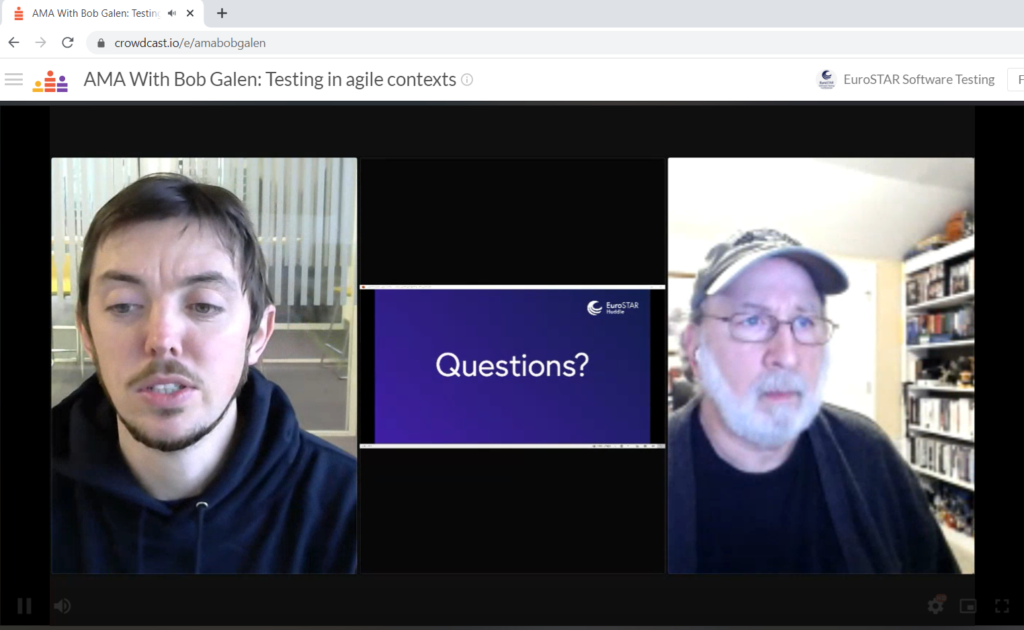
Wednesday heralded our first AMA of the week with Bob Galen who focused on testing in Agile contexts attracting a wide variety of questions. He discussed quality related metrics, where automation fits in Agile and test strategy in Agile projects.

Also on Wednesday, Selena Delesie joined us to explore peer to peer relationships in Agile and how to get the best out of your team. She shared some real-world examples from her own career on how to communicate within your own team and how you should think about working with others including management.

agile week

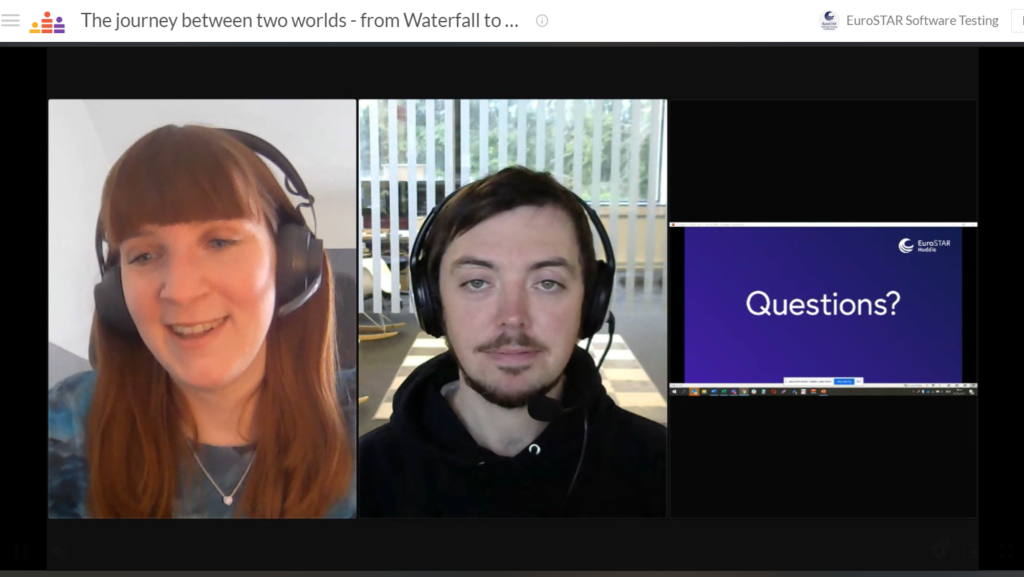
Next up, Hanna Dernbrant shared her story of migrating from Waterfall to DevOps. This included the role of the tester in DevOps, her weekly schedule and how her team works. I think we were all fascinated by her meetings!

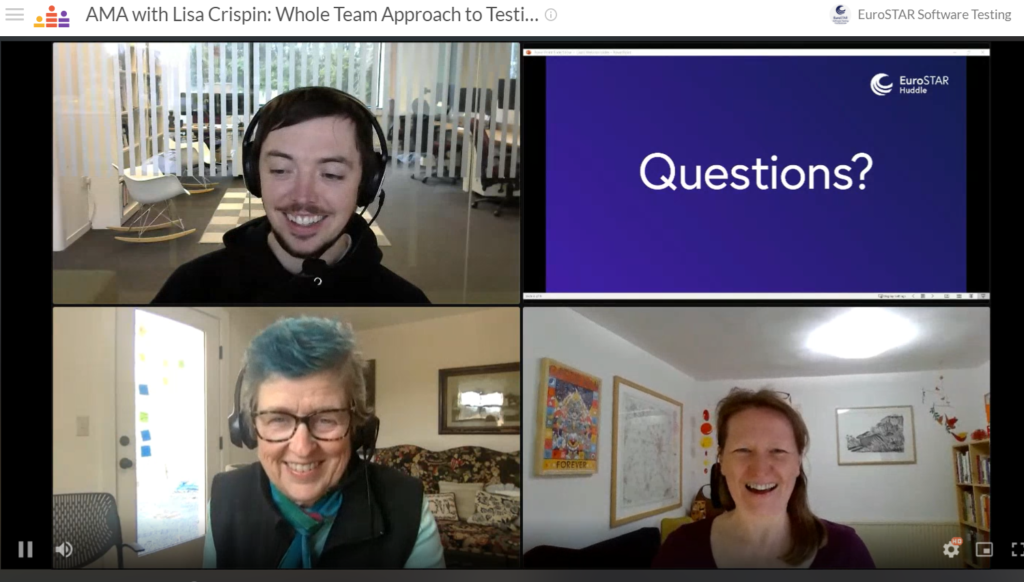
Later on Thursday, Lisa Crispin held our second AMA. Looking at Testing in Continuous Delivery, Lisa answered many of your excellent questions. She shared her thoughts on test plans for fluid projects, use of mind maps, what metrics she recommends in CD projects, the best time to write automation tests in Agile methodology and lots more. A big shout out to Clare & Clare who came on screen to ask their questions!

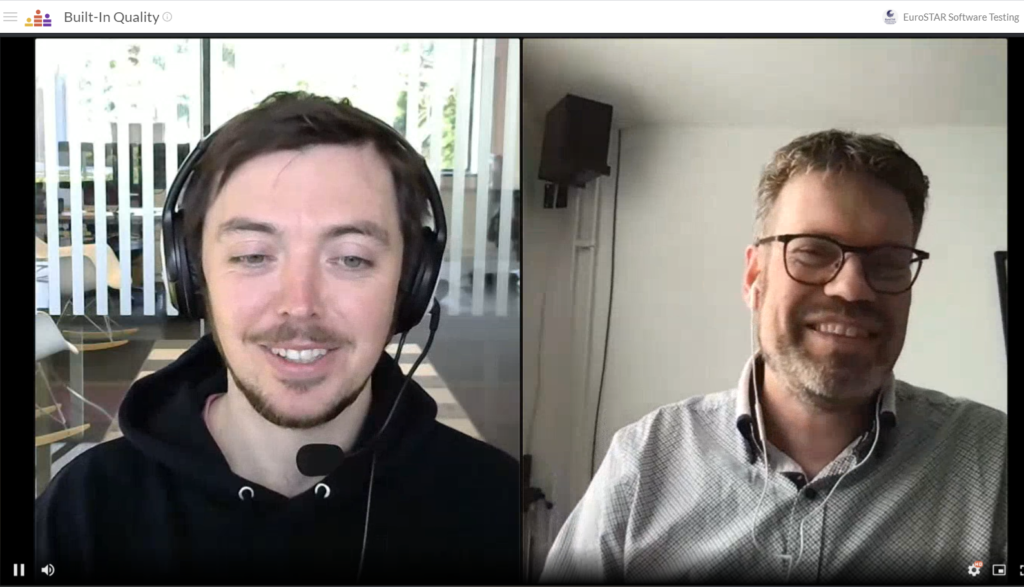
Friday came all too quickly and the final live talk of our Agile Deep Dive was with Derk-Jan De Grood (a member of the EuroSTAR 2021 Programme Committee). Derk-Jan discussed Built-In Agile in an interactive and fun session. He explained the concept of built-in quality, gave some examples, discussed faults and its effect on the line, what should be maximum feedback times for different scenarios and answered lots of your questions.

The team at EuoSTAR Huddle are already working on the next Deep Dive week. We are sure it will be as engaging as the Agile week. In the meantime, stay tuned to EuroSTAR for the announcement of the EuroSTAR 2021 Programme which is happening very soon.

Filed Under: Agile Tagged With: agile

EuroSTAR Huddle Deep Dive: Agile

March 11, 2021 by Ronan Healy

It has been twenty years since seventeen software developers met at a resort in Snowbird, Utah and since then Agile has become the dominant form of developing software.  At EuroSTAR Huddle, we will be acknowledging this with our just announced EuroSTAR Huddle Deep Dive: Agile week. Taking place from 22-26 March, the EuroSTAR Huddle Deep Dive will feature seven speakers, all experts on Agile who will guide you through all things Agile.

So at EuroSTAR Huddle we have invited seven highly regarded experts on Agile and software testing. Over the course of one week they will share their expertise with you across seven live events.

During the week we have some of the best minds on Agile. We have two new events in two AMA (Ask Me Anything) sessions.  First off is Lisa Crispin, a leading expert and author of numerous Agile books. She will be taking part in an  on Testing in Continuous Delivery. Also taking part in another AMA is Bob Galen who will be exploring Testing in Agile Context. Both events give you the chance to put your questions to these Agile experts with a wealth of experience in Agile.

But there is more! We will also have live presented events with practical takeaways that you can apply with your team. Gitte Ottosen will be sharing her thoughts on Quality in Agile and in particular what it means for your customer. Derk-Jan de Grood will also explore quality focusing on built in quality and how quality is organised at the team level. Speaking of teams in Agile Selena Delesie will be joining the Deep Dive week to demonstrate how you can super-charge your agile team and create Agile super teams. Mia Johannsson will explore the four key cornerstones of Agile QA and its importance in the software development process. Finally moving from teams to the user level, Hanna Dernbrant is going to explore what it is like to move from Waterfall to DevOps and what experiencing that sort of change can be like.

With this great quality (no pun intended) of speakers and minds on Agile, the EuroSTAR Huddle Deep Dive: Agile week is not to be missed. Plus there will be blogs throughout the week on all things Agile. Make sure to join us there.

Filed Under: Agile, DevOps Tagged With: agile

10 things you’ll learn in DevOps, Quality & AI [Webinar Series]

May 18, 2020 by Suzanne Meade

Join our May Test & Quality webinar series with our 3 testing experts, on 3 hot topics

Quality for DevOps teams with Rik Marselis

‘Deliver business value with the right quality at speed’. That’s what organizations ask of their IT teams. To achieve this, cross-functional IT teams need to work closely together. The DevOps culture is the enabler for this way of high-performance IT delivery, using an automated CI/CD pipeline to deliver at speed. But how do you deliver value with the right quality using DevOps?

Rik shares approaches, practical examples and concise explanations, to enable teams to implement quality engineering practices.

What You’ll Learn

  1. Deliver business value with the right quality at speed
  2. Incorporate quality engineering in the cross-functional teams
  3. Automate everything – as long as it is useful

SAVE MY SPOT

Agile Testing with Leanne Howard

COVID-19 has made us all look at the world in a different way, and many of us have been forced to change. We have all heard about websites crashing; the rise in hacking; apps not being accessible to everyone, and the strains on IT services. This all points to getting the cost of quality model right, and a higher focus on our customers’ needs.

Leanne will share experiments that you can try to accelerate your testing whilst still maintaining high quality and customer focus.

What You’ll Learn

  1. Some simple experiments to try
  2. Accelerating testing whilst maintaining quality
  3. How to focus on what the customer needs, now and into the future

SAVE MY SPOT

Quality and AI-based Systems with Adam Leon Smith

Looking to improve the quality of AI-based systems?

AI is a complex topic and is the biggest technical renaissance to impact testing for at least two decades. Adam will talk about intrinsic quality issues with AI, challenges in testing AI-based systems, and new techniques and methods.

He will also cover emerging AI-enhanced testing tools that are yet to get much coverage.

What You’ll Learn

  1. Key quality issues with AI
  2. Testing challenges with AI
  3. New ways of testing AI
  4. New tools that you won’t have heard of

SAVE MY SPOT

The Test & Quality Webinar Series is the latest series of online talks brought to you by EuroSTAR Conferences. For 2020, we will be taking the entire EuroSTAR Software Testing & Quality Conference online. See more details about the incredible talks you can attend.

Filed Under: Agile, DevOps, Webinar Tagged With: agile, DevOps, Webinar

Lighter and Faster: Two Strategies for Improved Agile Testing

November 5, 2019 by Fiona Nic Dhonnacha

Designing and maintaining test cases for a fast-paced agile team can be a real challenge. Testers don’t often receive rich requirements for test planning in advance, and they aren’t given months notice to write test-case specifications. In fact, it’s not uncommon for a tester to get his or her first look at a working piece of code just before the hopeful go-live deadline.

In order to overcome this common challenge and speed up the entire testing process, agile teams can implement a few different strategies to simplify team communications, reduce the risk of development rework, and increase the overall quality of delivered software.

Light and Fast Strategy #1 – The Three Cs

The Three-Cs concept, heralded by Ron Jeffries, emphasizes a discovery process instead of a traditional requirement/specification process, forgoing the precondition of comprehensive information early in the development cycle. The three core elements are as follows:

  • Card – Write user stories on cards. The card does not contain comprehensive requirement information. Instead, the card has just enough text to identify the requirement and remind everyone what the story is. Keep it simple.
  • Conversation – Customers communicate requirements to the team through conversation, including thoughts, opinions, and feelings. Conversations take place over time and are particularly important when a story is estimated (during release planning) and again when the story is scheduled for implementation. Conversations should aim to produce executable examples, which Jeffries calls confirmations—assurances that the team understands the goal and is producing the agreed upon functionality.
  • Confirmation – Regardless of how many conversations and examples are produced, certainty of success cannot be achieved without the customer-generated acceptance test. As the ultimate judge of all our development and testing efforts, the customer must be the primary voice that defines the parameters of success.

This lightweight approach replaces the time spent writing exhaustive documentation with conversation and collaboration. A good user story should collect and summarize conversations and log the agreed upon confirmation/acceptance tests, giving a tester the ability to execute tests manually with minimal—but invaluable—information.

Test cases define how a particular story could be used from an end-user’s perspective, and they are used to confirm when a story is complete and working as intended. They establish the boundaries of a story’s scope and the definition of done.

Lightweight test cases needn’t consist of more than a brief description of what needs to be tested. A clear and simple statement is the goal, with no detailed steps or expected results. In this regard, less is more because lightweight test cases generally won’t need to be revised as technical details shift throughout development.

Other benefits of lightweight test cases include:

  • A reduced number of test cases
  • Less time spent on test case design and maintenance
  • Emphasis placed only on work that adds value to the end product

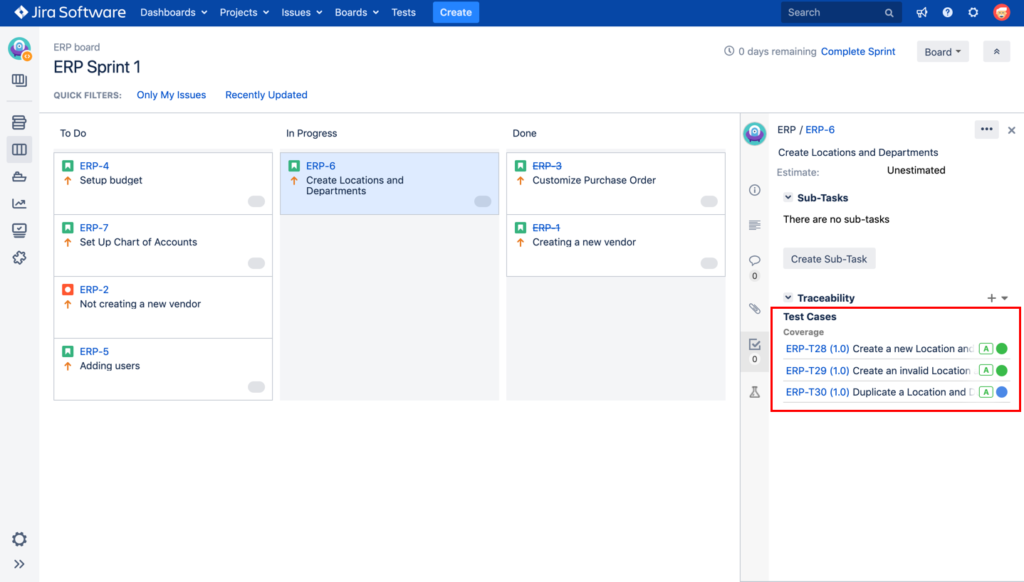
Agile teams using Jira to plan and track software development oftentimes struggle to manage acceptance tests since Jira doesn’t support them natively. Adaptavist’s Test Management for Jira (TM4J) is a full-featured test management app that seamlessly integrates with Jira and unlocks lightweight test case design right out of the box. TM4J sits on top of Jira and runs natively so testers and developers can work closely together to design and execute test cases directly from agile and kanban boards.

Jira software illustration

Light and Fast Strategy #2: Behaviour-Driven Development (BDD)

Behaviour-Driven Development (BDD) is another approach to lightweight test-case design for agile teams. BDD is a story-centric development concept, initially developed by Dan North, that builds upon the conversational and collaborative elements of the Three-C’s method.

BDD defines behaviours of a system through examples in plain text. Agile teams practicing BDD often run special meetings before or early on in a sprint in which developers, testers, and domain experts discuss the concrete behaviours of how the system should work. These concrete behaviors are called examples. The goal of the BDD approach is to solidify the shared understanding of the development efforts and to minimize the risk for rework at later stages.

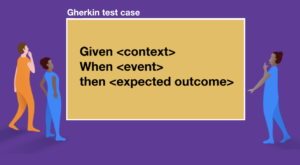
Graphic illustration of Gherkin test case

To clearly communicate desired behaviours for all involved parties, test case descriptions (or examples) should contain realistic data, not abstract jargon. The approach aims to avoid misunderstandings and waste while simultaneously giving non-technical users an opportunity to express thoughts and ideas in the shared common language.

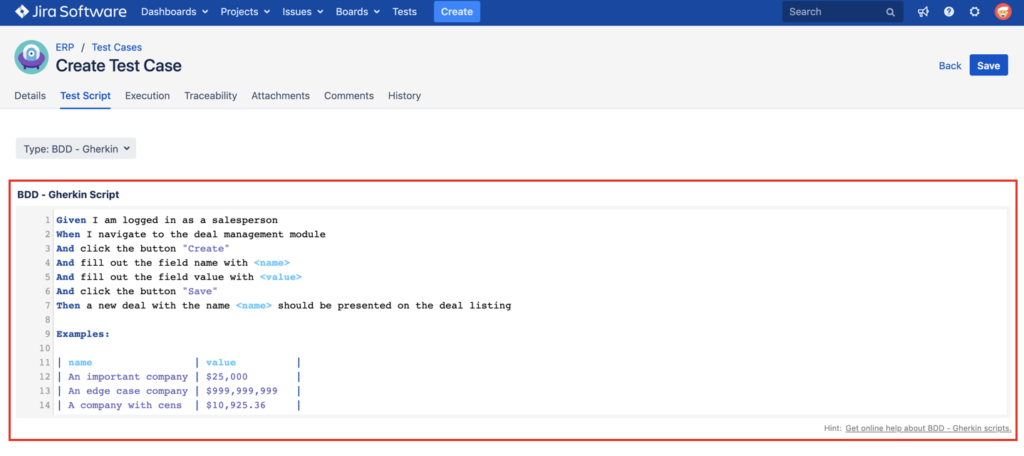
A plain-text structured language called Gherkin is often used to design BDD test cases. It is incredibly basic but has just enough structure to make it useful for developers. Gherkin’s format has Given, When, Then, And, and But elements to illustrate behaviours of the system or functionalities with example data, including pre/post-conditions. It simultaneously specifies user stories while identifying acceptance tests, thereby streamlining requirement discovery and test case design.

Adaptavist’s Test Management for Jira (TM4J) supports BDD with Cucumber and a host of other Gherkin-compatible tools used to write acceptance tests. TM4J helps teams build a shared understanding around acceptance tests within Jira.

Jira software graphic illustration of a test case gherkin script

When concisely written, these tests help development teams avoid ambiguity and rework, ensure all scenarios are accounted for, and help establish that all user stories are complete. If you’re interested in learning more about the topic, check our our guide to BDD in Jira here.

Closing thoughts

100% of successful agile teams eventually learn this important lesson: testing is not a separate stage of development, but an integral part of the software development lifecycle.

With new code being pushed daily (or even hourly!), the changes that teams need to test are constantly moving targets. Designing lightweight test cases allow testers to respond faster to changed requirements and streamlines the entire testing process. Test cases that are easy to understand aids clear team communication and ensures that the delivered software is exactly what the end-user expects and needs. Improved communication between developers, testers, and domain experts simplifies the development process, meaning less bureaucracy, more time to code, and faster delivery.

Want to learn more about agile testing inside Jira? Come chat with us at booth #11 at the EuroSTAR Testing Expo.

– – – – – – – – – – – – – – — – – – – – – – – – – – – – – – – – — – – – – – — – – – – – – – – – –

Author: Cristiano Caetano

Adaptavist product manager Cristiano Caetano

Cristiano is a Product Manager lead at Adaptavist, one of Atlassian’s leading global Platinum Solution Partners.

He is interestested in all things agile, digital transformation, and helping companies build better software. He shares his thoughts on these topics and more on the Adaptavist blog.

Filed Under: Agile Tagged With: agile, agile testing

  • Code of Conduct
  • Privacy Policy
  • T&C
  • Media Partners
  • Contact Us

part of the