• Skip to main content
EuroSTAR 2027 - Sign up for early access

EuroSTAR Conference

Europe's Largest Software Testing Conference.

  • Programme
    • Call for Speakers
    • 2026 Programme
    • Community Hub
    • Awards
  • Attend
    • Why Attend
    • Bring your Team
    • Testimonials
  • Sponsor
    • Sponsor Opportunities
    • Sponsor Testimonials
  • About
    • About Us
    • Our Timeline
    • FAQ
    • Blog
    • Organisations
    • Contact Us
  • Book Now

Application Testing

How accessibility testing tools use AI to ship quality products faster

May 19, 2025 by Aishling Warde

Accessibility testing is essential for compliance with regulations such as the European Accessibility Act (EAA). The EAA becomes a national law in all 27 EU Member States on June 28, 2025, and businesses need to be prepared. While failure to meet this deadline can result in severe penalties, achieving compliance is ultimately about much more than just avoiding fines. It’s about expanding your market share, enhancing your brand reputation, and building high quality products for everyone, including people with disabilities.

This is why testing is so essential. By putting an effective and efficient testing approach in place, you can quickly identify and fix accessibility issues early and ensure you’re building the highest quality products for all people. The question is, how do you integrate comprehensive accessibility testing while maintaining velocity and keeping costs down?

It’s a challenging question. Fortunately, there’s a clear answer.

In this post, we’ll explore an approach called “shift left“, which refers to addressing accessibility issues earlier in the software development lifecycle—during development and QA—as opposed to later in production or after a product has been released, at which point the work becomes slower, costlier, and the risk of customers having a poor experience goes up exponentially. We’ll also examine how AI and automation can accelerate velocity while elevating quality.

The benefits of automated and AI-guided testing

Getting and staying compliant in a strategic and cost-effective way means prioritizing efficiency. It’s about doing the work early and accurately, avoiding re-work, and getting high-quality products out the door faster.

This is where advanced automation can have an outsize impact. By using automated and AI-guided testing, dev and QA teams can find and fix over 80% of conformance issues—without needing special accessibility knowledge!

The efficiency gains are immediate. Your teams can find more issues more quickly and address them earlier, saving both time and money, freeing them up to focus on more complex concerns, and consistently delivering the highest quality products.

Human-centric AI and automation in digital accessibility

As valuable and effective as AI and automated testing can be, human insight and expertise are still required. Automation doesn’t remove humans from the work; it enables humans to do their best work. And rather than replacing accessibility expertise, AI amplifies and scales it.

By leveraging what AI makes possible, we can empower dev and QA teams to accelerate velocity while maintaining quality. Recent updates from Deque, for example, introduce AI-driven capabilities that address the toughest accessibility challenges—increasing test coverage, reducing manual work, and making accessibility testing faster and easier than ever.

Saving time with tools for every part of the software development lifecycle

A comprehensive suite of accessibility testing tools that brings together automated testing and AI-guided testing can help your development and QA teams shift left and identify and fix accessibility issues early, with the highest levels of efficiency, and without the high false positive rates that hamper other solutions.

False positives—testing results that inaccurately flag issues that aren’t actually issues—waste your team’s time, and it’s why Deque is committed to zero false positives—because efficiency and accuracy matter.

It’s why our customers choose Deque and why developers and QA professionals prefer our tools. Because we help businesses become and stay accessible in the fastest and most cost-effective ways possible while delivering high-quality products and services for everyone. When it comes to digital accessibility, the proactive approach is the right approach.

Want to learn more? If you’re at EuroSTAR 2025, come see us about a free demo at Stand 34! You can also visit our website to request a free trial.

Author

Derrin Evers

Derrin Evers is a Senior Solution Consultant at Deque Europe. Derrin’s background and experience spans from design to development, small agencies to large enterprises, and public sector to private business from North America to Europe. With the professional goal to promote positive change within software development through digital accessibility, Derrin helps Deque customers discover, plan, and realize their potential through strategic and technical support across the software development lifecycle.

Deque were exhibitors In EuroSTAR 2025. Join us at EuroSTAR Conference in Oslo 15-18 June 2026.
Filed Under: Application Testing Tagged With: Test Automation

Data Testing VS Application Testing

March 12, 2024 by Lauren Payne

Introduction

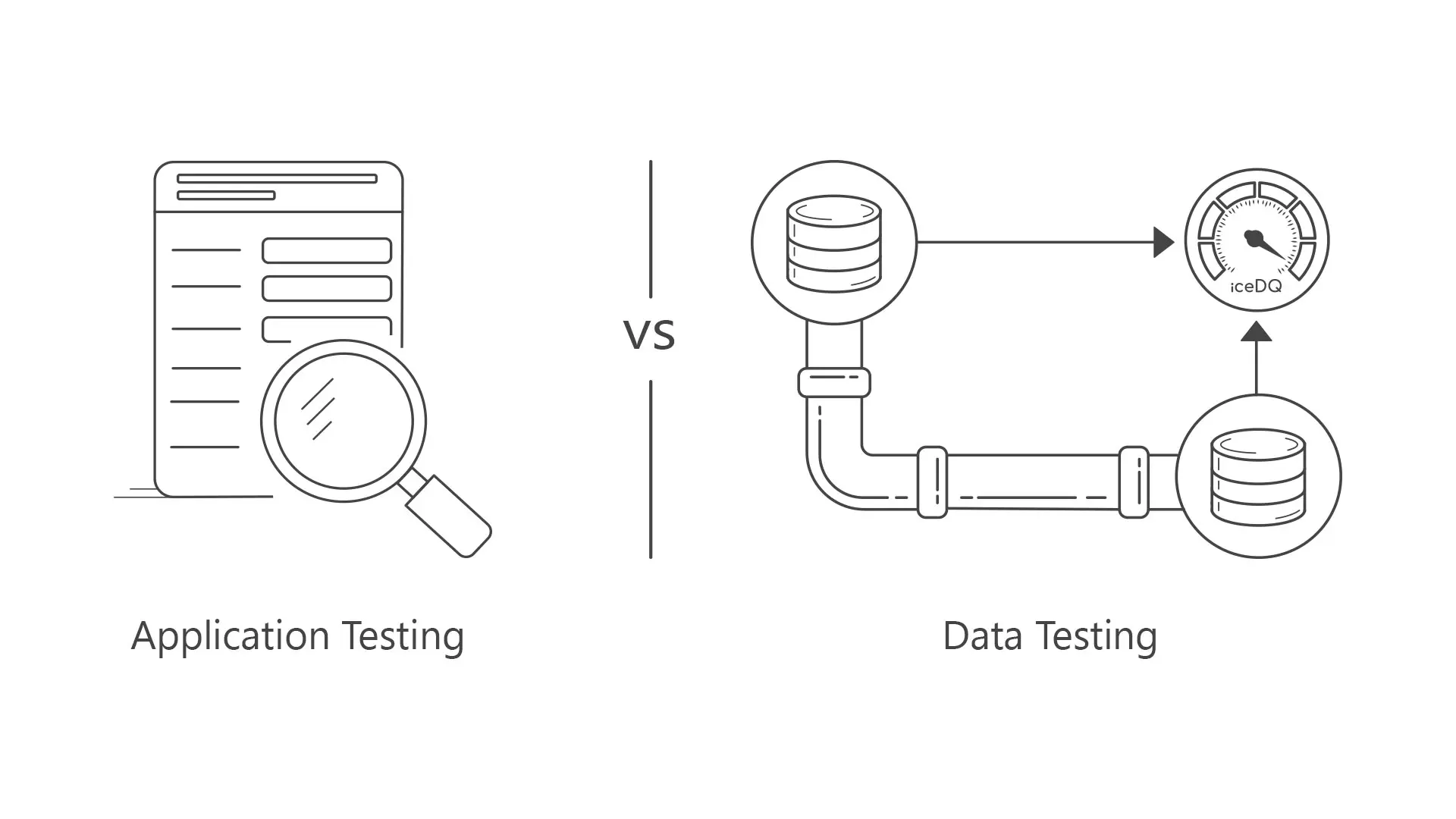
This blog will explore the critical distinctions between application testing vs data testing, common mistakes with data testing, and reveal the consequences of neglecting it.  

Testing is a critical step for any software development project. Web applications, or mobile apps are tested to ensure proper functionality of the UI. But what about data-centric projects such as data warehouses, ETL, data migration, and big data lakes? Such systems involve massive amounts of data, have long running processes, and unlike applications, they lack screens. In such projects how does testing work? 

Data Testing vs Application Testing 

At a high-level data testing and application testing both share a common goal of ensuring functionality of a system, however on a closer look, it reveals that they have very distinct focuses and methodologies. Here is a quick list of differences for your reference. 

Project Types:  

  • Application testing spans a wide spectrum of web apps and mobile apps.  
  • On the other hand, data testing zeroes in on projects like data migration, Data pipelines, data warehouses. 

Testing Objective and Focus: 

  • Application Testing addresses everything from user interface intricacies to scripting, APIs, functions, and code integrity.  
  • For data testing, the emphasis is on ETL/data processes, process orchestration, and unique attention to data integrity sets it apart as a specialized discipline.  

Data Volume: 

  • Application Testing spans various dimensions, one of them being data. But in the scope of application testing data involvement is extremely limited to a few records created by a transaction. 
  • Data testing however, puts a spotlight on the critical nuances of data. The contrast is stark: compared to application testing, data testing involves millions and billions of records. 

Certification: 

  • In application testing the certification focus is on code integrity. 
  • Data testing is essentially designed to certify data integrity. 

Expected vs. Actual: 

  • Application testing compares the actual behavior of user interfaces and scripts vs expected. 
  • Data testing navigates the complex terrain of data integrity, migration accuracy, and the nuances of big data. 

Performance Testing: 

  • In application testing the focus is on the speed at which the UI or the underlying functions respond to a request. It is in the realms of microseconds. On the other hand, performance testing for Data is in minutes and hours. 
  • For data testing the performance is usually calculated by rows processed per second. It is usually computed in the time required to read data, transport data, process data and load data in a target database. The loading time is further calculated in terms of update, insert, and delete speed. 

Employee Skillsets: 

  • Both processes demand a skill set that combines technical acumen and a deep understanding of the tools at play. Application Testing requires proficiency in user interface testing, scripting, and tools like Selenium/JMeter. Application testing requires understanding screen behavior, and utilizing tools tailored to the unique challenges presented by data. 
  • In contrast, data testing necessitates expertise in handling data sources and target data, SQL, Data Models, and Reference data. Proficiency in scripting and code-level understanding is essential for application testing, while data testing demands a command over SQL for effective data manipulation and validation. 

Testing Tools: 

  • Application testing often employs tools like Selenium and JMeter. 
  • Data testing leverages specialized tools like iceDQ for comprehensive data quality assurance. 

Top Data Testing Mistakes

At the heart of the issue lies a fundamental misunderstanding – the perception that application testing and data testing can be treated interchangeably. 

  1. Ignore Data Testing: Organizations often neglect data testing. A QA professional with an application background does not understand data testing, while the data engineers are not classically trained in testing.  
  1. Lack of Dedicated Data Testing Team: The lack of a dedicated team will result in knowledge gaps. Dedicated teams is essential to properly train and acquire proficiency.  
  1. Application Testers for Data Testing: Just because someone is skilled in application testing does not mean that the person will have the know-how of data testing.
  1.  Manual Data Testing: Automation has become the mantra for efficiency in software testing, but this mantra is often focused more on application testing. Automated UI tests and functional checks take centre stage, leaving data testing to be more of a manual process. The absence of automation in data testing not only hampers efficiency but also introduces the risk of human error. 
  1. Data Sampling: In the absence of automation, organizations resort to manual data testing, a daunting task when faced with millions of records. Manual testing becomes a mammoth task to undertake, prone to errors, inconsistencies, and a significant drain on resources. The sheer volume of data makes it humanly impossible to ensure comprehensive testing, forcing the testing team to resort to testing sample data rather than the entire dataset. 
  1. Misuse of application testing tools for data testing: While tools like Selenium and JMeter excel in UI and functionality checks, testing data pipelines demands specialized tools. The mismatch not only results in inefficiencies but also fails to address the unique challenges posed by data-centric projects. 
  1. Low /No Budget for Data Testing: Organizations, in pursuit of flawless user experiences, often channel a significant portion of resources towards application testing tools and frameworks.  Meanwhile, data testing, which operates in the complex terrains of data migration testing, ETL testing, data warehouse testing, database migration testing and BI report testing is left with a fraction of the QA budget. 
  1. In-house Scripts or Frameworks: Some organizations realize the distinct nature of data testing and attempt to build in-house frameworks. However, this approach often has more disadvantages than advantages. In-house frameworks, while tailored to specific needs, may lack the scalability required for projects dealing with millions of records and complex data structures. The inefficiencies in this approach become apparent with the growth in data volumes and complexity.  

Consequences of Ignoring Data Testing 

  1. Cost and Time overruns 
  1. Complete failure of projects 
  1. Data Quality issues in Production 
  1. Compliance and regulatory risks 
  1. Reputation Risks 

Conclusion

To summarize the difference, while Application Testing and data testing share the overarching goal of ensuring the robustness of a system, they operate in distinct realms. Application Testing spans the broader landscape of application functionality, whereas data testing homes in on the intricate dance of data within the system. Understanding and appreciating these differences is crucial for organizations aiming to fortify their digital transformation.  

Recognizing the critical distinctions between application testing and data testing is the first step towards comprehensive Quality Assurance. Organizations must recalibrate their approach, acknowledging the unique requirements of data testing and allocating resources, budgets, and automation efforts accordingly.  

Embracing specialized tools like iceDQ which is a low code-no code solution for testing your data-centric projects is key to building software that stands the test of both user experiences and data integrity. 

For more details please visit our blog: https://bit.ly/3SWpgYs 

Author

Sandesh Gawande is the CTO at iCEDQ (Torana Inc.) and a serial entrepreneur.

Since 1996, Sandesh has been designing products and doing data engineering. He has developed and trademarked a framework for data integration – ETL Interface Architecture®. He consulted various Insurance, Banking, and Healthcare. He realized, while companies were investing millions of dollars in their data projects, they were not testing their data pipelines. This caused project delays, huge labor costs, and expensive production fixes. Herein lies the genesis of the iCEDQ platform.

iCEDQ is an EXPO Gold Sponsor at EuroSTAR 2024, join us in Stockholm


Filed Under: Application Testing, EuroSTAR Expo, Gold Tagged With: 2024, EuroSTAR Conference, Expo

Smarter Testing. Superior Outcomes. Achieve Both With Micro Focus.

October 25, 2019 by Fiona Nic Dhonnacha

EuroSTAR is Europe’s No.1 software testing conference. Whether your thing is testing, devOps, agile or QA, you’ll be among Europe’s testing stars. The Micro Focus team looks at what delegates can expect.

This year’s conference theme is ‘working well’, and we will be busy at booth 6 proving how our Application Delivery Management solutions can transform your testing environment. We’re bringing our a-Game – and some of our best solutions – to the show.

Visit us at booth 6

See how to minimize risk and maximize user satisfaction by testing early and often with our industry-leading, integrated portfolio for continuous and comprehensive testing of web, mobile, and enterprise applications. The results – smarter testing.

From development through to production, you and your teams will have the benefit of specific, actionable feedback on your applications’ security, functionality, performance, and application readiness status. Ask for a demo in booth 6 and leave the conference with a plan to deliver smarter testing and superior outcomes!

Check out the best in:

  • Micro Focus Functional Testing
  • Micro Focus Performance Testing
  • Micro Focus ALM Octane

Intelligent test automation

Our Functional Testing solutions deliver AI-driven test automation across an unparalleled range of technologies; on the most popular browsers, mobile devices, operating systems, and form-factors; from the cloud or on-premises; to deliver the speed and resiliency required to support rapid application changes within a continuous delivery pipeline.


Optimized application performance

Do you need to test applications and complex scenarios on-premises or in the cloud? Stop by and see how to achieve superb quality at scale. Performance Testing must be part of your DevOps pipeline AND your definition of “Done.”  We help customers confidently test the complex load, stress, and performance scenarios that their applications require while simultaneously providing comprehensive analytics for root cause analysis and accelerated identification of performance issues. Test any application type and protocol on-premises or in the cloud while incorporating real or simulated services and networks.

ALM Octane

Enterprise Agile and DevOps software development faces many challenges and organizations want to improve application delivery processes across the entire application life-cycle. The powerful capabilities in ALM Octane include:

  • Delivering at enterprise scale and optimizing application delivery
  • Providing full application visibility and traceability
  • Increasing application quality
  • Reducing integration costs and achieve better value flow
  • Achieving DevOps management, scalability, automation and intelligence

Stop by and be in with a chance to win

We’re also participating in the “passport around the expo” and the “Expo-Prize giving”, so when you are not hearing from peers in the sessions, be sure to stop by for your chance to win some Lego! Haven’t got your EuroSTAR ticket yet? For a limited time you can use code MICES19 at checkout for a 10% discount.

——————————————————————————————–

Author: Gil Cattelain, Product Marketing Manager, Micro Focus

Micro Focus product marketing manager

Gil has 20+ years of experience in software marketing, including recent time at Echopass and Genesys as Director of Digital Marketing where he specialized in digital marketing for the cloud-based contact center market.

His expertise also includes director of corporate marketing at Matrix42 and product marketing at Novell. He has also held positions as international public relations manager and channel marketing manager.

Gil holds a B.A. in political science from Brigham Young University and is fluent in French.


Filed Under: Application Testing, Test Automation Tagged With: applicat, software testing tools

API Testing Solves the Confirmation Bias in UI and Web/Mobile Testing

October 14, 2019 by Fiona Nic Dhonnacha

Watching the World Burn: API Testing as an Afterthought

The annual cost of software defects has risen to over $1 trillion, even while enterprises and government organizations devote large chunks of their IT budgets to QA and testing. In “Watching the World Burn: API testing as an Afterthought,” API Fortress explores why so many teams have releases with defects (bugs) that cannot be diagnosed until it’s too late.


New Rules for Quality

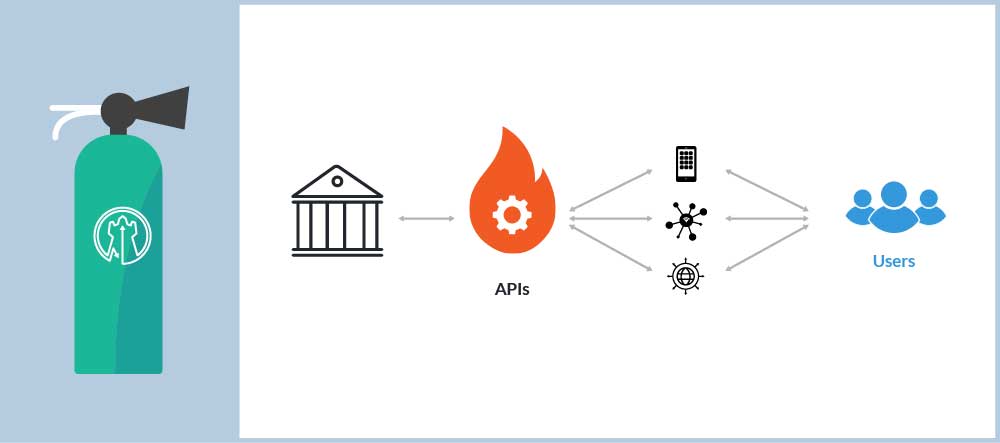
Our CEO, Patrick Poulin, tackles the dilemma of how defects are released despite strong QA efforts. Digital transformation, microservices, composite apps and public API initiatives such as open banking and open payments have triggered a paradigm shift in software quality and testing automation. Traditional unit testing and web/mobile testing often leave QA gaps that only API testing can close. See real world examples in our eBook: Nine Bugs That UI Testing Could Not Diagnose.

Confirmation Bias: The Persistence of Human Error in QA and Testing

Renowned theoretical physicist Richard Feynman once posited that humans ask questions that tend to derive answers based on who we are and what we want to know. Today, this tendency is known as “confirmation bias.” QA and software testing teams are not immune to this bias, which leads to gaps in testing strategies.

API Testing graphic representation

Is Confirmation Bias Inherent in UI and Web/Mobile Testing?

In Nine Bugs That UI Testing Could Not Diagnose, Feynman’s confirmation bias surfaces in nine stories of UI and web/mobile testing failing to find and diagnose errors, resulting in software bugs that cost time, money, and reputation.

One of the stories, for example, involves a company that runs a self-service online marketplace. The bug was the result of a problem that plagues all large companies – different teams not being on the same page. One team plans and builds an API, another team builds the web page to sell products, and a third team runs homepage navigation.

None of the siloed teams made an obvious mistake. Further, no bugs were discovered during the QA and testing process. Prone to the Feynman bias, UI and web/mobile testing simply validated what each siloed team needed to validate. However, the bug was due to a constellation of human errors that only proper API testing could discover.

API Testing Solves the Feynman Bias

Many Testing Centers of Excellence (TCoE) have long understood the need to remedy the Feynman bias (inadvertent human error due, in part, to siloed workflows) by supplementing UI and web/mobile testing with API testing. API testing digs beneath the UI layer where it can holistically extend testing coverage across the entire “constellation” of functionality built by different teams. In this way, API testing can diagnose bugs caused by many different moving parts that may be working out of alignment.

We invite you to sign up for a free trial and demo of API Fortress and put your testing to the test.

——————————————————————————————–

Author: Patrick Poulin

Patrick, CEO of API Fortress


Patrick started his tech career on mobile, and soon was managing the retail vertical for a company building the first mobile websites for over 75 major brands such as Tesco, Target, Macys, and MAC Cosmetics.

After a (thankfully) short stint in adtech, he became the API Evangelist for Getty Images. This is where he first recognized the lack of good API tools. That experience is what led to the creation of API Fortress with his co-founder.

Filed Under: Application Testing

  • Code of Conduct
  • Privacy Policy
  • T&C
  • Media Partners
  • Contact Us

part of the