• Skip to main content
Year End Offer: Save 30% + Teams Save Up to an Extra 25%!

EuroSTAR Conference

Europe's Largest Quality Engineering Conference

  • Programme
    • Programme Committee
    • 2025 Programme
    • 2025 Speakers
    • Community Hub
    • Awards
    • Social Events
    • Volunteer
  • Attend
    • Location
    • Highlights
    • Get Approval
    • Why Attend
    • Bring your Team
    • Testimonials
    • 2025 Photos
  • Sponsor
    • Sponsor Opportunities
    • Sponsor Testimonials
  • About
    • About Us
    • Our Timeline
    • FAQ
    • Blog
    • Organisations
    • Contact Us
  • Book Now

Uncategorized

Lowering testing barriers with computer vision-based AI

May 12, 2022 by Fiona Nic Dhonnacha

Thanks to Micro Focus for providing us with this blog post:

The constant surge in digital transformation forces organizations to perform tests on an increasing number of platforms – but still get results as quickly as possible. Manual testing just can’t keep up with the speed of business, so teams turn to test automation. But traditional software testing tools are only effective to a point. Generally, these tools rely on identifying objects on the screen through their internal representation—e.g. coordinates, class name, type, and many other. This method of identifying objects can be very fragile. Even a small change might result in the tool failing to find the object. The drawbacks of these techniques prevent teams from scaling their test automation efforts up to the levels they require.

To that end, the most common test automation challenges include:

  • Relentless test maintenance —tests that rely on unique object properties can be susceptible to breaks, thereby making testers perform regular updates to ensure their tests still run on each supported environment.
  • Test execution time is too long — even if a test set runs without interruption, it can take a significant amount of time to run all the tests to completion.
  • Insufficient test coverage — teams must support an ever-expanding range of platforms, devices, and operating systems, requiring testers to customize the tests for each environment.
  • Test creation fatigue — it takes time to build and design effective tests, with much effort required to uniquely identify on-screen objects that are part of the test.

What our research at Micro Focus revealed was that automated object detection with computer vision is key to lowering these barriers.

Computer vision-based AI for automated object detection

Recognizing objects without knowledge of their internal representation was one key objective when we developed our AI engine. This goal was accomplished by combining AI-based algorithms that accurately and consistently recognize objects regardless of device or environment.

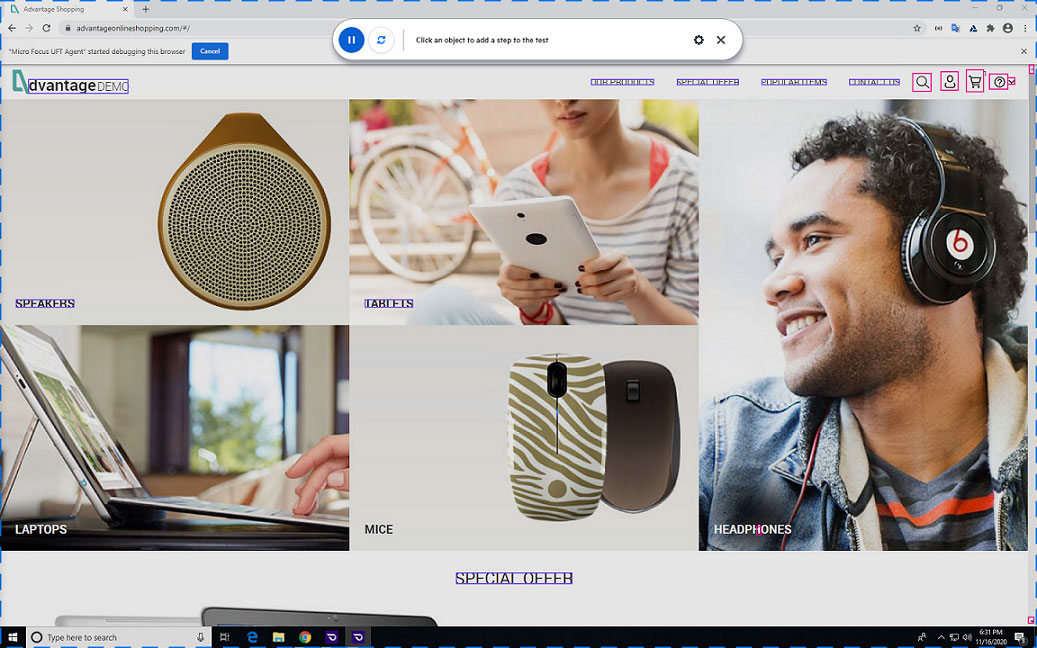
For example, a test step might require clicking the shopping cart icon on a mobile app. The AI engine should be able to locate the shopping cart icon on the current screen without knowing:

  • If the screen is on a mobile device.
  • Whether the device is running Android or iOS.
  • If the screen is a desktop browser.
  • Whether it’s Chrome, Firefox, Edge, or another browser.

The ability to “Click the shopping cart” step should work under any circumstance with an AI engine. At Micro Focus, we have successfully implemented this in the Micro Focus UFT Family of software test automation products, and the AI techniques used in the engine include computer vision through an artificial neural network and optical character recognition.

Defining computer vision

An AI engine understands a screen’s composition and breaks it down into the unique objects that it contains. Additionally, the AI engine knows nothing about the implementation of the object. It treats the object as an image, regardless of the device or platform it comes from. As such, a powerful CV tool is needed and should be supported by an artificial neural network (ANN), a layered structure of algorithms that classify objects. It will train the ANN with many visual objects, resulting in a model that identifies objects it will likely encounter in applications under test (AUT). Thus, when the AI engine is tasked with locating a specific object, it utilizes the model to identify a match in the AUT

In terms of architecture, we implemented the AI engine as a separate module. Rather than restricting it to a specific product, any of our testing products can theoretically use the engine. Our first product that integrated with the AI engine was Micro Focus UFT One, our flagship test automation tool.

Defining OCR-based identification

Our AI engine also leverages OCR to identify text-based objects. These objects may themselves be part of the test, or they could function as a hint to identify the object’s relative location. This capability is useful if an object appears multiple times on a screen. For example, a login screen might have two text boxes, one for the username and one for the password. OCR helps identify which of the edit boxes is which. OCR can also identify a button by its textual caption.

Maturity of test automation based on computer vision

When we rolled out our new computer vision-based testing capabilities, we worked closely with our early adopter customers. We wanted to learn how they were using the technology and to ensure that clients were receiving the greatest value from it. This collaboration helped us discover new use cases and increase the technology’s reach and coverage.

As with any nascent technology, customers reported multiple edge-case scenarios that helped us improve our implementation and refine our model. Over time, we resolved more scenarios and grew the data set we use to train our model. Our algorithms became more capable and reliable. Due to these improvements, these customers now position AI as the preferred test automation mechanism when possible.

Lowering and removing test automation barriers

AI-based test automation reduces the time it takes to build and design tests because objects are identified simply by looking at them. AI algorithms lower skill barriers because they identify most objects and are hidden from the user. Teams can also use the same test without modification on different devices and platforms. They simply procure an appropriate device and run the test on it as-is. And because the algorithm doesn’t rely on an object’s underlying implementation and properties, the test keeps running even if there is a change. If the test’s flow stays the same, the test will continue to run.

The final barrier yet to be removed completely is test execution time. Tests will always take a finite time to run; hence there is a lower limit on the amount of time they take. However, AI-based testing helps teams test earlier and provides robust mechanisms that parallelize and optimize test execution, reducing the wait time for results.

Micro Focus is a Gold Partner at EuroSTAR 2022. It’s our first in-person event in 2 years – and it’s going to be a massive celebration of testing! Learn from 70 testing experts, and connect with your peers at Europe’s best testing event. Get your ticket now.

Filed Under: Uncategorized

EuroSTAR at Night events

May 11, 2022 by Fiona Nic Dhonnacha

EuroSTAR 2022 is taking place in the heart of Copenhagen – a buzzing, contemporary city packed with a rich history, colourful architecture, and lots of things to see and do.

We’re so thrilled to be celebrating 30 years of the EuroSTAR community with the amazing people who have helped shape EuroSTAR into what it is – a community of inspiration, leadership, innovation, and friendship. This is THE largest gathering of software testers in Europe!

It’s going to be an action packed 4 days of learning and networking – and once the talks are over we’ve got lots to do with EuroSTAR at Night networking events. Reconnect at EXPO Community Party, make new friends and lifelong memories at the Gala Awards Night, and lots more.

get conference tickets

EXPO Community Networking Party

Weds 8th June 2022

The EXPO community networking party is an opportunity to get together for an evening of conversation and connections over drinks, followed by a light dinner, and then it’s on to lots of games and prizes! The EXPO Party is sponsored by Keysight Technologies, and it will begin immediately after the last talk of the day. This event is an add-on for attendees, so if you haven’t booked your ticket yet, do it now.

EuroSTAR at Night events - EXPO community networking party

Gala Awards Night

Thurs 9th June 2022

Every year, at the EuroSTAR Awards, we shine a spotlight on the people who have made the biggest contribution to testing. The winners are decided by the community, and this year’s awards include Best Paper, Best Tutorial, the RisingSTAR Award, and the prestigious EuroSTAR Testing Excellence Award. See more about the awards.

EuroSTAR at Night Events - Gala Awards Night

This year the Gala Awards takes places at Wallman’s, with a massive celebration encompassing a show, dinner, and then onto the awards! Enjoy an amazing range of musical interpretations of legendary artists, a heart stopping acrobatics show, followed by a rock finale that kicks off the party on the dance floor. Book your EuroSTAR ticket now to make sure you don’t miss out.

There’s plenty of other networking opportunities outside of the EuroSTAR at Night events. Between the daily networking events, community Huddle area, packed EXPO hall, and bumping into people in between conference sessions, we facilitate exceptional networking opportunities: so you can focus on meeting the people who will help you most. You’ll leave EuroSTAR feeling inspired, with valuable, new connections and a strong network of testers you can call on after the conference.

get tickets

Filed Under: Uncategorized

Why did we build HyperExecute?

May 5, 2022 by Fiona Nic Dhonnacha

Thanks to Mayank Bhola, co-founder and head of product at Lambdatest, for providing this blog post:

Innovation distinguishes between a leader and a follower.“

steve jobs

Testing isn’t an easy job.

Trust us, we know.

Given today’s rapid pace of innovation, it is what distinguishes the best companies from the rest of the pack. Any brand today must offer the best customer experience across all possible types of devices, versions and browsers, and more importantly, at record speeds.

Sadly, testing infrastructure is still lagging behind. There hasn’t really been any noteworthy innovation that has been optimized for speed. Our company has built a cloud-based test execution infrastructure, and one of the constant asks from our customers has been that cloud infrastructure isn’t as fast as a local setup. But, on the other hand, local setups don’t have the features that can be offered on cloud. We knew there had to be an answer to this rather glaring problem.

We thought long and hard about it. We began working on a germ of an idea almost six months ago and after a lot of building, re-building and of course, a lot of back and forth discussions, we finally launched HyperExecute.

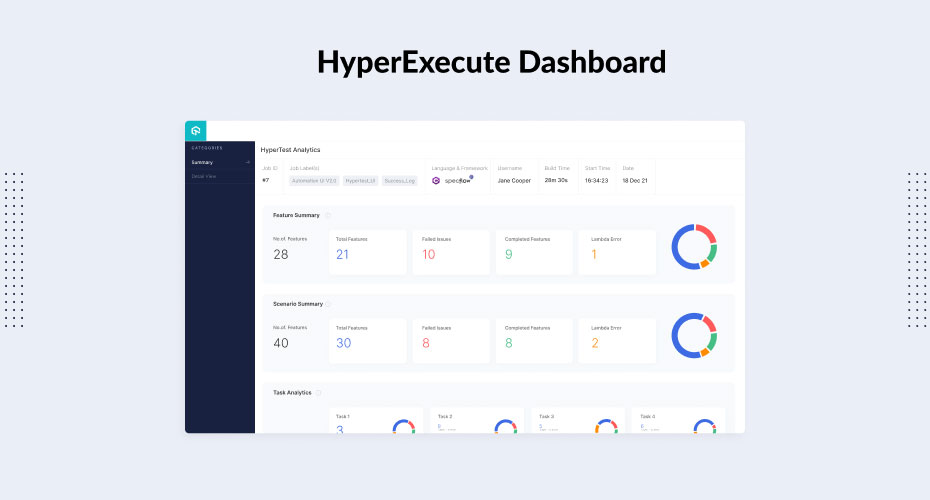
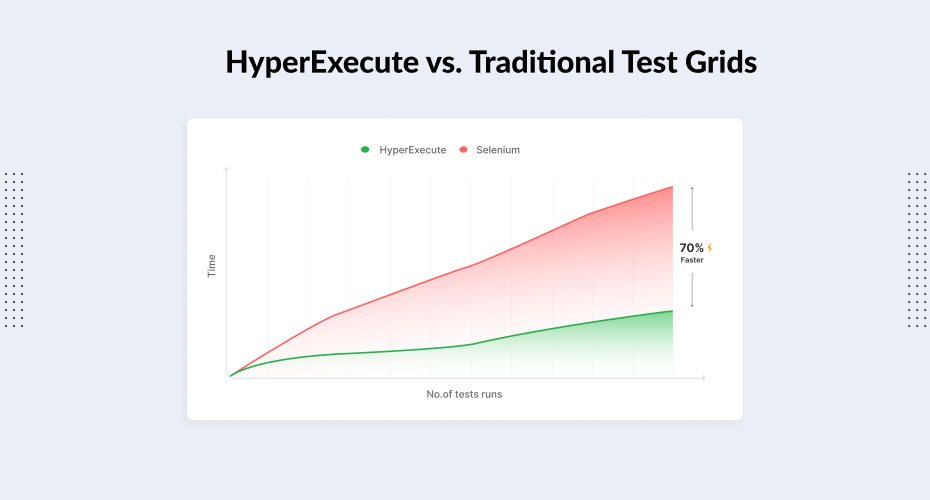
HyperExecute is a next-gen smart testing platform to help businesses run end-to-end Selenium tests at the fastest speed possible.

Why HyperExecute?

We had a few thoughts that formed the base on which HyperExecute was conceptualized. They were:

Achieve parity between sophisticated tooling available to developers and testers
Lack of an integrated testing environment
Customers had to compromise on speed when they moved to the cloud and this was not fair.
The goal was to let the users focus on writing test cases and leave the rest to us. Our motto for HyperExecute was—you write tests and let us do the rest. It sounds a bit too simple, but that’s the ultimate aim of the product—make testing really that easy and fast.

In short, HyperExecute brings together the speed of a local setup and the best features of the cloud — speed + best-in-class intelligence + zero maintenance + Autoscaling.

HyperExecute drastically cuts the feedback time for developers by executing tests at hyper speed. The tooling does the heavy lifting instead of testers modifying their code every time.

Wait, so how do we really achieve this?

Taking a step back, existing automation testing platforms are inherently slow because of lots of network hops that happen during each test. In the traditional approach, triggered test scenarios are first sent to the Selenium hub, which in turn are scheduled to run on the best-suited Selenium node. This results in unnecessary latency as many network components are involved in the entire process. Also, multiple network hops with separated components result in increased test flakiness, a factor that is a big hindrance to time to market.

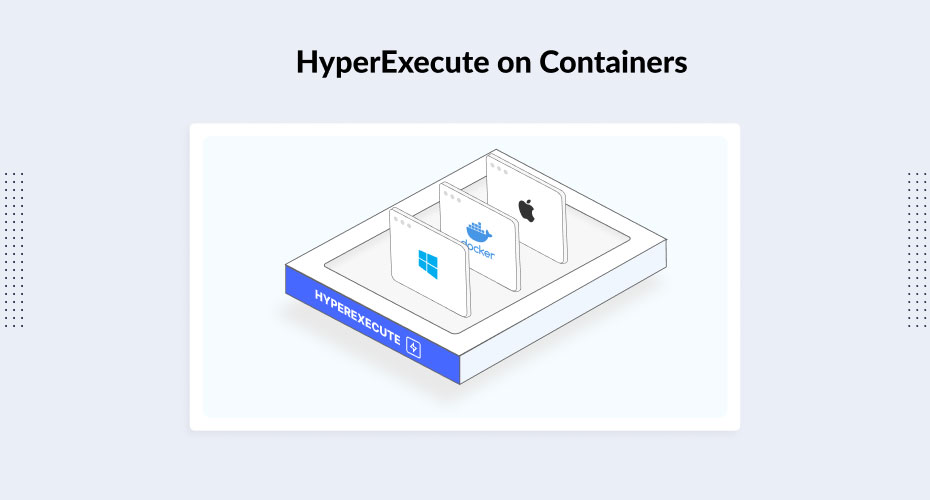
HyperExecute unifies all the components into a single execution environment that eliminates these network hops and cuts down on test execution times. This enables businesses to test code and fix issues at a much faster pace and hence achieve an accelerated time to market.

Why are we bullish on HyperExecute?

ITE. That’s why!

Integrated Testing Environment.

HyperExecute provides CI/CD-type native features for testing as well. When there can be an Integrated Development Environment, there certainly must be an Integrated Testing Environment.

It basically means that all the operations that are required to conduct a test should be available at a single place and most of them must be automated.

Let me give you an example of what HyperExecute can do. Let’s say a tester ran 10 tests yesterday and the eighth one failed. So, when this tester tries to run these tests again the next day, HyperExecute will intelligently reorder them. It will run the eighth test first because the tester wants the feedback on that one quickly. S/he isn’t waiting to see the passed tests, pass again. HyperExecute will move it to the top so that you can get the fastest feedback possible. Also, let’s say, if you have 1000 tests and want to run them on 10 virtual machines, we will intelligently group them according to their latest execution times so that the large test cases are distributed evenly.

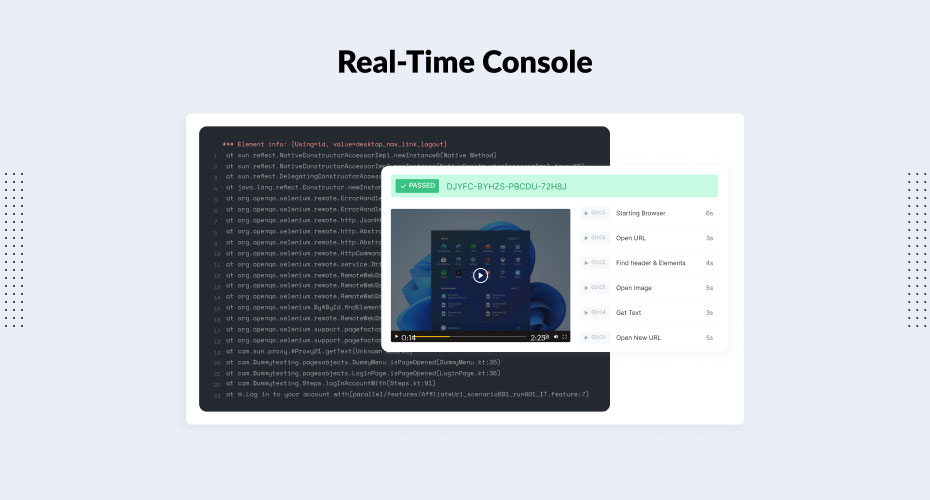
These are just a few examples of what’s possible with HyperExecute. When we were building it, our core product was ready quite early, but we knew that we had to give our customers something more than just the raw power. We packaged it with smart features like real-time console logs for test execution, intelligent grouping of tests to reduce total build time, artifacts management, automatic reporting, and automatic retries on failures.

We wanted to make HyperExecute the best choice for users so much that they’d never need hand holding and explanations, they should just use it and see value instantly.

What’s the path ahead?

We launched HyperExecute a few weeks ago and we are already seeing tremendous response for it. While it supports Selenium today, we want to bring in more frameworks in the days to come. We hope HyperExecute redefines test execution and gives digital brands a smart test orchestration platform that can truly match their speed of innovation!

Lambdatest is a Gold Partner at EuroSTAR 2022. It’s our first in-person event in 2 years – and it’s going to be a massive celebration of testing! Learn from 70 testing experts, and connect with your peers at Europe’s best testing event. Get your ticket now.

Author

Mayank Bhola, co-founder and head of product at Lambdatest

Mayank Bhola is the co-founder and head of product at LambdaTest. Bhola began his career as a software engineer at Zomato. He then moved to PressPlay TV and finally to Juggernaut Books, where he was the head of technology. Bhola joined as the lead architect at LambdaTest in 2018 and moved up the ranks to become a co-founder. He is responsible for the engineering & entire product development at LambdaTest. In his free time, Bhola loves to read non-fiction, discover new Italian food & learn something new.


Filed Under: Uncategorized

6 things you can do in the Huddle Community Area

May 5, 2022 by Fiona Nic Dhonnacha


The Huddle Community Area is located in the heart of the EuroSTAR EXPO hall – and it’s your space to take some time out of your busy conference schedule to relax, chat, and play games. It’s packed with activities and networking events, and run by the friendly Huddle team of volunteers. It’s all about connecting our diverse and international delegates, so the conversation is always flowing here – feel free to join in. You can check out the Huddle Community Area any time during the conference to take a break in between sessions, and make some new friends!

get conference tickets
6 things you can do in the Huddle Community Area - ask questions at the speaker couch sessions

Ask questions at the Speaker Couch Sessions

The learning isn’t just happening inside the sessions at EuroSTAR – we aim to foster knowledge sharing outside of the official talks as well. There’s plenty of opportunity to expand your knowledge in the Huddle Community area: don’t miss our 2022 Speaker Couch Sessions; where you can join some of your favourite speakers at the conference for a chat and coffee. This is your chance to learn and engage more with experts in a relaxed, informal setting.

Chat about testing topics at Huddle Lean Coffee

The Huddle Lean Coffee sessions are a firm favourite with attendees – there’s no set agenda, just get together and bring your favourite topic to the table for discussion. It’s a perfect mix of learning and collaborating with others. We also have the 1st time welcome for anyone who’s joining us for their very first EuroSTAR. Find out how to get the most out of your first conference with EuroSTAR veterans – they have lots of tips!

Share your voice

The community soapbox has always been a key part of EuroSTAR. We want to hear YOUR voice. Take to the Huddle SoapBox for a 3 min talk on a testing topic of your choice. Do you have an idea, a solution, or insights from your personal journey? Maybe you want to talk about diversity in testing, or invite your community to join you on a project – it is up to you! Pick something you are passionate about, and fill in the form here.

Solve problems at the Test Clinic

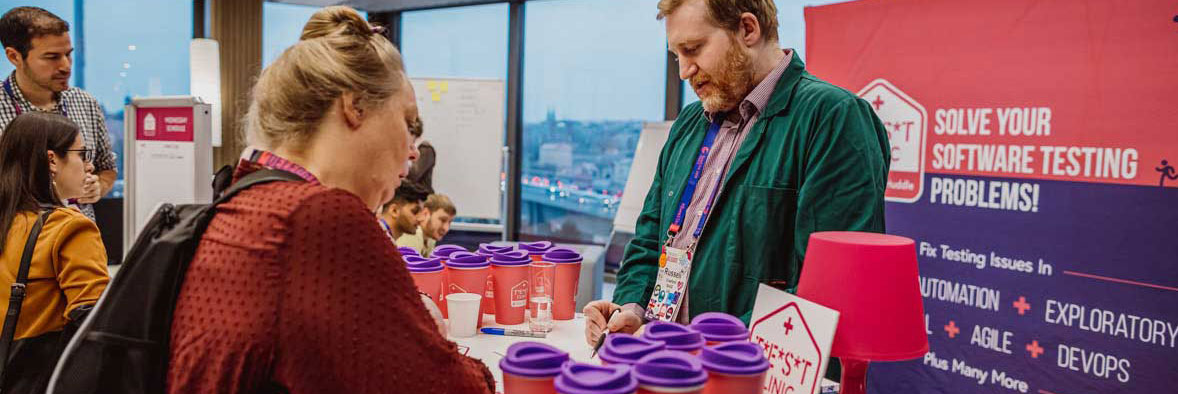
Solve your software testing problems with the help of onsite test experts. Tell us what you need help on, and our Test ‘Doctors’, who are industry experts with years of testing experience and knowledge, will offer coaching and guidance on ideas and solutions. The EuroSTAR experts will cover all areas of testing, and you can choose between open session or 1:1 consultations. Book your slot now.

Try hands-on testing at Test Lab

This is your opportunity to gain hands-on testing experience on ideas you’ve heard about at the conference. It’s run by testers for testers, and we’ve set up a range of environments and testable systems to help you practice what you’ve learned. It’s an open, friendly atmosphere to include you in conversation and discussion no matter what your level of experience. There will be plenty of testing challenges to get you started.

get conference tickets

Win prizes and play awesome games

Want to challenge your competitive side and win cool prizes? Of course you do! We have plenty of games in the Huddle Area, from puzzles to board games and lots more. We also have plenty of opportunities for you to win some amazing prizes and goodies.

So, now that you know about all the incredible activities you can take part in this year, there’s only thing left to do – get your conference ticket, and start deciding what you want to do in the Huddle Community Area.

Filed Under: Uncategorized

Digitalizing the future of testing

April 27, 2022 by Fiona Nic Dhonnacha

Thanks to Sophie Gustafson and Matt Holitza for sharing the below article on the UiPath Test Suite:

It’s been over 20 years, and not much has changed: testers continue to face the challenge of needing to test more technologies, both faster and more frequently. On top of this, testers must still mostly do their job manually because testing tools haven’t lived up to their promise – automations are fragile and require continuous maintenance.

Yet the modern digital business needs to deliver customer value continuously, rapidly, and with high quality, no matter if the value is delivered via an application, a process automation, or a mobile experience. So how do we revolutionize the state of testing to support and align with the demands of current businesses? It’s obvious – the future of testing is digital.

In less than two years, UiPath Test Suite has been named a leader in Cloud Testing by IDC. How did we make it to the top? We built upon a proven, production-grade automation technology, enabling us to completely disrupt the software testing market. Test Suite is the only testing solution that supports the next-generation ‘Digital Tester’ with production-grade, low-code automation and AI power tools to make testing more precise, efficient, and rewarding.

No matter the testing role, Test Suite helps empower all digital testers, liberate them from their legacy tools, and transform their QA processes.

Empower the digital tester

With its low-code IDE and enhanced capabilities like AI Computer Vision and native support for testing virtually any technology, including Citrix, SAP, mobile, and APIs, Test Suite enables anyone and everyone to automate their processes. Our platform offers the ability to synthetically generate test data for a more seamless test data management experience, as well as enforce test automation standards with rules and definitions.

Digitalizing the future of testing

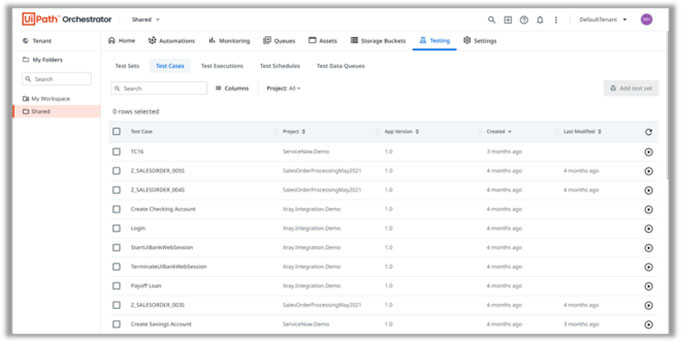
Using UiPath’s Orchestrator as a control center, testers can engage in production-grade continuous test execution through scheduled test sets and CI/CD integrations. And we’ve made automated testing even easier – testers can use our Test Discovery capabilities like Process Mining and Task Mining to target and prioritize specific tests based on actual production usage. Additional digital tools like Test Assistants and Task Capture also aid in eliminating time-intensive, mundane tasks.

Liberate from legacy

Digitalizing the future of testing

If you have existing testing tools or assets, we’ve got you covered – our open platform seamlessly connects into your DevOps toolchain.

With UiPath migration services, you can migrate test management artifacts, and, depending on your technology and other factors such as customizations, you may also have the option to gradually migrate your existing automation assets. You can also choose to have existing tools co-exist

Transform QA

You can say goodbye to tedious QA processes by leveraging our Enterprise Automation platform that allows for sharing and reuse across your cross-functional business. By expanding and scaling your automations, your testing components and objects will improve and become more resilient, transforming the QA process from a cost center to a value contributor.

UiPath is a Gold Partner at EuroSTAR 2022. It’s our first in-person event in 2 years – and it’s going to be a massive celebration of testing! Learn from 70 testing experts, and connect with your peers at Europe’s best testing event. Get your ticket now – book your individual ticket, or book a group and save up to 30%. See you in Copenhagen.

Authors

Sophie Gustafson, Content Strategist, UiPath Test Suite

Sophie Gustafson recently joined UiPath as a Content Strategist on the product marketing team for Test Suite. Sophie has previous experience working in the consulting and tech industries, specializing in content strategy, writing, and marketing.

Matt Holitza, Product Marketing Lead, UiPath Test Suite

Matt Holitza has worked at UiPath for two years and is currently the global Test Suite product marketing lead. Matt spent the first ten years of his career as a manager of a test automation team.

Filed Under: Uncategorized Tagged With: EuroSTAR Conference

10 things to do in Copenhagen

April 26, 2022 by Fiona Nic Dhonnacha

Join us for this year’s EuroSTAR Conference in stunning Copenhagen; a surprisingly compact, easy to navigate city, oozing Scandi cool from all corners. Bridges bustle with cyclists, colourful houses hug the harbours, and the city is abundant with cultural riches. Let’s dive in to 10 things to do while you’re here ☀️

Book ticket to EuroSTAR

1. Stroll through Tivoli Gardens

The iconic Tivoli Gardens is Copenhagen’s central theme park – and the second-oldest amusement park in the world. Visitors have been flocking here since the 19th century, and it’s inspired the likes of Hans Christian Andersen and Walt Disney, who both visited many times (Walt Disney found his inspiration for Disney World here). And it’s no wonder: Tivoli features exotic architecture, lush gardens and picnic lawns, a scenic lake; and the iconic Star Flyer to send you soaring through the skies. At night, thousands of twinkling lights illuminate that fairytale feeling.

2. Explore history at the Museum of Copenhagen

The Museum of Copenhagen sits right behind City Hall, and tells the story of the city through its artefacts, buildings, people, and culture. Explore your way around 800 years of the city’s history, from Viking tales, to plagues, bikes, fires, and the building boom – everything which has shaped Copenhagen into what it is today. You’ll get to grips with some incredible archaeological finds – including the skeleton of a warrior from the Middle Ages, and an early edition of a bicycle made of wood! Exhibits feature installations that bring history to life, including an interactive model that gives you an overview of the entire city.

3. Take in a show at Wallmans

The historic circus building, Cirkusbygningen, is home to Wallmans Dinnerparty, a magical show packed with sumptuous music, artistry and impressive acrobatics. Artists serve at the tables and perform, not only on the stage, but also in every corner of the circus arena. After the show’s grand finale, the venue turns into a nightclub – one of the biggest in Copenhagen! We’re so excited to host our EuroSTAR 2022 Gala Awards dinner here, with a massive celebration encompassing a show, dinner, and the EuroSTAR Software Testing Awards. This is a night you don’t want to miss.

10 things to do in Copenhagen - go swimming in the harbour baths

4. Plunge into pristine waterways

You’re never far from a swimming opportunity in Copenhagen, and summer is the ideal time to embrace its waterways and go for a dip. Try the centrally located ‘harbour baths’, which are free public swimming pools located along the harbours and fjords of the city – and there are plenty of them. As part of wellness at EuroSTAR, we are hosting daily morning swims during the conference, so make sure you join us for an invigorating wake up.

5. Hang out at Nyhavn

This 17th century harbour is easily one of the most iconic landmarks in Copenhagen, and it’s hard to find a more beautiful spot to hang out on a sunny day. Nyhavn has a history as colourful as its buildings – originally this was a commercial port where ships from all over the world would dock, and it was packed with sailors visiting its pubs and alehouses. It was also a favorite haunt of Hans Christian Anderson, and where he was inspired to write. Today, the multicolored houses have been renovated and its bustling quay is lined with wooden ships, modern boat, and restaurants.

book tickets

6. See historic trees at Frederiksberg Gardens

Frederiksberg Gardens has been a favorite spot for locals for centuries. It’s arguably Copenhagen’s most romantic park, with lakes, canals, woodlands and goergous trees and shrubs. Don’t miss one of its most unusual attractions, the suttetræet (sucky tree), located north of the Chinese Pavilion. The 250-year-old tree is hard to miss, its branches hung with hundreds of colourful ribbons tied to baby pacifiers. According to Danish tradition, when a toddler turns three it is time to give up their pacifier. They entrust the pacifier to their local suttetræet, along with a note on behalf of the toddler asking the tree to take good care of it.

7. Enjoy the epic sights at Kastellet

Kastellet is one of the best preserved star fortresses in Northern Europe. It was originally commissioned by Frederik III in 1662. You can walk or jog the grassy ramparts, and take in the moat surrounding some beautiful 18th-century barracks, as well as a chapel occasionally used for concerts. The high walls of the fortress offer a lovely view of the harbor, and don’t miss the charming windmill.

10 things to do in Copenhagen - cycle the bridges

8. Bike across Copenhagen’s bridges

Copenhagen is made for bikes, and that includes its bridges. Hop on two wheels and go for a ride across the harbour. Start south along the Cykelslangen (bike snake), a stunning, curved bridge which takes you on a criss-cross seven meters above one of the harbour baths. Once you get across the harbour, you can bike on to Olafur Eliasson’s Circle Bridge, then ride back over the harbor on the new Lille Langebro bridge. You’ll also come across the Inderhavnsbroen, AKA the Kissing Bridge, in Christianshavn.

9. Visit the Little Mermaid

This may be Copenhagen’s smallest attraction, but it’s packed with history. Based on the 1837 fairy tale The Little Mermaid by Hans Christian Andersen, this small and unimposing statue is a Copenhagen icon, and has been a major tourist attraction since its unveiling in 1913. It was a gift to the city from Danish brewer Carl Jacobsen, after he attended the ballet based on the story. He was so impressed that he asked Danish sculptor Edvard Eriksen to create the statue. The sculpture is made of bronze and granite, and sits in the water at Langelinie Pier.

10. Experience hygge

Of course, we couldn’t talk about Copenhagen without mentioning hygge. Pronounced hoo-gah, it’s a unique term that defines cosy social gatherings and intimate get-togethers, expressing the feeling of wellbeing and warm atmospheres. You can get your hygge on right here at EuroSTAR – the whole software testing community is coming together to chat, connect, learn from each other, and create lots of memorable moments.

What are you waiting for? It’s your last chance for EuroSTAR tickets as we count down to June 7th. Book your ticket now – and if you book a team, you save up to 30%. See you in sunny Copenhagen.

get tickets

Filed Under: Uncategorized

Book your Early Bird ticket now and save

April 13, 2022 by Fiona Nic Dhonnacha

We can’t believe that EuroSTAR 2022 is just a few weeks away. We’re busy adding all the finishing touches to a massive celebration as we bring the whole software testing community together again – in-person for the first time in 2 years. It’s an extra special conference this year as we celebrate EuroSTAR’s 30th birthday! We want to thank everyone for being part of a really special community over the past 30 years. Superstar speakers on this year’s programme include James Lyndsay, Smita Mishra, Michaël Pilaeten, Alex Schladebeck, Rikard Edgren, Anne Kramar, and more.

Now is the BEST time to book your Early Bird ticket – prices are rising on April 22nd, and it’s our final offer of the year. You save 10% on individual tickets, and up to 35% if you bring the whole team.

Here’s what you can expect at this year’s conference.

4 days of learning from the world’s leading test experts

The 2022 committee has carefully curated a programme bringing together the brightest minds in the software testing community. Our testing experts are bringing new ideas, fresh perspectives, and a vast wealth of experience to all of the talks. They are here to help YOU achieve your testing goals, so take your place next to some series brainpower and bring all your questions, thoughts, ideas, and a let’s put our heads together.

There are 70 sessions this year – with 5 inspiring keynotes, 10 tutorials, & 55 track talks to get creativity flowing. Of course, there will be lots of actionable ideas and new processes for you to take home and apply to your work right away.

Book now

In-depth tutorial training

Our 10 tutorial trainers are here to deep dive into all the topics you care about the most – agile, DevOps, automation, strategy, management, and more. Learn new ways to solve the typical problems that impact on test and quality in Scrum. Develop your critical thinking and testing skills. Discover a visual ATDD approach you can start applying to your projects. Understand how to implement exploratory testing concepts through all phases of testing. And So. Much. More.

The EuroSTAR tutorials are focused on being interactive, and give you the opportunity to ask questions, discuss problems with your peers, and find solutions together. Choose between half and full day tutorials.

Book your Early Bird ticket now and save

Networking and community events

It’s always nonstop networking at EuroSTAR, and this year is no different. The Huddle Community Area is the heart of the conference – this is where you can hang out in between talks, chat to speakers at couch sessions, enjoy Lean Coffee, games, prizes, and lots more. It’s also where you’ll find the Test Lab and Test Clinic, where our dedicated testing experts are on hand to help you.

Once the day is finished, it’s on to EuroSTAR at Night! The EXPO Community Networking party is your opportunity to connect with leaders in software testing tools and services. There’s also plenty of opportunity to chat in between talks, and have impromptu discussions with other attendees.

book tickets

1:1 problem solving

This is your chance to solve your software testing problems with the help of onsite test experts. Whether you’re a QA manager, team lead, test architect, software developer in test… the Test Doctors are here to help. Have a problem that’s slowing you or your team down?

Tell us what you need help on, and our Test Doctors will offer coaching and guidance on ideas and solutions. They bring years of testing experience and knowledge – and have yet to meet a problem they can’t solve. You can either join an open session or book a private consultation.

Book your Early Bird ticket now and save

New tools and services

The EXPO area is a huge part of the conference. It’s where attendees go to visit in between sessions, and it draws some of the biggest companies in the world – all armed with solutions for you. Discover new testing tools, check out all the latest trends in software testing, and get lots of cool demos.

Did we mention the prizes? Every year, the EXPO booths offer incredible prizes and cool swag for you to bring home. Visit the Expo booths throughout the conference to find out how you can get your hands on some super cool stuff!

You know what to do next – go check out our offers and book your Early Bird ticket to Europe’s best software testing conference, at the best price.

Filed Under: Uncategorized

Native quality management: how to adapt to a quality-centric culture

April 11, 2022 by Fiona Nic Dhonnacha

This article was provided by José Domingues, Head of Marketing at Xray.

“A company with a highly developed culture of quality spends, on average, $350 million less annually fixing mistakes than a company with a poorly developed one.”

Harvard Business Review

Historically, software development and quality assurance were one and the same. If you built it, you also tested it. But then software grew up, and as it got more and more complex, dev and QA needed to split up in order to do their job right.

But instead of these two teams remaining close friends, they grew far apart. Each in their own world, operating in different environments, using their own workflows, speaking different languages.

Who paid the price? The software. Now, complex, disconnected workflows weigh us down, slowing down our releases. Critical tests are missed, compromising our coverage. And more than anything else, we’re just not on the same page – even simple tasks are frustrating when each team needs to translate into their own language just to get stuff done.

How can we expect our software to be at the highest quality, when quality and development are so disconnected?

Adopt a “native quality management” approach to testing and development that prioritizes quality every step of the way.

Let’s see how to do just that.

Measure your “quality maturity” and the time and cost it takes to fix bugs

In August 2013, Amazon experienced a software glitch that shut down the website for 40 minutes. Amazon lost $4.8M or $120,000 per minute due to this glitch. As a result, Amazon executives prioritized quality management to prevent any similar catastrophes in the future.

In the report “The Economic Impacts of Inadequate Infrastructure for Software Testing by NIST (National Institute of Standards and Technology), the relative cost to fix bugs based on the time of detection significantly increases as you progress through the software development lifecycle.

By the time a bug slips through all the way to production and post-release, it can be up to 30x more expensive to fix than if it was caught during the requirements/architecture phase.

native quality management by Xray graph illustrating the cost of failure

Now more than ever, you need to understand how much quality impacts your organization. A method you can use to assess your “quality maturity” is to measure the time and cost it takes to fix bugs.

In the book, How Google Tests Software – Help me test like Google, authors James Whittaker and Jason Arbon show how Google quantified the cost of poor software quality and how long it took engineers to fix bugs.

They used the following model to calculate the cost of bug fixes:

native quality management by Xray graphic calculating the cost of failure

Plugin your own numbers and try this technique to gain a clear indication of how much time you waste fixing bugs, so you focus on preventing them in the first place

By now you understand that you can’t ignore software quality. Testing needs to evolve to fit the growing demands of rapidly released software.

So, how do you adapt to avoid costly errors?

Evolve into a “Quality-Centric Culture” that prioritizes quality every step of the software development lifecycle.

Transform to a culture of quality vs testing

Your team needs to collaborate and adapt to deliver quality. Shift the focus from a specific role or team that does testing, to a unified organization focused on creating quality.

First, let’s understand the meaning of Quality. In the book Leading Quality: How great Leaders Deliver High-Quality Software and Accelerate Growth by Ronald Cummings-John, he describes “Quality (as) subjective; it’s determined by whoever is using the product at the time…Quality is relative; it changes over time.”

To begin, understand what is the “Quality Narrative” in your organization. Leading Quality: How Great Leaders Deliver High-Quality Software and Accelerate Growth by Ronald Cummings-John, tells us how we can adapt the quality-first narrative in our organization.

Ask your team the following questions:

  • Who owns quality in the team?
  • What is the perceived role of quality and testing?
  • What does quality mean to us and to our customers? Are we aligned?
  • How important is quality when it comes to releasing a product?
  • How do we define risk and what is our threshold for risk?

By answering some of these questions, you gain a better handle of how quality is perceived in your organization, and how you can improve it.

The shift from a testing culture to a quality culture has a lot to do with mindset. When you understand this shift in mindset, you can use tools to support you.

What is Native Quality Management?

With the rise of Agile, DevOps, and Continuous Testing, we understand that QA and development teams need to collaborate and work together.

With Native Quality Management, all the tools, tests, and processes used by QA are built natively into your development environment like Jira. That way, every test is accounted for, every task lives in the same workflow, and everyone speaks the same language.

Many organizations are embracing this new, holistic approach that naturally embeds quality into the development workflow.

What you get with Xray – Native Test Management:

Xray weaves test management into every stage of development, so quality now comes naturally:

Keep tabs on all your tests: Xray indexes tests in real-time, so you run tests with full control of the entire process. That way, you get total coverage, catch problems fast and keep releasing quality software with confidence.
Learn where tests went right (and wrong): With detailed traceability reports, you know which tests went wrong and where — so you pinpoint what to fix, and easily collaborate with developers to fix it.
Focus on quality, at scale: Pull off complex, large-scale testing projects without missing a beat. With smart orchestration and native integration with frameworks like Cucumber and JUnit, you easily manage all testing across even the largest code-bases.

The next wave: the software quality lifecycle

Our native quality management approach brings the promise of all these new quality assurance technologies back to development teams and most importantly, any company that develops software. Finally, quality and development work alongside each other — just as they should — enabling companies to release stellar software day after day.

Imagine all development requirements naturally linked to your testing, so you never overlook a test again. Imagine the same naming and terminology across all dev and QA tasks so both teams work seamlessly side by side.

Imagine all activity managed in one single environment sharing one familiar workflow, giving your teams more control, efficiency, and speed than ever before.

But don’t take our word for it. The hundreds of raving reviews from leading organizations worldwide speak for themselves. And they all say the same thing – Native Quality Management is the best way to make sure you deliver the best software. Period.

Xray is a Platinum Partner at EuroSTAR 2022. It’s our first in-person event in 2 years – and it’s going to be a massive celebration of testing! Learn from 70 testing experts, and connect with your peers at Europe’s best testing event. Get your ticket now – book by April 22nd and save 10% on individual tickets; up to 35% on group bundles. See you in Copenhagen.

Author

José Domingues

José Domingues is Head of Marketing at Xray.

Filed Under: Uncategorized Tagged With: EuroSTAR Conference

  • « Previous Page
  • Page 1
  • …
  • Page 4
  • Page 5
  • Page 6
  • Page 7
  • Page 8
  • Next Page »
  • Code of Conduct
  • Privacy Policy
  • T&C
  • Media Partners
  • Contact Us