• Skip to main content
EuroSTAR 2027 - Sign up for early access

EuroSTAR Conference

Europe's Largest Software Testing Conference.

  • Programme
    • Call for Speakers
    • 2026 Programme
    • Community Hub
    • Awards
  • Attend
    • Why Attend
    • Bring your Team
    • Testimonials
  • Sponsor
    • Sponsor Opportunities
    • Sponsor Testimonials
  • About
    • About Us
    • Our Timeline
    • FAQ
    • Blog
    • Organisations
    • Contact Us
  • Book Now

Uncategorized

The test automation capability map

December 14, 2022 by Lauren Payne

Thanks to Karate Labs for providing us with this blog post.

Test Automation is serious business. With teams under pressure to ship more often for competitive advantage, ensuring the best-quality end-user experience is key.

The choice of a test-automation tool can make the difference between a team that has high velocity – or one that lacks confidence to release.

We have seen many teams that have made the mistake of writing an in-house test-automation framework. I have personally experienced the pain of developers who have inherited tests in such a framework multiple times.

Unfortunately, teams continue to write their own framework for many reasons. One is that development skills are valued more than domain-knowledge or knowledge about the end-user. Creating a test-framework “from scratch” is over-hyped, fueled by a multitude of influencers and bloggers.

A reason that few like to talk about is that it is easier to write some code instead of thinking through what it takes to actually test a given piece of software. You would have seen cases where a team spends months building a test-framework, only for a new team to come along and promptly decide that a re-write is required.

To help teams make the right choice, we have created this graphic to emphasize a few points. It can be used as a handy reference to compare test-automation tools and discuss the relative importance of the capabilities for your specific team.

Please pass this on to those who are responsible for driving standards and evaluating tools in your enterprise.
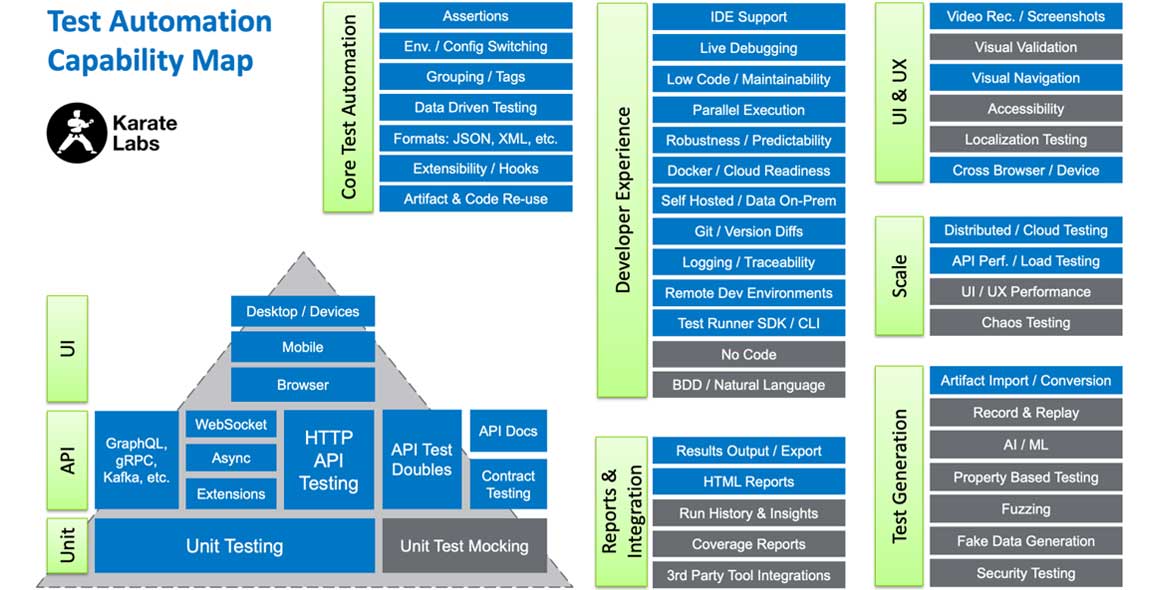
test automation capability map

To summarize:

  • Test Automation requires a large set of fundamental capabilities. Are you sure you can implement all these in-house, or would you be better-off using an industry standard solution?

  • Does the tool pay attention to Developer Experience? Keep in mind that tests must be maintained for as long as your systems are in production.

  • Does the tool bring developers and QA closer together or force them into different user-interfaces and workflows?

  • Can your tests be version-controlled just like your code? To be specific, can you see the history and the “diffs” between previous versions?

  • Is your test data within your firewall or going into “somebody else’s cloud”?

  • Is it easy to simulate end-user-flows and the core capabilities (your reason to exist) of your business?

  • Is there a mature community of users or someone that you can reach out to for support?

  • How useful is the documentation? Does it go into detail? Are there enough examples?

  • How easy is it for someone new to the tool to start using it productively?

The list of capabilities in the graphic is a result of many iterations and discussions. Do let us know if any test-aspect is missing, or if you have any other feedback!

And by the way, the boxes in blue are things that Karate does today.

Happy Testing!

Author

Peter Thomas Co-founder & CTO Karate Labs

Peter Thomas, Co-founder & CTO, Karate Labs

Peter is recognized as one of the world’s top experts in test automation. He brings 25 years of industry experience from which he has been in open source for the last 18 years. He has worked at Yahoo and Intuit. As part of the API platform leadership at Intuit, Peter created “Karate” the open-source solution unifying API, UI & Performance testing. Peter was one of only 15 chosen by GitHub for a grant in India 2021. He co-founded Karate Labs Inc in Nov’21 to accelerate the adoption of Karate with the mission of making test automation fun and collaborative. Karate Labs is a Y Combinator backed company.

Karate Labs is a Platinum Partner at EuroSTAR 2023. Join us at Antwerp Zoo June 13-16 in a 4 day celebration of testing. Learn from 65 expert speakers and connect with your peers at Europe’s Best Testing Event. Book your tickets by Dec 31 and save 20% or book your team and save up to 45%.


Filed Under: Test Automation, Uncategorized Tagged With: 2023, Test Automation

The EuroSTAR 2023 programme is out

November 21, 2022 by Fiona Nic Dhonnacha

What’s waiting for you inside the EuroSTAR 2023 programme? Get ready to be blown away by 60+ sessions from 65 expert speakers, all delivering insights and inspiration on essential testing topics.

A big thank you goes to the 2023 Programme Committee, chaired by Kristoffer Nordström. Together with Fiona Charles, Maria Kedemo, and Rob Lambert, they have put together a wonderful programme.

There’s a session for you at EuroSTAR no matter what your day-to-day involves. Jump into the energy of the best testing conference in Europe –  live and in-person at the most incredible conference ZOO venue in Antwerp. Stunning architecture, summer sunlight, magnificent nature, and majestic animals… there’s no better place to re-invigorate your testing!

Check out the programme and come together with your community, 13-16 June 2023.

see programme

Visionary keynotes

Get inspiration straight from the testing icons making an impact in testing. Isabel Evans will show you how to build a team that succeeds. Kristel Kruustük will reveal her formula to unite testing and QA teams. Maaret Pyhäjärvi shares her 10-step recipe in exploratory unit testing. Ken Munro & Jo Dalton will talk about why validating input and output is so critical. Anne-Marie Charrett highlights why the how and when of your communication is critical to the message being heard.

11 fantastic tutorials

This year’s tutorials deep dive into test automation, collaborating, team building, leadership, management, and lots more. Learn design techniques, see how to create a continuous delivery pipeline, develop skills to deal confidently with difficult testing situations, and more.

45+ interactive track talks

Do you want to know why testers are the true rock stars of IT? How to build high-quality products? Make yourself future proof? Get the answers to these and LOTS more questions at our track talks. These are collaborative sessions with Q&As at the end of each talk – don’t miss out on brilliant insights from Iris Pinkster-O’Riordain, Brijesh Deb, Brendan Connolly, Jecelyn Yeen, and more.

This is your community

As well as all the amazing talks, at EuroSTAR you’ll connect with testers and QAs across all industries and from 50+ countries. Chat, network, relax, share ideas, and play games with your peers – the Huddle Community Hub is the heart of EuroSTAR, and THE place to hang out! It’s also where the Test Clinic experts will help solve your testing problems, and you can enjoy hands-on challenges at the Test Lab.

Check out the programme, and join your community next June – we currently have 15% off full price tickets with our programme launch offer.

Filed Under: Uncategorized Tagged With: 2023

How to test mobile apps in the cloud

June 18, 2022 by Fiona Nic Dhonnacha

Thanks to Mike Wagner from Keysight for providing us with this blog post.

In 1973, Martin Cooper did something that no one had ever done before. He placed a call on the world’s first commercial cell phone. The Motorola DynaTAC 8000X might have been slightly smaller than a house phone with limited functionality and poor call quality by today’s standards, but this was a significant step in developing mobile device technology.

Mobile devices today are wildly different. They have multiple screen sizes, resolutions, and functions, with capabilities expanded by millions of apps to meet our specific needs at work and home. Brilliantly convenient for the user, but with different models, operating systems (OS), and manufacturers, ensuring your app works across each of these variables is challenging. Get it wrong, and your app goes in the trash can. In the US alone, 43% of apps are uninstalled after 30 days, according to Statista.

Testing mobile applications is the only way to ensure functionality before it hits the end-user. However, you need to execute thousands of test cases because there is no guarantee that an app performing on an Android device will work without issues on the latest Apple iPad or Samsung handset. Even simple problems with screen aspect ratios or orientation can occur on the same OS but different device models. So, what’s the answer?

Cloud-based mobile app testing

Cloud-based device farms optimize mobile app testing by executing test cases in virtual software environments. Mobile conditions are replicated using simulators, emulators, or on actual devices hosted in the cloud.

Compared to physical on-premise device farms, cloud-based device farms are easier to maintain and allow multi-site project teams to test applications on numerous devices in various real-user situations without setting up a physical lab. Competition is fierce, with thousands of apps released daily around the world. Testing app performance and functionality are essential to prevent bugs from entering production. If bugs are missed, costly delays occur, damaging the user experience and losing customers.

Benefits of cloud-based mobile app testing

One obvious benefit to cloud-based mobile app testing is that it is much easier to maintain than physical device farms, but there are a few more advantages that are at hand

  1. Cost-effective

Executing hundreds of different test scenarios across multiple OS, devices, and models is hugely expensive when acquiring and managing physical hardware yourself. Cloud-hosted testing platforms, such as Sauce Labs, offer monthly charges for a range of old and new devices, so you don’t need to constantly update yours when new models are released.

  1. Better availability

When your testing environment is hosted in the cloud, a massive number of devices, platforms, and OS are available via simulators and emulators. Real devices are also available to instantly access the latest models and features to execute accurate testing.

  1. Easily accessible

Quality Assurance and test engineers can access a device farm and execute tests from anywhere, which is helpful in distributed teams as it supports collaboration. By accessing mobile device farms in the cloud and from various geolocations, testing can occur 24/7, accelerating time to market.

  1. Enhance collaboration

Cloud-based device farms can be integrated with test management tools to accelerate feedback loops and software delivery. Various people are involved in software development, so good communication is critical to identify if they are any issues with a release so fixes can be made as quickly as possible.

  1. Increased productivity

Utilizing a device farm in the cloud allows parallel testing of various devices, rather than testing one after another, which dramatically speeds up test cycles. Testing is often a bottleneck to software development, so being able to execute multiple test scenarios unique to your end-users accelerates production deployments.

Mobile app testing in the cloud with Keysight’s Eggplant software test automation

Manually testing apps on multiple devices can be unreliable, costly, and slows down release cycles. With Keysight’s Eggplant test automation solution, you can accelerate the end-to-end testing of every user journey in your app across multiple mobile device types.

Eggplant’s flexibility allows integrations with mobile device farm providers, so your teams can access numerous devices and execute test cases specific to their end-users needs.

Using Eggplant test automation software, testers can expand test coverage incrementally to parts of an application with discovered issues via intelligent automated exploratory testing. The artificial intelligence and machine learning algorithms proactively explore areas close to these defects, as the probability of other bugs is high. Missed defects are costly to fix, especially when discovered in production.

Eggplant’s ability to increase test coverage helps reduce the chance of a buggy user experience, which can cause brand damage, dissatisfied end-users, and negatively impact an organization’s bottom line.

To discover how to optimize your app testing and accelerate releases, read our guide on mobile device testing in the cloud.

Keysight is a Platinum Partner at EuroSTAR 2022.

Author

How to test mobile apps in the cloud - Mike Wagner

Mike Wagner

Mike Wager is a Product Marketing Manager at Eggplant, a Keysight Technologies company. Over the last decade, he has brought product ideas and digital services to life for engineering technologies, SaaS applications, and software development. In his current role, Mike communicates the unique benefits of AI-driven test automation for enterprise applications, retail services, and mobile testing.

Filed Under: EuroSTAR Conference, Software Testing, Uncategorized

EuroSTAR 2022 Highlights

June 16, 2022 by Fiona Nic Dhonnacha

We’ve had an incredible 4 days at EuroSTAR 2022! Talk about returning to work exhilarated and full of energy from all the amazing sessions last week… we learnt from 70 speakers and hung out with more than 1000 software testers from all over the world to chat, share learnings, and make friends. Thanks to everyone who joined us – and helped us celebrate 30 years of EuroSTAR in style. We spotted this gorgeous comment on LinkedIn:

Looking back at the past 4 days at EuroSTAR 2022 in Copenhagen, it was not just a celebration of the 30th anniversary of the conference. It was a celebration of learning, courage and life.” 

Brijesh Deb, Netherlands  

Here are some of the highlights of this year’s conference.

Inspiring talks

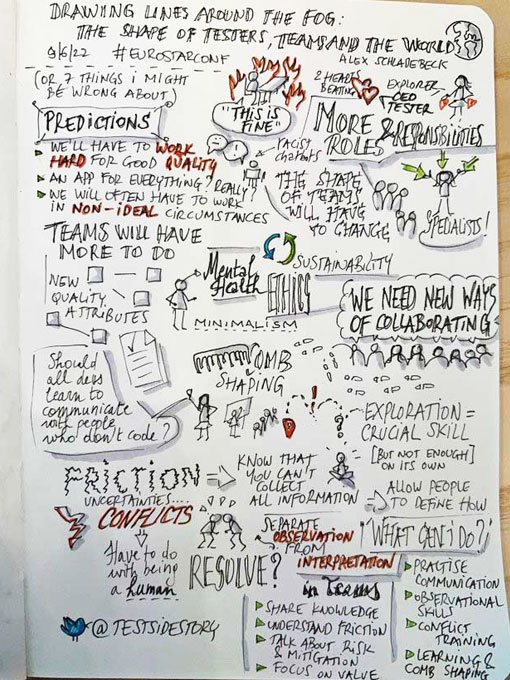
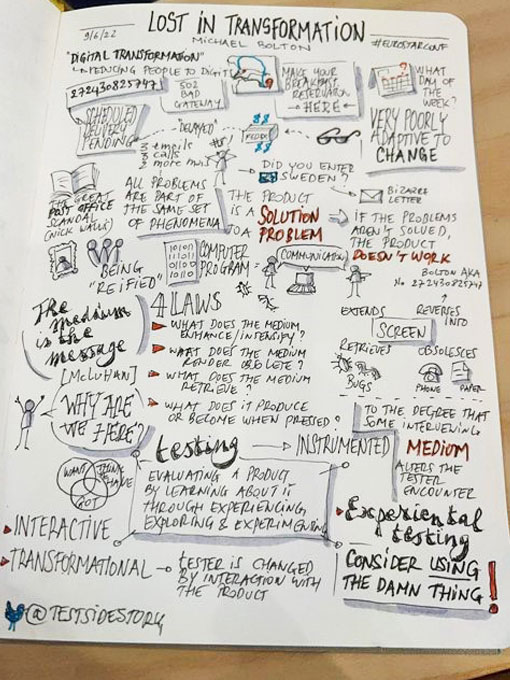
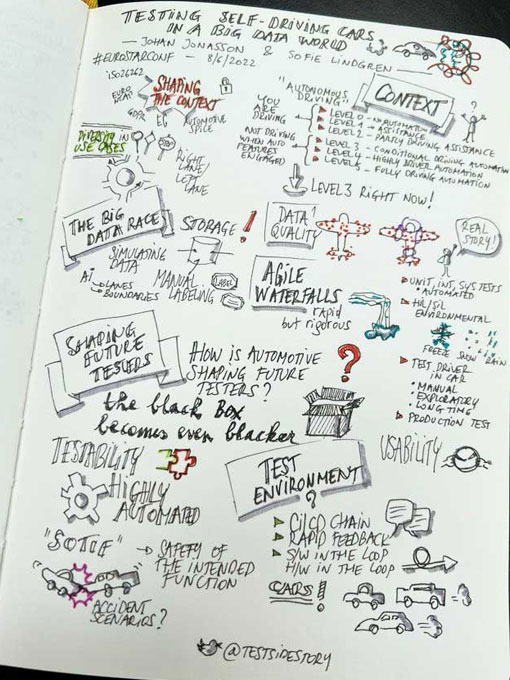
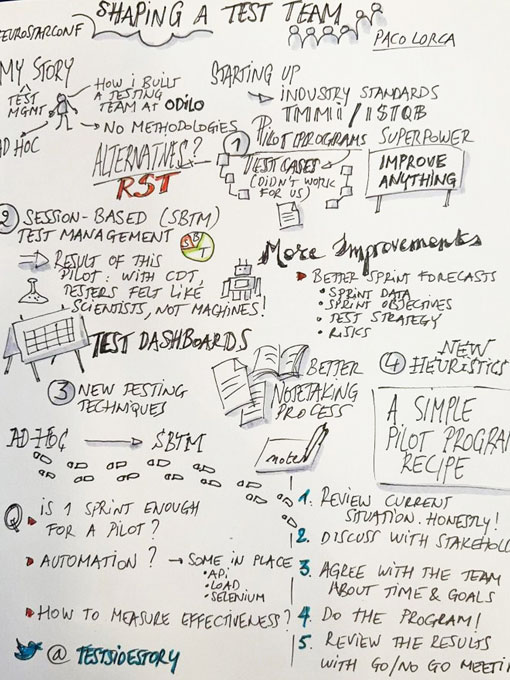
With 70 expert talks to choose from, attendees were spoilt for choice. There was even a thread on the conference app discussing how hard it was to choose between talks! Thank you to each and every one of our speakers – we’ve received some incredible feedback on your sessions. If you missed them, Zeger Van Hese curated some wonderful sketchnotes of some of the talks at EuroSTAR and our attendees posted lots of their highlights on social media using #EuroSTARConf – check them out. We will also be sharing blogs on EuroSTARHuddle.com with your questions answered. Rikard Edgren’s Keynote Q&A is now available.

Drawing Lines Around the Fog: The Shape of Testers, Teams and the World | Alex Schladebeck

The world is constantly changing, and everything is impermanent. After the last two years, we have been forced to come to terms with how quickly and drastically things can change. How will external changes shape our teams and our work? Alex looked at what factors are at work now, and what kinds of effects they will have on how we work, and the roles of testers and software professionals.

Lost in Transformation | Michael Bolton

More and more organizations are taking on “digital transformation”, leaning on software and machinery to perform jobs, make decisions and solve problems. The reach of what machines can do is extended by technological advancements, growing bodies of data, and by human ambition. As software changes, our testing has to respond. Michael Bolton shared what you need to address when going through a digital transformation.

Testing Self-Driving Cars in a Big Data World | Johan Jonasson and Sofie Lindgren

The competition in the automotive industry is fierce, and everybody wants to be the market leader in autonomous driving. Johan Jonasson and Sofie Lindgren shared the skills necessary for an AI and machine learning driven future, along with how to win the autonomous vehicle race, and the role Big Data plays in developing the next generation of autonomous vehicles, as well as similar industries.

Shaping a Test Team | Paco Lorca

To develop the next big thing, start-ups and and new IT companies will be creating one or more agile teams from scratch.  Paco Lorca talked through the challenges of setting up a test team from scratch, why industry standard procedures don’t always work in your context, and why exploratory testing and excluding traditional test cases may be a good thing to consider.

EuroSTAR 2022 Awards

We had an amazing Awards Evening at the spectacular Wallman’s Circus – it was a night full of fun, dancing, music, acrobats, great food – and of course, award winners. The EuroSTAR 2022 Testing Excellence Award went to Anne-Marie Charett, who joined us via video link from Australia to accept. This is the highest honour bestowed by our community, and we are thrilled for Anne-Marie.

Kimberly Snoyl is the 2022 RisingSTAR Winner, which you can read all about on EuroSTAR Huddle. In addition to the Testing Excellence Award and RisingSTAR Award, we also celebrate our EuroSTAR speakers with conference awards. Best Tutorial went to Rik Marselis, while Lalitkumar Bhamare won Best Paper. The Best Paper will be released as an eBook on EuroSTARHuddle.com this month – keep an eye out!

Sophie Küster’s talk ‘You Don’t Talk about THAT at Work‘ was the most highly rated track talk of EuroSTAR 2022 and she claimed the coveted Do-Over Session on Friday afternoon. Talking about mental health is so important and we are glad to see Sophie’s talk getting this recognition by the EuroSTAR attendees.

Community Spirit

EuroSTAR 2022 highlights - speaker couch session

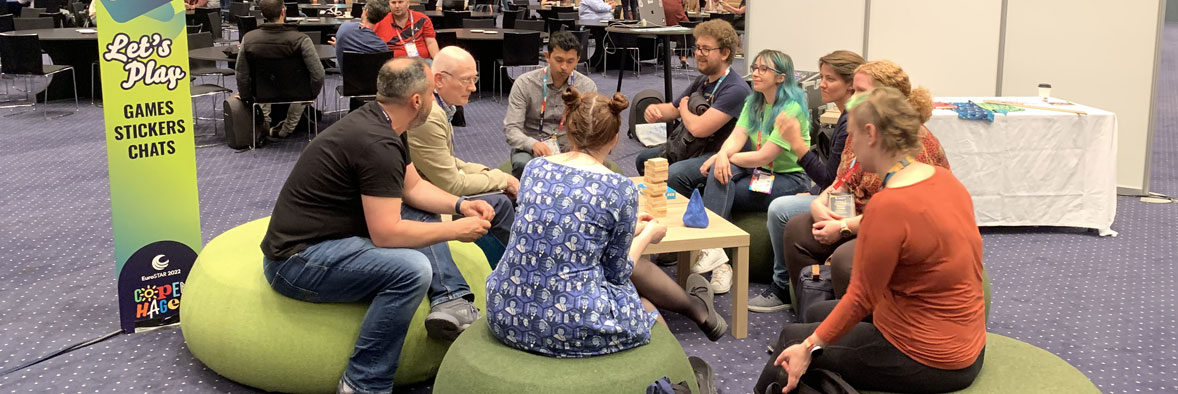
The Huddle Community Area was buzzing throughout the conference as everyone gathered in between sessions to chat, participate in games and challenges, and join some of our speakers at the speaker couch sessions. Thanks to everyone who joined in and embodied the conference community spirit. Fun fact – there were 13,868 messages sent via the app during the conference!

EuroSTAR 2022 highlights - volunteers

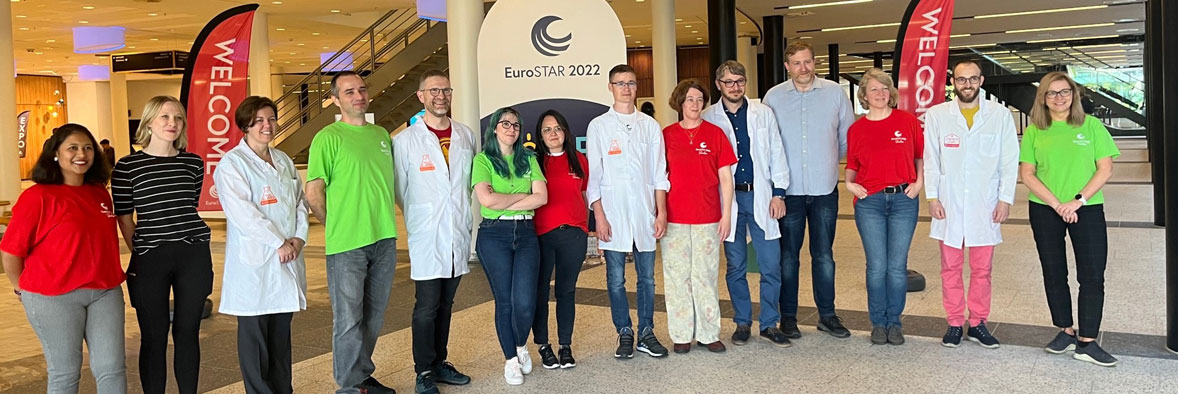
Of course we couldn’t talk about the community without mentioning our talented volunteers, who helped make the conference so amazing! They led the Community Huddle Area, assisted in sessions, and were on hand to help delegates with questions and photos! Thanks to everyone involved for their dedication and hard work.

Thank you to our Programme Committee

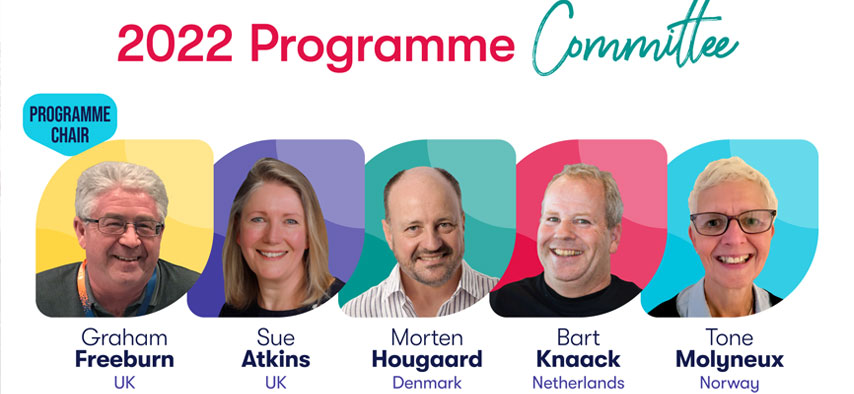
A massive thank you to our EuroSTAR 2022 Programme Committee; Graham Freeburn, Sue Atkins, Morten Hougaard, Bart Knaack and Tone Molyneux, for curating such a stellar programme of talks, and for bringing a wonderful mix of speakers together for us all to learn from. It was a truly special 30th EuroSTAR Conference.

Thank you all

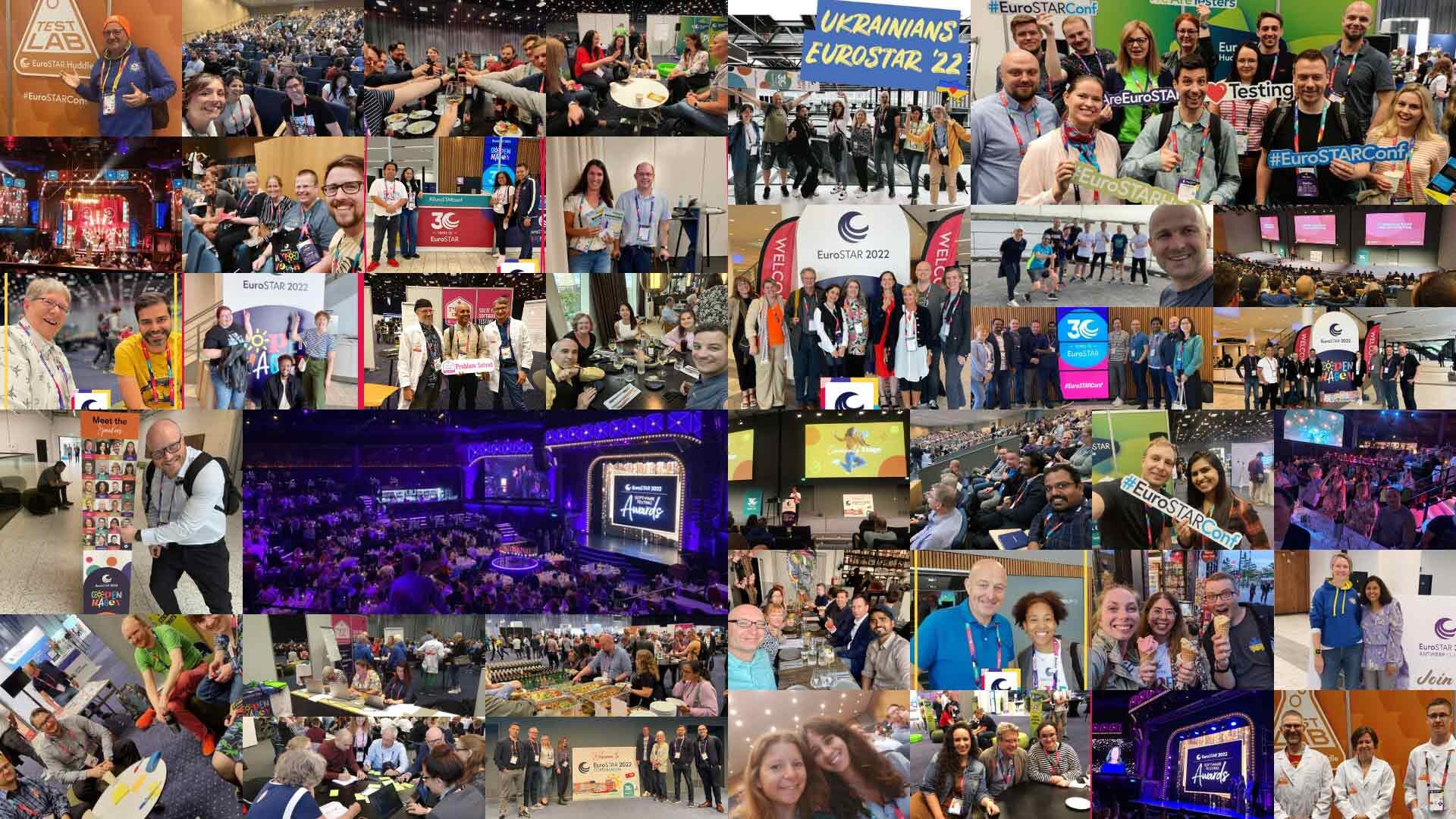
We are truly blown away by how amazing our 30th conference has been. We’ve already received so much great feedback and kind words from delegates on how awesome it was! Thanks to everyone involved in this year’s conference, you made it very special, and we can’t wait to do it all again with you next year. See some of the photos uploaded by our attendees in the collage below.

We leave you with another heart warming comment from one of our attendees – this is what EuroSTAR is all about!

An incredible experience like never before in 1.5 decades of my QA career! An incredible opportunity to network, meet and share QA experiences with versatile test professionals in person! Interesting discussions, loads of fun & lots of food with fellow QA colleagues!”

Sudarsan Suriyanarayanan, Sweden 
A selection of the photos uploaded to the EuroSTAR App by conference attendees.

Filed Under: Uncategorized

EuroSTAR 2022 kicks off tomorrow!

June 6, 2022 by Fiona Nic Dhonnacha

Since 1993, we’ve been bringing testers together at Europe’s largest software testing conference. That’s 30 years of expert talks and sessions, sharing new ideas, and forming thousands of friendships.

This year, we’re having an extra special celebration as we mark 30 years of the software testing community! We have 70 sessions from 70 incredible speakers, and a global community of testers. It’s all here, and it starts tomorrow – we can’t wait.

It’s not too late to get your ticket and join us – book right NOW and choose from 1, 3, or 4 day tickets.

get tickets

5 reasons to book your ticket now

Join a global community

It’s been two years since we met up with the software testing community in person, and we couldn’t be more excited to see everyone again, live in sunny Copenhagen! We’ll have lots of opportunities for you to make new friends, reconnect with some old ones, and expand your network. Every day, you can meet over coffee, converse in the Huddle area, & collaborate in tutorials. You’ll also get to enjoy the EuroSTAR at Night networking events – relax with drinks and conversation at the EXPO Community Networking party on Wednesday, and celebrate the best of the software testing community at the Gala Awards Night on Thursday.

Skyrocket your testing

The EuroSTAR programme is packed with talks from Europe’s testing trailblazers. Enjoy inspiring keynotes, tutorials, & track talks to get creativity flowing, with lots of actionable ideas to take home. Learn how to shape your testing with the best test design techniques, improve your testing abilities by uncovering your biases, learn how to develop your critical thinking skills, scale your team successfully, and LOTS more.

A group of EuroSTAR attendees at a tutorial

Solve testing challenges

Bring your toughest questions to our testing experts: our community loves a challenge, and you’ll connect with peers who have faced similar obstacles. Attend our dedicated Test Clinic for 1:1 help from our test doctors – they have a 100% success rate! Here are just some of the questions they’ve helped answer:

  • How do I set up a mobile device lab? What tools would you suggest?
  • How do I improve my influence over my managers?
  • How do I build in performance testing into my scrum teams definition of done?
  • Are there any tips to help improve working in a distributed team?

Strengthen your team

EuroSTAR is made for teams: boost your team’s performance, learn new skills, solve problems together, and of course – bond as a group. Share the learnings by splitting up and attending talks based on different skills and knowledge. We have incredible offers for groups – it’s your last chance to get your team together at Europe’s best testing event! Check out team offers here.

Discover new tools

Stay on top of what’s coming next in testing tools, check out the demos, and add new processes to your testing toolkit by visiting the EuroSTAR EXPO. It draws some of the biggest companies in the world! Of course, this means there’s lots of prizes and swag up for grabs as well.

It’s all happening at EuroSTAR 2022 in Copenhagen – see you there!

Filed Under: Uncategorized

Best EuroSTAR talks for new testers

June 1, 2022 by Fiona Nic Dhonnacha

If you’re new to testing or looking to progress to the next level in your career, we have lots of sessions on the EuroSTAR programme to help you do just that! Skyrocket your testing skills and make lots of valuable connections. Learn how to shape your testing with the best test design techniques, improve your testing abilities by uncovering your biases, discover powerful tools to help you with day-to-day tasks, and LOTS more.

Our programme committee chair Graham Freeburn has created a mind map so you can check out the whole programme and filter by topics, roles, and more so that you can find the talks best suited to what you’re looking for – check it out and start planning your EuroSTAR 2022 diary.

get tickets

Test design with data combination testing and classification trees | Rik Marselis

Test case design is one of the core competences of the quality engineering & testing profession. If you want to properly shape your testing, which test design technique(s) do you use? And is it effective and efficient? What coverage can you achieve? Rik explores the Data Combination Test design technique, which uses Classification Trees.

This technique can be combined with 3 different coverage types, so you have a great way to align with the risk level of the application. Join Rik’s tutorial on DCT & CT and start applying his techniques, the very next day you return to work.

The good, the bad and the biased | Emma Lilliestam and Hanna Schlander

How does the brain work? Why do biases exist, and what are the pros and cons of biases? In this workshop you’ll learn about two thinking systems in the brain, and four categories of biases. We are all biased. Biases affect our everyday lives, both at work and at home. By learning more about them we can expand our view, shape our minds, and improve our testing abilities!

You’ll get the chance to deep dive into biases in groups, and discuss a selection of your favorite biases, before presenting your findings to the group.

Drawing for effective testing and learning | Davrondzhon Gafurov

You may have heard of the term ‘a picture paints a thousand words’, but what about ‘a drawing replaces 100 (textual) user stories’? Davrondzhon shares how you can improve quality assurance by using graphical representations.

Drawings can help you identify tests which are difficult to extract from (textual) user stories, especially negative test cases. Furthermore, drawings can be used not only for quality assurance purposes, but also as a tool for learning (for newcomers) and collaboration (to get a common understanding between various roles in team).

Best EuroSTAR talks for new testers

Toolsmithing – a live coding session crafting test tools on stage | Kristoffer Nordström

Even though testing is a highly intellectual pursuit, it still involves a lot of manual steps, laborious work, and tasks to perform. How many times have you had to unnecessarily download a bunch of files from a remote test server after running your tests, or download them via a browser, clicking on the links to the files and saving them?

In this live coding session, Kristoff used Python to show you short, powerful, and useful examples of small test tools, that address specific day-to-day tasks, of the same kind as the ones described above.  At the end of the day you will have seen several examples of how you can use Python when crafting your own test tools.

get tickets

21st century skills for a tester | Emna Ayadi and Ard Kramer

What are the skills that you need to survive the digital 21st century? Soft Skills! In this tutorial, Emna and Ard explore the skills a 21st century tester needs. This can be defined with 4 Cs; Communication, Critical Thinking, Creativity, and Collaboration.

How do those 4 C’s relate to testing? Are testers already applying those skills, or have they thought about how to apply them in the future? Learn how you can use them to communicate, how they apply critical thinking in their organization, how they collaborate with team members, and how they apply critical thinking as a tester.

Drawing lines around the fog: the shape of testers, teams, and the world | Alex Schladebeck

The world is constantly changing, and everything is impermanent. After the last two years, we have been forced to come to terms with how quickly and drastically things can change. How will external changes shape our teams and our work? How can we shape ourselves proactively in order to be able to respond to changes, make changes or our own and even thrive?

Alex looks at what factors are at work now, and what kinds of effects will they have on how we work, and the roles of testers and software professionals. She will also look at concrete activities on an individual and company level, to best prepare ourselves for a nebulous future.

Have you booked your conference tickets yet? It’s not too late to join us next week – book your ticket now and we’ll see you for a celebration of testing in Copenhagen.

Filed Under: Uncategorized

Test automation: the dangers of a success path!

May 31, 2022 by Fiona Nic Dhonnacha

Thanks to Eduardo Amaral, Quality Management Director at Noesis, for providing us this blog:

When I hear someone talking about test automation, its benefits, and the investment needed, I always remember an example I’ve recently witnessed: 50% of the regression tests were executed in an automated process for more than a year on a specific eCommerce app from a well-known company. This company had one Automation Engineer working full time on the project to achieve it.

The project also had a quality engineer to execute the remaining 50% of the regression tests needed manually, and all new features. These new features testing represented around 50% of the global execution, which means that the Automation Engineer (a more expensive resource for the project) was only handling 25% of tests delivered. The remaining 75% was executed manually!

It’s a fact that automation is needed and beneficial to the software development lifecycle. It is the only way to keep high-quality assurance standards in a fast-moving market. So, the 1 million dollar question is: What’s missing? Why are most of the companies failing in this automation effort? Why are they just replacing manual testing with automated testing without any efficiency gain?

On the contrary, if we consider that the development costs are higher than manual testing, the reality is that those companies are just increasing costs rather than reducing them (the primary goal of test automation).

There’s no correct answer or a magic solution to make automation happen and work, like in all other foundational changes. Because automation is such a trend and hype in the industry, many companies are just doing it because of it, without having a real need or a structured business case. And that is not a detail. Moving forward with a technical proof-of-concept instead of a proof-of-value is the wrong approach and reveals a lack of strategy!

Achieving success in automation strategy

This lack of suitable strategy regarding the company’s organization and needs, its application landscape, and business processes, makes the adoption of standard automation processes the obvious path – it seems so obvious that failure is not even considered. “If I execute these tests manually today, tomorrow I’ll hire an Automation Engineer and run them in an automated way without additional effort!”

Where can this line of thought fail? It’s simple: we only execute repeatedly (the justification for automation) if we are talking about an application that is constantly being upgraded. Those are the apps that require intense automation maintenance, which also means breakeven slippage and ROI underachievement. And it gets even worse when a manual tester, especially skilled in focussing on business processes and setting up quality assurance strategies according to risk analysis and error patterns, is replaced by an Automation Engineer focused on technology and test patterns.

To achieve success in any Automation strategy, it’s vital to coexist and optimize (not replace) these two profiles – manual tester and automation engineer – during the development lifecycle, taking advantage of what each approach can offer. And most of all, it’s necessary to understand the application’s characteristics and adopt the best automation strategy.

When we’re talking about solutions where time-to-market is crucial, it is impossible to succeed without a seamless continuous testing strategy, where test and validation happen on the continuous integration pipeline. On the other hand, evaluating complex application architectures with significant dependency levels and integration with other systems, such as ERP, Billing, HR, Legacy, etc., makes it difficult to have an efficient use case for automation. The focus must be E2E and only use automation on specific and routine quality assurance processes instead of trying to automate all testing frameworks.

Test automation will be an essential part of any Quality Management strategy in the future and a complement for quality assurance, that’s certain.

But, to have the ambition to automate all the process for every application developed is a dangerous path, with a great probability of not achieving the desired results and producing a financial loss.

Noesis is a Gold Partner at EuroSTAR 2022. It’s our first in-person event in 2 years – and it’s going to be a massive celebration of testing! Learn from 70 testing experts, and connect with your peers at Europe’s best testing event. Get your ticket now.

Author

Eduardo Amaral, Quality Management Director at Noesis

Eduardo has worked as an analyst/developer, project manager, program manager, and service delivery manager. He has a background and certifications in several domains, including quality assurance, project/program management, process management, and product management. Over the last 21+ years, he’s been involved in a variety of software project development lifecycles and solutions integration, at high level of complexity and customer experience exposure. He’s performed in some of the major national and international companies, from different business areas – industry, banking, insurance, telco, retail, etc.

Filed Under: Uncategorized

Last chance for EuroSTAR 2022 tickets

May 30, 2022 by Fiona Nic Dhonnacha

EuroSTAR 2022 kicks off in just over a week, and it’s going to be our biggest year yet! We can’t wait to welcome software testers from near and far to Copenhagen for our 30th EuroSTAR Conference.

Have you got your ticket yet? We have a limited amount of tickets left so book now, and secure your place at the best testing event of the summer! Here’s what you can expect…

Star keynotes

Our keynote speakers are driving testing forward with innovations – Smita Mishra talks about testing software for the next economy; Rikard Edgren shows you how to generate a good understanding of testing through continuous learning; Michael Bolton shares insights on testing through digital transformation; and Alex Schladebeck talks about the future of testing, and how it will shape teams and testers’ work.

buy tickets

Expert tutorials

Last chance for EuroSTAR 2022 tickets

This year we have 10 interactive tutorials on all topics from agile to strategy, new technologies, DevOps and lots more. Our speakers will share learnings that you can apply into immediate and actionable tactics, both personally and professionally.

Tutorial trainers this year include James Lyndsay, Rik Marselis, Anne Kramer, Gáspár Nagy, Emma Lilliestam, & Hanna Schlander.

Track talks

55 track talks means plenty of opportunity to join sessions that motivate your passions, whether you’re a new or experienced tester. Track talks cover everything from testing techniques to management, skills development, challenges and lots more… talks are followed by live Q&As so you can get your tough questions answered in real time.

Track talk speakers include Dorothy Graham, Michaël Pilaeten, Ard Kramer, Andrea Jensen, Kristoffer Nordström, and Isabel Evans.

Huddle Community Area

EuroSTAR is all about community – and Huddle is at the heart of it all. Take part in speaker couch sessions, community soapbox, lively conversations, fun games, and impromptu chats in the Huddle area. Talk to our Test Doctors at the Test Clinic to get even your toughest testing problems answered, try some hands-on testing at our Test Lab, and so much more.

Networking Events

Our evening events are extra special this year as we celebrate 30 years of EuroSTAR – join us on Wednesday night for the EXPO Networking Party: drinks, chats, and a chance to meet some new people. On Thursday night it’s the Gala Dinner Night, where we celebrate with a night of great food and a show at Wallman’s, followed by the EuroSTAR Software Testing Awards presentation. We can’t wait!

… and much more!

Of course, there’s also lots of spontaneous meetings that result in lifelong friendships – make new friends over coffee, lunch breaks, and in between sessions. You’ve also got access to the largest software testing expo in Europe, so you can check out the latest software testing tools and be in with a chance to win some cool swag and prizes!

get tickets

Filed Under: Uncategorized

  • « Previous Page
  • Page 1
  • …
  • Page 3
  • Page 4
  • Page 5
  • Page 6
  • Page 7
  • Page 8
  • Next Page »
  • Code of Conduct
  • Privacy Policy
  • T&C
  • Media Partners
  • Contact Us

part of the