• Skip to main content
EuroSTAR 2027 - Sign up for early access

EuroSTAR Conference

Europe's Largest Software Testing Conference.

  • Programme
    • Call for Speakers
    • 2026 Programme
    • Community Hub
    • Awards
  • Attend
    • Why Attend
    • Bring your Team
    • Testimonials
  • Sponsor
    • Sponsor Opportunities
    • Sponsor Testimonials
  • About
    • About Us
    • Our Timeline
    • FAQ
    • Blog
    • Organisations
    • Contact Us
  • Book Now

2026

From Oxymoron to Reality: How to Execute Manual Tests Automatically with AI 

March 2, 2026 by Lauren Payne

How does the automatic execution of manual tests speed up test cycles? 

On the surface, “automatic execution of manual tests” sounds like an oxymoron. The industry has always operated on a binary: manual means a human tester; automatic means a script, a framework, and an automation engineer. For decades, “manual” has been synonymous with human intervention. 

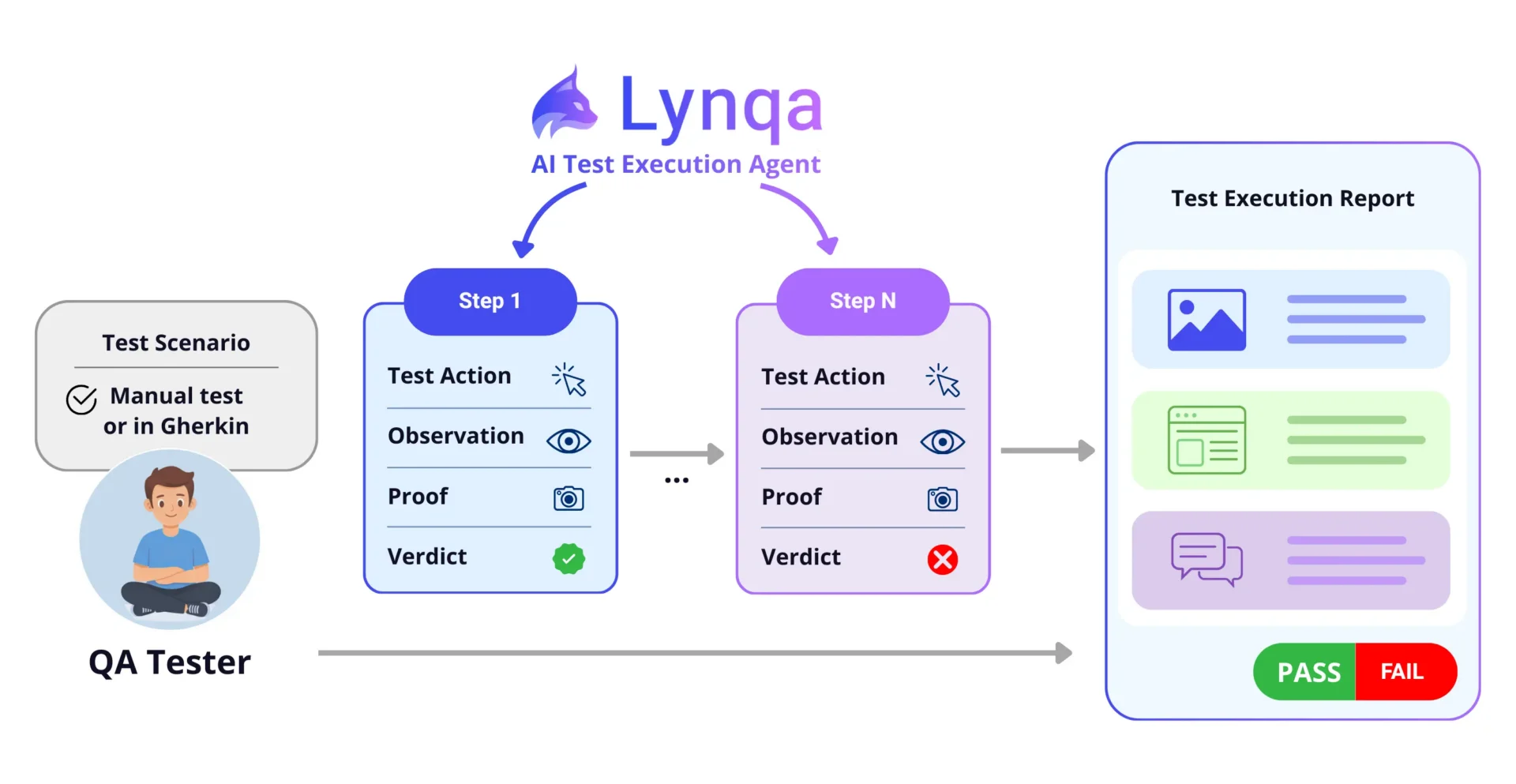
But agentic AI is turning this contradiction into a practical capability. At the heart of this shift is Lynqa, an AI agent designed to run manual tests directly on the GUI. It understands test procedures, navigates the application interface, verifies results, and delivers a detailed execution report without a single line of automation code. 

The Sprint Bottleneck: Why “Manual” Needs a Boost 

Every QA team knows the pattern: as the sprint nears completion, the volume of manual checks piles up, testers are stretched thin, and feedback to developers slows to a crawl. This is the “Manual Testing Debt.” 

The usual responses, hiring more testers or rushing to automate new features, rarely work within a single sprint. Traditional test automation simply takes too long to develop alongside the feature it’s meant to validate. 

This is where GUI AI agents change the game.  

What Are GUI AI Agents? 

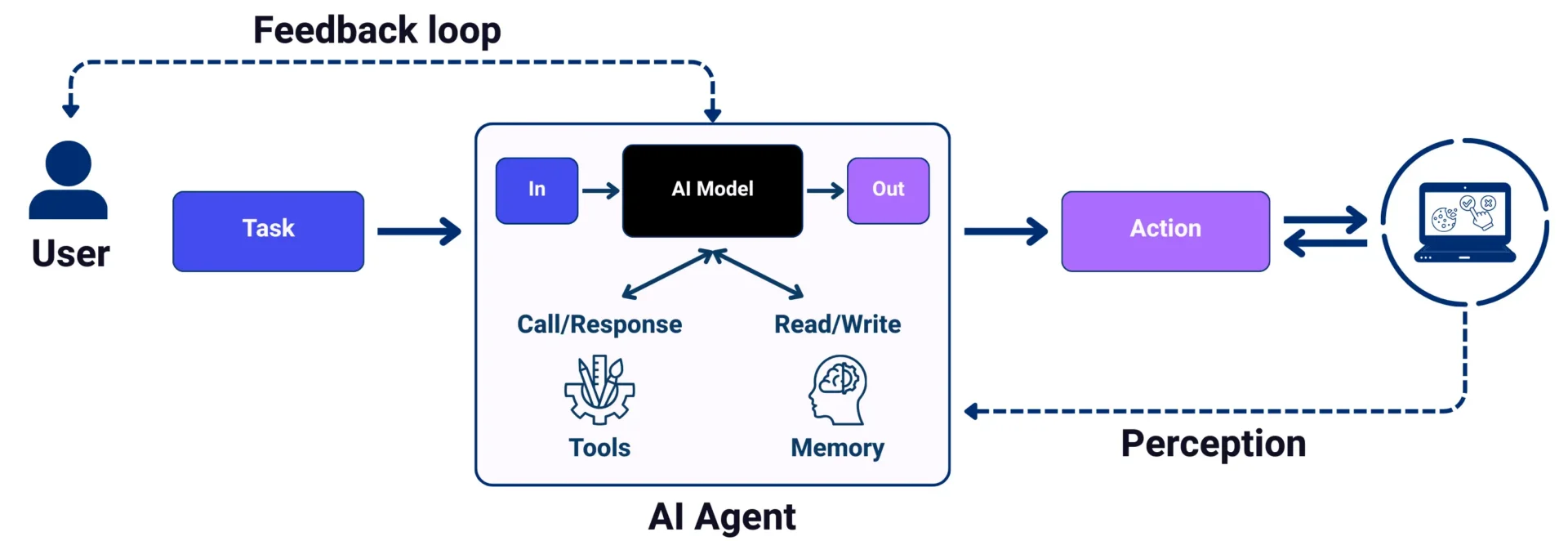
GUI AI agents interact with software by visually interpreting screen interfaces and operating a virtual mouse and keyboard. Instead of relying on backend APIs, these AI agents execute complex digital workflows exactly as a human user would: 

  1. GUI-Based Actions: It interacts with the graphical interface exactly as a human would, opening browsers, scrolling through menus, filling in fields, and navigating complex clients such as ERP systems. 
  1. Visual Perception: It monitors progress by analyzing the screen at each step, identifying the areas affected by an action or verification. 

The Feedback Loop: Thought and Action 

The agent operates in a continuous feedback loop that combines reasoning with action: 

  • Interpretation: It reads the test steps and builds a logical action plan. 
  • Perception: It analyzes the current screen to decide which interaction (click, type, drag) to perform. 
  • Monitoring: After every action, it checks the UI state to verify the expected result. 
  • Communication: If the agent encounters an ambiguity or a high-risk step, it pauses to ask the user for clarification before proceeding. 

This means the agent doesn’t blindly follow a script; it reacts to the application’s actual behaviour. 

Lynqa: Agentic AI Inside Your Test Management Tool

While general-purpose AI agents are appearing in consumer chatbots, Lynqa for Jira is purpose-built for the testing ecosystem. By integrating directly into Jira/Xray, it transforms how teams handle manual workloads within a sprint. 

How it speeds up the cycle: 

  • Zero Scripting Overhead: If you have a written test case or a clearly defined User Story, the agent can execute it immediately, without waiting for an automation engineer. This enables “Day 1” testing of new features. 
  • Adaptive Execution: When a button moves, a CSS class is renamed, or a color shifts, traditional automation breaks. The AI agent sees the “Submit” button regardless of underlying code changes, removing the maintenance tax that halts progress. 
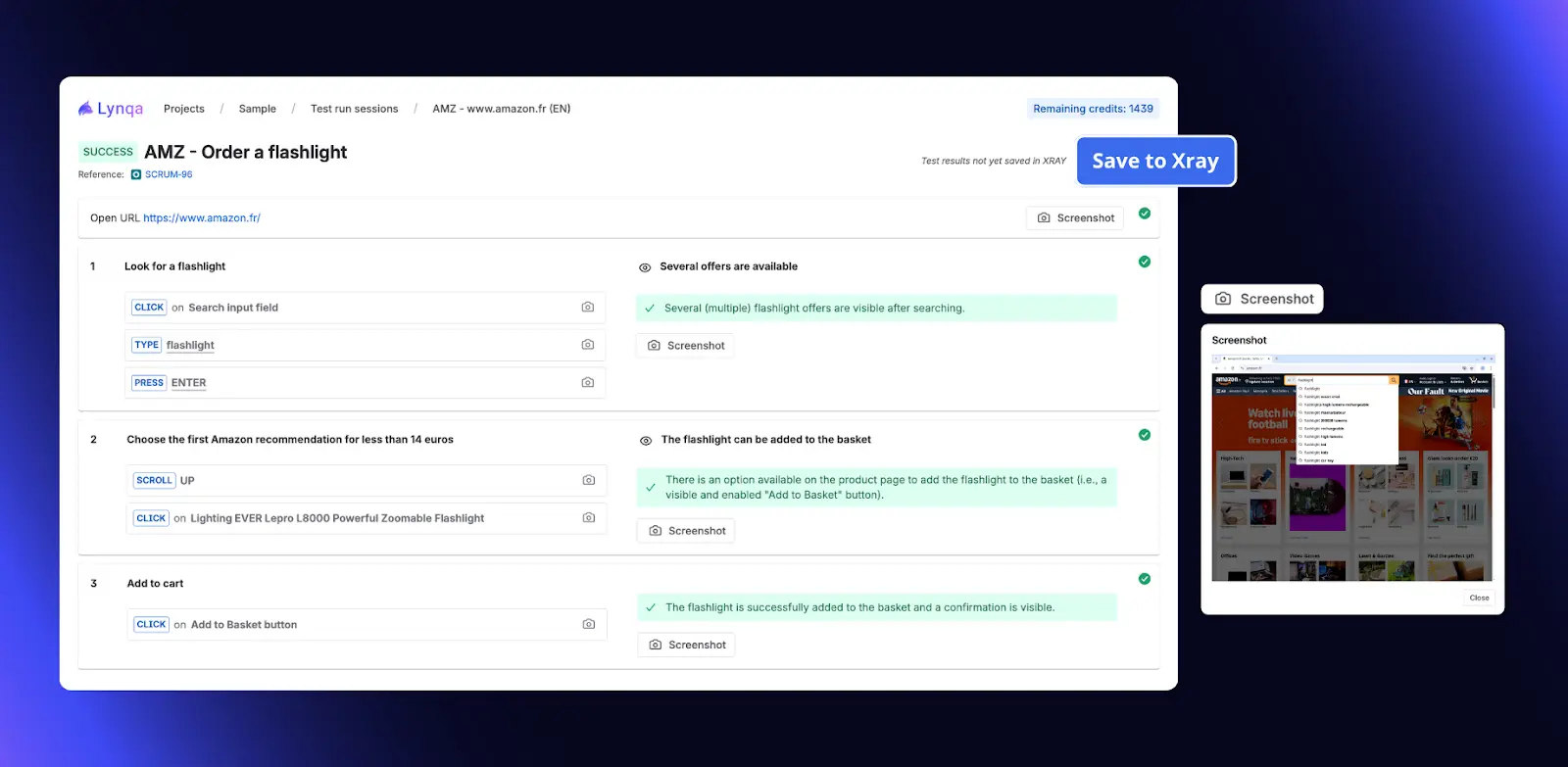
  • Analysis-Ready Reporting: The agent doesn’t just return “Pass” or “Fail.” It provides step-by-step screenshots and a detailed failure analysis, giving testers actionable information immediately. 

Start your experience with Lynqa today! We offer 10 free credits upon installation, or you can book a demo with our team. Find more information here.  

A Collaborative Future: The QA “Tribe” 

At EuroSTAR, we talk about “finding your tribe” and sharing the passion for quality. AI agents aren’t here to replace human testers; they’re here to empower the tribe. 

The most effective teams use agents like Lynqa as extra hands. While the agent handles repetitive GUI-level checks and initial failure analysis, human testers reclaim time for the work that matters most: exploratory testing, risk analysis, and strategic quality coaching for the development team. 

The tester’s role evolves from executor of steps to orchestrator of agents. As we look toward the 2026 EuroSTAR Conference, the question is no longer whether manual tests can be automated; it’s how quickly your team can leverage agentic AI to keep pace with modern delivery. 

Author

Bruno Legeard,  Smartesting

Bruno Legeard heads up the AI Lab at Smartesting (publisher of Lynqa). An expert in AI for software testing, he is one of the authors of the ISTQB CT-GenAI certification “Testing with Generative AI.” 

Meet the Lynqa team at the Smartesting booth during the EuroSTAR 2026 Conference to see agentic testing in action! 

Smartesting are Exhibitors at EuroSTAR 2026. Join us at EuroSTAR Conference in Oslo 15-18 June 2026

Filed Under: EuroSTAR Expo Tagged With: 2026, EuroSTAR Conference, Expo

Testing at Its Best: Inside the EuroSTAR 2026 Programme 

February 25, 2026 by nicole Rodriguez Gorham

When we started shaping the EuroSTAR 2026 programme, one question kept coming back to us: 

What does testing at its best really look like today? 

To help answer that question, Programme Chair Elmar Jürgens (CQSE GmbH, Germany) worked alongside our dedicated Programme Committee, bringing together their expertise, insight, and passion to create a programme that is both practical and inspiring. 

The committee members – Fiona Østensvig (Gritera Quality, Norway), Willem Keesman (Sopra Steria, Netherlands), Richard Seidl (Consulting GmbH, Germany), and Sophie Küster (cronn GmbH, Germany) -each bring their own unique experience.  

Together, they’ve designed a programme that tackles the real challenges testers face today, offers opportunities to learn and grow, and celebrates the collaboration that makes our community so strong. 


AI in Testing: Practical, Thoughtful, and Human-Led 

AI is everywhere in the EuroSTAR 2026 programme, but what’s refreshing is how it’s being discussed. Rather than “AI will replace testers” narratives, the sessions focus on practical collaboration between humans and machines.  

Sessions explore how testers are already using AI in their work and what’s required to do this well. Tutorials such as AI-Driven API Test Automation and talks on training and guiding Large Language Models focus on real applications, not promises of full automation. 

Other sessions take a more reflective approach, asking important questions about trust, bias, and responsibility when AI becomes part of the testing process. Across these talks, one message is consistent: AI can enhance testing, but it still relies on human judgement, context, and critical thinking. 

Testing at its best means understanding both the power and the limits of these tools. 

Context, Risk, and Understanding the System 

Another strong theme running through the programme is context. 

Sessions on context engineering, exploratory testing, and risk-based approaches reinforce the idea that quality cannot be separated from the environment in which software exists. These talks focus on helping testers understand why something matters – not just how to test it. 

The Human Side of Quality 

Alongside technical depth, the EuroSTAR 2026 programme continues to highlight the human skills that support great testing. 

Talks exploring psychology in testing, communication and collaboration, and mental health in remote testing teams. Quality depends on conversations, relationships, and the confidence to ask difficult questions. 

As testing tools become more advanced, these skills become even more valuable. 

EuroSTAR keynotes are designed to challenge thinking and spark meaningful discussion — and the 2026 keynote line-up does exactly that, bringing insight, experience, and inspiration to the main stage. 

The Jobs Not Taken 

Dona Sarkar — Microsoft, USA 
Dona Sarkar encourages us to embrace experimentation in our careers and work. Drawing on her role as Chief Troublemaker for Microsoft’s AI and Copilot Extensibility Program, she discusses how curiosity and bold experimentation can unlock growth, creativity, and impact. Explore the session.

Do It For the Plot 

Sanne Visser — Bartosz, The Netherlands 
Sanne Visser explores resilience, curiosity, and consistent effort in testing. Using software projects as a metaphorical story, she shows how engaging fully with challenges — even uncertain ones — fosters growth, learning, and meaningful progress in our daily work.  Explore the session.

Three Decades of Software Testing – From Startup to Global Leader 

Wolfgang Platz — Katharo Ventures, Austria 
Wolfgang Platz reflects on his journey from early software development to founding Tricentis, Austria’s first unicorn. He shares lessons from three decades in testing, including innovation, leadership, and how testing practices have evolved to meet the challenges of modern technology.  Explore the session.

With Great Trust Comes Great Responsibility 

Michael Kutz — REWE digital, Germany 
Michael Kutz examines the role of trust in high-performing teams and software quality. Drawing on his experience establishing agile practices at REWE digital, he highlights how autonomy, accountability, and responsibility underpin successful testing and development cultures.  Explore the session.

What “Testing at Its Best” Means to Us 

When we look at the EuroSTAR 2026 programme as a whole, a few things stand out to us.

AI is now part of everyday testing — and learning how to use it thoughtfully and responsibly is something we all need to consider.

Context, risk, and truly understanding the system still sit at the heart of quality.

And human skills? They’re not secondary. They’re essential.

For us, testing at its best isn’t about moving faster for the sake of it, or automating everything we can. It’s about making informed decisions, understanding what matters, and applying our skills where they have the greatest impact.

Looking Ahead to EuroSTAR 2026 

EuroSTAR has always been about bringing the testing community together — to learn from each other, challenge ideas, and share experiences. The 2026 programme continues to do so, offering a mix of deep technical learning, human-centred topics, and opportunities for discussion. 

We’re looking forward to welcoming the community to the Nova Spektrum in Lillestrøm and exploring what testing at its best can look like – together. 

Filed Under: Uncategorized Tagged With: 2026, EuroSTAR Conference

Autonomous Testing with AI: Separating Hype from Real-World Value

February 25, 2026 by Lauren Payne

Autonomous testing is one of those phrases everyone nods at, but few people can clearly explain. Slide decks talk about systems that write their own tests, fix failures automatically, and keep pipelines green without anyone watching. Somewhere along the way, teams start wondering if they are falling behind simply because they don’t have “autonomy” yet.

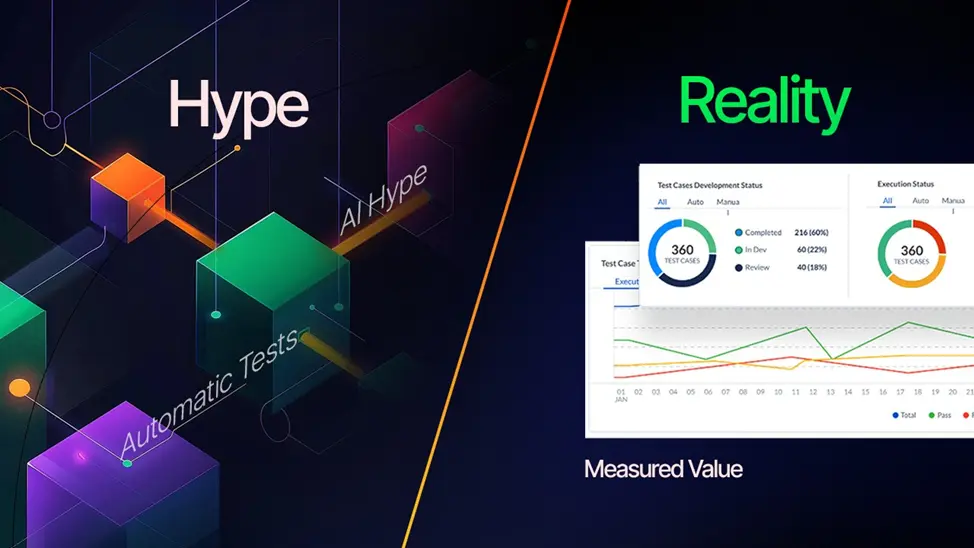
Most of that anxiety comes from hype, not reality. The real question isn’t whether testing can become autonomous. It’s where autonomy actually helps teams do better work, and where it quietly introduces new risks.

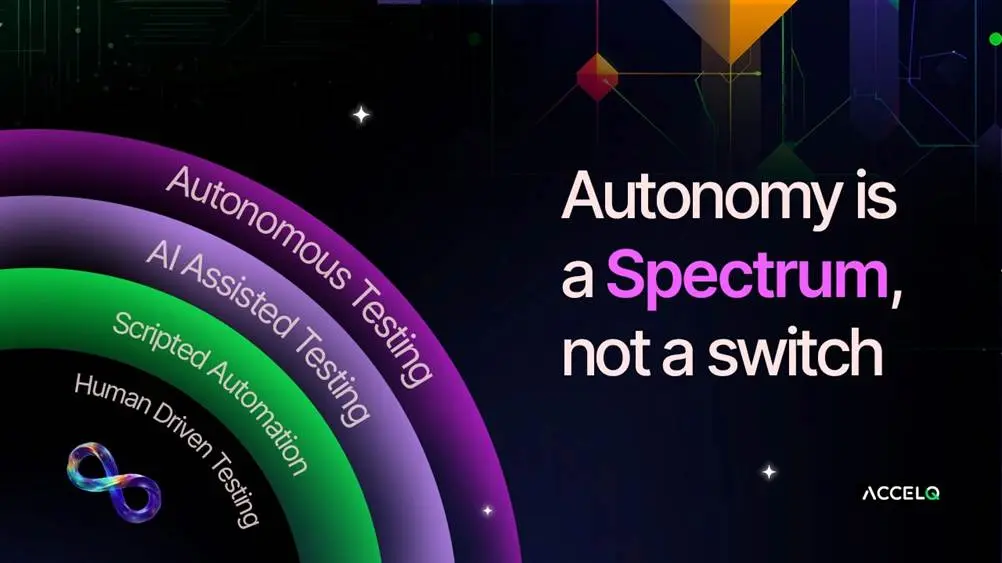
Autonomy is a spectrum, not a switch

Testing doesn’t suddenly flip from human-driven to autonomous. It evolves in layers.

Most teams start with automation that focuses on execution. Scripts run faster than humans, but people still decide what gets tested, how coverage is shaped, and whether results can be trusted. This is familiar territory.

AI assistance adds another layer. Test creation speeds up, failures are grouped instead of dumped into long reports and maintenance effort drops. These gains are real, but they are still reactive. Humans remain firmly in control.

Autonomy begins only when a system can take on limited decision-making, within boundaries defined by the team. Not creative judgment, but practical judgment. Deciding which tests are relevant for a specific change. Flagging failures that look like noise rather than regressions. Noticing flows that are becoming so fragile they can no longer be trusted. This is usually where expectations and reality part ways. What is sold as autonomy often turns out to be faster automation with a new label.

Why Hype Breaks Down in Real Environments?

Autonomous testing struggles when context is missing.

AI does not understand business importance on its own. It cannot tell which workflow carries regulatory exposure or which release is under executive scrutiny. Without that context, decisions become statistical guesses rather than informed choices.

Self-healing is another frequent weak spot. Updating locators can keep tests running, but it can also hide changes in behavior that actually matter. Pipelines look stable while confidence quietly erodes.

A green pipeline is comforting. A trustworthy pipeline is far more valuable. Autonomy that masks risk does more harm than good.

Where AI Genuinely Helps?

Used well, AI shines at recognizing patterns humans don’t have time to see.

It can connect failure signatures across pipelines and environments. It can reveal tests that only break under specific data conditions. It can point out entire suites that consume time without improving coverage. It can highlight areas where manual testing consistently finds issues automation misses.

This doesn’t replace testers. It sharpens their judgment.

One of the most underrated benefits of AI-assisted testing is how it changes team discussions. Less time is spent arguing about flaky failures. More time is spent talking about system behavior and risk. For many teams, that shift alone justifies the investment.

Autonomy Needs Boundaries to be Trusted

The most effective autonomous testing systems are deliberately limited.

They don’t decide what quality means; teams do.

They don’t invent test strategies. They optimize what already exists.

They don’t operate silently. They explain their reasoning.

Explainability is non-negotiable. If a system skips tests or classifies failures without showing why, teams will override it every time. Accuracy matters, but transparency is what builds trust.

Autonomy is adopted when people understand not just the outcome, but the reasoning behind it.

From Scripts to Systems

Traditional automation treats tests as isolated scripts. Autonomous testing treats them as parts of a larger system.

That system understands dependencies between services, data, environments, and user flows. It recognizes that a login failure ripples across dozens of downstream tests. It understands that a configuration change in one region shouldn’t invalidate results everywhere else.

This shift is subtle, but important. Autonomy works not because AI is smarter than humans, but because it can track complexity humans can’t reasonably keep in their heads.

This way of thinking is increasingly reflected in how enterprise platforms are being designed. At ACCELQ, autonomy is treated less as an end state and more as a support system for decision-making at scale. The emphasis is on observing system behavior, correlating signals across pipelines, and making change easier to understand rather than hiding it behind execution.

Capabilities such as adaptive test generation, intelligent handling of change, and agent-style execution through ACCELQ Autopilot are used to reduce noise and maintenance while keeping teams firmly in control of intent and strategy. Autonomy, in this model, is not about removing oversight. It is about making complex testing environments more transparent as systems evolve.

How Teams Should Evaluate Autonomy Today?

A simple way to cut through autonomous testing claims is to ask a few uncomfortable questions. What decisions does the system make without human input? What signals drive those decisions? How does it behave when signals conflict? And how easy is it to override decisions and learn from them?

Vague answers usually point to cosmetic autonomy.

Real autonomy shows up quietly. Fewer late-night reruns. Fewer ignored failures. Fewer production surprises. It reduces friction without asking for attention.

The Future is Assistive, Not Absent

The strongest testing organizations aren’t trying to remove human judgment. They are trying to protect it.

AI is well-suited to repetition, correlation, and scale. Humans are better at intent, ethics, and trade-offs. Autonomous testing works when it creates space for thinking, not when it pretends thinking is no longer needed.

The real value isn’t in replacing testers. It’s in freeing them from work that hides risk instead of revealing it.

That’s the point where autonomy stops being a promise and starts being useful.

Author

Geosley Andrades, Senior Director,  ACCELQ

Geosley is a Senior Director, Product Evangelist and Community Builder at ACCELQ, leading global AI-driven, no-code test automation initiatives alongside product strategy and go-to-market programs. With nearly 18 years of cross-industry experience, he helps enterprises rethink how software quality is built, validated, and scaled for real-world impact. A strong advocate for intelligent, autonomous testing at enterprise scale, Geosley actively shapes ACCELQ’s vision through competitive analysis, analyst engagement, and forward-looking research—driving simpler, more reliable, and sustainable automation for modern digital ecosystems.

ACCELQ are Exhibitors at EuroSTAR 2026. Join us at EuroSTAR Conference in Oslo 15-18 June 2026

Filed Under: EuroSTAR Expo Tagged With: 2026, EuroSTAR Conference, Expo

How Agentic AI is Transforming Software Delivery Lifecycles 

February 10, 2026 by Lauren Payne

Software delivery has always been a balancing act between speed, quality, and risk. As enterprises adopt cloud-native architectures, DevOps, and continuous delivery models, that balance is becoming harder to maintain. Traditional automation and AI tools help — but they still rely heavily on human direction. 

Agentic AI introduces goal-driven intelligence into the software delivery lifecycle (SDLC), enabling systems to adapt, recommend, and act within defined enterprise guardrails. Rather than replacing human decision-making, agentic AI augments teams with continuous intelligence and policy-aware automation. The result is faster releases, higher quality software, and delivery pipelines that continuously optimize themselves. 

In this blog, we explore what agentic AI is, how it applies to software delivery, and why it represents the next evolution of enterprise DevOps. 

What is Agentic AI in Software Delivery? 

Agentic AI refers to artificial intelligence systems designed to act autonomously in pursuit of defined goals, rather than simply responding to prompts or executing predefined rules. 

In the context of software delivery, agentic AI systems can 

  •  Analyze delivery data across tools and teams. 
  • Make context-aware recommendations and trigger actions with minimal manual intervention, while remaining aligned to enterprise policies and approval models. 
  • Take coordinated action across the SDLC (planning, testing, release, operations) by leveraging a unified platform that connects delivery data, workflows, and governance in one system of record.
  • Learn and adapt based on outcomes. 

Unlike traditional AI, which primarily assists humans with insights or recommendations, agentic AI acts as an intelligent participant in the delivery process. 

The Role of Agentic AI Across The Software Delivery Lifecycle 

Agentic AI doesn’t replace DevOps teams — it augments them by operating continuously across every phase of delivery. 

Planning and Prioritization 

Agentic AI can analyze backlogs, historical delivery data, and business objectives to recommend optimal sprint scope, identify high-risk dependencies, and dynamically reprioritize work based on changing conditions. Instead of static planning cycles, teams gain adaptive planning intelligence that evolves in real time. 

Development and Build Automation 

During development, agentic AI agents can 

  • Detect code patterns linked to future defects. 
  • Optimize build pipelines based on performance trends. 
  • Flag architectural risks earlier in the process. 

This proactive intelligence reduces downstream rework and accelerates time to value. 

Continuous Testing and Quality Management 

Testing is where agentic AI delivers some of its greatest impact. AI agents can can intelligently prioritize and optimize test execution based on code changes, historical risk patterns, and release context—reducing redundancy while increasing confidence in release readiness. This leads to faster feedback loops and higher confidence in release readiness. 

Deployment and Release Optimization 

Agentic AI enables smarter, safer deployments by selecting optimal deployment windows, monitoring live performance and user impact, and detecting performance or reliability thresholds in real time and initiating guided remediation workflows. The result is a more resilient release process with fewer disruptions. 

Post-Release Learning and Optimization 

Unlike traditional automation, agentic AI continues learning after release by analyzing: 

  •  Customer feedback 
  • Production incidents
  • Delivery performance metrics

Those insights feed back into planning and execution, creating a continuously optimizing delivery lifecycle—where insights from production, quality, and delivery performance feed back into planning and execution with full transparency. 

Why Agentic AI Matters For Enterprise DevOps Teams 

Enterprise DevOps environments are complex — multiple tools, distributed teams, hybrid architectures, and competing priorities. Research from Google’s DORA team has consistently shown that high-performing DevOps organizations deploy software more frequently, recover faster from incidents, and maintain higher reliability than their peers. As delivery complexity increases, agentic AI helps teams manage that complexity at scale by enabling autonomous decision-making across the software delivery lifecycle. 

Google’s DORA research shows that high performance in deployment frequency, lead time, failure rate, and restoration time strongly correlates with effective DevOps strategies. 

Key benefits include: 

  •  Faster delivery cycles through autonomous decision-making 
  • Improved quality with predictive defect detection 
  • Reduced operational risk via real-time monitoring and response 
  • Lower cognitive load on teams, freeing humans to focus on innovation 

Rather than replacing human expertise, agentic AI allows teams to operate at a higher strategic level. 

How Agentic AI Fits into The Modern Software Delivery Stack 

Agentic AI works best when embedded within an integrated, enterprise-grade software delivery platform that connects planning, development, testing, and operations data. 

A unified platform enables AI agents to see the full delivery value stream, correlate signals across tools, and take informed, context-aware actions. This is where modern, AI-enabled delivery platforms play a critical role. 

Real-World Use Cases of Agentic AI in Software Delivery 

Organizations adopting agentic AI are already seeing tangible results, including: 

  • Automatically identifying release risks before production 
  • Reducing test execution time while improving coverage
  • Accelerating recovery from incidents without manual intervention
  • Optimizing delivery flow across large, distributed teams  

These outcomes are especially valuable for enterprises managing mission-critical applications and frequent releases. 

The Future of Software Delivery is Autonomous and Intelligent 

As software delivery continues to accelerate, static automation and manual oversight will no longer be enough. Agentic AI represents the next step forward — enabling delivery systems that think, act, and improve continuously. 

For organizations looking to improve speed, quality, and resilience at scale, agentic AI isn’t a future concept — it’s a competitive necessity. 

By combining agentic AI with an integrated software delivery platform, enterprises can unlock a new level of delivery performance and innovation. 

Deliver Software Faster—With Intelligence Built in 

OpenText brings agentic AI to software delivery by connecting planning, development, testing, and operations into a single intelligent platform. See how autonomous insights and actions can help your teams deliver higher-quality software at speed. 

For more information about the OpenText Core Software Delivery Platform, Visit us at EuroSTAR 2026 on Stand 5 or click here. 

Author

Gabriel Martinez, Director of DevOps Product Marketing, OpenText 

Gabe’s enthusiasm for tech is only matched by his passion for marketing it. With a 15-year sprint through DevOps, Cloud Management, and Application Security, he’s played a key role at Broadcom/VMware, CloudBees, Electric Cloud, and CA Technologies. Currently, Gabe is the Director of Product Marketing for ADM and DevOps at OpenText, leveraging storytelling and strategy with creativity and data-driven precision to orchestrate growth and innovation. 

OpenText are Exhibitors in this years’ EuroSTAR Conference EXPO. Join us in Oslo 15-18 June 2026.

Filed Under: EuroSTAR Expo Tagged With: 2026, EuroSTAR Conference, Expo

Oslo, Norway Travel Tips: Where to Stay, Eat & Explore 

January 30, 2026 by Lauren Payne

EuroSTAR 2026 is heading north and we’re bringing the magic of Europe’s biggest testing EXPO to stunning Norway! From 15–18 June, we’ll take over Nova Spektrum in Lillestrøm, just minutes from vibrant Oslo.  

Whether you’re joining us to learn, network, or showcase your tools, make the most of your trip with this quick guide on where to stay, what to eat, and how to explore Oslo while you’re here.

Where to Stay – Stay Close or Soak Up the City 

  • Steps from the Venue: Book a hotel in Lillestrøm for the easiest mornings – just a short stroll to Nova Spektrum and back to your room after a busy day. 
  • City Adventure: Stay in downtown Oslo to enjoy the buzz of the capital. With trains running frequently, you’ll be at the venue in 12 minutes, plus you’ll have nightlife, shopping, and cultural sights on your doorstep. 

💡 Tip: June is peak season in Norway – secure your hotel early for the best rates and availability.

Where to Eat – Flavours You’ll Love in Oslo 

Norway’s food scene is fresh, simple, and full of flavour. During your stay, treat yourself to: 

  • Taste Tradition: Smoked salmon, shrimp sandwiches, Norwegian meatballs, and the famous sweet Brunost (brown cheese). 
  • Dine by the Fjord: Enjoy fresh seafood and stunning views at waterfront restaurants – perfect for a relaxing dinner or team night out. 
  • Foodie Hotspots: Head to Grünerløkka for artisan coffee, cool cafés, and street food vibes, or visit Mathallen Food Hall to sample Norwegian cheeses, cured meats, and global street eats under one roof. 

💡 Tip: Oslo’s restaurants are popular in summer – book your evening meals early to guarantee a table. 

Explore Oslo – Adventure Beyond the EXPO 

If you’re arriving early or staying longer, take time to experience the best of Oslo: 

  • Oslo Fjord Cruises: Relax on a boat ride and take in panoramic views of the city and islands. 
  • Oslo Opera House: Walk on its iconic sloped roof for unbeatable sunsets and cityscapes. 
  • Vigeland Sculpture Park: Stroll through this vast outdoor gallery featuring 200+ sculptures. 
  • Viking Ship Museum: Step back in time and see beautifully preserved Viking ships and artifacts. 

💡 Tip: Oslo is compact and easy to explore. Grab a day pass for unlimited rides on trams, buses, and ferries, an easy way to see it all. 

Weather in June – Sunshine with a Nordic Breeze

 June is the perfect month to visit Norway. Expect long, bright days with temperatures around 19–20°C and cooler evenings near 9°C. Light rain is possible, so pack a lightweight jacket and comfy layers to stay prepared. 

Quick Essentials – Know Before You Go 

  • 📍 Venue: Nova Spektrum, Lillestrøm 
  • 🗓️ Dates: 15–18 June 2026 
  • 🚆 Transport: 12-minute train ride from Oslo Central Station 
  • 💬 Language: English is widely spoken 
  • 💰 Currency: Norwegian krone (NOK) 
  • 🎒 Packing: Layers + light rain jacket + comfortable shoes for exploring 

Pack your bags, bring your curiosity, and join us for four unforgettable days in Norway of learning, networking, and showcasing the future of testing. Let’s make EuroSTAR 2026 your most impactful event yet.

👉 Book your stand today!

Author

Clare Burke

EXPO Team, EuroSTAR Conferences
With years of experience and a passion for all things EuroSTAR, Clare has been a driving force behind the success of our EXPO. She’s the wizard behind the EXPO scenes, connecting with exhibitors, soaking up the latest trends, and forging relationships that make the EuroSTAR EXPO a vibrant hub of knowledge and innovation.


t: +353 91 416 001
e: clare@eurostarconferences.com

Filed Under: EuroSTAR Expo, Uncategorized Tagged With: 2026, EuroSTAR Conference, Expo

  • « Previous Page
  • Page 1
  • Page 2
  • Page 3
  • Code of Conduct
  • Privacy Policy
  • T&C
  • Media Partners
  • Contact Us

part of the