• Skip to main content
EuroSTAR 2027 - Sign up for early access

EuroSTAR Conference

Europe's Largest Software Testing Conference.

  • Programme
    • Call for Speakers
    • 2026 Programme
    • Community Hub
    • Awards
  • Attend
    • Why Attend
    • Bring your Team
    • Testimonials
  • Sponsor
    • Sponsor Opportunities
    • Sponsor Testimonials
  • About
    • About Us
    • Our Timeline
    • FAQ
    • Blog
    • Organisations
    • Contact Us
  • Book Now

Fiona Nic Dhonnacha

3 Layer Approach to Maintainable Test Automation

October 30, 2019 by Fiona Nic Dhonnacha

Testers worldwide are faced with similar issues and challenges in their test automation journey. The most common issues teams face pertaining to test automation are that scripts are brittle, fail too often and require a lot of maintenance.

This mostly happens because we are scripting everything at the same level, and when something changes at business level or at a UI level or at the data level, we end up going to the same script every time and trying to alter it.

So, what does it take to be in sync and achieve maintainable test automation?

  1. Less Work to be Done: We need to reduce time of creation and try to offload it to machine instead of manual scripting. This is where a robust tool with good recorder, object spy and authoring capabilities can help.
  2. More Hands to Help: We need to focus on getting more stakeholders and people involved and participate in the process, by contributing in some way to the overall process of test automation.

We can make this happen by understanding the different layers of test automation and how to separate them.

Maintainable test automation: Let’s consider the case of a user transferring money to another person and see how these layers help.

Layer 1: Business Layer

  • This layer expresses business intent.
  • It is agnostic of the UI or the web application itself, testing tool and interaction code, for example: Create User, Approve User, Login User etc.
  • This layer will change only if business logic itself changes. So, it survives across UI implementations (web or mobile or desktop), and survives architectural changes.
  • In this layer we can talk in the language of the business, without assuming anything about the UI, tool or code.

In Sahi Pro, this layer is implemented as Scenario files. This is a csv file which can be edited in our Editor or via MS Excel. A sample scenario looks like this:
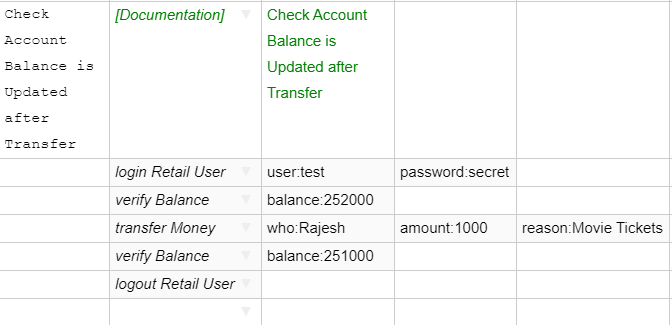
Sahi Pro test automation graphic explaining a business layer scenario


Notice how the business layer does not assume anything about the user interface. It does not matter if this is on a web application or on a mobile app.

Also, each of the steps in this business flow will correspond to functions or methods implemented separately.

Layer 2: Implementation Layer

This layer implements the business keywords specified in the previous layer

  • Understands interactions between different actions performed on UI
  • Library file with implementation of keywords used in Business Layer
  • Will change if interaction flow changes
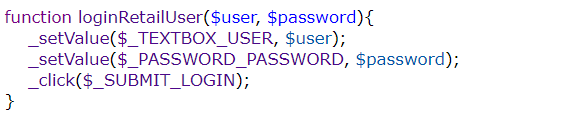
 

Sahi pro graphic explaining test automation functionsNote the name of the method corresponds to the relevant step in the scenario file, the number of arguments and their values are also picked from the provided scenario, while the actual code for the step is implemented inside the method.


Layer 3: Accessor Repository Layer

This is the layer where we store every element’s locator and accessors.

  • This is the Central repository of all elements in the automation code
  • This changes when a particular element changes in the application UI (for example, due to HTML/Javascript changes in web interfaces)
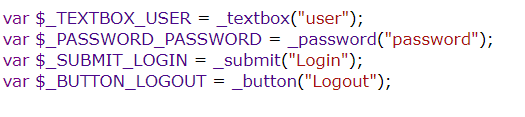
Sahi Pro graphic explaining test automation functionAs you see now, the business layer will be where you will define the flows and actions for every use case. This is high level and mostly worded in natural language. So, eventually your business team as well as manual testers will be able to write the scenario files easily.

The implementation layer is where you take each action and define the methods containing steps to perform that action. This is easily doable using any automation tool. With Sahi Pro, you can use record and playback as well as write your own using simple java script. These functions are stored in library files. These will change only if the flow or sequence of steps changes. These functions are not hard coded with your object ids, so they will not change even if an object’s locator changes. The locators are all in the Accessor Repository layer.

The Object locators are saved in Accessor Repository (AR) files.

In Sahi Pro, you can create an AR automatically as you record your script, and you can also have a single AR for multiple scenarios and scripts. This AR is the place you need to go and edit the object locator if anything changes.

Conclusion

  • Automation code is most useful when there is a lot of change planned in your application
    • Acts as a safety net and guideline
    • Automation code should not be thrown away when application technology changes
  • Building the right layers and strictly following them helps in minimal maintenance efforts and long-lived useful automation scripts


Find out more about maintainable test automation at the EuroSTAR Conference, Nov 11-15. Book your tickets now!

——————————————————————————————–

Author: Nishi Grover Garg – Product Evangelist and Head of Trainings, Sahi Pro

Nishi Grover Garg - Product Evangelist and Head of Trainings, Sahi Pro

Nishi is a corporate trainer, an agile enthusiast and a keen tester at heart! With 11+ years of industry experience in Agile environment, she has worked in various roles as a hands-on tester, automation developer, a freelance consulting trainer and currently works with Sahi Pro as the Evangelist and Trainings Head. Nishi is passionate about training, organizing testing community events and meetups, and has trained hundreds of professionals and teams on agile, test automation, QA bootcamps and DevOps courses.

Nishi is also a writer on technical topics of interest in the industry and has numerous articles published at numerous popular forums and her own blog testwithnishi.com where she writes about the latest topics in Agile and Testing domains. Connect with her at @testwithnishi
 

Filed Under: Test Automation Tagged With: Test Automation

Smarter Testing. Superior Outcomes. Achieve Both With Micro Focus.

October 25, 2019 by Fiona Nic Dhonnacha

EuroSTAR is Europe’s No.1 software testing conference. Whether your thing is testing, devOps, agile or QA, you’ll be among Europe’s testing stars. The Micro Focus team looks at what delegates can expect.

This year’s conference theme is ‘working well’, and we will be busy at booth 6 proving how our Application Delivery Management solutions can transform your testing environment. We’re bringing our a-Game – and some of our best solutions – to the show.

Visit us at booth 6

See how to minimize risk and maximize user satisfaction by testing early and often with our industry-leading, integrated portfolio for continuous and comprehensive testing of web, mobile, and enterprise applications. The results – smarter testing.

From development through to production, you and your teams will have the benefit of specific, actionable feedback on your applications’ security, functionality, performance, and application readiness status. Ask for a demo in booth 6 and leave the conference with a plan to deliver smarter testing and superior outcomes!

Check out the best in:

  • Micro Focus Functional Testing
  • Micro Focus Performance Testing
  • Micro Focus ALM Octane

Intelligent test automation

Our Functional Testing solutions deliver AI-driven test automation across an unparalleled range of technologies; on the most popular browsers, mobile devices, operating systems, and form-factors; from the cloud or on-premises; to deliver the speed and resiliency required to support rapid application changes within a continuous delivery pipeline.


Optimized application performance

Do you need to test applications and complex scenarios on-premises or in the cloud? Stop by and see how to achieve superb quality at scale. Performance Testing must be part of your DevOps pipeline AND your definition of “Done.”  We help customers confidently test the complex load, stress, and performance scenarios that their applications require while simultaneously providing comprehensive analytics for root cause analysis and accelerated identification of performance issues. Test any application type and protocol on-premises or in the cloud while incorporating real or simulated services and networks.

ALM Octane

Enterprise Agile and DevOps software development faces many challenges and organizations want to improve application delivery processes across the entire application life-cycle. The powerful capabilities in ALM Octane include:

  • Delivering at enterprise scale and optimizing application delivery
  • Providing full application visibility and traceability
  • Increasing application quality
  • Reducing integration costs and achieve better value flow
  • Achieving DevOps management, scalability, automation and intelligence

Stop by and be in with a chance to win

We’re also participating in the “passport around the expo” and the “Expo-Prize giving”, so when you are not hearing from peers in the sessions, be sure to stop by for your chance to win some Lego! Haven’t got your EuroSTAR ticket yet? For a limited time you can use code MICES19 at checkout for a 10% discount.

——————————————————————————————–

Author: Gil Cattelain, Product Marketing Manager, Micro Focus

Micro Focus product marketing manager

Gil has 20+ years of experience in software marketing, including recent time at Echopass and Genesys as Director of Digital Marketing where he specialized in digital marketing for the cloud-based contact center market.

His expertise also includes director of corporate marketing at Matrix42 and product marketing at Novell. He has also held positions as international public relations manager and channel marketing manager.

Gil holds a B.A. in political science from Brigham Young University and is fluent in French.


Filed Under: Application Testing, Test Automation Tagged With: applicat, software testing tools

6 Top Tips to Make the Most of EuroSTARConf

October 24, 2019 by Fiona Nic Dhonnacha

Stepping foot through the doors of Europe’s biggest software testing conference can be daunting – especially if you’re a newbie. We’re here to give you a helping hand.

Plan Your Sessions

Plan the sessions that you want to attend – it might sound tedious now, but you won’t regret it! Create a timetable for yourself, noting speaker names and room numbers. Creating a personalised timetable means you won’t waste any of your precious time at the conference trying to find your next session or rushing to where you need to be. Although, if that does happens, don’t worry – there’s always someone around from the EuroSTAR team who will steer you straight.

Dive in

First off, there are many people in the same boat as you. Take comfort from that if you’re feeling nervous. Second, the best way for you to get comfortable is to dive right in – or at least stick a toe in the water to get the feel of things. That means not just attending sessions but taking part in everything EuroSTAR has to offer (which is a lot this year!). Get chatting to people, ask lots of questions. Head to Huddle for some conversations with visionaries. If you’re feeling overwhelmed – head to the Quiet Room. You will come across some like-minded people!

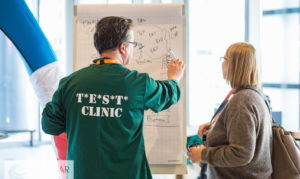
Group at EuroSTAR Test Clinic

Do Some Testing

OK, it seems obvious, but hear us out! We don’t just talk about testing at EuroSTAR, we’re all about getting hands-on: tinkering, tweaking and experimenting with testing. Head to the Huddle – the heart of EuroSTAR Conference – and connect with the community at the Test Lab and Test Clinic. Fact: Eurostar was the first ever conference to organise a test lab and 11 years later it’s gong stronger than ever!

Take Notes

Take lots of notes, because you’re surrounded by a fountain of knowledge and inspiration. Grab a notebook and pen, write it into your phone, sketch or draw – whatever works for you! You never know what will spark your creativity at the conference, and you can even share your notes with the community if you think there’s a benefit.

Join a conversation

Group at EuroSTAR Test Clinic

Conversations spill outside of the speaker sessions, and that’s usually where new ideas are born, discussions and opinions are shared enthusiastically. There are interesting conversations happening all over, and this is an opportunity to connect and meet people from very different backgrounds and experiences. There are always groups of people gathering to discuss different methodologies and their merits: agile, devops, and anything else you want to talk about.

Get social

EuroSTAR conversations happen online at the conference as well. People at the conference are commenting on sessions they’re attending using the conference hashtag, and some people will be live-blogging sessions they attend and posting links to their summaries on Twitter, so you can read up on any sessions you missed. This year we’re introducing the Whova app for the first time, a super way to engage with other attendees and stay up to date on what’s happening at the conference.

If you haven’t got your ticket yet – it’s not too late! Our 1-day ticket is the perfect option if you can’t join us for the full 4-day package.

PURCHASE CONFERENCE TICKETS
Thank you to Zeger van Hese and Rob Lambert for their excellent advice in helping put these tips together.

Filed Under: EuroSTAR Conference Tagged With: EuroSTAR Conference

3 Tips for Your Test Automation Success

October 18, 2019 by Fiona Nic Dhonnacha

Everyone’s talking about test automation: test teams, test managers and project managers. Why? The answer is simple: test automation saves a lot of time and money! BUT test automation is not just test automation…


In order to take full advantage of an automated solution, some rules should be observed. Follow and implement the following 3 tips from our test experts and get an easily maintainable test automation. This quickly pays for itself!

Tip 1: Separation of Concerns

Apart from trivial “Hello World” examples and “Proofs of Concept”, test automation for a technically relevant IT system necessarily results in a comprehensive automation code. This code can then no longer be effectively managed in a monolithic structure. The decisive factor for economic efficiency is that the code has a modular, low-redundancy structure.

A separation of the code into a logical level and a technical level has top priority. The logical level describes the workflow of the test case. The technical level contains the interaction of the code with the test object. This separation ensures that if the test object is changed technically, only the technical level has to be adjusted. Under ideal circumstances, this is exactly one method of the code.

Man sitting at his laptop getting frustrated over test automation

Tip 2: Framework

Complex code for test cases is difficult to understand, debug, and maintain. However, maintenance represents a large part of the total test automation effort. The costs are correspondingly high. It is therefore particularly important to keep this effort as low as possible.
A test automation framework covers a large part of frequently repeating code and thus reduces the complexity of the code.

By outsourcing this code from the test cases into the framework, the implementation of automated test cases is greatly simplified and thus more economical in terms of structure and maintenance.

Tip 3: Re-usability

A test automation component has a high re-usability when used by a large number of automated test cases. The higher the re-use rate, the more “useful” the component is.
A component-based model can automatically lead to a high re-use rate if implemented correctly. This is supported by a hierarchical layered architecture that separates the different levels of abstraction. This leads to a desirable high reuse rate at all levels of the test automation architecture.

Cost Analysis

Do you want to know if your automation is economical? Request the cost analysis and the data table. Get in touch with us via email: marketing@aqua-cloud.io

In order to decide when automation is economical, a cost analysis can be carried out according to a formula tested by our test experts. This formula is used to create a data table with all the cumulative costs of manual and automated operations. This shows from which release the break-even is reached.

——————————————————————————————–

Author: Martin Koch

Martin Koch from Aqua

A fixed parameter in the aqua world – Martin Koch is responsible for product management concerning anything to do with quality assurance software aqua.

Process consulting ITIL – focusing on release – and change management, QM, QA as well as requirements management all belong to his job profile. Equally, project work for customers such as T-Mobile/Telekom and Vodafone. He started off as a Java lead developer, development and project leader for the iTAP project before taking care of conception and development within the aqua team.

In addition to his diploma in computer science, Martin Koch also contributes to the company with his experience in banking, as a developer and graphic designer for interactive media (video game ‘Creatures’) and as a developer of the tele-cooperation software used by the aircraft construction company Airbus.

Filed Under: Test Automation

API Testing Solves the Confirmation Bias in UI and Web/Mobile Testing

October 14, 2019 by Fiona Nic Dhonnacha

Watching the World Burn: API Testing as an Afterthought

The annual cost of software defects has risen to over $1 trillion, even while enterprises and government organizations devote large chunks of their IT budgets to QA and testing. In “Watching the World Burn: API testing as an Afterthought,” API Fortress explores why so many teams have releases with defects (bugs) that cannot be diagnosed until it’s too late.


New Rules for Quality

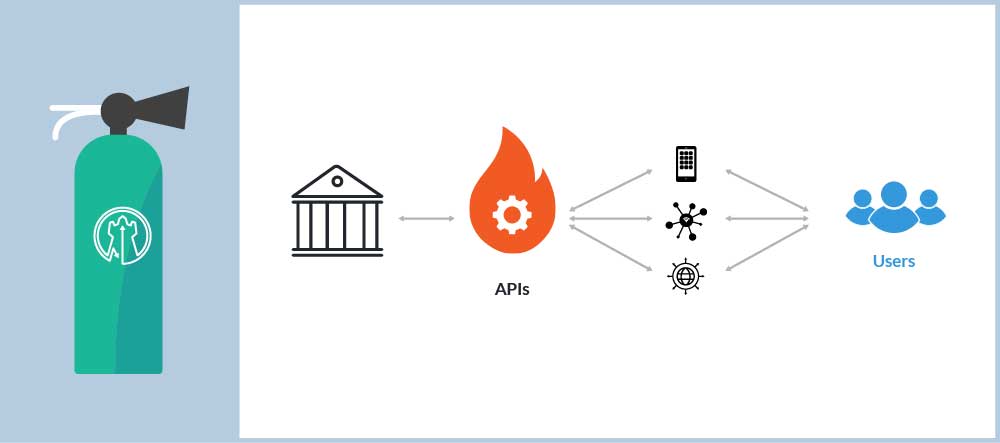
Our CEO, Patrick Poulin, tackles the dilemma of how defects are released despite strong QA efforts. Digital transformation, microservices, composite apps and public API initiatives such as open banking and open payments have triggered a paradigm shift in software quality and testing automation. Traditional unit testing and web/mobile testing often leave QA gaps that only API testing can close. See real world examples in our eBook: Nine Bugs That UI Testing Could Not Diagnose.

Confirmation Bias: The Persistence of Human Error in QA and Testing

Renowned theoretical physicist Richard Feynman once posited that humans ask questions that tend to derive answers based on who we are and what we want to know. Today, this tendency is known as “confirmation bias.” QA and software testing teams are not immune to this bias, which leads to gaps in testing strategies.

API Testing graphic representation

Is Confirmation Bias Inherent in UI and Web/Mobile Testing?

In Nine Bugs That UI Testing Could Not Diagnose, Feynman’s confirmation bias surfaces in nine stories of UI and web/mobile testing failing to find and diagnose errors, resulting in software bugs that cost time, money, and reputation.

One of the stories, for example, involves a company that runs a self-service online marketplace. The bug was the result of a problem that plagues all large companies – different teams not being on the same page. One team plans and builds an API, another team builds the web page to sell products, and a third team runs homepage navigation.

None of the siloed teams made an obvious mistake. Further, no bugs were discovered during the QA and testing process. Prone to the Feynman bias, UI and web/mobile testing simply validated what each siloed team needed to validate. However, the bug was due to a constellation of human errors that only proper API testing could discover.

API Testing Solves the Feynman Bias

Many Testing Centers of Excellence (TCoE) have long understood the need to remedy the Feynman bias (inadvertent human error due, in part, to siloed workflows) by supplementing UI and web/mobile testing with API testing. API testing digs beneath the UI layer where it can holistically extend testing coverage across the entire “constellation” of functionality built by different teams. In this way, API testing can diagnose bugs caused by many different moving parts that may be working out of alignment.

We invite you to sign up for a free trial and demo of API Fortress and put your testing to the test.

——————————————————————————————–

Author: Patrick Poulin

Patrick, CEO of API Fortress


Patrick started his tech career on mobile, and soon was managing the retail vertical for a company building the first mobile websites for over 75 major brands such as Tesco, Target, Macys, and MAC Cosmetics.

After a (thankfully) short stint in adtech, he became the API Evangelist for Getty Images. This is where he first recognized the lack of good API tools. That experience is what led to the creation of API Fortress with his co-founder.

Filed Under: Application Testing

QA Automation vs. Humans: Can You Automate Everything?

October 2, 2019 by Fiona Nic Dhonnacha

Increasingly, we rely on software to automate our lives. “Hey Google,” we say, “what’s the weather going to be like today?”…“Alexa”, we call, “order me a new dishwasher”.  In the workplace, we use automated HR services to check through applications at breakneck speed, create chatbots to answer all of our customer’s burning questions and rely on automation tools like Zapier to boost our productivity.

Every task we do seems to be heading towards automation. The robots are taking over! But is QA automation also the way forward? Can you really automate everything?

What is automated QA testing?

Automated QA testing uses specialist software to execute pre-scripted test cases. This means that you can run thousands of tests efficiently by programming an automation tool. For example, your new social media app may require a registration form with multiple-choice questions. A script could automate each answer to make sure that all options perform correctly. If the outcomes don’t match the script, they would be flagged for review. In cases like these, automation can be a huge time saver versus a human tester.

But can you automate everything?

Automation is an important part of any testing toolkit. If you know exactly what you want to test, you can effectively achieve a pass or fail scenario, and quickly identify any problems that may arise. But can every part of testing be automated?

Dan Ashby, former Head of Testing at eBay, answered this perfectly when he spoke to Global App Testing co-founder, Ronald Cummings-John for our Amazon best-selling book, Leading Quality. Dan argues that there are two types of testing:

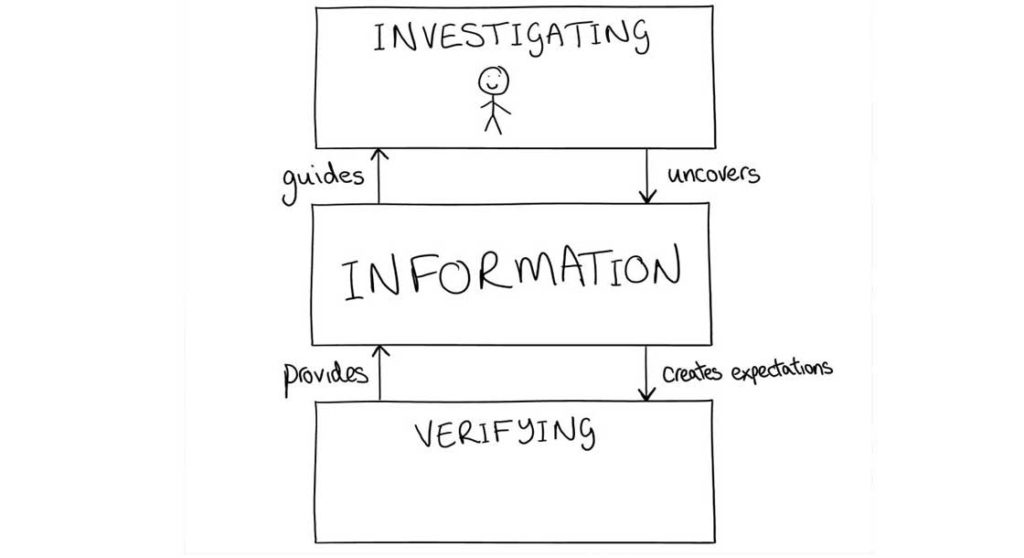
  • Investigating: using our ideas and creativity to attempt to uncover information about a product.
  • Verifying: confirming or denying our pre-conceived expectations of how a product will behave.

For example, if you wanted to conduct investigative testing on your new hotel booking app, you might manually test by attempting to book a room in Paris for the following month. In turn, you may discover a bug you hadn’t expected. This will then lead to verifying testing to confirm whether this is a common issue when trying to book a room. If similar issues arise, this will provide more information to guide the investigation.

Dan says:

“The problem with verifying activities is that you can only verify what you know needs to be checked. But once a problem is uncovered, you then have to investigate it. And that is why you will always need some form of manual testing.”

 When software engineers create apps, they can write up a checklist of all the things it should be able to do. A QA automation specialist can then turn that checklist into a test to verify that the software can do everything it’s supposed to. But, a level of creativity is required to identify ways in which software may not work, and to think up scenarios whereby programmes may not perform as expected.

 There will always be unexpected and unknown possibilities in software development that need to be explored. If you can’t plan for it, you can’t create an automation script for it. Therefore, you will always need professional testers who can use human imagination, knowledge, and experience to conduct investigative testing. Without them, you cannot prepare for the unexpected.

When should you automate?

It isn’t currently possible to automate everything in QA testing – so when should you automate?

Let’s look at the research. In a study conducted by IBM where researchers calculated the cost of manual testing vs. automation, it was found that there were three main situations where automation was more efficient than manual testing:

  1. The automated test case is expected to have a relatively long life without needing to be changed or edited.
  2. The test case is comparatively easy to automate, meaning that it can be created from a generalized manual process; the more complex the task, the more difficult it is to automate.
  3. The comparative cost of automating is lower than that of executing the test manually.

If these situations are in place, then it will likely be cost-efficient and/or time-efficient to automate your testing.

Automation vs humans?

You wouldn’t ask an engineer “what’s the best way to code?”, because that would suggest they were limiting themselves to just one method each time. So why should you only limit your testing to just automation or manual?

What have we shown?

  • There are two types of testing: investigating and verifying.
  • For investigative purposes, you need creativity, and therefore require manual testing
  • For verifying activities you can use either manual or automated testing to test pass or fail scenarios.
  • In certain situations, like those we outlined in ‘when should you automate?’ automated testing can save money and time, and increase productivity
  • In other situations, the creativity of humans can help you discover bugs that you might not have expected.

The answer is clear: by using a blend of automated and manual testing, you can find bugs that may impact your customers before they do. Global App Testing combines humans and intelligent automation to deliver fast, accurate, actionable test results – effortlessly.

If you would like to learn more about manual testing vs. automation, read Leading Quality, the software industries’ ultimate guide to quality.

——————————————————————————————–


Author: Amelia Whyman

Amelia is a Marketing Executive at Global App Testing, a crowdsourced testing company with 25,000+ testers in 105 countries. She writes about QA, software bugs and quality company cultures. She is interested in the future of autonomous testing.

Filed Under: Test Automation

30 Fast Facts About Prague

September 26, 2019 by Fiona Nic Dhonnacha

30 Fast Facts About Prague

Prague is many things: it’s centuries of spires, a quirky urban paradise, a glorious patchwork of art & architecture. Of course, it’s also where EuroSTAR Conference 2019 is taking place!


Nov 11 kicks off 4 unforgettable days of learning, testing, and life-changing experiences. Want to know a little more about our host city? Here are 30 fast facts about Prague – we bet some of these will surprise you. Book your tickets now, and we’ll see you there!

PURCHASE CONFERENCE TICKETS

1 An eye for a hand

The Astronomical Clock is struck every hour by moving sculptures of the 12 Apostles parading around from the above window. Legend says clock creator Hanus Carolinum was blinded by the Old Town councilors with a hot poker – so that he could never recreate the clock for another city. Burn.

2 Mind the beard

The Legendary ‘Bearded Man’ or ‘Chin Man’ is one of the oldest public sculptures in Prague, set in a stone embankment beside the famous Charles Bridge. It’s a watermark warning of flooding – if the Vltava River rises to the figure’s beard, it means flooding is imminent and the riverside quarters need to be evacuated.

3 Drunk as a…monk?

Brewing in Prague was first recorded at Prague’s Břevnov Monastery in 993 AD. These crafty monks had a monopoly on beer sales in Prague for many years – the monastery was reopened in 2012 with an onsite restaurant and of course, epic beer.

4 We ale make mistakes

The popular Pilsner beer was invented in Prague in 1842. It was apparently brewed by mistake by a Bavarian brewer trying to make German beer. Groll created the new beer using just barley malt, local Saaz hops, and lager yeast.

5 Dancing on ice

In the heart of the city centre lies central Europe’s largest club, Karlovy Lázně. There’s a dizzying 5 stories of dancefloors, different themes, bars and music for all tastes. The Ice Bar is the star – fully carved from ice, you’re provided with a stylish coat and and hat upon arrival to ensure you stay (relatively) toasty.

Prague Castle against a dusky sky backdrop

6 King of castles

Prague Castle is the largest castle in the world – and it’s an architectural feat. This 30 metre wide medieval marvel and its 70,000 square metres of land attract almost 2 million visitors every year, and it’s landed a spot in the Guinness Book of World Records.

7 Walk this way

The narrowest street in Prague measured at a mere 50 cm (1.6 ft) – so a traffic light was installed to regulate the flow of people up and down! Blink and you’ll miss it, but if you are near Charles Bridge it’s worth a stroll. Just don’t be tempted to ahem, run a red light.

8 Urban paradise

Just a short tram journey out of the city is a beautiful urban woodland called Divoká Šárka. The area is a pure escape from city life, offering a gorgeous valley that lends itself perfectly for a day out of hiking, swimming, and even golfing.

9 Graffiti lane

There’s an entire graffiti wall devoted to John Lennon in Prague. Initially it was built as the ‘Crying Wall’, and associated with protest lyrics. However, since John Lennon’s death in 1980, it became an outlet for the outpouring of grief and protest against his death

PURCHASE CONFERENCE TICKETS

10 River long

The Vltava is the longest river in the Czech Republic and runs right through Prague. This stunning waterway is also where the EuroSTAR Community Dinner takes place, onboard The Grand Bohemia. Its destined to be a night of great food and gorgeous scenery!

11 Written in the stones

Former Czech king Charles IV laid the first stone of the Charles Bridge at precisely 5.31am on July 9, 1357. The king was so passionate about astrology and numerology that he chose this date because of its written form: 1-3-5-7-9-7-5-3-1 (year, day, month, time).

12 Tower of babies

12 Love it or hate it, the Zizkov Tower is one of Prague’s most striking structures, featuring a dozen gigantic babies crawling on it. Creator Czech artist David Cerny’s specialty is combining the thought-provoking with the utterly bizarre – and this is a must see.

13 We heard it on  the grapevine…

Although they’re famous for their beer, Prague’s warm summers and south facing hillsides means that it boasts some gorgeous wine. The country’s wineries have been making a name for themselves at international wine competitions, notably for their white wine varietals.

14 Good education

The first university to be established in Central Europe is in Prague. The Charles University is also the largest and oldest university in the Czech Republic – and one of the oldest in the world. Founded in 1348, today it’s renowned as a dynamic and prestigious institution of education.

Charles Bridge in Prague

15 Bridge of beheadings

The stunning 719-year-old Charles Bridge has a ghastly past. After the 27 leaders of the anti-Habsburg revolt were executed in June of 1621, 12 of their severed heads were suspended in iron baskets from the towers at each end of the Charles Bridge. According to history the heads remained there for over a decade and the bridge is haunted by their spirits to this day…

16 Cathedral city

St. Vitus Cathedral is the largest – and most important church – in the country. It was built over a rather long timespan of 600 years, and houses treasures ranging from the 14th century mosaic of the last judgement, to the baroque silver tomb of St John of Nepomuk.

17 Cheers!

Prague hosts the Czech Beer Festival (Český pivní festival) every year in May, and it’s the largest beer festival in the Czech Republic. It’s held over 17 days and gives you a chance to discover the best Czech authentic beers and foods – you can try more than 100 different kinds of beers!

18 Lights, camera, Prague

Hollywood films set in Prague include Mission Impossible, xXx, Blade II, Alien vs. Predator, Doom, Chronicles of Narnia, Hellboy, Red Tails, Children of Dune, Dungeons and Dragons and Van Helsing.

19 Something old, something new

Prague is home to Europe’s oldest active synagogue. Built in 1270, the Old New Synagogue (or Altneuschul) is Europe’s oldest working synaguge and one of Prague’s earliest Gothic buildings. It’s located in the historic Jewish quarter of Josefov. and the interior looks pretty much the same as it would have 500 years ago.

20 Fred and Ginger

Prague’s famous Dancing House, with its curved lines and glass tower snuggled against the original building, was inspired by Fred Astaire and Ginger Rogers. This icon of modern architecture is meant to symbolise communism blending into democracy.

PURCHASE CONFERENCE TICKETS

21 Why the long face?

The clock on the Church of the Most Sacred Heart of Our Lord, on Jiřího z Poděbrad square, has the largest clock face in Prague – and one of the largest in Central Europe. Built between 1928 and 1932, it was designed by Slovenian architect Josip Plečnik and has a diameter of 7.6 meters.

22 Look to the west

Though Czech Republic is often considered part of Eastern Europe (at least during the Cold War era), Prague is actually located further west than Vienna in Austria, which is considered part of Western Europe.

23 Wonder Woman

Prague-born Madeleine Albright was the first woman to hold the post of U.S. secretary of state, from 1997 to 2001. Among her achievements was the ratification of the Chemical Weapons Convention and progress toward stability in Eastern and Central Europe.

24 Still standing

The oldest surviving building in Prague is the 11th-century Rotunda of St Martin. The door and frescoes date from a renovation made in around 1880.

25 Cubist curiosity

The world’s only cubist lamp post can be found in Prague. Designed by artist Emil Kralicek, this angular concrete curiosity is conveniently just around the corner from Wenceslas Square. It’s worth a visit to this quirky monument.

26 Charles Square

Charles Square is one of the largest squares in the world and was the largest town square of medieval Europe. It was once known as “The Big Marketplace” (Tržiště velké) or “Cattle Market” (Doytčí trh).

27 Humerus hijinks

Inside the baroque Church of St. James the Greater is a withered human arm dangling by a meat hook – this nasty memento is said to be the arm of a jewel thief, caught trying to steal the jewels from the statue of the Virgin Mary. She gripped his arm in a such a vice that it had to be chopped off.

28 The Metamorphosis

Legendary author Franz Kafka was born in Prague on July 3, 1883, near the Old Town Square, and he’s now buried in the New Jewish Cemetery (Žižkov) on June 11, 1924.

29 Independence Day

Prague was the new capital when Czechslovakia declared independence in 1918. This heralded a new era for two nations which had previously been part of the Austro-Hungarian Empire. Czech Republic continues to celebrate their independence day on October 28th every year.

30 And finally…

The locals drink more beer per capita, than any other country in the world! The total beer consumption per head in the Czech Republic equals approximately 150 liters per year. In other words almost half a liter daily. Expect to sip on some quality beer as part of our EuroSTAR at Night events!

We hope to see you in Prague for this year’s 27th conference – book your tickets now and get ready for an unforgettable 4 days!

PURCHASE CONFERENCE TICKETS


Filed Under: EuroSTAR Conference

A Quick Guide to Risk-Based Testing

September 26, 2019 by Fiona Nic Dhonnacha

Risk-Based Testing is a strategy that uses defined risk as a means for adequate testing in order to maximize testing goals. This post introduces you to the concept of Risk-Based Testing as well as the purpose and key benefits.

A Quick Guide to Risk-Based Testing: What Is It?

Risk-Based Testing is a testing strategy that follows the principles of Risk Management, but in a testing context.

In software development projects, there is a set of common objectives, including:

●     “quality”

●     cost control

●     time-to-market (i.e. target release/delivery dates)

These goals can be affected by risks coming from different sources (both internal or external,) due to many different factors. In case of negative risks, the risk level will depend on things such as the complexity of the change, the number of impacted users, frequency of usage, likelihood of failure, etc.

Risks can affect the overall quality, including the customer perceived quality.

Quality is a broad word embracing “fit” of the product to customer needs and the many quality attributes which risks may affect. An intrinsic part of quality is ensuring that a product has few bugs (or at least a reduced probability of bugs on important/risky areas).

If testing is performed as a means to find/avoid bugs, RBT can be used as a “mitigation,” or even as an “avoidance” strategy. On the other hand, testing is also about understanding, discovering and providing valuable feedback that can help build “better” features and better products. Therefore, RBT assists in making testing related decisions based on the assessment of risks.

Purpose of Risk-Based Testing

The main purpose of Risk-Based Testing is to use risk management principles for adequate testing. First of all, RBT provides a framework for clear communication and discussion about risks between testers, developers, clients and stakeholders. RBT will help you define terms and agree on a common language, and through this it will make risk visible and actionable for you.

RBT takes into consideration the big picture, as it covers customer needs and also the needs of the development team. It specifically uses risks as the input to support testing activities.

Typically, customers are most concerned about business features, timing, visible quality and costs. On the other hand, the development team has similar concerns; however, it sees quality in a broader scope as it has to maintain and possibly evolve with the product being developed.

Timing and costs need to be managed effectively to be on a budget and avoid delays; however quality must not be hurt and if decisions need to be taken to meet timing/cost criteria, RBT can provide the means to ensure that focus will be given to the features/issues that matter most to customers.

Both customers and the development team want to avoid important defects, so, RBT focuses the testing efforts on what matters most – where we can get the most value from.

Benefits of Risk-Based Testing

●     More focus on the customer: RBT will help you test more thoroughly what customers are most concerned with.

●     Reduced probability and impact of negative risks: by focusing the testing on higher, negative risks, probability of missing important defects lowers. Therefore the probability assigned to the risk lowers as its corresponding risk level.

●     Increased confidence of testing decisions: RBT can help find more important defects first, by focusing testing on higher risks.

●     Optimized QA efforts and cost: Risk-Based Testing will help you answer the questions: ”What should we test? ” and “Where should we start?”

●     Increased risk level of positive risks: If an opportunity is identified, RBT can be used to provide thorough testing and take advantage of it.

●     Make better decisions based on risk: RBT can give you visibility of risks, so you can take a go/no-go decisions “knowing the risk.”

Make Risk-Based Testing Work for You

 Risk-Based Testing can be as complex or as simple as you need it to be, since it’s adaptable to different workflows and scenarios including Waterfall, Agile and Hybrid. Whichever route you decide to go, Risk-Based Testing will give you the framework, common language, and indicators to make wise testing decisions.

We hope you enjoyed this Quick Guide to Risk-Based Testing. To learn more about RBT, check out Xray’s Complete Guide to Risk-Based Testing.

Did you know that Xray is a Test Management app with capabilities which support Risk-Based Testing? Find out how to perform Risk Analysis by defining impact, probability and risk-level, as well as how to set-up and configure your Risk-Based Testing strategy using Xray.

——————————————————————————————–

Sérgio Freire, Product Manager at Xray

Author: Sergio Freire

My background is electronics and Telco based. Throughout the years I’ve worked in and with teams developing real-time software, web and mobile applications and also complex hardware systems. I’ve worked and interacted with teams in waterfall and Agile contexts.

As a Product Manager for Xray, the top-rated app for test management in Jira, I’ve been responsible for defining the features that will ease the task of quality assurance for teams developing products, no matter if they are software or hardware based.

As head of Solution Architecture, I work closely with many different teams worldwide from distinct yet highly demanding sectors (Automotive, Health, and Telco among others) to help them achieve great, high-quality, testable products. By understanding how organizations work, their needs, context and background, processes and quality can be improved, while development and testing can “merge” and act as a unique team, with a common goal: provide the best product that stakeholders need.

Filed Under: Risk

  • « Previous Page
  • Page 1
  • …
  • Page 10
  • Page 11
  • Page 12
  • Page 13
  • Page 14
  • Page 15
  • Next Page »
  • Code of Conduct
  • Privacy Policy
  • T&C
  • Media Partners
  • Contact Us

part of the