• Skip to main content
EuroSTAR 2027 - Sign up for early access

EuroSTAR Conference

Europe's Largest Software Testing Conference.

  • Programme
    • Call for Speakers
    • 2026 Programme
    • Community Hub
    • Awards
  • Attend
    • Why Attend
    • Bring your Team
    • Testimonials
  • Sponsor
    • Sponsor Opportunities
    • Sponsor Testimonials
  • About
    • About Us
    • Our Timeline
    • FAQ
    • Blog
    • Organisations
    • Contact Us
  • Book Now

Fiona Nic Dhonnacha

Eurostar Online Ticket Benefits

June 29, 2020 by Fiona Nic Dhonnacha

What are the EuroSTAR Online Ticket Benefits?

Get ready to empower your testing at Europe’s biggest testing event.

EuroSTAR Online is more than a conference. For the past 28 years, the best and brightest minds have come together to learn, test & connect. This year, we’re bringing our entire programme online for 3 days of of learning & networking.

This is your space – your space to think creatively and connect with testers from across the globe. This is where you can approach challenges from new perspectives and tap into your full potential. It’s the topics you care about, the tools you work with – and it’s a programme carefully curated by our programme committee for the best possible experience: interactive tutorials, inspiring keynotes and incredible track talks.

Our expert speakers are here to help, along with the worldwide testing community! Bring your ideas, problems, worries, and a fresh notebook – let’s put our heads together.

But what are the EuroSTAR Online ticket benefits? Here are 10 top reasons you should get your ticket now:

  • 3 days of half-day practical tutorials, keynotes & workshops
  • 55+ speakers who are industry leaders in their field
  • 60+ hours of quality, actionable content
  • 1:1 problem solving with experts
  • On demand access to tutorials to use as a resource in your work
  • Our beloved Huddle, plus trivia, hands-on testing & more, all re-imagined for online!
  • Try new testing tools & platforms from the world’s leading companies
  • No hard choices – attend any topics & sessions based on what you want to learn that day
  • Valuable training without any travel or accommodation costs
  • Instant connection with your peers and a space to open up exciting new conversations

It’s going to be an incredible conference, and we’re looking forward to welcoming testers from all over the world. Get your ticket now!


BUY TICKETS

Filed Under: EuroSTAR Conference

How to become a top testing expert

June 24, 2020 by Fiona Nic Dhonnacha

At some point this question will come to all of us in the industry: how do I become a top tester? My answer is this:  to become a top testing expert you need to be curious, a quick learner, and possess some technical skills.

Considering the IT evolution towards low-code solutions and increasing (right-first-time) time-to-market improvement challenges, for every minute a developer spends doing some coding, a higher volume of testing coverage is needed (and quickly!).

Since this isn’t achievable by increasing headcount, the only way is to use all automation and artificial intelligence capabilities by accelerating quality delivery. The engineer needs to ensure all pieces are fully functional, and ready to be part of any end-to-end business process… that will work E2E!

For many engineers solving development challenges at unit or system level, they can simply stay there – at unit or system level. However, the testing engineer must make sure that the unit does everything it should – and doesn’t do anything it shouldn’t – at necessary speed and security levels, as part of a bigger applicational and business process architecture.

Therefore, the learning skills and curiosity to go beyond borders will become key for success.

What if I can only pick one skill, either from soft skills or technical skills, that is key to become a top tester?

Then, I would say excellent communication skills are essential (including negotiation and conflict management). Why was this not in the initial top three skills that I’ve mentioned before? Simply because in this world of high demand for IT change, the need for functional end-to-end validation will increase. Robots will not be able to do it on their own (at least the fit-to-purpose) because it is something complex.

software testing graphic

Humans asking questions, changing their mind (according to the business needs), going through any lifecycle methodology and being delivered exactly as the human wants, are some of the factors that only humans understand. It will be extremely difficult, even impossible, for a machine to learn.

But doesn’t this sound contradictory? Yes, it does! And it is also the proof that the testing professionals and all other QA related jobs will have a massive increase in the coming years: while we’ll see low-code increasing, some other “Ultra High Even Less Code” approaches are also appearing, and it will require large amounts of testing effort, more and more.

So why should technical and curious professionals be ready for this challenge? The demand for quality assurance will increase, and without those professionals, it will be impossible to achieve everything, without technology to validate technology.

Looking for more ways to learn how to become a top tester? Check out the EuroSTAR 2020 Online programme.

——————————————————————————————–

Eduardo Amaral, Quality Management Senior Manager at NoesisAuthor: Eduardo Amaral, Quality Management Senior Manager at Noesis
Filed Under: Development, EuroSTAR Conference

The 2020 EuroSTAR Programme is Here

May 11, 2020 by Fiona Nic Dhonnacha

The first speakers for EuroSTAR programme are announced! We’re so excited to share our biggest year yet.

Inspiring Keynotes

The EuroSTAR 2020 programme has been carefully crafted by our committee, and it’s going to be incredible. The keynote speakers are leading experts in their field, and ready to share their insights and experiences. Join Ronald Cummings-John on the true value of quality; Abby Bangser on unlocking the power of testing; and get help on your testing problems from Michael Bolton. We also have Jason Arbon talking AI testing limits (and superpowers!). Meanwhile, Tomasz Dubikowski gets real with microservices testing.

Interactive Tutorials

The programme also features half day intensive tutorials offering in-depth learning in the hottest testing topics. Fran O’Hara delves into agile, Fiona Charles shares powerful test techniques, Alan Richardson gets technical on web applications, and LOTS more. You’ll get actionable tactics to improve your work and get back to work motivated and refreshed.

Incredible Track Talks

The 2020 EuroSTAR programme keeps on giving and there are two days of track sessions, bursting with talented speakers ready to delight and inspire. Learn to thrive in test automation, deep dive into continuous delivery, learn new skills to become better testers, and lots more. Bring your curiosity. Take-home new perspectives.

Meet Some Great People

The community is still at the heart of EuroSTAR, and outside of the talks, the 2020 Online conference will include interactive sessions and conference favourites that you’ve come to expect. Solve problems at the Test Clinic, try some hands-on testing at the Test Lab and enjoy fun and games in the Community Huddle…all re-imagined for an online experience.

Ready to join us in November? Get your tickets here.

Filed Under: EuroSTAR Conference, Virtual Conference Tagged With: EuroSTAR Conference, speakers

EuroSTAR 2020: What, Why and Where (+ 5 Reasons You Can’t Miss It)

April 23, 2020 by Fiona Nic Dhonnacha

For the past 27 years, we’ve gathered the testing and QA community from all over Europe to bring you a conference that sparks inspiration, friendship and collaboration. EuroSTAR 2020 is being re-imagined… we’re bringing our incredible EuroSTAR speakers and talks online. It’s going to be our most ambitious programme yet.

What’s Different?

We might be changing the how, but we’re still delivering the same high energy, adrenaline-filled EuroSTAR experience: visionary speakers armed with insights, ideas and inspiration; interactive training tutorials; cool new testing tool demos; even more opportunities to connect and chat – all from your device.

Who will be there?

We have an impressive line-up taking shape and we can’t wait to share it with you! We’ve already introduced our first keynote line-up and our full programme launch is coming next week! Expect the best and brightest from the testing world. Of course, you’ll (virtually) bump fists with like-minded peers at online networking events. This is where you forget about the daily grind and start dusting off your ideas – here’s where they will flourish.

What about everything else?

It wouldn’t be EuroSTAR without your favourites, now newly imagined to ensure the best possible experience. Try the coolest software testing tools from worldwide brands at our Expo, ask our Test Doctors your most complex problems, and come visit Huddle – the heart of EuroSTAR. We’ll see you there for chats, fun games & lots, lots more.

Will Eurostar 2021 be back in person?

That’s a YES! EuroSTAR will be back in a European Conference Centre next year (currently a top secret!) This year, due to COVID-19, we are prioritising the health and safety of our community, partners and team, but in 2021, we can’t wait to welcome you back in person. As always, we’ll announce the Programme Chair for next year on the final day of the conference

5 Reasons You Can’t Miss EuroSTAR Online

5. Upskill & Sharpen your Knowledge

The EuroSTAR 2020 programme will be packed with content from Europe’s testing trailblazers. Expert sessions including inspiring keynotes, tutorials and buzzing track talks to get creativity flowing. You’ll be back at your desk filled with actionable ideas to apply to your work. Our live Q&A sessions means you get to pick our speakers’ brain and absorb lots of extra knowledge! Bonus – it’s all on demand after the conference.

4. Connect with a Global Network

Meet and jump into conversations with an even larger testing community online this year. The conference is a melting pot of creative people, and we’re excited to welcome a global audience to our online networking platforms. Talk it out, validate your ideas, or change your perspectives with people who tackle the same problems as you do – even from the other side of the world!

3. Solve your Testing Challenges

Bring your toughest and most complex questions to our testing experts: our community loves a challenge and you’ll connect with peers who have faced similar obstacles – and are just as excited about a solution. Our famous Test Clinic and Test Lab are re-imagined this year to curate an online experience to help you get all the answers you need.

2. Try Testing Tools from Global Companies

Stay on top of what’s coming next in testing tools, try some cool demos, and add new processes to your testing toolkit by getting involved in our Expo Hall. It draws some of the biggest companies in the world armed with all the latest testing tools. Don’t forget your virtual swag bag…

1. Bottom Line: Create YOUR vision

We are always asking delegates to share their feedback, and here’s one we love: after attending, a delegate decided he was going to ask tougher questions at work – which led to better results and a promotion! You’ll be motivated and ready to put YOUR vision into action at you work.

See the programme here, and check out our ticket options.

Got more questions? Check out our FAQ page for everything you need to know.

BUY TICKETS

Filed Under: EuroSTAR Conference, Virtual Conference Tagged With: EuroSTAR Conference

Call for Speakers #EuroSTARConf 2020

December 13, 2019 by Fiona Nic Dhonnacha

It’s that time of year again, as EuroSTAR 2019 comes to a close, the planning begins for EuroSTAR 2020 begins. If you haven’t already heard, next year we are going to Antwerp! The Call for Speakers is officially open, and we would love for you to get involved and take to Europe’s Biggest Testing stage!


Keeping with nature the element of the venue: A Room With A Zoo, the theme of 2020 is Testing in The Wild! You may interpret this theme in any way you like. Tell us your wildest testing tales. Connect your story with animals. It’s not just theory: did you face off with a ferocious testing problem and live to tell the tale? Give us your practical experiences and real-life anecdotes.

Submit to Speak

We invite speakers from a diverse range of topics including approaches to testing, testing techniques, tools and automation, security, quality, skills and knowledge, teams and organisations as well as ethics, professionalism, how we work and so much more to speak at EuroSTAR.

Whether you have never spoke at a conference before, if you’ve soley spoke at meet-ups & small events events, or if you’re a professional speaker, we welcome everyone to submit to speak at EuroSTAR.

Our Programme Chair, Rik Marselis is hosting a webinar to help new speakers or those wishing to improve their talk ratings when submitting to conferences on January 14th. Register for Webinar.

There are many reasons why speaking at an international testing is beneficial. Learn more here.

Start preparing your submission for EuroSTAR 2020 today – the closing date for submissions is Friday 7 Feb. 2020!

It could be you this year on the EuroSTAR Stage!


Incase you need another reason to submit to speak at EuroSTAR 2020, take a tour around the conference venue. Nestled in the heart of Antwerp conservation zoo and embedded in nature. We’re going beyond conventional space – think sprawling architecture, marble, lots of light – all on the doorstep of the wild. After all, nature nurtures. Here’s the icing on the cake: all profits made by the convention centre are invested into animal breeding programmes, research and nature conservation worldwide. We’re blown away by the inspirational setting here – and we’re sure you will be too.

So what are you waiting for? Start writing your proposal and submit to speak at EuroSTAR! 

Filed Under: EuroSTAR Conference Tagged With: EuroSTAR Conference

Database Subsetting

November 11, 2019 by Fiona Nic Dhonnacha

The biggest technical challenge when using production data for development and testing is that the volume of data can be huge. Subsetting the data while keeping its semantic meaning is not an easy task.

In a practical sense relating to IT, subsetting is a process of making a large database smaller in order to ease the development and testing. Without it, teams would either have to works directly on production databases or each have his own copy of it, which when talking about enterprise solutions, could be well over the terabyte mark.

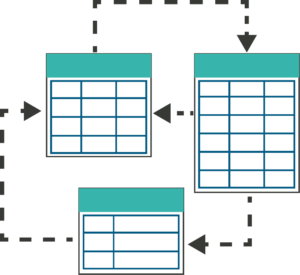
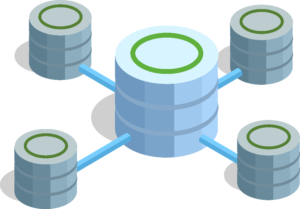
Ekobit's graphic illustration of subsetting a large database into several small ones
Figure 1 – Subsetting a large database into several small ones

Challenges of subsetting

With subsetting, each team or even team member can have his own database with the data that is relevant to the task. But because of the new process, a lot of technical skill are required, most of which are not needed and shouldn’t be required from a tester or, for example, a UX designer:

  • Knowledge of the SQL syntax
  • In depth knowledge of the database schema and relationships
  • The domain knowledge of the application, and what tables are needed for it to function

Because of all this, scarce resources have to be consumed, mostly database administrators and developers time. And it’s not a one-off process. Every time the database definition changes, the process must be updated, and the new subsets redistributed to users. Now add anonymization and pseudo anonymization because of the GDPR into the mix, and the task becomes extremely tedious.

What is a subset anyway?

We must decide what data we need, or to go down to the database level, what tables are the pivot for our subset building. Some of the possible strategies are:

  • First, top, bottom or random N records
  • Filter by columns of a table
  • List of primary keys to extract
  • Complex queries spanning over multiple tables

After that, we need to include all the related parent table data to the records we extracted so that when we bring the constraints in, the database is valid. We might also want some child records of the tables, with or without filters and then we must gather the remaining parents.

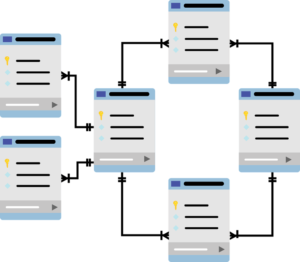
Ekobit's graphic illustration of parent-child relationships between tables
Figure 2 – Parent-child relationships between tables

Figure 2 – Parent child relationships between tables


Data explosion

There will probably be tables that have circular references back to itself, either directly or via some sequence of tables. Here we can easily experience data explosion, if we run into a record that is connected to many other records, and we end up with a useless subset, that is almost as big as the original one.

Here we need to identify such records and tables, and either copy them entirely, which is usable for smaller tables like organization hierarchy, but for a very active table, like transactions in a banking system we need a cutoff. Some of the basic cutoff strategies available are:

  • Don’t collect the data, we will deal with the constraint later, either by not collecting the records, or putting the appropriate key to null
  • Link all the records to the same parent record, be it a random, fixed or syntactic record
Ekobit's graphic illustration of circular references between tables
Figure 3 – Circular references between tables

Performance

There are many factors that can affect the performance, but the one we can influence is the number of queries to the database. We can make the queries smarter, try to minimize the number of visits of the same table, and perform micro optimizations by deciding how to transfer the data from one system to the other.

We can offload a lot of work to the machine running the subsetting, and have it log the Ids of row to be transferred, but then we run into a risk of needing a lot of memory. Or we can have the database engines run the queries for us utilizing linked servers, but then we can easily overextend the production database. It’s not an easy decision to make and each system is different.

Conclusion

Subsetting sounds trivial when first mentioned, but as you get deeper into it, it becomes more complex. As soon as you start working with real life database, a great number of challenges appear which are not easily solved. Considering that the users want an application that works and is thoroughly tested, subsetting should be an integral part of quality control, testing and DevOps.

If you’ve encountering the subsetting Gordian knot, and need help, or are just overwhelmed with the many details, come and find us at the Ekobit stand, and see how we, our software and our expertise in both data masking and subsetting can help you.

Filed Under: Big Data

Run and analyse a JMeter test in 5 minutes

November 8, 2019 by Fiona Nic Dhonnacha

In this post we will cover how you can quickly run a JMeter test from recording to results in a few minutes.
We will use OctoPerf to process our recording, launch the test and aggregate the results for us.

Recording and design

First we are going to use our browser to record traffic from a real application.
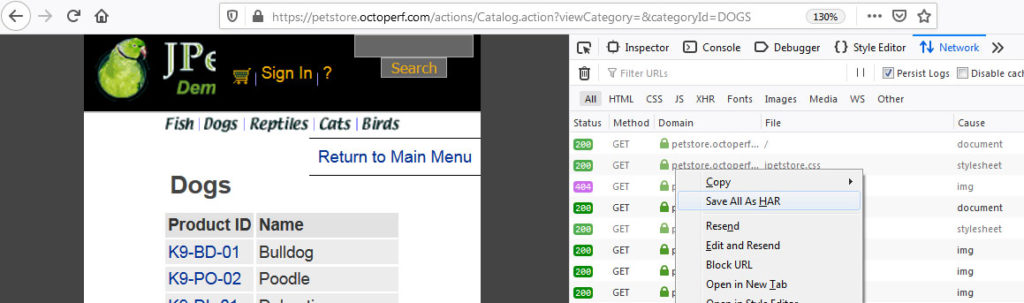
We do not need to install anything since that can be done by using the dev tools, more specifically the “Network” tab:

Octoperf graphic illustration of a test recording

Then, when you’re done navigating through your application, you can export this traffic as a HTTP archive file and import it in OctoPerf.
We can then rework it in OctoPerf design engine, in particular to handle session IDs or other similar parameters.
This process can be time consuming, but OctoPerf will also help speed it up. You can see how that would work in our tutorials
If you are a JMeter user, note that any script/plugin or custom development you are using in JMeter can also be used with OctoPerf.

Execute the test

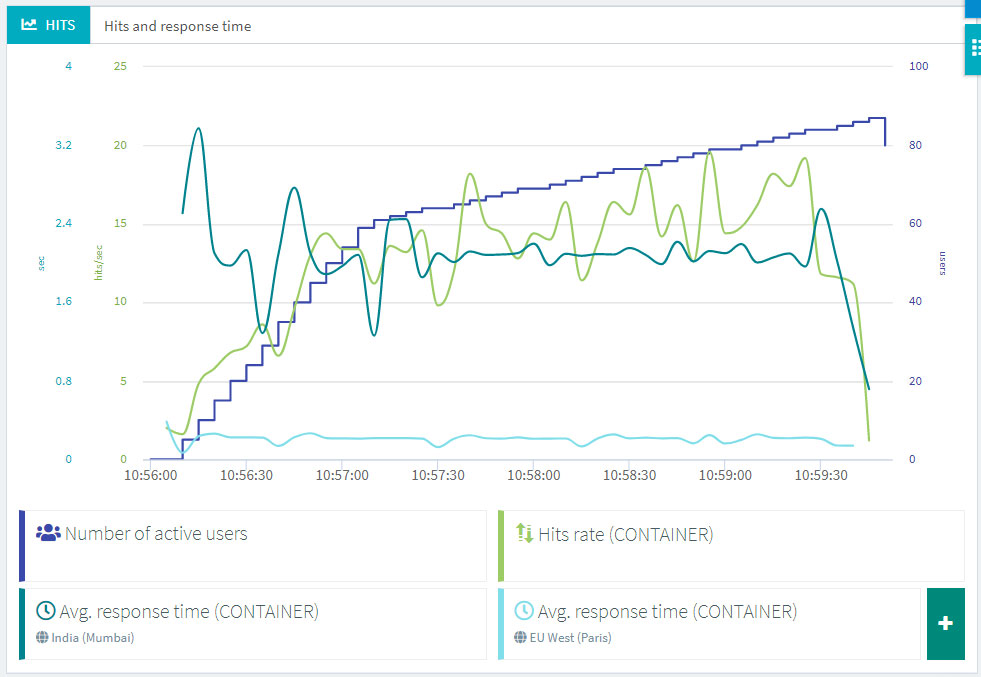
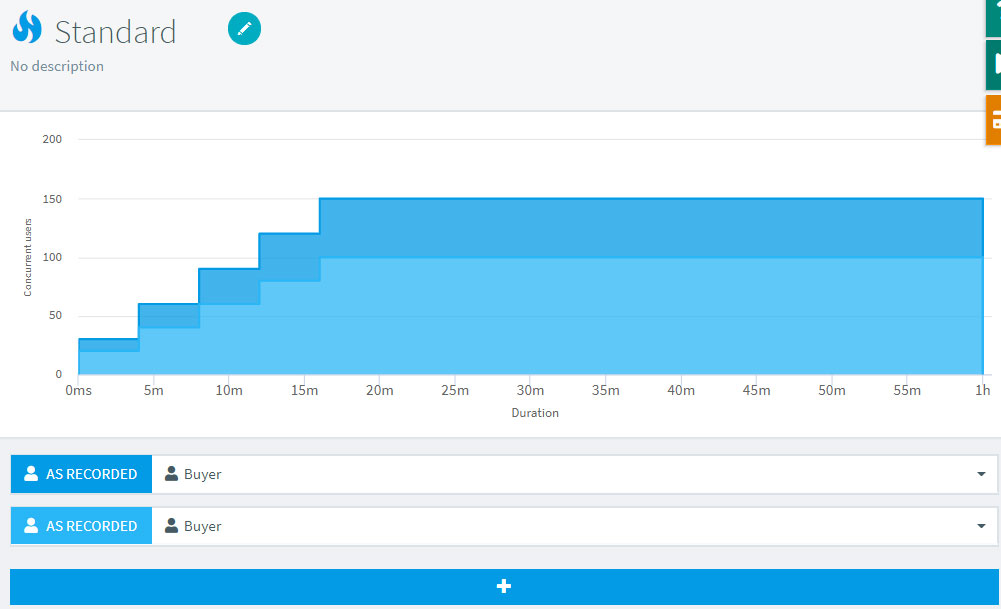
Now what remains is to execute the test; we can set up the load to be executed from different cloud locations so that we can compare the impact of latency:

Octoperf graphic illustration of a software testing execution

Load generators will be started automatically as required, we do not have to trouble ourselves with the machines and their setup.
That can be incredibly convenient since JMeter requires a lot of tuning to work in an optimal fashion.

Analyse the results

Once we launch the test, we will have access to the live report, with every metric being collected in real time it is possible to analyse our test as it goes:

Octoperf graphic illustration of software testing results


That way we can quickly find out what is going on. Even more so thanks to our report templating that allows you to have the exact metrics you care about in every test report.
That is another pain point out of the way, since aggregating results from different load generators can be complex and has to be done after the test or through the use of a custom influxDB.

Conclusion

This post was aimed at giving you a quick overview of the productivity gains you can have when you operate JMeter through OctoPerf.

Filed Under: Performance Testing

Lighter and Faster: Two Strategies for Improved Agile Testing

November 5, 2019 by Fiona Nic Dhonnacha

Designing and maintaining test cases for a fast-paced agile team can be a real challenge. Testers don’t often receive rich requirements for test planning in advance, and they aren’t given months notice to write test-case specifications. In fact, it’s not uncommon for a tester to get his or her first look at a working piece of code just before the hopeful go-live deadline.

In order to overcome this common challenge and speed up the entire testing process, agile teams can implement a few different strategies to simplify team communications, reduce the risk of development rework, and increase the overall quality of delivered software.

Light and Fast Strategy #1 – The Three Cs

The Three-Cs concept, heralded by Ron Jeffries, emphasizes a discovery process instead of a traditional requirement/specification process, forgoing the precondition of comprehensive information early in the development cycle. The three core elements are as follows:

  • Card – Write user stories on cards. The card does not contain comprehensive requirement information. Instead, the card has just enough text to identify the requirement and remind everyone what the story is. Keep it simple.
  • Conversation – Customers communicate requirements to the team through conversation, including thoughts, opinions, and feelings. Conversations take place over time and are particularly important when a story is estimated (during release planning) and again when the story is scheduled for implementation. Conversations should aim to produce executable examples, which Jeffries calls confirmations—assurances that the team understands the goal and is producing the agreed upon functionality.
  • Confirmation – Regardless of how many conversations and examples are produced, certainty of success cannot be achieved without the customer-generated acceptance test. As the ultimate judge of all our development and testing efforts, the customer must be the primary voice that defines the parameters of success.

This lightweight approach replaces the time spent writing exhaustive documentation with conversation and collaboration. A good user story should collect and summarize conversations and log the agreed upon confirmation/acceptance tests, giving a tester the ability to execute tests manually with minimal—but invaluable—information.

Test cases define how a particular story could be used from an end-user’s perspective, and they are used to confirm when a story is complete and working as intended. They establish the boundaries of a story’s scope and the definition of done.

Lightweight test cases needn’t consist of more than a brief description of what needs to be tested. A clear and simple statement is the goal, with no detailed steps or expected results. In this regard, less is more because lightweight test cases generally won’t need to be revised as technical details shift throughout development.

Other benefits of lightweight test cases include:

  • A reduced number of test cases
  • Less time spent on test case design and maintenance
  • Emphasis placed only on work that adds value to the end product

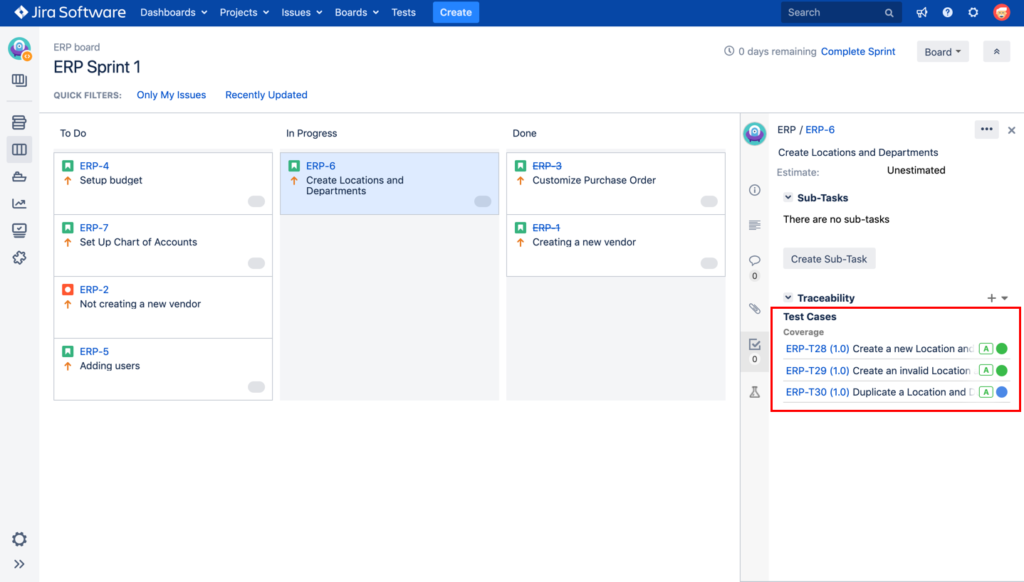
Agile teams using Jira to plan and track software development oftentimes struggle to manage acceptance tests since Jira doesn’t support them natively. Adaptavist’s Test Management for Jira (TM4J) is a full-featured test management app that seamlessly integrates with Jira and unlocks lightweight test case design right out of the box. TM4J sits on top of Jira and runs natively so testers and developers can work closely together to design and execute test cases directly from agile and kanban boards.

Jira software illustration

Light and Fast Strategy #2: Behaviour-Driven Development (BDD)

Behaviour-Driven Development (BDD) is another approach to lightweight test-case design for agile teams. BDD is a story-centric development concept, initially developed by Dan North, that builds upon the conversational and collaborative elements of the Three-C’s method.

BDD defines behaviours of a system through examples in plain text. Agile teams practicing BDD often run special meetings before or early on in a sprint in which developers, testers, and domain experts discuss the concrete behaviours of how the system should work. These concrete behaviors are called examples. The goal of the BDD approach is to solidify the shared understanding of the development efforts and to minimize the risk for rework at later stages.

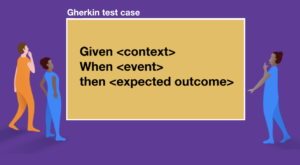
Graphic illustration of Gherkin test case

To clearly communicate desired behaviours for all involved parties, test case descriptions (or examples) should contain realistic data, not abstract jargon. The approach aims to avoid misunderstandings and waste while simultaneously giving non-technical users an opportunity to express thoughts and ideas in the shared common language.

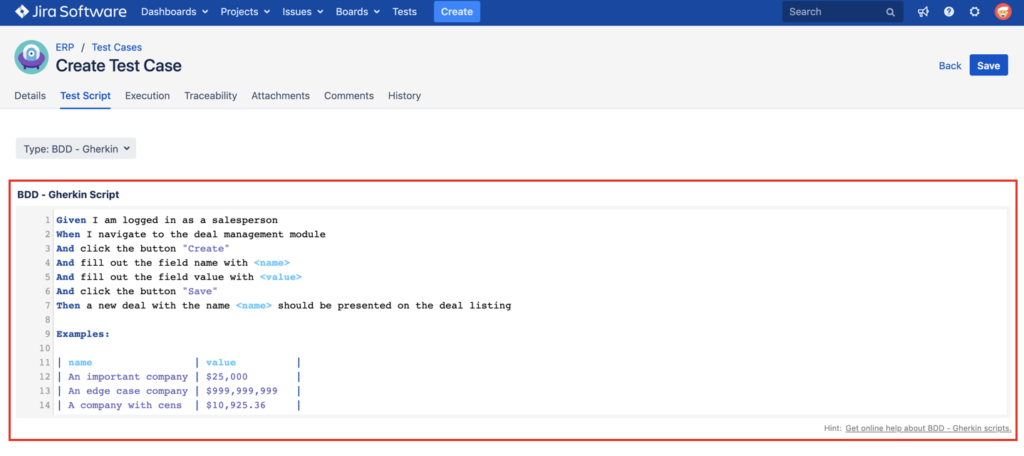
A plain-text structured language called Gherkin is often used to design BDD test cases. It is incredibly basic but has just enough structure to make it useful for developers. Gherkin’s format has Given, When, Then, And, and But elements to illustrate behaviours of the system or functionalities with example data, including pre/post-conditions. It simultaneously specifies user stories while identifying acceptance tests, thereby streamlining requirement discovery and test case design.

Adaptavist’s Test Management for Jira (TM4J) supports BDD with Cucumber and a host of other Gherkin-compatible tools used to write acceptance tests. TM4J helps teams build a shared understanding around acceptance tests within Jira.

Jira software graphic illustration of a test case gherkin script

When concisely written, these tests help development teams avoid ambiguity and rework, ensure all scenarios are accounted for, and help establish that all user stories are complete. If you’re interested in learning more about the topic, check our our guide to BDD in Jira here.

Closing thoughts

100% of successful agile teams eventually learn this important lesson: testing is not a separate stage of development, but an integral part of the software development lifecycle.

With new code being pushed daily (or even hourly!), the changes that teams need to test are constantly moving targets. Designing lightweight test cases allow testers to respond faster to changed requirements and streamlines the entire testing process. Test cases that are easy to understand aids clear team communication and ensures that the delivered software is exactly what the end-user expects and needs. Improved communication between developers, testers, and domain experts simplifies the development process, meaning less bureaucracy, more time to code, and faster delivery.

Want to learn more about agile testing inside Jira? Come chat with us at booth #11 at the EuroSTAR Testing Expo.

– – – – – – – – – – – – – – — – – – – – – – – – – – – – – – – – — – – – – – — – – – – – – – – – –

Author: Cristiano Caetano

Adaptavist product manager Cristiano Caetano

Cristiano is a Product Manager lead at Adaptavist, one of Atlassian’s leading global Platinum Solution Partners.

He is interestested in all things agile, digital transformation, and helping companies build better software. He shares his thoughts on these topics and more on the Adaptavist blog.

Filed Under: Agile Tagged With: agile, agile testing

  • « Previous Page
  • Page 1
  • …
  • Page 9
  • Page 10
  • Page 11
  • Page 12
  • Page 13
  • …
  • Page 15
  • Next Page »
  • Code of Conduct
  • Privacy Policy
  • T&C
  • Media Partners
  • Contact Us

part of the