• Skip to main content
EuroSTAR 2027 - Sign up for early access

EuroSTAR Conference

Europe's Largest Software Testing Conference.

  • Programme
    • Call for Speakers
    • 2026 Programme
    • Community Hub
    • Awards
  • Attend
    • Why Attend
    • Bring your Team
    • Testimonials
  • Sponsor
    • Sponsor Opportunities
    • Sponsor Testimonials
  • About
    • About Us
    • Our Timeline
    • FAQ
    • Blog
    • Organisations
    • Contact Us
  • Book Now

Big Data

Agentic Automation in Testing: Smarter Workflows, Faster Results

April 7, 2025 by Aishling Warde

In modern software development, outdated QA processes often struggle to keep up with the necessity for reliability, accuracy, scalability, and speed. Manual testing is tedious and too slow, while rigid automated test frameworks demand constant maintenance. This is where Agentic Automation gained prominence. Agentic AI is revolutionizing QA with AI-driven, self-adapting workflows that autonomously analyse, learn, and optimize test processes.

This shift towards Agentic Automation guarantees smart decisions, higher test efficiency, optimized test execution, and smooth incorporation with modern CI/CD pipelines.

As companies push for seamless digital experiences and faster release cycles, embracing Agentic Process Automation is no longer a choice—it’s a requirement. Let us discover how this innovative approach revolutionizes QA with smarter, quicker test execution.

What is Agentic Automation in Testing?

Agentic Automation denotes a quantum leap from traditional automation testing. Unlike conventional test frameworks that depend on manual oversight and predefined scripts, Agentic AI test works autonomously, making intelligent decisions based on actual data.

Unlike deterministic automation that strictly follows predefined workflows such as RPA (Robotic Process Automation), Agentic Automation leverages modern ML (machine learning) algorithms and LLMs (Large language models) to scrutinize patterns, adapt to growing test environments and smartly optimize test strategies.

Crucial Traits of Agentic Automation:

  • Self-Healing Testing Scripts – Self-heals broken tests caused by code or User Interface (UI) changes.
  • Self-Learning & Adaptive Tests – Agentic process Automation continuously refines test cases based on past implementation results.
  • Predictive Error Detection – Detects potential glitches before they impact production.
  • Continuous Optimization – Enhances test performance using data-driven insights.
  • Autonomous Test Implementation – Executes testing strategically through risk-based prioritization.

How Agentic Automation Drives Smarter, Faster Testing Workflows?

Agentic Automation is revolutionizing quality assurance (QA) by applying Agentic Process Automation, Agentic AI, and Agentic Workflows to deliver self-healing, self-learning, autonomous test systems. This transition helps businesses minimize human effort, increase the pace of test execution, and improve the entire software quality.

  1. AI-Centric Self-Healing for Reliable Automated Testing

One of the major challenges in traditional automation testing is test maintenance. Slight modifications or code updates can disrupt automated scripts, demanding persistent manual fixes. Agentic Automation addresses this issue with self-healing capabilities. AI detects UI or application logic changes and dynamically updates test scripts, ensuring seamless execution and improved reliability.

  1. Intelligent Test Prioritization for Speed & Productivity

Test cases differ in significance. Rather than executing every single test indiscriminately, Agentic Process Automation intelligently prioritizes them using past failures, risk assessment, and impact analysis. This confirms critical functionalities are tested first, accelerating feedback loops and reducing delays.

  1. Predictive Analytics for Early Error Identification

Traditional testing is reactive—errors are identified and fixed after implementation. Agentic Automation transforms this method using predictive analytics to find potential failures early in the SDLC. By scrutinizing previous test data and production logs, AI can forecast defect-prone areas, enabling QA teams to take proactive measures.

  1. Smooth Cross-Platform & Cross-Browser Tests

Guaranteeing software compatibility across various settings—such as Safari, MS Edge, Chrome, and mobile devices—is a daunting challenge. Agentic Automation optimizes cross-browser tests by intelligently choosing the most effective test configurations, ensuring thorough coverage while eliminating redundant executions.

  1. Incorporation with CI/CD Pipelines for Continuous Tests

Modern DevOps practices demand smooth CI/CD incorporation. Agentic process Automation impeccably incorporates tools such as Azure DevOps, GitHub Actions, GitLab, and Jenkins, allowing continuous testing at every development phase. This enables speedy deployments, mitigates risk, and improves the software delivery pipeline.

Why Businesses Need to Adopt Agentic Automation Now?

Gartner has named Agentic AI one of the top technology trends for the year 2025. By 2028, 33% of enterprise software will integrate Agentic AI and around 15 percent of day-to-day work decisions will be made autonomously. This significant move denotes a fundamental change in how enterprises operate—moving towards automation that thinks, accepts, and progresses in real-time.

Image Source

Businesses that embrace Agentic AI can also experience the following:

  • 80% reduction in test maintenance efforts through AI-powered self-healing.
  • Lower defect escape rates through advanced predictive defect identification.
  • Better scalability and test coverage across multiple devices and platforms.

With rising demand for higher software quality and faster releases, companies that overlook Agentic process Automation may fall behind in speed, agility, and quality.

ACCELQ Autopilot – AI-Driven Agentic Automation at Hyper speed

ACCELQ’s Autopilot represents a sophisticated implementation of generative AI in test automation that goes beyond basic script generation. It offers an interconnected suite of AI capabilities that work together to transform how teams create, maintain, and scale their test automation.

At its core, Autopilot combines multiple intelligent features that address the fundamental challenges in test automation:

  • Scenario Discovery and Test Step Generator
    • Automatically creates comprehensive test scenarios and detailed test steps from – simple business descriptions.
    • Understands both UI and API testing needs.
  • AI Designer for Modularity
    • Intelligently structures test into reusable components.
    • Ensures tests are built as maintainable assets rather than isolated scripts.
  • Test Case Generator
    • Creates diverse test combinations that cover various business scenarios.
    • Automatically populates relevant test data while maintaining logical relationships.
  • Logic Insights
    • Provides contextual understanding and optimization suggestions.
    • Embeds test architecture expertise into the tool.
  • Autonomous Healing
    • Automatically adapts to application changes, even handling complex modifications like element type changes.
    • Provides AI-augmented troubleshooting support.

What makes this offering particularly noteworthy is how these features work together cohesively – from initial test creation through maintenance and optimization – while keeping the interface intuitive for both technical and non-technical users. It’s smarter than it sounds — the system knows much about what makes a good test. It forcibly applies best practices requiring years of experience to do manually around things like reusability, maintainability, and reliability.

Though the immediate focus of this multi-pronged approach to integrating AI at the core of test automation is about faster test creation, this offering also promisingly tackles longer-term challenges such as test maintenance, scalability, and adaption to change, making it one of the strongest candidates for enterprises keen on rolling out sustainable AI-powered test automation at scale.

By removing the old bottlenecks associated with script maintenance and test flakiness, Autopilot allows test automation to be a development enabler instead of a maintenance burden. With its deep integration of generative AI, businesses can achieve continuous testing with minimal manual intervention, accelerating release cycles while maintaining high-quality standards.

Final Thoughts

As organizations progressively adopt agile methodologies, Agentic AI emerges as a boon, fostering smarter, faster, and more adaptive software development. By embracing Agentic Automation, companies can optimize workflows, accelerate test execution, reduce costs, and stay competitive. Those who hesitate risk disorganization, delays, and falling behind in an ever-growing landscape.

To stay ahead, businesses must embrace Agentic Process Automation and shift towards AI-centric, adaptive test strategies. The future of QA is proactive, intelligent, and self-sustaining —the time to embrace it is now.

What’s holding you back? Step into the future of test automation now! Connect with our experts now and supercharge your test workflows.

Author

Geosley Andrades, Sr. Director, Product Evangelist at ACCELQ

Geosley is a Test Automation Enthusiast and Community builder at ACCELQ. Geosley helps ACCELQ with innovative solutions to transform test automation to be simpler, more reliable, and sustainable for the real world. He is also involved in actively shaping ACCELQ’s vision, immersing himself in comprehensive competitive analysis, industry analyst relationships, and pioneering research endeavours.


ACCELQ were Exhibitors at EuroSTAR 2025. Join us at EuroSTAR Conference in Oslo 15-18 June 2026.

Filed Under: Big Data, EuroSTAR Expo Tagged With: software testing conference

Real-World Data vs. Fake Data: Choosing the right strategy for effective testing

April 1, 2025 by Aishling Warde

Testing environments play a critical role in software development, ensuring applications function correctly before release. To achieve this, having test data that simulates real-world scenarios is essential. However, the choice between “fake data” and “real-world data” sparks an interesting debate, as each approach offers significant challenges.

In this article, we will explore the key differences between these two types of data, analyze their benefits and challenges, and ultimately highlight how a strategic combination of both can optimize the testing process, ensuring accuracy, security, and efficiency in development environments.

What is real-world data?

Anonymized real-world data is derived from production environments, ensuring it does not contain personally identifiable information while complying with regulations such as GDPR, CCPA, LPDP, and others.

These datasets offer a high degree of realism, as they preserve referential integrity, maintain the natural complexity of real-world scenarios, and accurately reflect user behavior, system interactions, and business logic. Additionally, real-world data naturally exhibits aging, reflecting how information changes over time and capturing historical trends and patterns that influence system behavior.

By leveraging real-world data, organizations can test applications under conditions that closely resemble actual usage, improving the reliability and effectiveness of their testing processes.

What benefits do real-world data offer?

Using real-world data provides significant advantages for your organization:

  • Captures the complexity of real-world behavior, including intricate patterns, sudden fluctuations, and inherent biases while ensuring data privacy.
  • Maintains appropriate statistical distribution and frequency.
  • Preserves relationships and interdependencies between elements, allowing comprehensive “end-to-end” testing.
  • Reduces the gap between development, testing, and production environments.
  • Facilitates integration testing with other systems under production-like conditions.
  • Provides immediate availability and reusability.

Challenges of using real-world data

Working with anonymized real-world data presents challenges. Identifying the right data for each test case, anonymizing it effectively, and delivering it on-demand to the testing environment are key challenges, especially in complex and costly environments with large volumes of data. Managing real-world data requires robust tools to ensure that no sensitive information is exposed and that masking processes remain effective, as well as addressing other critical challenges in test data management.

Synthetic data

The term “fake data” or “synthetic data” is widely used across industries but lacks a universally accepted definition. Different sectors and vendors interpret this concept in various ways depending on their testing needs and available technologies. While some consider synthetic data as manually created datasets, others define it as AI-generated data, or even simply masked real data. As these variations can create confusion, understanding the most common approaches provides greater clarity about what synthetic data really means.

Some of the most common definitions include:

  • Traditionally created data: Data manually or traditionally generated using tools like spreadsheets, scripts or bussines apis. While quick to produce, it often lacks complexity, is prone to errors, and becomes costly over time.
  • AI-Generated data: Data created by AI models trained on real-world patterns. Although it can mimic realistic behaviors, its reliability remains limited for mission-critical applications. For the time being, there is no evidence of successfully using this approach for testing business support systems.

Synthetic data limitations

These approaches to synthetic data generation often fall short when it comes to accurately simulating production environments, facing critical limitations challenges such as:

  • Lack of aging: No representation of time-based changes.
  • Limited complexity: Misses intricate, real-world dependencies.
  • Absence of rare scenarios: Struggles to simulate edge cases.
  • No technical debt: Fails to reflect legacy patterns and old system quirks.
  • Unrealistic data: Lacks inconsistencies found in production.
  • Reduced data richness: Missing the diversity of real-world interactions.
  • Insufficient volume: Smaller datasets than real production environments.
  • Inaccurate data distribution: Does not replicate real-world patterns.

These gaps make these synthetic data approaches unreliable for testing environments that aim to mimic production conditions accurately.

How does icaria Technology generate high-quality synthetic data?

To overcome these limitations, icaria Technology has developed a model-based synthetic data approach that ensures realistic, secure, and scalable datasets for high-quality testing environments. This approach allows us to create high-quality test data that mirrors real-world conditions without compromising security, compliance, or performance.

Advantages of icaria Technology’s synthetic data

Our approach to synthetic data offers significant advantages for software testing environments. By replicating the structure, patterns, and complexity of real-world data while ensuring the exclusion of sensitive information, this method strikes a balance between realism, scalability, and security. Here are some key benefits of using our synthetic data:

  • Realistic test scenarios with no privacy risks
    Maintains relationships, distributions, and behaviors from real-world datasets without exposing PII. By generating this data from pre-existing models, we ensure that test environments mirror production scenarios.
  • Consistency across testing stages
    Ensures smooth transitions between development, staging, and production phases by preserving referential integrity and data relationships.
  • Scalability and flexibility
    Generates large volumes of test data tailored to specific needs, supporting extensive performance and scalability tests.
  • Customizable for testing requirements
    Allows the generation of datasets designed for edge cases, rare scenarios, or new application features.
  • Cost efficiency
    Reduces manual effort and minimizes rework costs through automated processes, ultimately saving resources during the testing lifecycle.

When to use real-world data and when synthetic data?

After reviewing what real-world data is and our definition of synthetic data, the question arises: which one should we use in testing?

Real-world data is the best option for testing due to its richness and complexity, accurately reflecting system behavior and user interactions. Since this data already exists, it is often more efficient to use it rather than generating new datasets, which can introduce additional challenges and complexities.

However, this does not mean synthetic data has no place in a robust testing strategy. In certain situations, our synthetic data approach can be particularly useful, such as:

  • When testing requires data that is not yet available in existing application environments. For instance, during new developments involving changes to the application’s data model, there will be no existing data for the new model, necessitating synthetic data generation.
  • When specific datasets are rare but essential for testing. Some scenarios occur infrequently, meaning only one or two real-world examples exist. In these cases, synthetic data can generate additional instances, ensuring all testers and developers have access to the necessary data.

The perfect combination for reliable testing with icaria TDM

In the high-complexity environments managed by icaria Technology, particularly in icaria TDM, the reality is significantly more complex. These applications function in mission-critical domains where the margin for error is nonexistent.

By combining real-world data with synthetic data, organizations can create a balanced and efficient approach to test data management that ensures accuracy, compliance, and scalability.

Choosing the right type of data for each scenario, or combining both, helps companies improve test quality, comply with regulations, and optimize resources. With icaria TDM, achieving this balance has never been easier. This approach not only enhances testing efficiency but also strengthens confidence in systems, ensuring applications meet the highest quality standards before deployment.

Author

Enrique Almohalla

Enrique Almohalla, leading icaria Technology as CEO, brings a wealth of experience in TDM methodologies, cultivated through over twenty years of directing software development and testing projects. His significant involvement in Test Data Management, marked by continuous innovation and application, underscores his deep understanding of the field. Additionally, his position as an associate professor at IE Business School in Operations and Technology melds his hands-on experience with academic insights, offering a comprehensive perspective on business management.


iCaria were Exhibitors in EuroSTAR 2025. Join us at EuroSTAR Conference in Oslo 15-18 June 2026.
Filed Under: Big Data, EuroSTAR Conference Tagged With: EuroSTAR Conference

Are You Aware of the Hidden Cost of Test Data Governance?

May 10, 2024 by Lauren Payne

What Does Lack of Test Data Governance Mean for Your Testing?

Inefficiency in test data management is one of the main causes of delays in companies that regularly conduct software testing activities. In these companies, highly skilled teams spend up to half of their workday on routine tasks such as creating or waiting for data, which not only significantly decreases productivity, but also impacts the quality of the software developed and the motivation of the team.

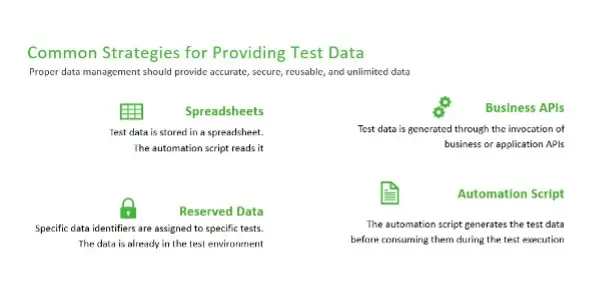
Software development and testing teams often resort to inefficient strategies that fail to provide the data that tests need. Among these, we can highlight spreadsheets, Business APIs, Reserved Data, and Automation Scripts.

Upon examining these alternatives, we can identify common problems among them, such as creating inconsistent, non-reusable data, simple data structures, etc. This leads to tests with unreliable results, which reduce test coverage and thus limit their effectiveness.

Failing to quantify these issues prevents organizations from realizing the true extent of the consequences and hinders their ability to implement effective Test Data Management strategies to reverse the situation. Recognizing and addressing the neglect of test data governance is, therefore, essential for optimizing resources, improving development cycles, and ensuring market competitiveness.

Digital Transformation in Test Data Management

Digital transformation in the realm of test data management marks a before and after in software quality. This allows you to have good test coverage and effective data management, which is fundamental for software quality.

The lack of software quality is directly related to the quality of test data. Therefore, a digital transformation necessarily encompasses not only processes and tools, but also the data management culture within the organization. By integrating advanced digital technologies for the creation, management, and deployment of test data, companies can significantly improve the accuracy of their tests, reducing data security and privacy challenges. Moreover, this transformation strengthens endusers’ trust in the digital solutions offered.

In this context, the integration of TDM tools not only increases efficiency and reduces Time To Market but also significantly improves the robustness and reliability of the software in complex production environments. Thus, automating test data management is the foundation for facing new technological challenges.

icaria TDM: Transforming Test Data Management

The constant evolutionary changes in technology have made efficiency and innovation fundamental in any technological process. icaria Technology positions itself as a leading vendor in Test Data Management soluctions with icaria TDM. Among its main features, we highlight the adaptation and extension to customer needs while staying within the philosophy of product-oriented design, scalability, and easy evolution.

icaria TDM is more than a tool, as it is based on a proprietary methodology; it is a robust solution that transforms the way testing teams access and use data. It provides accurate and secure data just when testers need it and perfect for their tests, radically transforming testing. By reducing waiting times and saving on storage costs and resources, icaria TDM not only optimizes operations but also significantly improves software quality.

What Features Should a Good TDM Tool Have?

  • Data Masking: Ensure compliance with European GDPR or similar regulations by protecting sensitive information.
  • Automatic Identification of PII: Locate sensitive data in databases, ensuring that no critical information is exposed.
  • Pseudonymization and Subsetting: Mask and move data subsets efficiently, maintaining coherence and security.
  • Self-Service and Synthetic Data: Facilitate on-demand data delivery and the generation of complex structures, streamlining the testing process.
  • Integration with Third Parties: Ensure perfect synchronization with external tools, improving flexibility and adaptability. Integrating into CI/CD processes.

The Impact of icaria TDM on Testing Teams

Testing teams that adopt icaria TDM experience a notable improvement in their daily work.

“Generating a test data used to take us about 3 days and was done manually… We have reduced the test data generation time by more than 70%.”

An extract from the Orange SQA team’s presentation during the ExpoQA’22 conference. The elimination of bottlenecks and the immediate availability of data not only accelerates Time to Market but also increases team satisfaction. With automated and predictable processes, icaria TDM improves SLAs and transforms data management challenges into a competitive advantage.

Where is icaria Technology Heading?

icaria Technology aims to continue being at the forefront of technological innovation. Participation in European events such as Eurostar is an opportunity to share knowledge and vision about TDM and also to learn from other experts in the field. With data tools like icaria TDM or icaria GDPR, icaria Technology aims not only to improve testing practices, but to redefine what software development is.

Author

Maarten Urbach

Enrique Almohalla, leading icaria Technology as CEO, brings a wealth of experience in TDM methodologies, cultivated through over twenty years of directing software development, deployment, and testing projects. His significant involvement in Test Data Management, marked by continuous innovation and application, underscores his deep understanding of the field. Additionally, his position as an Associate Professor at IE Business School in Operations and Technology melds his hands-on experience with academic insights, offering a comprehensive perspective on business management.

iCaria is an exhibitor at EuroSTAR 2024, join us in Stockholm.

Filed Under: Big Data Tagged With: 2024, EuroSTAR Conference, Expo

Database Subsetting

November 11, 2019 by Fiona Nic Dhonnacha

The biggest technical challenge when using production data for development and testing is that the volume of data can be huge. Subsetting the data while keeping its semantic meaning is not an easy task.

In a practical sense relating to IT, subsetting is a process of making a large database smaller in order to ease the development and testing. Without it, teams would either have to works directly on production databases or each have his own copy of it, which when talking about enterprise solutions, could be well over the terabyte mark.

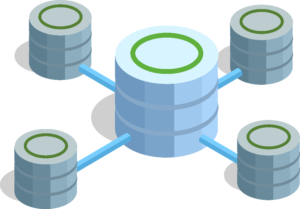
Ekobit's graphic illustration of subsetting a large database into several small ones
Figure 1 – Subsetting a large database into several small ones

Challenges of subsetting

With subsetting, each team or even team member can have his own database with the data that is relevant to the task. But because of the new process, a lot of technical skill are required, most of which are not needed and shouldn’t be required from a tester or, for example, a UX designer:

  • Knowledge of the SQL syntax
  • In depth knowledge of the database schema and relationships
  • The domain knowledge of the application, and what tables are needed for it to function

Because of all this, scarce resources have to be consumed, mostly database administrators and developers time. And it’s not a one-off process. Every time the database definition changes, the process must be updated, and the new subsets redistributed to users. Now add anonymization and pseudo anonymization because of the GDPR into the mix, and the task becomes extremely tedious.

What is a subset anyway?

We must decide what data we need, or to go down to the database level, what tables are the pivot for our subset building. Some of the possible strategies are:

  • First, top, bottom or random N records
  • Filter by columns of a table
  • List of primary keys to extract
  • Complex queries spanning over multiple tables

After that, we need to include all the related parent table data to the records we extracted so that when we bring the constraints in, the database is valid. We might also want some child records of the tables, with or without filters and then we must gather the remaining parents.

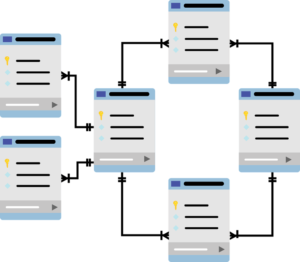
Ekobit's graphic illustration of parent-child relationships between tables
Figure 2 – Parent-child relationships between tables

Figure 2 – Parent child relationships between tables


Data explosion

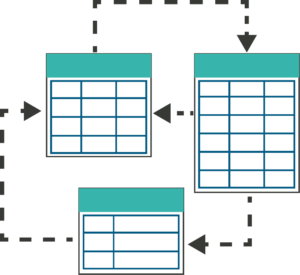
There will probably be tables that have circular references back to itself, either directly or via some sequence of tables. Here we can easily experience data explosion, if we run into a record that is connected to many other records, and we end up with a useless subset, that is almost as big as the original one.

Here we need to identify such records and tables, and either copy them entirely, which is usable for smaller tables like organization hierarchy, but for a very active table, like transactions in a banking system we need a cutoff. Some of the basic cutoff strategies available are:

  • Don’t collect the data, we will deal with the constraint later, either by not collecting the records, or putting the appropriate key to null
  • Link all the records to the same parent record, be it a random, fixed or syntactic record

Ekobit's graphic illustration of circular references between tables
Figure 3 – Circular references between tables

Performance

There are many factors that can affect the performance, but the one we can influence is the number of queries to the database. We can make the queries smarter, try to minimize the number of visits of the same table, and perform micro optimizations by deciding how to transfer the data from one system to the other.

We can offload a lot of work to the machine running the subsetting, and have it log the Ids of row to be transferred, but then we run into a risk of needing a lot of memory. Or we can have the database engines run the queries for us utilizing linked servers, but then we can easily overextend the production database. It’s not an easy decision to make and each system is different.

Conclusion

Subsetting sounds trivial when first mentioned, but as you get deeper into it, it becomes more complex. As soon as you start working with real life database, a great number of challenges appear which are not easily solved. Considering that the users want an application that works and is thoroughly tested, subsetting should be an integral part of quality control, testing and DevOps.

If you’ve encountering the subsetting Gordian knot, and need help, or are just overwhelmed with the many details, come and find us at the Ekobit stand, and see how we, our software and our expertise in both data masking and subsetting can help you.

Filed Under: Big Data

  • Code of Conduct
  • Privacy Policy
  • T&C
  • Media Partners
  • Contact Us

part of the