• Skip to main content
EuroSTAR 2027 - Sign up for early access

EuroSTAR Conference

Europe's Largest Software Testing Conference.

  • Programme
    • Call for Speakers
    • 2026 Programme
    • Community Hub
    • Awards
  • Attend
    • Why Attend
    • Bring your Team
    • Testimonials
  • Sponsor
    • Sponsor Opportunities
    • Sponsor Testimonials
  • About
    • About Us
    • Our Timeline
    • FAQ
    • Blog
    • Organisations
    • Contact Us
  • Book Now

Fiona Nic Dhonnacha

3 reasons to book your early bird ticket now

September 25, 2020 by Fiona Nic Dhonnacha

We’re getting ready for a high-energy, jam-packed,  3-day online celebration of testing this November: with 6 keynotes, 9 half-day tutorials, & 40 track sessions, plus lots of community networking.

You’re getting hands-on learning, problem solving with your peers, and juicy insights to get your creativity flowing – and if you can’t join us on the day, it’s all on demand after.

Right now, you can save €150 and secure your place at EuroSTAR Online. But hurry, our offer is closing in just a few days!

GET EARLY BIRD TICKETS


Here are 3 reasons you can’t miss it.

EuroSTAR Conference keynote speakers

The Speakers

Our keynote speakers are leaders in their field, and they’re bringing their expertise to the topics you care most about, including agile, DevOps, automation, functional testing, quality improvement, and lots more.

Jason Arbon shares real-world examples demonstrating the limitations and pain of some AI approaches. Michael Bolton will help you ask those tough questions in testing. Join Abby Bangser for examples and explanations on leveraging the dynamic duo of observability and testing in production.

Learn more about about common testing challenges while moving to cloud-based, microservice architecture with Tomasz Dubikowski. Learn how to develop a quality narrative that communicates the true value of your quality team throughout the company with Ronald Cummings-John.

The Learning

 

Team working together at a EuroSTAR Conference tutorial

With expert speakers, hands-on workshops and tutorials, you’ll absorb infinite and invaluable knowledge from many of the world’s brightest minds. Tutorials this year include Addressing Real Life Agile Testing Challenges with Fran O Hara, technical web testing with Alan Richardson, a strategic testing masterclass from Fiona Charles, and lots more. You’ll be back at your desk filled with actionable ideas to apply to your work. Check out our programme here!

Don’t worry, we’ve still got your Huddle favourites, re-imagined for an online platform: take part in our TestLab by completing  challenges, exercises and games; and solve all your testing problems at our dedicated Test Clinic.

The Community

 

Team working together at a EuroSTAR conference tutorialWe’re thrilled to be gathering the global testing community online this year – which means it’s easier than ever to chat with your peers – people who share the same problems as you, even on the other side of the world.

Say hello to new friends: connect 1:1 on video chat, try speed meeting, community networking, and jump into conversations from around the globe!


GET EARLY BIRD TICKETS

Filed Under: EuroSTAR Conference, Virtual Conference

The Ultimate Guide to getting started with Test Automation

September 24, 2020 by Fiona Nic Dhonnacha

Introduction

Getting started with test automation can seem daunting. How do you know where to start and what to focus on? We’re getting actionable and concrete advice from a Selenium enthusiast and UI testing whiz Diego Molina at Sauce Labs:

“I currently work as a software engineer at Sauce Labs. I co-created Zalenium, and help maintain the most used docker-selenium images. But it might be helpful to share with you some background on my personal testing story. I too was once just getting started with automation, and hopefully my experience can help you do the same.”

Step 1. Getting Started with test Automation – understand the benefits

Years ago, after getting my degree in computer science, I got a job as a developer. At that time, testing was primarily done by end users—we would hand over spreadsheets with all the test cases. Later, I got a job as an automation engineer where I wrote tests for every single use case. I started doing UI automation with Selenium and took the same approach, again writing tests for every use case.

At the time, I didn’t think about whether that was the right approach or not. But then I noticed a problem. My test suite went from taking 20 minutes to run to upwards of 60-70 minutes! Uh-oh. Could it be too many tests? Or did I just need to tune the infrastructure?

I ended up building my own infrastructure and scaled it up. I was able to improve the performance of the tests back down to 15-20 minutes. So then, of course, I thought the best idea would be to—you guessed it—add yet more tests. I started writing tests for every use case again.

It’s a vicious cycle! After a few rounds of this, I realized I was not tackling the problem the right way, and that automation was the key to solving it.

Why Automate?


Test automation team working together around a table

Simply put, automation gives you the opportunity to spend less time on repetitive tasks and move on to solving bigger challenges, hopefully ones that are more fun.

Also, there is a trend in the software industry: getting software out the door faster and faster. We are finding ways to speed up our releases more and more, and in order to keep up, we have to automate.


I’ll cover 5 specific areas that will help you jumpstart test automation and get the most out of it in 5 easy steps

  • Team Setup: I’ll give advice on how to handle various team setups and ensure great communication, whether the testing team is integrated with the dev team or stands alone.
  • Testing Framework: I’ll discuss why to use a framework, talk about what features a framework should have—and why you should consider open source.
  • Test The Right Thing: We can’t automate everything. Creating and maintaining automated tests takes time, so I’ll help you think critically about what to automate.
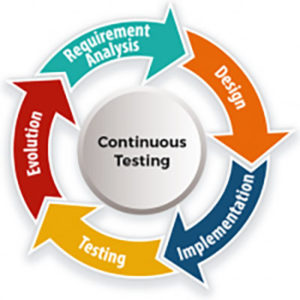
  • When To Run Tests: I’ll discuss the evolution of testing and how to use automation to move your organization forward toward Continuous Testing.
  • Get People to Join You: In the final installment, I’ll offer advice on how to motivate yourself, your entire team, and your company to invest in automation (and discuss the risks of not doing so).


Team Setup


When testers are on a separate team to developers

Choose a programming language such as Ruby or Python that has an easy setup and low barrier to entry. In fact, according to the 2019 Stack Overflow survey, Python has recently proven to be one of the most popular languages. But what’s more important than programming language? One word: communication. You have to communicate regularly with the product owner and with the development team in order to test effectively.

Here are some specific action items to facilitate this communication:

  • Get access to the story/task/feature definitions to create tests.
  • Get business context from the product owner to prioritize testing activities.
  • Get as much information as possible about the tech stack, system architecture, etc.

Also, be in sync with the dev team. Go step by step as you’re implementing the first automated tests. Work together to agree on a working pace and define a bug report flow.

When testers and developers are on the same team

This can look one of two ways: either the testers and developers have separate, defined roles (QA/Dev), or each team members serves both functions as part of their role. It really helps when one or more team members are responsible to guide the team in testing.

In this scenario, it also helps when application code and test code use the same programming language, as it really leverages team collaboration. Also, when you’re testing, take advantage of the good practices used in the software development lifecycle. Keep test code in the same repository as the app code. This simplifies the flow required to write tests for features that are not yet in production.

The bottom line is that you should look at test automation as a software project… because it is!

Key Takeaways

  • Invest time looking for a test framework that helps the team move faster. I will cover this in more detail in my next post, but this can be a huge time saver and make everyone more efficient.
  • Make test design and implementation a team task. This cannot just be one person’s job: testing and quality need to be a part of the overall team culture.
  • Document how tests are structured.Keep records of configuration as well as how to run, add and remove tests.
  • Pair program and do code reviews.When you’re adding new tests, it’s really helpful to pair up with a teammate to check each other’s code and think through each other’s approach.
  • Continuously evaluate if the existing test cases deliver enough value. We always want to be sure that we are testing the right thing and getting the results we need. Constantly evaluate and make sure this is happening!


How the team setup should evolve over time

No matter what your team setup looks like, there’s always room to evolve over time to get better and better. The goal is constant improvement, moving toward more efficient practices to let automated testing do the heavy lifting for you.

Of course, there will always be room for manual testing. However, the focus on it will change: manual testing will be used strategically for debugging and exploratory testing, instead of dominating your testing landscape.

Step 3. Testing Framework

What is a testing framework and why should you have one?

A framework isn’t just one thing. It’s a union of different things—guidelines, coding standards, good practices, tools and libraries—that work together to make us faster and more efficient. An effective test framework can lower maintenance costs, improve code reusability, help us focus on writing tests instead of writing boilerplate code before coding tests, and more. The point is that a single/library tool will hardly cover all my testing needs, but putting together a few testing tools and libraries that work in harmony will help me get there. When I say “framework,” that’s what I’m talking about.

From my perspective, there are three reasons to use a framework:

  • Reduce maintenance costs– a framework simplifies sharing common functionality that’s needed across the team.
  • Be faster– we can make changes by only changing things in one place when we have a single testing framework.
  • Be reactive– we can bootstrap code to write tests, and this is embedded in the framework. When we are creating new test cases, we can get to implementation much faster.

What features should your framework have?

The below list is a guideline, not necessarily a set blueprint—and there may be additional things to consider given your individual situation.

  • Assertions on actions
  • Initialization and cleanup
  • Data modelling/mocking configuration
  • Site modelling abstractions
  • Wrappers and helpers
  • API usage
  • Built-in reporting or easy to plug in
  • future ready features
  • Speed
  • Debugging features
  • Cross Browser
  • Simulators-Emulators/Real Devices


It’s also important that you take into account whether the framework you’re considering is future-ready. Does it change and adapt to trends, which will enable you to evolve appropriately?  For example, will it allow the dev team to switch JavaScript frameworks?

Consider this scenario. If your web app is written in Angular, but the team decides for some reason to change it to React, will your framework allow you to start testing the React app without too much additional work?

Another good example why you need a “future ready” framework could be a situation where the team starts out only needing to write tests for a web application, but after some time has passed, they develop a mobile app that needs to be tested via Appium as well.

“An effective test framework should be able to support/leverage the team to write tests for the mobile app without the need of going through all the hassle of setting everything up from scratch.”

How to build your testing framework

Two words: open source. “But Diego,” you may say, “Why should I use open source tools to create a testing framework?” Simply put, it’s because you don’t need to reinvent the wheel! You may think you’re the only person who has encountered a particular testing problem, but I assure you that isn’t true. Many other people have likely experienced the same issue and have created and shared open source tools and resources in the community that can solve your challenge.

So how do we choose open source tools? First, you’ll be guided by the programming language you’re using. Also, check GitHub to see how many stars and forks, as well as how active the project is. Are people replying and does the community appear active? Is there solid documentation? Often when a project fails, it’s because it lacks good documentation. Conversely, good documentation can really help you get started easily.

Also, choosing an open source tool should really be an effort of the entire team. Everyone should be involved putting in their own concepts and ideas. First do you your research, and then do a proof of concept. Try out an open source tool with your team to determine if it’s a good fit for you.

Step 4. How to Test the Right Things

Software tester working at selenium workdesk


We know automation is important, so now we need to determine which tests to automate. But if automation is so valuable, shouldn’t we automate everything? As great as that sounds, the answer is a definite no. The fact is that automation takes time. It takes time to implement and it takes time to maintain, so we have to think critically about what to automate.

I believe you should prioritize automating tests that have high value for you, the team, and your organization as a whole. For example, if you’re testing an online shopping site, the checkout process may hold the highest value for your organization simply because of the revenue potential.

How do you identify what you do want to test?

The first step is to identify the main application flows that must always work. Ask yourself a few key questions:

  • How bad is it if this feature/behaviour breaks?
  • How much value does the test have?
  • How big is the risk that mitigates?


Using our example of an online shopping site, we might decide that the following application flows are the most critical:


  • Users can login
  • Users can register their accounts
  • Product images display correctly
  • Items can be added to the shopping cart
  • Payment can be collected


It’s important to know that you don’t need to write hundreds of tests to have your website tested! As in the example above, we can start with five prioritized tests for now, and then use analytics and user traffic data to help you evaluate the answers and determine the browsers, versions, and operating systems to test.

Putting a test into practice

Ultimately, using our example, we could have 5 tests executed in different browser, version, and operating system combinations, which then would give us around 200 test executions.

To put this into practice, you might look at the data and determine that the majority of your site users are using Chrome, Firefox and Safari.

Then, you can look further to determine the browser versions that are used most often, and then do the same for OS and device.

Based on our research thus far, we have identified our key application flows that will give us the most value. These will give us security knowing that testing these lowers the risk of something going wrong. Also, by looking at the analytics, we’ve decided to test on:

  • Three different browsers (Chrome, Firefox, Safari)
  • Two different OS (Windows, OS X)
  • Three different screen resolutions
  • Seven different browser versions (Chrome 71-74, Firefox 64-65, Safari 12)

This gives us the assurance that we are automating the highest value tests on the platforms being used most often.

Now that we know WHAT to automate, let’s turn to a few best practices for making your automated tests successful. Here are five best practices.

  • Focus on reusability and maintainability. Avoid code duplication across tests and helper classes/methods.
  • Every test must be autonomous. Tests can run in any order without depending on each other!
  • Write tests and code only for the current requirements. Avoid complex designs that consider potential future use cases.
  • Get familiar with software design patterns. They can benefit automation testing as well.
  • Base your work on testing plans and/or strategies, not on tools. Don’t choose a tool and then look for ways to use it. Start with your strategy and plan, and only then should you consider the tools that can help.

Step 5. Where—and when—to run tests

The answer to these questions will really depend on which stage of testing you’re in.

Waterfall

Waterfall is the legacy that we are hopefully moving away from. For example, if you’re in waterfall, you may be doing a lot of manual testing. In this scenario, everyone may be working together towards a major release, possibly doing joint bug-hunting sessions together to prepare. In this situation you’re likely doing local testing on desktops, and it’s common to have shared testing environments. Due to the nature of manual testing, you just won’t have time to test more often.

Fast Waterfall

If you’re in fast waterfall, OK—that’s a good start when moving from manual testing to automation. It allows for a safe environment to learn how to automate and do proof of concepts for different approaches. Fast waterfall is where automation begins. Here, we start enabling testing to happen more often, perhaps one or more times per day. Tests are triggered manually and often combined with manual testing that takes place during the pre-release phase. We need to learn how our tests are evolving and working properly. In this scenario, we may still be testing locally or you may have built your own grid, and you may begin to dabble in cloud-based testing.

Continuous Integration 

Once you move to Continuous Integration, automation dominates. With CI, all high-value tests are automated, everyone can execute them, they are part of the CI pipeline and give fast feedback. This is the true benefit of automation. Manual testing will still happen, but will be used more often for debugging or exploratory testing. A cloud infrastructure is vital for success at this stage, because maintaining your own test grid is difficult and expensive—and you need comprehensive browser and operating system coverage.

Continuous Delivery 

With CD, the development process is fully automated. All teams should be able to do testing and development. Manual is used for exploratory testing only. Tests are also used to validate production deployments. When are you running tests? All the time: pre-commit, commit, after merge/pull requests, after merging, release, etc.

The result is that automated tests are fully resilient and trustworthy, and can be used in all environments. Again, at this stage, you should be trusting a cloud-based testing platform to ensure you can be confident in the tests across multiple browsers, devices and operating systems.

Conclusion

Now you’re ready to jump-start your test automation! If you want to learn even more about test automation, check out our EuroSTAR Online programme.

——————————————————————————————–

Diego MolinaAuthor: Diego Molina, Software Engineer at Sauce Labs

Diego is part of the live testing team at Sauce, helping users get the most out of their manual and exploratory testing. He is part of the Sauce Labs Open Source Program Office, helping other Saucers get started with open source. Diego has put in a great deal of time working on the Selenium project, especially in improving the documentation and expanding into different languages so people across cultures can use Selenium to simplify and enhance their continuous testing efforts.  Diego runs the Continuous Testing Meetup Berlin, a group that provides an environment for local testers to share knowledge and participate in the community.

Filed Under: Test Automation Tagged With: Test Automation

“Dear Younger Me…” Letters from the community

September 23, 2020 by Fiona Nic Dhonnacha

It’s hard to believe, but this year we’ll celebrate the 28th edition of the EuroSTAR Software Testing Conference. Since 1993 we’ve gathered testers from all over Europe to connect, learn and test.

Every year, we got a little bigger – and now we’re thrilled to celebrate 28 years of the testing community coming together in an inclusive space, to share knowledge, support each other, and grow. We couldn’t do it without you!

There has been such incredible community spirit, shaped and nurtured by every single tester and quality professional that has been part of this wonderful journey. To mark our 28th anniversary, we have invited many of those instrumental in the creation and ongoing development of our community to write an open letter to their 28-year-old selves.

“The year is 1983, and it is a long time ago – 37 years. I remember how frustrated you were a few years earlier, trying to figure out how your working life should be.”  (Anne Mette)

Each letter is a unique personal reflection, and pens what the writer deems most important to tell their 28-year-old-self – and to remind their younger self what is worth fighting for! Topics range from advice on navigating career decisions and challenges to personal adventures and triumphs.

We’ve got sage advice our programme chair Rik Marselis, Anne Mette describes her eye-opening first time at EuroSTAR, Dorothy Graham highlights the importance of taking opportunities, and more!

Check out our series below. What would you say to your 28-year-old self?


Dorothy Graham – 1st EuroSTAR Programme Chair                     Rik Marselis – 2020 EuroSTAR Programme Chair


Shmuel Gershon – EuroSTAR speaker and 2016 Programme Chair        Anne Mette Hass – 11th European Testing Excellence Award Winner


Join the global Testing Community at EuroSTAR Online

Once you’re suitably inspired after reading, it’s time to check out our EuroSTAR programme. We’ve taken the entire programme online this year – so we’re going global.

Join us anywhere, on any device. It’s 3 days of learning, networking, testing – with lots of opportunities to connect, meet your fellow testers from around the world and make new friends.


EuroSTAR is going online

Filed Under: EuroSTAR Conference Tagged With: Community Huddle, EuroSTAR Conference

Test Automation: 5 Top Talks at EuroSTAR Online

September 8, 2020 by Fiona Nic Dhonnacha

Test automation can help with testing efficiency and re-usability of test suites – and it’s here to stay. The good news: we’ve got lots of test automation sessions at EuroSTAR Online, from automation challenges to inclusivity to different concepts.

From Rags to Riches: Turning Your Test Automation Into a Cinderella Story | Niranjani Manoharan

In the era of DevOps and continuous deployment, more and more organisations are demanding a move from lengthy release cycles to shorter deployments – occurring weekly and sometimes even daily. To accomplish this, test automation is now an integral piece of the continuous integration pipeline. In the past, teams treated test automation as a side project but now, test automation is now the “belle of the ball”.

So, how does this change how we develop test automation? Niranjani will share her experiences driving test automation from rags to riches at companies such as Lyft and Pinterest. She’ll discuss the practices of building a team and culture to support test automation, as well as failures and mishaps that they endured.

She’ll also share the lessons learned of how to prepare tests and infrastructure for this new and richer lifestyle of being a part of CI/CD.

Key Takeaways:

  1. Best design patterns to adhere to while developing a test framework
  2. Case Study with challenges and solutions based on my experience
  3. How to go about inducing a testing culture at startups

BUY TICKETS

Surviving and Thriving in the Automation Jungle | Martin Gijsen 

The automation journey is often perceived as complicated and dangerous: So many things that can go wrong. So many automation pyramids and tools. So many choices and probably more that we are not even aware of yet. In order to help avoid (most of) the danger, the PUPPET approach to automation in testing divides it into 5 clearly defined areas: People, Product, Process, Execution, Technology

Martin details these areas in his talks, in context to his personal experiences in automation. Clearly defining the areas not only provides a map through the ‘jungle’, it also identifies automation opportunities for testers.

Key Takeaways:

  1. Automation is no longer a jungle but consists of 5 clearly defined areas that all make sense.
  2. Always consider the context and fit the automation approach to your situation for each of the areas, as pointed out in the talk.
  3. There are various roles for testers relating to automation, not all of them requiring programming. Try (some of) them and boost your value as a tester!

BUY TICKETS

RisingSTAR Talk: Inclusive Automation | Brendan Connolly

The RisingSTAR Award is designed to stimulate innovation in the software testing and quality assurance industry. It was created to encourage the development of new ideas, support the growth of the community through mentorship and bring new innovators to the fore.

Brendan Connolly was the winner of the 2019 RisingSTAR Award with his idea of Inclusive Automation. Brendan wants to foster, support and promote automation that integrates exploration, collaboration, monitoring/observabilty, reporting and ultimately the human tester into a holistic solution to help teams succeed in the agile/devops world.

During his talk at EuroSTAR 2020 Online, Brendan will present his idea and his progress throughout the year.

The 2020 RisingSTAR Award is now open for entry. If you have a great new testing idea, or know of a colleague that does, why not submit your entry for this year’s award.

BUY TICKETS

Progressing Beyond Continuous Delivery | Joost van Wollingen

Companies are looking for ways to roll out new software even faster to meet consumer expectations, but they also need to manage the risk of exposing their customers to software that is broken.

Continuous delivery fixed the technical hurdles to ship artifacts more quickly to production. So, how do we avoid low-quality software for our users?

Front runners in this field, that already have continuous delivery in place, have turned to observability, traffic management, and user segmentation. An emerging term for these practices is Progressive Delivery: continuous delivery with fine-grained control over the blast radius.”

This talk explore the four pillars of progressive delivery: automation, observability, traffic management, and user segmentation.

Key Takeaways:

  1. Introduction to the concept of Progressive Delivery and why you’d want to apply it
  2. Learn about the pillars of Progressive Delivery: Automation, Observability, Traffic Management and User Segmentation
  3. Next steps to take if you want to get started with Progressive Delivery tomorrow

BUY TICKETS

The Importance of Building in Accessibility from the Start | Kristoffer Nordström

Accessibility is often seen as something expensive; a necessary evil when building software.

This talk flips this theory on its head, and shows just how relatively easy it is building accessibility into our products

Kristoffer will illustrate what testing you can do in a manual way, and which accessibility checking you can do in an automated fashion using the free tools that are available, such as html-validate.

He also highlights the different benefits that comes out of this work if we do it from the start – not only for users, but your business. It’s much less expensive to do it this way, rather than being forced to do it before the release.

Key Takeaways:

  1. Accessibility testing is not scary
  2. It’s possible to automate some of the accessibility testing
  3. Building in accessibility from the start leads to a better product

BUY TICKETS

More EuroSTAR Online resources:

Check out our 6 top agile talks.

Filed Under: Test Automation

Continuous Testing Is Not Automation

September 2, 2020 by Fiona Nic Dhonnacha

Many people confuse continuous testing with test automation. That makes sense, because you cannot do continuous testing without automated tests. But, it’s much more.

There are four basic questions you can ask to see if your automation is truly continuous:

  1. Are your tests automated in real time?
  2. Are they included as part of your continuous integration (CI) pipeline?
  3. Do you allow them, alone, to determine that a version of code can move to the next step in the process?
  4. Are performance and security tests included in questions 1,2, and 3?

If you cannot say yes to all four questions, then you are not doing continuous testing.

So, how do you go from automated tests to continuous testing?

First, try to run your test suite back to back. If it takes more than a minute or two for each test to run, you need to look at the tools you are using for automation. Are you able to automate in real time without a complex abstraction layer for the testers? Are you using a third party that is inherently slower than an open source tool? Your answers might indicate that your automation tools do not support continuous testing.

continuous testing in automationThe other reason tests could be slow is if they all originated from your regression suite and thus are all end-to-end UI tests. In this case, you will need to adjust how you have applied the testing pyramid to ensure you reduce the number of tests, so that more is done at the API and component level.

Second, look at the failed tests to see if different tests failed in both runs. If a test passes in one run and fails in the next, then you might have flaky tests, which again can be solved by refining your testing approach, as well as evaluating your testing framework for good coding practices.

Flaky tests could also be caused by dependencies on data or downstream systems that are not reliable. In these cases, you should pull out all the data conditioning into its own suite of tests, or find a more reliable way to inject data, like via a test data management tool or through APIs directly. You also might need to leverage a service virtualization tool to replace unreliable or unavailable systems.

Third, integrate the suite with your CI tool. You could start with deconstructing your suite of tests so that you have multiple suites running at different points of the process, each building on so that coverage increases. You will also need a dashboard so teams can see the results of the tests and gain confidence that a failed test is truly a defect.

Finally, integrate performance and security tests into this process. You can follow the same steps as above, because the tool, approach, and CI integration may all have to be addressed.

Continuous testing has a higher-level maturity than automated testing that could require a totally different way of working. The result is a fast feedback loop for developers—and a faster path to production.

Learn more about continuous testing and automation at EuroSTAR Online this November:


From Rags to Riches: Turning Your Test Automation Into a Cinderella Story

Surviving and Thriving in the Automation Jungle

Continuous Delivery in 4 months for 15 Teams and their 1 Monolith

——————————————————————————————–

Epam blog author imageAuthor: Adam Auerbach, VP, Co-Head of Cloud and DevTestSecOps Practice at EPAM Systems

 

Filed Under: DevOps, Test Automation

7 Reasons to Attend a Virtual Conference this Year

August 27, 2020 by Fiona Nic Dhonnacha

Looking for reasons to attend a virtual conference this year?

2020 is rapidly becoming the year of the virtual conference — and they are not going anywhere. This is a good thing: in terms of savings, environmental footprint, accessibility and of course, immunity against external factors (ahem)… virtual events claim all the pros and not many cons.

We have 28 years’ experience hosting a worldwide software testing conference. Since 1993, we’ve brought software testers and QA professionals together to learn, test and connect. And every year, we get a little bigger. Now — well, we’re thrilled to be the largest, friendliest software testing event in Europe.

This year we’re doing things differently. We’re re-imagining our live event and taking our entire programme online. That’s 55+ speakers, 3 days of tutorials, keynotes, track talks, networking events, and more.

It’s going to be our best programme yet. Why? Because going virtual opens up a whole new arena of possibilities for us — and for you.

With this in mind, here are 7 reasons you should attend a virtual conference this year.

1. Connect with a global network

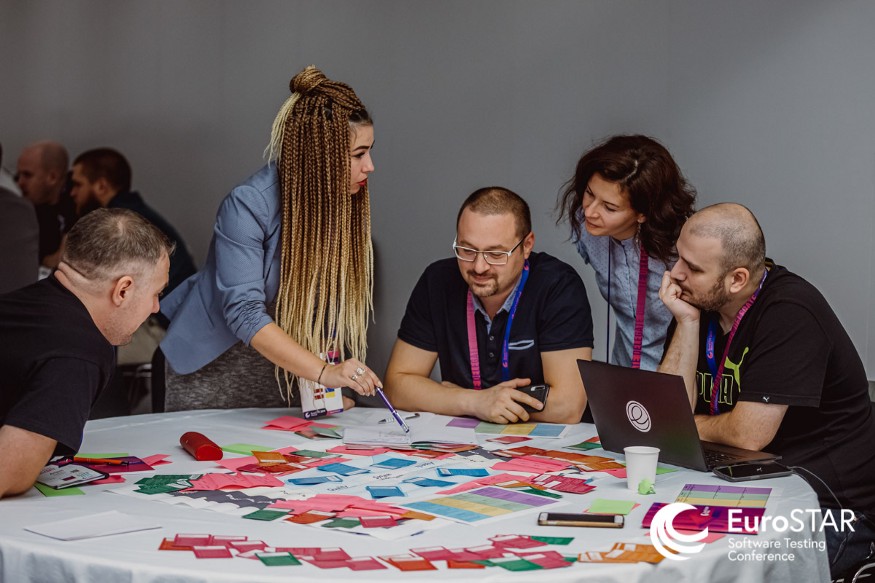
Team at a tutorial working together to solve a problemWith endless online networking opportunities, it’s easier than ever to make connections that are most relevant to you at a virtual conference. Talk it out with those who are in the same boat, even if they’re not on the same continent — people who tackle the same problems, and get just as excited about a solution. At EuroSTAR 2020 Online, you can meet and jump into conversations with the world’s largest testing community

The conference is a melting pot of creative people. Hear new thoughts, validate your ideas, or change your perspectives — it’s all possible.

2. Get access to all the learnings

Ever gone to a conference and had to make a tough choice between two sessions you’d love to attend — but both are happening at the same time? You don’t have to worry about that with virtual conferences. In most cases sessions will be recorded, as they are streamed. At EuroSTAR 2020 Online, we’re including post conference on-demand access to ALL 60+ hours of talks, so you don’t have to miss a thing. That’s some serious learning at your disposal — our tutorials are super interactive and practical to get your creativity flowing. You’ll hit your desk filled with actionable ideas to apply to your work.

3. Solve testing challenges

We know that an important part of a live conference is that you get help with those frustrating problems creating bottlenecks in your work. Attendees at the Huddle It’s also where you’re sometimes hit with your best ideas, inspired by random interactions with your fellow attendees. But that doesn’t mean you won’t get that same chance at a virtual conference. For example, our live conference will feature the EuroSTAR Test Clinic, where you can bring your toughest and most complex questions to our testing experts. We’re creating a dedicated online space where you can get 1:1 help and resolve even the most frustrating testing challenges.


4. Explore new tools & vendors

Trying cool new tools and demos from vendors is all part of the conference experience.  There are tons of opportunities to replicate this online, with platforms offering extremely sophisticated virtual expo booth experiences. We’re going to make sure you get the most out of our software testing expo — it’s Europe’s biggest, and draws some of the best companies in the world, armed with all the latest testing tools. Chat face to face, ask questions, try online demos and tools, and add new processes to your testing toolkit. And did we mention the virtual swag bag…?

5. Bring an open mind, take new perspectives home

One of the best things about a conference is that it’s a new space and a chance to put your thinking cap on; away from the usual daily grind. Well, that’s still a given with a virtual conference when it’s done right. It’s all about the people taking part in the online space — and our community is so passionate and enthusiastic about testing, the vibes will jump out of the screen! Plus, it can be easier to ask questions in a virtual setting. Our live Q&A sessions mean you get to pick our speakers’ brains and absorb lots of extra knowledge.

A team working together at a tutorial

6. Increase team bonding

Yes, there’s a huge benefit to giving your whole team access to a virtual conference. Everyone is absorbing the knowledge together and getting into the same headspace. Create a ‘divide and conquer’ approach to split up the programme of talks and maximize the learnings from all sessions. Co-ordinate talks and keynotes in order to get different perspectives and learnings and hop in and out of different breakout session as a team. This nurtures team building, strengthens your company culture and gets everyone thinking creatively so you can test more efficiently as a group. If your team has a backlog of ideas, now is the time to let them flourish! With on-demand access to all the sessions after the conference, your team can use the content as a learning resource all year.

7 Save, save, save

This is a no brainer, but you really are saving on a huge cost by attending a virtual conference. Most of the potential physical barriers are gone — travel and accommodation, accessibility, and all the other reasons that may have stopped you from attending a conference. You can join an online conference from anywhere — all you need is your device and an Internet connection. You don’t even have to show up for the entire conference if you really don’t want to — just secure your ticket and enjoy the peace of mind that comes with knowing you’ll have access to recordings. It’s a win-win.

EuroSTAR Online is happening this November, 17–19. It’s Europe’s largest software testing conference and has been bringing software testers and quality professionals together since 1993!

This is where you are going to solve your testing problems — straight from the comfort of your home or office. Check out our programme for even more reasons to attend a virtual conference…

Filed Under: EuroSTAR Conference, Virtual Conference

EuroSTAR Keynote Spotlight: 5 talks you can’t miss

August 21, 2020 by Fiona Nic Dhonnacha

Our EuroSTAR keynote speakers are testing experts in automation, agile, DevOps, security, test strategy and much more. Don’t miss their online talks this November.

1. Develop a ‘Quality Narrative’ that Communicates the True Value of Quality | Ronald Cummings-John

EuroSTAR keynote Ronald Cummings-John dives into quality and asks some key questions: how can we change the way that people think and talk about quality in our business? What are the best ways to influence people within our company to ensure everyone has bought into the idea of quality?

Using worldwide companies such as Google, Etsy, Airbnb and Twitter as inspiration, he will take you through developing an internal narrative around quality that will help you build incredible products.

Key Takeaways:

  1. Learn how to develop a quality narrative that communicates the true value of your quality team throughout the company
  2. Influence those around you to buy into your narrative
  3. Align the different teams and their activities towards a shared goal to contribute to the overall growth of the company

View Talk

2. Unlock the Power of Testing in Production with Observability | Abby Bangser

Join Abby for examples and explanations on leveraging the dynamic duo of observability and testing in production: it’s the next step for empowering software teams to deliver high quality, high impact software with speed and confidence.

Abby believes in empowering delivery team members to contain, and track, the impact of changes as they make them.

Key Takeaways:

  1. Everyone is testing in production, but some people are looking at the results
  2. Testing in production can be done with care for a large impact
  3. Observability is another form of testability

View Talk

3. Let’s Talk About Problems | Michael Bolton

“Don’t come to me with problems; come to me with solutions.”

“Failure is not an option.”

“I don’t want to focus on finding bugs; I want to focus on preventing bugs.”

At one time or another, you’ve probably heard all of the above. As testers, we encounter bugs, issues, and obstacles every day. Yet, talking about problems can be uncomfortable, controversial, and embarrassing.

Michael Bolton will discuss how testers can talk about those things courageously and deal with them reasonably and responsibly.

View Talk

4. Real Life Stories of Microservices Testing | Tomasz Dubikowski 

Cloud-based microservice architecture has seized our tech world. The new approach promises a quick, convenient development of modular, reliable and, most importantly, easily scalable systems. Microservices, when done alright, solve a significant amount of issues we face while working with monolithic applications.

However, done incorrectly, it can bring more harm than good to your project. And that’s a quite common case, as we don’t have much experience with the new architectural approach, and we are still learning how to use microservices properly.

Key Takeaways:

  1. Get to grips with common testing challenges while moving to cloud-based, microservice architecture
  2. Learn about contract testing in microservice architecture
  3. Learn about end to end, performance and infrastructure testing

View Talk

5. AI Testing in the Wild | Jason Arbon

AI is impacting the world of testing today. AI-based test automation is testing everything from games, gig-economy and finance apps, platforms, app stores, and thousands of top apps every day. AI is testing desktop, mobile, and web apps. AI has been commercially compared with the value of manual regression testing teams from 10 to 100–and it’s come out on top. AI is starting to give people the time to focus on the more creative and fun testing problems.

Jason shares real-world examples demonstrating the limitations and pains of some AI approaches, as well as ways in which AI is doing testing even humans couldn’t have performed.

Key Takeaways:

  1. Visually see AI testing real-world apps, in the wild
  2. Understand the limitations and superpowers of AI-based testing today
  3. Understand how AI-based testing stacks up against traditional manual and automated testing

View Talk

Ready to learn more? Book your online ticket now and save €150.

Filed Under: EuroSTAR Conference, Virtual Conference Tagged With: EuroSTAR Conference

Agile Testing: 6 Top Talks at EuroSTAR Online

July 10, 2020 by Fiona Nic Dhonnacha

With most companies practicing a version of agile methodology in their software development and testing, building on this is key for the future of testing: continuous integration, DevOps, and new trends in AI and ML are all changing the way you work.

Join leading experts from the testing community to learn about the latest trends in agile testing, solve tricky test issues, adapt to new forms of testing – and become the best at what you do.

Scrum and Kanban – Addressing Real Life Agile Testing Challenges | Fran O’Hara

Are you using Scrum, Kanban, or a hybrid of both? Do you have challenges with test and quality in these contexts? This tutorial is for you.

Get insights into key implementation challenges impacting quality, and test when these frameworks are used individually or in combination with each other. Test and quality related topics initially introduced will include common challenges experienced with team culture, team competencies and Dev-QA integration; user stories and backlog refinement; visualising and integrating testing into the work stream and more.

Plus, a significant element of this tutorial will give you the opportunity to identify your own test and quality challenges with the class, and vote on what challenge should get more focus, and interactive group discussion.

At the end of the tutorial, you will leave with a suggested list of ideas/tips and experiments to try to help address common challenges introduced in the class. You’ll also have access to all the learning materials.

Key Takeaways:

  1. Deeper insights into implementation challenges impacting quality and test when Scrum and Kanban are used individually or in combination with each other
  2. Suggested practical solutions to the real world issues being encountered now and as your team and organisation evolves.
  3. New ideas to enhance your effectiveness in agile testing

View Talk

Testing SAFely – Finding your way in the Scaled Agile Framework | Gitte Ottosen

Being a tester or test manager in a scaled agile framework can sometimes be a bit like being lost in the jungle; there are many strange animals there (new agile roles), and you have to learn to behave differently compared to the city in order to survive (ceremonies, life cycle). But, as time passes you learn new skills and maybe even change your mindset. You may find that the jungle isn’t that bad after all.

You might not turn out to be Tarzan or Mowgli – but you find ways to live and thrive in the new environment.

Gitte Ottosen took the journey to the wild, being a test manager and quality coach, trying to find her way in the jungle called SAFe. Based on her experience from several agile release trains, she will give you her insights on some of the challenges, along with several practical ways to solve them.

Key Takeaways:

  1. What to test – Safe says built in quality, what test does that result in?
  2. Where to test – Team Vs. Train
  3. Who drives test – The test manager as a coach

View Talk

The Green Traveller – Prioritizing Your Backlog to Make an Impact | Derk-Jan de Grood

Is your businesses a green traveler organization? Learn how to order your backlog based upon business value and define a roadmap that delivers a workable release. Using the slogan: “Get out the plane take the train”, the Green Traveler aims to expand travel coverage in Europe by combining and linking train and aircraft services, to enable an environmentally friendly one-stop-shop.

Help your organization by sorting their backlog in such a way that it yields in releases with e2e business value that provide fast feedback loops for the business.

While collaborating online with fellow participants, you’ll explore the role of testing as a measure to create feedback and assess whether the roadmap should be altered to optimize for testing. In additional rounds we’ll explore the impact that DevOps and IT improvements have on the road map and we’ll check whether the technical solution we defined aligns with the company goals. Participants of this workshop will gain insight in how to find routes through the forest and influence the planning of the development project, become part of the hunter’s team and hunt for quality, rather than be stuck in the wild.

Key Takeaways:

  1. Learn how to effectively sort a product backlog based on value
  2. Experience different ways to define a roadmap with clear releases
  3. Understand the impact of testing, improvements and DevOps on the release planning

View Talk

Taming DevOps | Hanna Dernbrant

When Hanna started at Jayway, she went from a waterfall mindset into working with DevOps. It was like going into the jungle, down the rapids – without a paddle! Much like being dropped in a jungle, where you’d turn to explore; she did the same thing in DevOps, and turned to exploratory testing – with great success.

One major difference is that when working with the waterfall model, much like the zoo, your team/pack is the same kind as you; a team of testers. It’s safe and comfortable. In DevOps all of a sudden you’re the only one of your kind. In the DevOps way of working, the pack is different types of people with different strengths. I found that I became a coach for the rest of the team on how to work with quality as a team. It is in everyone’s interest to work together to achieve a good quality product. No one wants that phone call in the middle of the night that wakes you in a panic and cold sweat!

Key Takeaways:

  1. A practical example of how to work in DevOps
  2. How to face the challenge of going from waterfall to DevOps
  3. How to coach your DevOps team members on test and quality

View Talk

Continuous Delivery in 4 Months for 15 Teams and their 1 Monolith | Thierry de Pauw

15 teams, 1 shared monolith, 1 release every 6 months, and product demand for 1 release every 2 weeks. How do you know where to start with Continuous Delivery, when you’re surrounded by technology and organisational challenges?

This is the journey of 15 teams and their 1 shared monolith, at a federal Belgian agency. They increased their throughput from bi-annual releases to fortnightly releases in under 4 months, achieving a state of Continuous Delivery.

The costs and time for testing quality into the software product, stabilising and releasing the product during each bi-annual release were skyrocketing. The demand for Continuous Delivery was there, but the circumstances made it very difficult.

I’ll cover how we used the Improvement Kata, Value Stream Mapping, and the Theory Of Constraints to choose which changes to apply first, and kickstart the organisational changes we needed to improve quality and drive down lead times.

Key Takeaways:

  1. Be able to use the Improvement Kata to introduce change at scale.
  2. Be able to run a Value Stream Mapping workshop to understand the current situation.
  3. Be able to use the Theory of Constraints to identify which activity should be improved first and which experiment will be most likely to succeed.

View Talk

The Power of Diversity in Cross-Functional Mob Programming | Cindy Duflot

I am part of a team that does full-time mob programming. The team consists of 12 people from various disciplines (including web, iOS, Android), but only a smaller group does mob programming. In the mob there are two backend developers, one frontend developer, one ops and one QA. We do just about everything together: picking up a story starts at the white board and ends with a push to production.

We draw out the functional and technical analysis and consider what is the best possible API to build for the client apps. In the backend we build and test together. For the mobile apps, we have mob testing sessions in which everyone goes through the feature and writes down the oddities on a white board. Working in this fashion makes standups, planning, retro etc almost superfluous. There is always one item in progress and everyone is working on it. Pretty simple right?

Key Takeaways:

  1. Mob programming is more than a theoretical approach you read about on blogs. Some people actually do it and it works.
  2. Ask yourself how agile your team really is.
  3. Maybe you are triggered to start your own mob?

View Talk

Ready to elevate your agile testing? Book your ticket to EuroSTAR Online here.

Filed Under: Agile, EuroSTAR Conference

  • « Previous Page
  • Page 1
  • …
  • Page 8
  • Page 9
  • Page 10
  • Page 11
  • Page 12
  • …
  • Page 15
  • Next Page »
  • Code of Conduct
  • Privacy Policy
  • T&C
  • Media Partners
  • Contact Us

part of the