• Skip to main content
EuroSTAR 2027 - Sign up for early access

EuroSTAR Conference

Europe's Largest Software Testing Conference.

  • Programme
    • Call for Speakers
    • 2026 Programme
    • Community Hub
    • Awards
  • Attend
    • Why Attend
    • Bring your Team
    • Testimonials
  • Sponsor
    • Sponsor Opportunities
    • Sponsor Testimonials
  • About
    • About Us
    • Our Timeline
    • FAQ
    • Blog
    • Organisations
    • Contact Us
  • Book Now

Fiona Nic Dhonnacha

API Documentation, Should I take it Seriously?

August 6, 2019 by Fiona Nic Dhonnacha

Empower your developers and users to integrate and deploy your APIs as swiftly as possible, with API documentation.

The Importance of API Documentation 

If you are serious about developing cutting edge APIs, you need to take your API documentation seriously. Just developing a cutting edge software application is not enough. You need to be able to communicate the benefits of your API; what it does, how it works and how to use it, and this must be done in a clear and effective manner. Documentation has a direct impact on the adoption, usage and success of your API. Documentation is an area where many developers and organisations struggle. In fact, many organisations actually find it much easier to develop complex code, than to create useful documentation to support their APIs.


What is API Documentation?

API documentation is an technical document, that contains clear instructions on how to effectively use and integrate with an API. It is a reference manual, containing all the information required to work with the API. When a user refers to the documentation, it should effectively communicate; how the API works, what it does and how to use it. However, traditionally organizations and developers allocated little to no time or resources for the creation of supporting documentation. In fact, it is often seen as an afterthought. The document should contain at least the following: Quick Start Guide, Examples, Functions, Parameters, Classes, Return types, Error Messages, Arguments and Formatting.  In essence, it is a blueprint for creating an API.


Who uses API Documentation?  

Your API documentation is an important reference, for internal & external developers. When creating API documentation you need to think of the audience.  The documentation will be consumed largely by developers, who think analytically, are precise and are actively trying to solve a complex problem with your API.  They are also time poor and working to a strict deadline.


What are Disadvantages of Inadequate API Documentation?

Failure to allocate adequate time and resources to the documentation of your API development will have severe consequences. Imagine the anarchy of trying to build a skyscraper, with a team of construction workers, without a detailed set of blueprints.  The lack of adequate API documentation, has resulted in major problems such as: increased cost of development and user frustration. For example, if a key member of a development  team leaves, the remaining team members should not be spending precious  time trying to figure out how the API functions and how to use it. Lack of documentation, also increases the amount  of time spent onboarding new team members, and results in users becoming frustrated and confused with your API. It is important to remember that if users find your API complicated and confusing they will look elsewhere for an alternative!


What are the Advantages of API Documentation?

API documentation will empower your developers and users to understand precisely how to use, test and deploy your API fast and effectively.  The goal of your documentation is to answer questions about your API clearly and precisely. It should enable teams to collaborate effectively when building API definitions, creating standards and reusing assets. Adequate documentation is the foundation for a good developer experience. It should communicate to the user, in a fast and effective manner. It is essential in reducing the learning curve for developers and enables them to build to a set of guidelines, improve team performance, while also reducing inaccuracies, delays and budget overruns.


What are the Tools Available for API Documentation?

Documentation has traditionally been written using regular content creation, maintenance tools and text editors. These methods are not effective or fit for purpose in today’s fast paced and competitive development environment. At SmartBear, we have been leading the way in creating innovative and industry leading tools to empower developers to create and share effective and impactive API documentation. SwaggerHub (https://swagger.io/tools/swaggerhub/)

SwaggerHub is our design and documentation platform which supports working with the OpenAPI specification at scale. SwaggerHub allows teams and organizations to collaborate on building API definitions, create standards and reusable assets to speed up the time it takes to define a new API and seamlessly integrate those definitions as part of a larger process.

SwaggerHub (https://swagger.io/tools/swaggerhub/) acts as a single source of truth for multiple teams across development, testing and operations. Regardless of how an API definition is being used – to write code against, validate an existing service or configure something like an API gateway – having a single location that any of these teams will have to look back on saves time, energy, and unnecessary confusion.


Developer Need API Documentation for Success 

In closing, it is important to remember that development teams, need to create detailed API documentation to support their APIs. API documentation enables developers and users, to  share, integrate and deploy APIs as swiftly as possible. For more information please visit www.SmartBear.com (Link: https://smartbear.com/)


———————————————-

Patrick is a marketing specialist at SmartBear, with experience in online services and ecommerce. SmartBear empowers developers and testers to create quality software by using innovative tools to build, test and monitor APIs. Over 6 million software professionals, and thousands of companies across the globe are using SmartBear tools to build, test, virtualize and monitor their software applications.


 

Filed Under: EuroSTAR Conference Tagged With: EuroSTAR Conference

The City of a Hundred Spires – Prague Facts

July 25, 2019 by Fiona Nic Dhonnacha

Prague is home to a number of well-known cultural attractions, including the beautiful Prague Castle, the stunning Old Town Square, the intricate Astronomical Clock and much more. It is a one of a kind city and the EuroSTAR team are more than excited to host our annual conference in the capital of the Czech republic.

In one of our previous articles we mentioned the Top 5 Attractions in Prague which you can read here. There is so much to tell you about this fascinating city … did you know that Prague is also called the City of 100 Spires? This is based on a count by 19th century mathematician, Bernard Bolzano and today’s count has increased that to 500 as estimated by the Prague Information Service.

That’s right. we’re talking about the spiky structure on the top of a building, often a church tower, similar to a steep tented roof. Prague has got tons of them!

From cathedrals to churches, towers and other magnificent buildings topped with stunning spires, Prague amazes every visitor with its beauty. Almost undamaged by World War II, the city’s compact medieval centre remains a beautiful mixture of fabulous lanes, walled courtyards, cathedrals and countless church spires all in the shadow of her majestic 9th century castle that looks eastward as the sun sets behind her. Sadly, the modern world doesn’t create such architecture anymore, but you can always enjoy visiting Prague for your fix of medieval buildings.

The annual EuroSTAR Software Testing Conference will take place in the Prague Congress Centre this November. It is located just 4 stops on the metro from the Old Town, close to some of the most amazing attractions on the capital. Stroll down to the river or get a tram to Prague Castle which is only 30 minutes from the conference. You will also notice the building nearby, called  Saint Peter and Paul Basilica.

Too many spires for the day? Head down to see the Dancing House, a stunning building 30 minutes walk from the Congress Centre. Look out for Zofin Palance when you are there – this is where we will have our Gala Awards Dinner on Wednesday 13th November.

As you will be very busy learning and focusing your mind on the presentations during the conference, evening times can be spent walking down the streets of this amazing city. Prague, we are counting the days until we visit you in November!

Filed Under: EuroSTAR Conference Tagged With: EuroSTAR Conference

Say Yes to End-to-End Tests!

July 22, 2019 by Fiona Nic Dhonnacha

End-to-end test automation has been generally avoided for what were once good reasons. But today’s technology allows us to automate end-to-end tests effectively and without causing too much overhead. 

Why end-to-end testing was originally avoided

Automating end-to-end tests is a tricky business. Many leading practitioners over the years have advised against doing ANY end-to-end test automation. They say, do a good job of automation at the lower levels, and do end-to-end testing manually once and trust your lower level tests to protect against regressions.


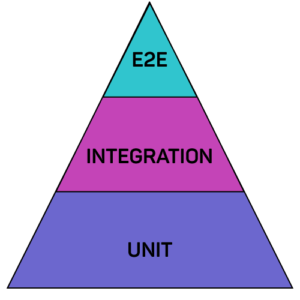
As a result of this, we often see the test automation triangle pictured below. The shape of the test automation triangle is predicated on traditional associations about the cost of troubleshooting test failures and feedback cycles at each level. Traditionally, the closer you were to the bottom, the easier it was to find the root cause of the issue. Therefore, they recommend that you 70/20/10% split between unit, integration, and end-to-end tests, respectively.


But no matter how much testing you do at lower levels of granularity (unit, integration, etc.) the complete end-to-end is the only thing that brings together all the pieces and configurations while focusing on the true end-user functionality and experience.


No matter how much granular testing and tracing is done at the unit and integration level, the fundamental issue is that we’re spending less time on the user experience, and more time testing how we hope the application works. We’re losing the ability to surface problems to the tester in an easy-to-understand fashion.


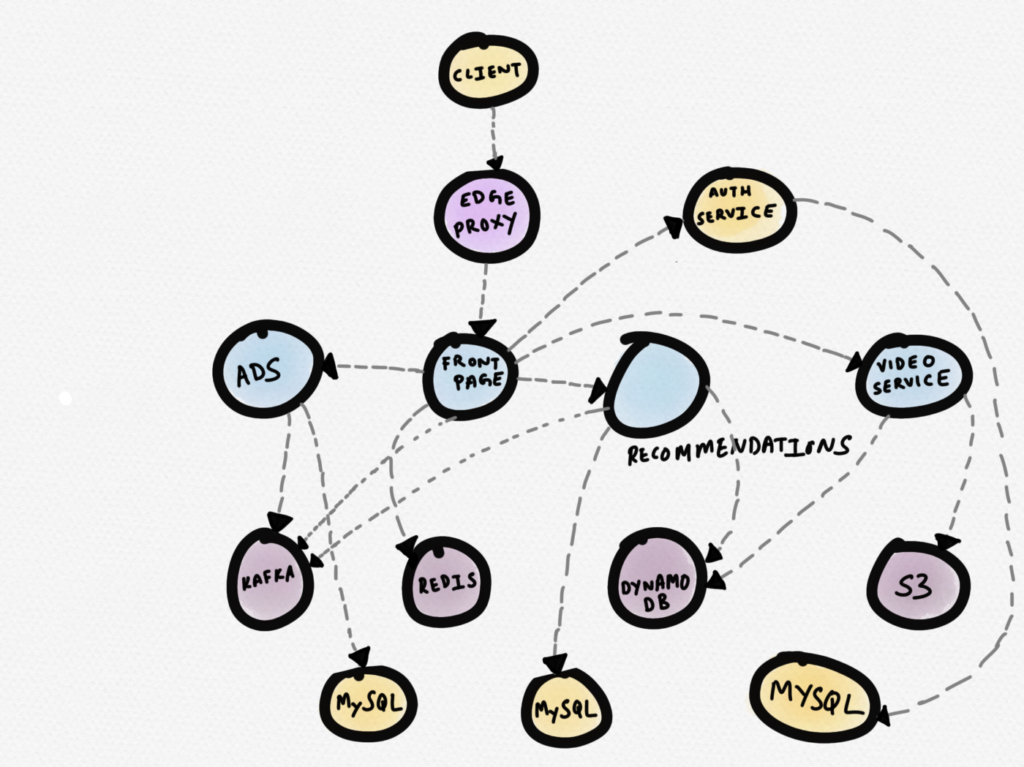
Cindy Sridharan makes it clear in her story about distributed tracing. The service graph she draws below depicts dependencies well, but when it comes down to debugging a scenario where a specific service is experiencing issues, such a granular view isn’t particularly useful. If there is a slowdown with the front page, there are many dependencies you’d need to start digging into to find the root cause.

Source: https://medium.com/@copyconstruct/distributed-tracing-weve-been-doing-it-wrong-39fc92a857df

Putting more focus on unit or integration testing puts us into the same scenario. From the end-user perspective, we lack test coverage and it becomes harder to troubleshoot issues when tracing issues from the user-experience point of view. So the case to be made is – does today’s technology allow us to automate end-to-end tests effectively and without causing too much overhead?

mabl’s part of a wave that can change the shape of the automated testing triangle.


Times have changed

Unit and integration tests just aren’t aligned with the user experience. Additionally, there is a class of manual tests that were reserved for manual execution because they were too difficult to automate, not because they truly required human observational powers and reasoning.

So the questions we’ve asked ourselves is: Why avoid automating end-to-end tests to avoid the problems with it? If the end-user is as important as we preach they are, why not fix the problems with end-to-end test automation so we can do it better? Faster? Reliably? Easily?

With mabl’s ease of creation of robust end-to-end tests and rapid cloud execution providing quick feedback, we’re removing the constraints that suggest the end-to-end tests should be a taper. mabl also uses big data and machine learning to lower that pain, and we do this in a way where we aren’t intrusive. We create machine learning models from the tons of test output that already exists as the tests are executed, learn from the data, and surface insights and predictions about the quality of the application under test which ranges from functional test failures to more nuanced issues like visual changes and performance slowdowns.


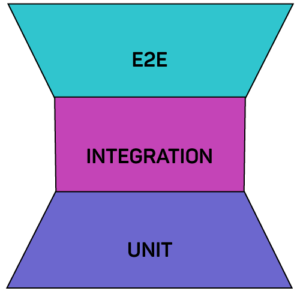
By eliminating the cost and difficulty of end-to-end test automation, we allow the top of the pyramid to broaden, eventually perhaps becoming a testing hourglass, with the end-goal of benefiting the end-user experience.


The bottom line is, end-to-end testing has become stigmatized because of reasons that no longer apply with the innovation we’ve seen in test automation offerings in recent years. But end-to-end tests are way too valuable to avoid doing because they best align with the user experience.

So if the recurring argument is that end-to-end testing is too expensive… what if we just made it cheap?


About the Author: 

Chou Yang

Chou is an engineer turned marketer who originally studied art. She enjoys her days at mabl engaging with the testing community via meet-ups in Boston, via Twitter, and on the mabl blog. You can find her napping in random nooks in the mabl office, and at chou@mabl.com


Filed Under: EuroSTAR Conference Tagged With: software testing conference

The Skills You Will Learn

July 18, 2019 by Fiona Nic Dhonnacha

This month at EuroSTAR we have planned some great webinars to ensure that your testing is ahead of the testing game.


We are excited to have Paul Gerrard back with us with his webinar Future Skills of Software Testers. With the software testing industry constantly evolving, the tester needs to evolve too. Change in the industry means testing and tester skills need to change too. The current training that is there for testers is simply not enough- certification and courses available will not excel your testing and Paul is currently working on building a tester skill programme designed to meet the current and future needs of the testing community. With this webinar, learn to think for yourself!

We are also thrilled to have Ken Johnston with us from Microsoft with his webinar AB Testing is Hard: But You Should Do it Anyway. Experimentation, often called A/B Testing, has been around as a common practice for web sites for more than 20 years.  With Microsoft Windows and Office, people now AB test not just UX Changes but also bug fixes.  One thing we find all the time, it’s easier to mess up an AB test than it is to get it right.  Everything from designing the test to actually prove the hypothesis to getting a proper distribution.  It really is hard but even so, you need to get great at it and you just need to do it. Join Ken Johnston this month to learn how to build an experimentation culture, design good experiments and develop actionable data.

Register for all upcoming webinars this month and next and sign up to our newsletter to be the first to hear about the latest content coming your way!


Filed Under: EuroSTAR Conference Tagged With: blog, EuroSTAR Conference

How to Improve the Test Data Management Process with Data Simulation

July 10, 2019 by Fiona Nic Dhonnacha

Good test data is hard to come by. Learn how to use data simulation to improve the test data management process and save valuable time normally spent waiting for test data.

Good test data is hard to come by, and test teams are often left waiting for test data to be produced for them. According to a recent survey from Sogeti, up to 60% of application development and testing time is devoted to data-related tasks, and many project overruns are due to inefficiencies in test data provisioning. In general, up to 20% of the average software development lifecycle is lost waiting for data! 

To improve this process, testing teams can use service virtualization to augment traditional test data extraction. With this method of data simulation, testers can quickly build meaningful test data by capturing realistic test data from interactions between components in their existing system (real and virtualized), and building data models that can be shared and controlled directly by testing teams.

How do you benefit from data simulation?

The process is as follows:

  1. Define monitors: Monitors are proxies that intercept and record the data traffic between users and servers.
  2. Capture: Test data is captured by monitors and recorded from existing testing via functional, performance and security testing already in place by the development team. The application under test likely has dependencies on various types of services such as databases, legacy mainframe systems and many others. As test automation is executed the transactions and data between the application and services is recorded by the monitors and stored in the virtual service repository.
  3. Create: The captured transactions and data are sent to the service virtualization engine to create simulated virtualized services with associated test data.
  4. Deploy: The created services are stored and deployed to a virtual service repository allowing for later consumption.
  5. Manage: Orchestration of these virtualized service is required to make service virtualization work in a
    CI/CD workflow.
  6. Consume: Test data management and integrated orchestration of these virtual services means automated API and service-level testing is robust, easily repeatable and easier.

How does it work in practice?

A good example might be replacing a reliance on a shared database by swapping it with a virtual service. This allows for parallel and independent testing, that would otherwise conflict. With data simulation, testers can generate, subset, mask, and create individual customized test data for their needs.

By replacing shared dependencies such as databases, service virtualization removes the needs for the infrastructure and complexity required to host the database environment. In turn, this means isolated test suites and the ability to cover extreme and corner cases. Although the virtualized dependencies are not the “real thing,” some actions (e.g. an insert and update operation on a database) add some complexity to virtualization.

After capturing transactions and data, there is full control over the contents of the data from within the data manager. In addition, a model is abstracted automatically from the data based on database extraction or through the interactions observed during the recordings. This create model, as illustrated below, allows for better understanding of the data structure and relationships. This understanding is key to the next steps of masking, generating, and subsetting.

Quickly getting secure, real data for testing

Test data is hard to procure and a risk to manage. A solution based on secure, real data capture provides the best way to get the data you need, as fast as you need it. Service virtualization helps teams capture this data earlier in the development process, to be easily used for testing. With this modern approach to test data management, testers can securely store and manage test data, customize data sets for their needs, reduce the risk and liability of using production data, and reduce overall project risk and costs. For more information, you can download the free whitepaper: Tired of waiting for test data? Here’s the solution to your test data management headaches.

Chris Colosimo is a Product Manager, with expertise in SDLC acceleration through automation. Chris strategizes product development and deployment of Parasoft’s Continuous Testing solutions (Parasoft SOAtest, Virtualize and Continuous Testing Platform). Being a service virtualization and API testing subject matter expert and focusing on the concept of Continuous testing at speed, he works with developers and testers to discover constraints, evolve process, and facilitate the change management required to adopt agile and DevOps principals throughout an organization. Keen to share his knowledge and vast experience he frequently writes blogs and can be followed on Linkedin.

Filed Under: EuroSTAR Conference Tagged With: software testing conference, software testing tools, Test Automation

4 Software Testing Webinars You Cannot Miss

July 4, 2019 by Fiona Nic Dhonnacha

Software testing is evolving at a rapid pace. You need to learn more, know more, test more – but that’s OK, As long as you are keeping up with it, you won’t be left behind.

There is a few great ways to keep up to date with software testing news. One would be to follow your favorite software testers on social. The other one is to check software testing websites and blogs run by experienced testing people. And last but not least you can register for webinars and download eBooks. 

This is where EuroSTAR Huddle comes in. We are in close contact with the best minds in software testing and our goal is to provide our readers with fresh content, great webinars and awesome eBooks. And today, we want to show you our 4 webinars that you can register for. Our guests will share their testing knowledge an pass it on to you. Learn from top testers in the game with EuroSTAR Huddle. 


Future Skills of Software Testers

Webinar Description: How do you build a tester skills program that matches the requirements of the software industry? Paul will describe how he is helping a consortium of software companies in the Cork area to build a tester skills programme designed to meet the current and future needs of their testing community. The Tester Skills Program encourages and helps testers to think for themselves.

Webinar Info: 23rd July, 2pm BST with Paul Gerrard

RESERVE YOUR SEAT


AB Testing is Hard: But You Should Do it Anyway

Webinar Description: Experimentation, often called A/B Testing, has been around as a common practice for web sites for more than 20 years.  With Microsoft Windows and Office we now AB test not just UX Changes but also bug fixes.  One thing we find all the time, it’s easier to mess up an AB test than it is to get it right.  Everything from designing the test to actually prove the hypothesis to getting a proper distribution.  It really is hard but even so, you need to get great at it and you just need to do it.

Webinar Info: 25th July, 3pm BST with Ken Johnston

RESERVE YOUR SEAT


Working Well with Test Design Techniques & Test Approaches

Webinar Description: Experimentation, often called A/B Testing, has been around as a common practice for web sites for more than 20 years.  With Microsoft Windows and Office we now AB test not just UX Changes but also bug fixes.  One thing we find all the time, it’s easier to mess up an AB test than it is to get it right.  Everything from designing the test to actually prove the hypothesis to getting a proper distribution.  It really is hard but even so, you need to get great at it and you just need to do it.

Webinar Info: 20th Aug, 2pm BST with Rik Marselis

RESERVE YOUR SEAT


 Re-Shaping The Test Pyramid for App Teams

Webinar Description: In this session Jennifer Bonine and Rick Faulise will explore new shifts in testing paradigms.  Demonstrate an AI first testing method that integrates with your current manual and automation testing, and understand AI that aids your app teams.  Re-think where you want to spend time and money in your testing team in a challenge that plagues most companies of too much to test and too little time.

Webinar Info: 22nd Aug, 2pm BST with Jennifer Bonine & Rick Faulise

RESERVE YOUR SEAT


Filed Under: EuroSTAR Conference Tagged With: EuroSTAR Conference, Webinar

Women in Testing

June 20, 2019 by Fiona Nic Dhonnacha

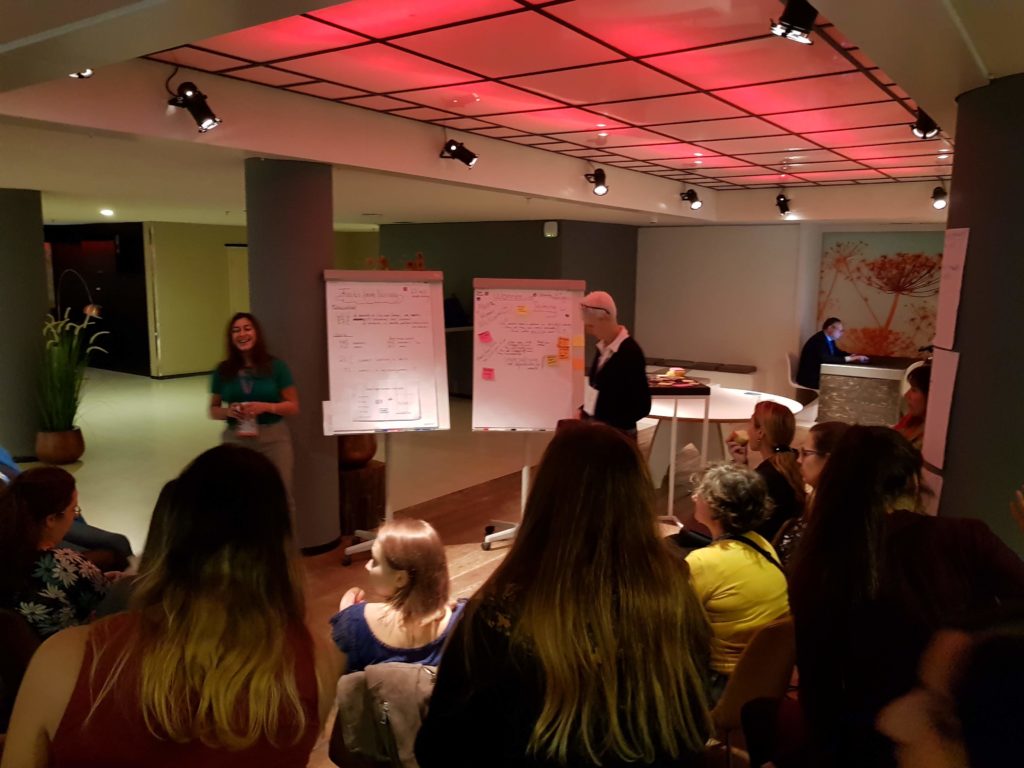
A big thank to all of you that made last year’s EuroSTAR session “Women in Testing” in den Haag awesome. We had such a lovely time collaborating with all of you. Unfortunately the area was not the best suited space, but we all made the best of it and had a blast 🙂

What we did in 2018

We wanted this session to be as much of a collaboration as possible so basically before the session, from lunchtime Tuesday until late coffee break Wednesday we spent time in the community area to promote our session. Here we had come up with some ideas that we wanted to discuss with you and encouraged you to write down key words, interesting information that we could bring along to the session. Already here we started to get some good talks going. Since so many of you turned up for the session, we found that we needed to divide us all into groups to make sure we would get as much input from all of  you as possible. It was really great seeing you all being so committed/eager and hearing all the buzzing from the different groups.

We started the session with some information about Women in IT/tech in Norway, which lead to us also getting some similar information about other countries. See fact box at end.

We are so thrilled to share with you an overview of your thoughts on the different areas we ended up discussing

Do women have a problem in tech/test industry?

The answer here was unanimously, unfortunately Yes – we are still judged and questioned harshly, more than men are.At the same time there were comments that we should be aware that we do not want the goal to be that women should become like men. But we want the same chances and treatment.

So why are we not taken seriously? 

We believe we are being stereotyped. This is deep rooted over years and lots of people are biased (both men and women). We also have some unconscious bias which is even more difficult to “deal” with. Some people felt that women strive for perfection more than men and together with having a lower self-esteem and confidence, which together with being sometimes more averse at risk taking and tendency to be more agreeable which in some areas is looked upon as being weak. These points can maybe explain some of the reason?

And what can You/We do about this?

From the answers we got here you obviously believe that this should start at an early age and go on throughout the years at school and later in the workplace.

For the parents they need to nurture the tech abilities. Parents must raise their children equal, then they will choose what they like instead of what they are expected (i.e. the expectation that girls like dolls and boys like cars) Start early to give girls access to tech toys and coaching.

Awareness of the “problem” is important together with having good role models. There should be more open appreciation of good work done by women and both women and men should support each other. Also we should create safe spaces (not different ones for women) and do mentoring both by men and women. You also mentioned that women cannot (and should not have to) solve this alone. We need allies to support women testers, we need to have men and women in position of power who enforce equal treatment and education. Women must be more assertive, assert power, be less hesitant. (comments from us which is our prerogative J remember we want to be judged by who we are and do not want to become a man to achieve this).

Are you a girl/guy geek? Do you like IT?

With this question we thought we could maybe find some areas we could emphasize for helping women to become more confident and hence treated in the way we want. Not quite sure if we managed that, but here are your answers anyway.

Most of you answered positively to this. You commented like: This is part of who I am. I like: Star Trek, Star Wars, Lord of The Rings, Harry Potter, Gaming, so I like other geek stuff, not just in work. Not only in IT but also in everyday life. My background is not technical, but I LOVE testing. We liked that the rest of your answers/comments reflect that you caught up on our double question (do you like it (being a geek) do you like ITJ) Thank you so much, made our day.

Your comments range from math and coding is fun to the importance of diversity in the workplace. You mention that pretty much everything depends on IT, you need logical thinking and programming is not subjective. To find solutions empowers and problem solving gives satisfaction. You are able to combine soft skill like good communication and interpersonal skills with technology. The more complex something is, the more interesting it gets. In IT you not only learn new things, but you learn new things first. And of course we had a couple of comments about more guys as co-students colleagues and friends.

Finally we like to share the facts you gave us from your own countries:

Norway:

60% of all students at the universities are women

26% women working in tech and 17% women in top IT management

Estonia:

Population 3:1 (Women/Men)

Working in tech 2:10 (Women/Men)

Belgium:

55% testers are women in our company

The Netherlands:

13% of women in higher tech educational jobs

France:

70% women testers in off shore team in one company

Colombia:

60% women testing service company

UK:

50% women in test, 20% women in development in one company

Italy:

20% women in testing in one company

Thank you all so much for attending last year’s women in testing session and making this such a great happening.

Plans for EuroSTAR 2019 in Prague

This year we will run a Diversity & Inclusion session on Thursday afternoon of the EuroSTAR Conference and we hope to have some more facts for you, and to think more not just about women in testing but about the wider diversity in testing.. To help us plan, we would really like to hear back from you about what was good and what was not so good at the session.

Also do you have any ideas about how to make it even more awesome let us know. Any special topics you would like us to raise/to discuss. This will only be as good as we make it ourselves. See you in Prague.

Fiona Ring Østensvig & Tone Molyneux

 Share your Requests for this year’s Diversity & Inclusion Session  – communications@eurostarconferences.com

SEE DIVERSITY SESSION 2019
other Diversity and Inclusion sessions at #EuroSTARConf 2019: Diversity Strikes

Filed Under: EuroSTAR Conference Tagged With: EuroSTAR Conference, software testing conference, women in testing

Automation Tools you’ll find at EuroSTAR 2019

June 20, 2019 by Fiona Nic Dhonnacha

The EuroSTAR Conference is home to Europe’s Largest Software Testing Expo, attracting the leading testing tool and services providers each year with over 1,000 software testing & QA professionals attending. 

Delegates get the most out of their EuroSTAR experience when they visit the Expo and meet the excellent partners showcasing their testing tools and services.  You will discover new automation tools and services that will benefit your day to day work, your company’s goals and objectives and find news ways to improve working well practices for you and your team.

Here are some of the top automation tools that you will find at the EuroSTAR Software Testing Expo:

Adaptavist Test Management for Jira is on of the top-rated Atlassian Jira app for quality assurance and test management. It’s a full-featured, enterprise test case management solution that is seamlessly integrated in Jira. It offers end-to-end traceability across issues, requirements, test cases, and execution. Test Management for Jira has been designed to meet the needs of testers, developers, QA directors and Jira admins. There is no need to switch between environments as you can do everything right inside Jira. 

Applitools provides commercial-grade, visual AI-based test cloud that validates application under interfaces in a fully automated manner. It is built to test all the elements that appear on a screen with just one line of code. Using AI powered cognitive vision, you can automatically verify that your web or mobile app appears correctly across all devices, all browsers and all screen sizes.

Inflectra: SpiraTest is a test management software that lets you create and run all of your tests from a single QA powerhouse. Easily generate tests from requirements, and bugs from tests.

Jamo Solutions– Jamo Automator is a code-less cloud-based tool that allows the user to focus on the tester without needing a develop implementation. It uses an artificial intelligence-based engine to recognize uniquely UI objects. This tool facilitates the creation of automated test cases, report reading and test case maintenance.

JetBrains creates professional software development tools for coding in Java, Kotlin, C#, C++, Ruby, Python, PHP, JavaScript and more languages, as well as advanced team collaboration tools. By automating routine checks and corrections, their products speed up production, freeing developers to grow, discover and create.

Leapwork: is a great solution provider for intelligent, out-of-the-box software automation that everyone can use. With its unique visual flow designer, the LEAPWORK Automation Platform hides all unnecessary complexity from the end-user, works across technologies, and comes with on-demand, personal support from automation experts. With their tool, build automated tests from day one with codeless UI automation & eliminate the maintenance burden that’s holding back QA.

Mabl is changing the way QA is done with an auto-healing automation framework and cloud-based test infrastructure that eliminates the burden of test script and infrastructure maintenance. mabl is delivered as a robust, codeless, intelligent, all-in-one platform that allows QA teams to test continuously and at scale in DevOps. Using proprietary machine learning models to automatically identify application issues like visual regressions, increased latency, javascript errors, broken links and more, mabl brings traditional UI and regression testing to the modern age

Maveryx is a Test Automation Company that provides world-class innovation in software testing and automation to help improving quality of software applications, reducing complexity, saving time and costs. The Maveryx Test Automation Framework is an automated functional, regression, GUI, data-driven and keyword-driven testing tool. It provides powerful and easy-to-use automated capabilities to beginners (scriptless) and experts (scripting) for testing a wide range of Desktop and Web applications. This tool eliminates the need for recording actions, GUI Maps, Object Repositories and so on, cutting the connected expensive maintenance costs.

Microfocus provides critical tools to build, operate, secure and analyse an enterprise in a constantly changing world. useMango™ is a functional test automation tool that integrates with HPE ALM to test Oracle EBS, SAP GUI, and web applications. For organisations implementing, upgrading, patching or enhancing SAP, Oracle EBS, and web applications who are dissatisfied with their current level of test automation.

Parasoft SOAtest brings artificial intelligence and machine learning to functional testing to support users test applications with multiple interfaces, in-turn allowing simple end-to-end testing. The efficiency of Parasoft SOAtest can transform the functional testing artifacts into security and performance test, while building a foundation of automated tests to execute as part of Continuous Integration and DevOps pipelines.

Progile – TestResults.io automation service provider provide access to Test Automation by delivering Automated Testing to small, medium and highly regulated businesses such as MedTech. This service allows these companies to automate their regression, performance & stability tests as well as their live monitoring in a plug & play fashion combined with a simple pay-as-you-go approach.

Sauce Labs is one of the world largest cloud-based platforms for automated testing of web and mobile applications. Sauce labs enables companies to accelerate software development cycles, improve application quality and deploy with confidence over a vast range of browsers and OS platforms. They provide services to Fortune 500 businesses, worldwide.

Smart Bear – TestComplete is an automated UI testing tool that makes it fast and easy to create, maintain, and execute functional tests across desktop, web, and mobile applications. It can increase test coverage and ensure you ship high-quality, battle-tested software.

Xray is a highly rated manual & automated test management app for Quality Assurance in Jira. Developed by Xpand IT, a Platinum Atlassian Solution Partner, it’s a full-featured tool that lives inside and seamlessly integrates with Jira. Its aim is to help companies improve the quality of their products through effective and efficient testing.  Xray integrates directly with the leading SDLC software: Jira. With your development and test teams working in the same tool, you never ship untested or broken code again.

If you are interested in showcasing your company at the 2019 EuroSTAR Conference, download the Expo Brochure today.  Limited spaces left for this years event.  We look forward to welcoming you to Prague, this November!

Filed Under: EuroSTAR Conference, EuroSTAR Expo, Test Automation Tagged With: blog, software testing conference, software tools, Test Automation

  • « Previous Page
  • Page 1
  • …
  • Page 12
  • Page 13
  • Page 14
  • Page 15
  • Next Page »
  • Code of Conduct
  • Privacy Policy
  • T&C
  • Media Partners
  • Contact Us

part of the