• Skip to main content
Year End Offer: Save 30% + Teams Save Up to an Extra 25%!

EuroSTAR Conference

Europe's Largest Quality Engineering Conference

  • Programme
    • Programme Committee
    • 2025 Programme
    • Community Hub
    • Awards
    • Social Events
    • Volunteer
  • Attend
    • Location
    • Highlights
    • Get Approval
    • Why Attend
    • Bring your Team
    • Testimonials
    • 2025 Photos
  • Sponsor
    • Sponsor Opportunities
    • Sponsor Testimonials
  • About
    • About Us
    • Our Timeline
    • FAQ
    • Blog
    • Organisations
    • Contact Us
  • Book Now

People

How to Solve Your Recruitment Needs for Software Testers?

August 16, 2023 by Lauren Payne

Thanks to Talent2Test for providing us with this blog post.

The testing market is currently facing the same challenges as almost the entire IT industry. A lot of new projects are starting up, the challenge lies in finding the right profiles, with the right education for the right roles. Double match, win-win call it as you want. Often supplier and customer are fighting to get the upper hand in “winning the deal”: the best price, the best consultant,… and face each other’s agenda’s. These agenda’s prevent a smooth collaboration because one of both parties wants to win the deal.

From our years of experience in guiding and helping companies in their digital journeys, we developed a way of thinking that leads to a more profound collaboration. By noticing that, making a random match between request and offer is like flipping a coin, we decided to take the matter in our own hands and create a platform where both parties can meet each other and create a real win-win.

Our Answer to This Scarcity?

15 years ago, we started organizing classes for our customers. Throughout the years we started finetuning this setup and came to a format where the customer, the supplier and the consultant find the right way to go. Before the start we define the needs of the customer, what kind of profile do they need, which technologies do they prefer? Wat is the location of their offices? Based on this information, we start looking for possible candidates in collaboration with our brand “Cookie Crunchers”. The Cookies talk to the Juniors consultant’s and make a careful selection. The consultant does interviews with us as a supplier and with the customer to define if there is a match. We start the training, which is also a training based on the needs of the customer e.g. emphasis on manual testing, test automation…

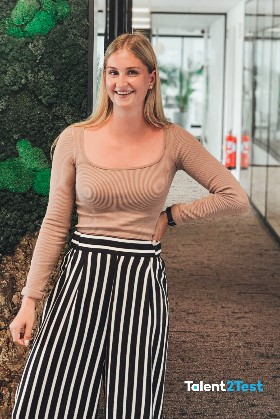
Meet the friendly Carole, 23 years old, who decided this year: I want to delve into software testing. Today she is making waves as a software tester. How she achieved that, she is happy to tell!

A Leap of Faith

“During my studies Media & Entertainment I came into contact with a website for programming and front-end development, and this is where my love for IT arose. But after three years of studying, I just wanted to start working and gain experience on the job. On the advice of my aunt, I took the plunge and started applying for a job in IT without any degree or experience.”

Mission Accomplished

“Within two months I was allowed to start at a company as a functional software tester. I didn’t know anything about it, but I learned a lot in the process. Soon I felt like I could handle even more of a challenge. Quite coincidentally, I received a LinkedIn message from Merijn from Talent2Test: was I interested in a Software Testing Class? That’s how the ball started rolling.”

Software Tester of the Day

“After the class, I was able to start very quickly with a Talent2Test customer. I’m the only tester on the team so that takes a lot of responsibilities with it. It is a large, international company and there are many career opportunities. There is a lot of variation within IT and I speak English every day. I also have a very nice team that I can always turn to. When I started the Testing Class, I really wanted to go to automation, because I thought I had already seen the functional, but with my employer I really noticed that there are a lot of new functionalities and more involved.”

Career Boost

“I experienced the process at Cookie Crunchers very positively. The regular contact, follow-up and support; I had a really good feeling about it. There are also plenty of opportunities to follow training courses and take your knowledge to the next level. By starting at Cookie Crunchers, I now have so many more options and I’m glad I committed. The world of testing has opened up completely.”

Talent2Test – When Quality Matters

Want to know more about our junior classes? Are you looking for Software Tester? Or maybe you are a Software Tester looking for a new challenges or ways to improve your knowledge? Get in touch with Stijn, account manager.

a: Houtdok-Noordkaai 12, 2030 Antwerpen
m: +32 0497 64 10 25
e: Stijn.lekens@talent2test.be
w: www.talent2test.be

Author

Talent2Test

When quality matters, Talent2Test is your partner for software testing.

Talent2Test trains & supports and offer driven test engineers to help companies achieve the quality they need.

We have the flexibility of a local player, based in Antwerp. But also the ability to execute in an international environment. This due to the fact that we are part of the Nash Squared group.  

Talent2Test is an EXPO Exhibitor at EuroSTAR 2023

Filed Under: People, Software Testing Tagged With: 2023, EuroSTAR Conference

Improve how you work and communicate with others in Software Testing

February 10, 2022 by Ronan Healy

Every software testers needs to have the skills to do their job. Whether that be experience in tools, working in DevOps, or other technical skills there are basic requirements to do your role.

Though they are often listed on job descriptions, the ability to work with others and communicate well are sometimes ignored for the technical ability to do a role. However the ability of working with others in software testing, being able to communicate and being aware of your own faults and biases are essential to being a great tester.

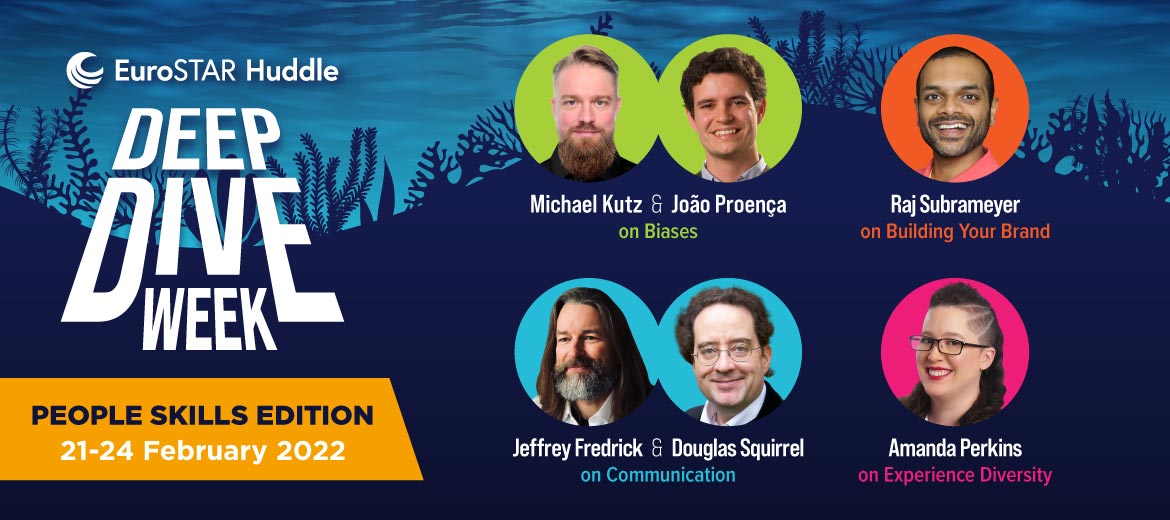
EuroSTAR Huddle can help with with our Deep Dive People Skills Series coming on 21-24 February. Over the course of 4 days the Huddle will host 6 speakers on four essential topics in working with others in testing. Let’s explore how they can help.

Psychology of Testing

We all have our own psychological biases and this can affect the way we work. In their talk on biases in testing, Michael Kutz & João Proença will explore what is bias, how you can recognise your own biases. They will, more importantly show how you can be aware of your own biases when making decisions. Avoid biases like confirmation bias through this expert talk.

Understanding You

To be a great tester and a great person, you have to be aware of your own strengths and faults. Not just that, you have to be aware of your background too. In her talk, Amanda Perkins shows how different backgrounds can shape your testing. Learn why your experiences outside testing matters and how they can contribute to what you do in software testing.

Communication in Software Testing

Communication is key in any role. How do you improve communication. This can be difficult especially when you have to criticise or assess others work. The emotional work this requires can be draining. So Jeffrey Fredrick and Douglas Squirrel will guide you on a path on learning how to be a good communicator and excel at communication in software testing. Discover the secret to being a good communicator which can benefit both you and your work colleagues.

Being Your Own Ambassador

Sometimes you have to shout about what you do and how good you are at it. This might not be something that you excel at. Creating your own personal brand might be something you would dismiss but you would be surprised to know that it something you do need to think about. In the world of social media, creating a brand image for yourself is very important. If you are applying for a job, looking to submit to a conference to or want to connect with others, your own brand matters. Raj Subrameyer will answer your questions on this in his AMA on Building Your Personal Brand. Ask Raj any question about branding and getting out in the world. Learn why you need to have a Personal Brand and why it it will benefit you.

These group of talks might not teach you how to use the latest automation tool but will teach you other tools and skills that you can use, not just in your work life but also in your home lives too. Make sure to attend the Deep Dive People Skills week to get the most of improving your soft skills and getting to better communication in Software Testing.

Filed Under: People Tagged With: people skills

The Attributes of a C-R-A-C-K Tester?

October 12, 2021 by Ronan Healy

Understanding the skills of a great tetser

September 29, 2021

The attributes of a C-R-A-C-K tester came to be as a response to a frequent question:
“What do I look for in hiring a superstar tester on my team?”

Often the context of this question had to do with people asking about what automation tools/skills are essential in hiring new testers. I was continually stymied by the question, but it helped me ponder what things really differentiate the superstar testers I’ve encountered in my career. What do they possess or demonstrate that seems to be missing from the staff tester that has become a commodity in the industry (replaceable by automation, outsourcing, or other forms of test executioners)? Surprise! The answers categorically are not related to their knowledge of automation tools!

The many answers I came up with led me here … to C-R-A-C-K. CRACK represents a subset of all the answers I came up with, and I chose them because I think they are the most broadly applicable and helpful of the bunch. Further, they are all similar in this way … they are not things I can teach in the classroom. As a trainer, I was first depressed by that realization. But deep down, I know that career testers are born as testers. They are not made out of trainings, books, certifications, or things like that. So here’s C-R-A-C-K in a nutshell:

C – curiosity

R – resourcefulness

A – adaptability

C – creativity

K – knightly (bravery)


Why are these my favorites, and why do I value them? 
Let me explain further:

Curiosity
Testing is a function of inquiry. Every test we design or execute is an inquiry about the software or system under test (related to functionality, usability, performance, etc.). A curious person will simply generate more questions to ask the software. Further, a curious person will pursue things outside of a specified test or requirement, often uncovering why something is not working correctly or discover new and unexpected things to be evaluated.

Those who do not possess a curious nature will probably not pursue these paths, thus limiting each testing encounter’s usefulness. That’s all.

Resourcefulness
So many things we encounter in software are new to us. New features, new functionality, new user interface conventions, new technologies or implementations, new security vulnerabilities, new organizational or project context or goals, new or shifting customer/user base, and so on. 

With so much being new, how will we keep up? Develop an ongoing training program that attempts to keep everyone in sync about all that might be relevant to today’s work? As an instructional designer, curriculum developer, and career trainer, I know that won’t work. Training can help where and when it can help, but testers will be faced with “new” every day.

Resourcefulness helps a tester be in charge of their own learning – in a real-time way. Resourceful testers recognize new, different, or something that they are now curious about as learning opportunities. For example, if a new version of a website-under-test uses flyout menus for the first time, how should that be tested? It’s just a menu, right? Well, a curious and resourceful person might go research (a.k.a. Google), investigate, and learn more about it so they can incorporate that knowledge into their testing and evaluation.

A resourceful and curious tester doesn’t get stuck … they pursue! As a result, these self-starters will continually be growing their knowledge base and skill set, and in turn, will be contributing that to their work and teams. That sounds like a winning combination!

Adaptability
An adaptable person is continually able to evaluate current conditions and make adjustments. Adjustments that increase testing’s effectiveness and/or efficiency will often be highly valued.

Here are a few examples of how to identify a lack of adaptability:

“We’ve always done it that way.”
        “This is the way we do things here.”
“Test cases are required.”
        “We never write test cases.”
“We don’t do exploratory testing here.”
        “We can’t do that because it’s not part of our process.”

Inflexibility comes in the form of many superlatives. Always, never, must, can’t … and in even more subtle forms like should or shouldn’t.

The landscape of software and testing today requires us to pivot, sometimes immediately, along with changing requirements, development processes and tools, organizational initiatives, competitive concerns, and market demands. However, an adaptable person will not get stuck or knocked down by change or frustrated by constant change. Instead, a person possessing adaptability will not only anticipate change as a matter of course, but they will also develop a mode of working that will enable them to easily and quickly adapt. 

In the ever-evolving and fast-changing world of software, adaptability is an essential quality for success and survival!

Creativity
Why did creativity make it into my top 5 list of attributes? That’s simple. Creativity leads to out-of-the-box or out-of-the-ordinary ways of thinking and doing things. This leads to increased coverage in testing and the ability to find questionable behavior and bugs that no one else will encounter following scripts or specs. Think about it. Do customers/users follow your test scripts? Do they have intimate knowledge of the specs or rules of technology implementations? I tend to think users do what they do.

Have you ever thought of entering data in a screen from bottom to top, or right to left, instead of the expected order of interaction? Have you ever tried to double-click or right-click a button? Creative people find ways to scratch the surface of possibilities that will illuminate previously hidden quality risks. I believe that’s a value-add to any team!

Knightly
I had some difficultly getting my cornerstone attribute of bravery into this acronym I wanted to build. Searching cascading lists of synonyms got me to the word knightly. Honestly, it’s a way better word! It encapsulates so many star tester attributes without making my acronym bigger! LOL

Knightly qualities can help a tester be a more valuable and impactful asset to their team and organization. Here are a few examples:

Bravery – Do it afraid! Have enough resilience to speak truth in intimidating situations. Truth comes in the form of bad news, devastating bugs, and the inability to meet deadlines. But the information must be shared, so be brave!

Ethical – Ethics in testing shows up in lots of ways. Confidentiality is an obvious one. But here’s a more subtle one – not spending testing cycles on what’s enticing to the self instead of what’s vital for the team and org. 

Steadfast – We face so much adversity and stress in the job of testing. Through it all, it’s essential to maintain our inner strength and balance.

Loyal – Be a beacon of constant support. How can we help today?

Humility – Be careful of stating what someone should do or how something should be implemented. We, as testers, are not the decision-makers on projects. The business decides, and the customer or users will concur or not. Besides, a bossy or lofty attitude will curtail collaboration opportunities. Once those have dried up, our ability to influence things related to quality will diminish. A humble approach is often more effective.
___________

My goal in putting together and sharing C-R-A-C-K was never to suggest these are the only things that would matter to any hiring manager. Instead, it was to point out that many valuable things that talented individuals could offer to a team are not necessarily the things found in CVs or resume bullets. Instead, I want to provoke people to look beyond the buzzwords and contemplate what someone can add to the team now and in the future.

Probably the most common question I get after someone hears the CRACK talk is, “how do I interview for these attributes?”

I think the first step is determining which attributes, these or others, are most valuable to you and your team. Then, once you’ve settled on them, rank them. During the interview, listen for evidence or indicators of these things. When you want to explore an attribute or see if it’s there, then ask the candidate to share an experience. 

Here are a few potential questions you can use to surface attributes:

With new technologies and tools emerging in software and testing all the time, how do you keep up?

Can you give me an example of a time when you had to deliver an important but difficult message to a person or team? How did you prepare? How did you end up delivering the message?

Have you ever been in a meeting with something critical to say on your mind, but you ended up keeping quiet? If so, why?

Have you ever invented something? Tell me about it …

Do you often come up with new (possibly better) ways of doing things, or are you satisfied to do things the way you learned them?

Do you follow instructions well? 
– or –
Do you question instructions (or procedures) you are given?
Follow on: Can you give me an example?

Can you share an example of a bug report that you would write? This could be an actual bug you have recently scribed, one you haven’t submitted yet, or one you found on the way to the interview. 🙂

If you had to tell a developer they made the same mistake they’ve made several times before, how would you do it?

About the Author

Dawn Haynes is the Principal Trainer and Quality Coach at PerfTestPlus, a US-based consultancy. As a highly regarded trainer of software testers, Dawn blends her 35 years of IT experience with a real-world view to provide testers of all levels with tools and techniques to help them generate new approaches to common and complex software testing problems.

Dawn Haynes
Dawn Haynes

Dawn holds a BSBA in MIS with a minor in programming, and endeavors to keep pace with changes to the industry through memberships, participation in peer conferences, and continuing education/professional development. Member: IEEE, ACM, ASQ, AST. Former Secretary and Director of the Association for Software Testing Founding member-International Institute of Software Testing. ISTQB CTFL, CTFL-AT, CTAL Full, ASTQB CMT

This post was originally published on Curating Testing Talent.

Filed Under: People

Acing an interview in the new normal

June 25, 2021 by Fiona Nic Dhonnacha

The ‘new normal’ means many things to many people. In all walks of life, we have to re-learn how to do simple things, and that’s no different in business.

One of the major changes many people have to contend with is the traditional interview process. How do we navigate interview etiquette when such an important part of an interview is about physical contact, facial cues and getting a “feeling” for the person we’re interviewing (or is interviewing us)?

Here are the 5 most important things you need to know about acing an interview in the new normal.

Replacing the handshake

Prior to the ‘new normal’, we would walk into a room and shake the hand of the interviewer, or the panel of interviewers, to establish rapport and introduce ourselves. But unfortunately, nowadays, we can’t do that. Instead, we now have to do this virtually. The good news is that we can still make that great first impression, and it’s all about making sure the first image of you, when you appear on the video screen, is what you want it to be. This will set the scene for the rest of your interaction.

For example, you can show ‘openness’ with a gentle and friendly raising of your hand, along with a gentle smile, while greeting the people on the other side of the screen. I’m not talking about a wave, just a gentle raising of either your left or right hand, followed by a polite greeting. This shows you are happy to be there, that you’ve got a warmness about you, and that you’re comfortable talking to the rest of the panel.

Technology can be your friend (or your enemy)

It is absolutely imperative to understand, and know how to use, the virtual platform. Some organisations use Teams, some use Skype, some use Zoom. One of the biggest challenges that I find is candidates only acquaint to the platform at the time of the interview, which can be a problem, especially in making that all-important first impression.

I’ve had instances where candidates couldn’t find the video toggle button, or something as simple as the unmute button. Which means they have to essentially try navigate their way through a ‘new’ piece of software for the first time, when it’s actually supposed to be interview time.

My suggestion: do a dry run and test the link a day or two before. It’s all about knowing what the process is to going to be like, so you’re fully prepared.

Secondly, and more importantly, is the hardware that you use. I strongly suggest you don’t use a cellphone for a video interview. Rather use a fixed device, either a laptop or a desktop. Remember, an interview is not the same as having a Whatsapp call; the image of you needs to be professional, which means stabilised and properly framed. There have been times where I’ve had interviews with candidates who use their cellphones, and all I could see was an image up their nose. This is not a good look.

Know your own CV

This point for me is probably one of the most important and in fact doesn’t only apply to the new normal but to any interview situation. This is where most candidates fail interviews, because they’ve actually lost familiarity with their own CVs and struggle to answer questions around tasks and duties that they themselves have put on the CVs.

Your CV is your textbook; learn it, study it and know it well. It is about you, after all. Being unable to respond quickly and effectively about your own capabilities will create doubt in the mind of any interview panel.

Maintaining focus during your interview

One of the most important techniques to learn for physical interviews is how to look at people, to maintain eye contact, and to be able to respond and look at different people in an interview panel inside the room. This is difficult, if not impossible to do in a virtual interview, but you can do the next best thing: maintain your focus on the screen at all times.

To simulate eye contact, keep your eyes focused just below the eye of the camera on your device, and it will appear to the viewer that you’re looking directly at them. When listening to the interviewer or anyone that’s posing questions, you are welcome to look at his or her face on your screen, but when you respond, always focus your eye just below your camera. Even though there may be multiple attendees on the chat, it will give every single person the impression that you are looking at and talking directly to them.

Integrate your surroundings

In a virtual call, each participant will be seated at various settings and locations. Some are at home, some at the office, some in their cars. However, it is up to you to invite the panel into your setting.

I have no problem with fixed backgrounds on Teams and other platforms for most video calls, but this is a problem when it comes to interviews. I once interviewed a candidate who used the standard office background on Microsoft Teams, which at first glance, looked absolutely fine. However, when he moved around, I could actually see that he was sitting up in bed, not a good look for a professional interview.

You can actually use your background to your advantage. Create a natural setting that reflects who you are as a person, not just a professional. For example, you can display your highest qualification behind you, or maybe a professional interest that you may have. Perhaps you’re a tennis lover, or a cricket player, a music listener, an animal activist; include some visual elements to represent that without you having to openly discuss it in the interview. Be careful not to be too controversial, by including visuals of specific sports teams for example. Rather keep it neutral and conversational.

Remember, interviews in the new normal can be just as exciting (or scary) as they were in the ‘old days’. By learning to adapt, using the guidelines above, and working with – rather than against – the technology, you can make an even better impression than before.

Good luck! 

Inspired Testing is exhibiting at EuroSTAR 2021 Online. Check out the EuroSTAR 2021 programme, and join us September 28-30th.

Author

Greg Naidoo, Head of Talent Acquisition at Inspired Testing

Greg has been leading Talent Acquisition efforts in Technology for more than 15 years. He has enabled organisations across South Africa to effectively attract and acquire top talent in Quality Engineering and Testing. He is passionate about growing the existing compliment of brand ambassadors at Inspired Testing to showcase their world class software quality engineering solutions..

Filed Under: EuroSTAR Conference, People Tagged With: EuroSTAR Conference

Preventing Burnout While Working in the Tech Industry

March 31, 2021 by Fiona Nic Dhonnacha

‘Preventing Burnout While Working in the Tech Industry’ is a talk given by Raj Subrameyer at EuroSTAR Online 2020. Raj is an international speaker, author, and tech career coach. He helps people in the industry find their dream job, and become successful leaders.

Now, Raj has put together his tried and tested strategies in a blog post – packed with information to help you prevent burnout in work (and in life); including tips, tricks, and tools he’s used on himself and his coaching clients.

Here’s Raj’s talk from the conference:

Where it started

Growing up, I was a shy and introverted kid. I was also average – in everything from academics, to sports, to dating. So, I put a lot of pressure on myself to emulate the overachievers around me – I wanted to be recognised, and for other people to see me as worthy. My biggest fear was being ignored.

When I started my career, I made a vow to myself: I would be famous, a recognised name. So I said ‘yes’ to every opportunity that came my way, and put in a lot of hard work. I tried to push myself out of my comfort zone constantly, in order to get the recognition that I wanted. What happened? Well, I got the fame, money and credibility I desired. Life was good.

Burnout

Then, in June 2018, something happened: one night, I suddenly blacked out while I was going to the bathroom. The next thing I knew, I was in the ER, undergoing lots of tests. The diagnosis?  Severe anxiety, depression, dehydration, and burnout.

Burnout is a serious issue, and it’s attributed to a lot of mental and physical health issues. About 60% of people in tech have burnout on some level – but they just don’t realize it.

Let’s ensure this doesn’t happen to you. I am sharing strategies to help you prevent burnout, including tips, tricks, and tools I’ve used on myself and the clients I coach, who are leaders in the tech industry.

Trust me, these things work! So let’s start your transformation process…

Pick up a book

There are two books which were instrumental for me at the start of my journey to productivity and mindfulness.

Deep work by Cal Newport

Deep work is focused time block sessions on cognitively demanding tasks, without any interruption. Research has found that we check our emails 30 times per hour, and it takes us, on average, 23 minutes and 15 seconds to regain concentration after this kind of interruption. That’s why doing deep work is really important in order to be highly productive. If you want to know more about my deep work process, check out my blog, 72-Hour ‘Deep Work’ Week.

Procrastinate on Purpose by Rory Vaden

Everyone talks about time management, but no one talks about self-management. The thing is, you cannot manage time, because time moves no matter what you do. The one thing you can manage is how you prioritize your work and tasks within a given time. The system I have in place to prioritize tasks is the focus funnel, which is detailed in this book. It’s been very influential in my transformation process.

Pick a task, and ask 3 questions.

  1. Can it be eliminated?
  2. If it can’t be eliminated, can it be automated?
  3. If it can’t be automated, can I delegate it to someone else?

If all three of these answers don’t work, then you have to make a decision on whether to do that task later on, or work on the task right now, because that’s the highest priority task.

This is a good decision-making system because it incorporates priority dilution, which means that you are focusing on the lower priority task compared to the higher priority ones.

Then, you have priority concentrate – where you’re trying to concentrate on the most important task at that moment right now.

Hack your week

You can implement planning hacks and mindfulness hacks in your daily life to help increase your productivity significantly. Have you ever had an overwhelmingly huge to do list? I was always overwhelmed with my to do list, because it always had around 30 tasks on it. But there’s only so much time in a day, and you need to know where to start and what to focus on. So I came up with a system – a daily and weekly planning routine.

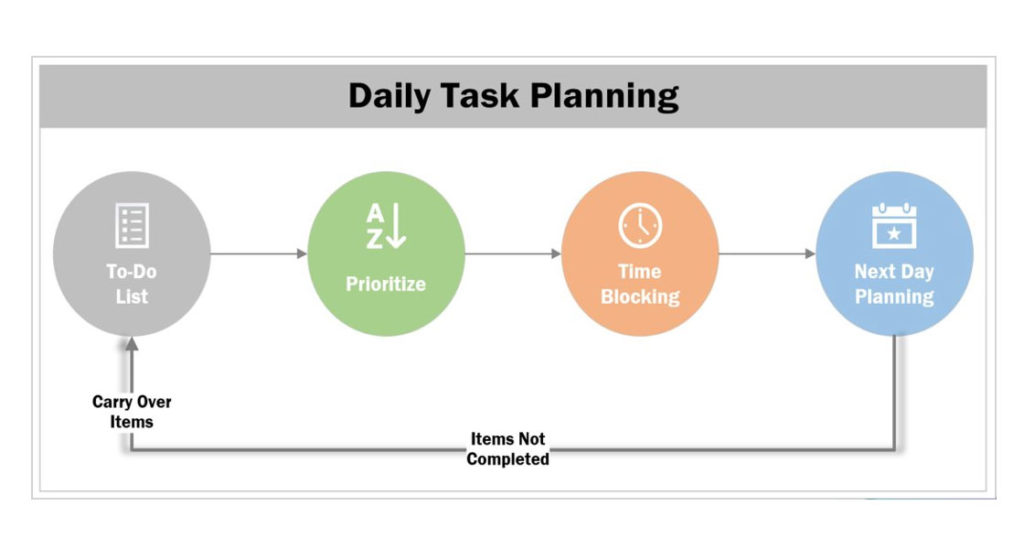
Daily planning routine

Every day, I spend 5-10 minutes coming up with a to-do list of different things I want to accomplish that day.

I then prioritize my to-do list from 1-10 in order of importance. My motto is to finish 3 top things every day. I started blocking my calendar to do focus work on these priority tasks. When the time comes, my mind does not need to think about what task I have to do, because it’s already there in the agenda.

At the end of the day, I spend 5- 10 minutes reviewing what I’ve accomplished that day. What I haven’t done gets carried over to the next day. That’s a simple way you can prioritize your work on a daily basis.

Weekly planning routine

I run my own business, and as part of my job, I have five tasks to do, no matter what: learning, reading, content creation, career coaching, and speaking. I already know how much time I have to invest in each of these buckets.

I spend about half an hour every Sunday on my weekly planning routine, and then schedule time blocks throughout the week, for example 2 time blocks for learning and reading, 4 for content creation, 8 for career coaching.

These buckets will be different for you, but make sure you are spending time in every priority task.

Meetings, meetings, meetings

Meetings are one of the most unproductive things you can do at work.

  • on average, 92% of the people in meetings multitask.
  • $219 billion dollars per year is spent on unproductive meetings.
  • 72% of the meetings which happen in the world are unproductive.

I highly recommend a Ted Talk on unproductive meeting from David Grady, How to save the world (or at least yourself) from bad meetings to get more insights on unproductive meetings.

Unproductive meetings suck the time, effort and life out of people and the company. So how do we prevent this from happening?

Pizza, anyone?

Amazon implements what’s called the Two Pizza Rule: no meeting should be longer than it would take to eat two boxes of pizza, which would be enough for approximately eight people. Printouts are given to attendees beforehand, and the first 20 minutes of a meeting is spent going over information before the meeting begins. This is a great way to ensure meetings run as productively as possible.

Another way to help avoid unproductive meetings is to ask yourself, do you really need that meeting? Could it be solved just by talking to someone via chat or email, or a phone call?

Try to avoid having more than 7-8 people in your meeting. If you have 15 to 20 people in attendance, it’s not a meeting, it’s a conference. You need to have a clear agenda, and ensure everyone comes prepared for the meeting, and then start and finish on time. The most important thing to ensure an effective meeting is to follow up on the action items, and make sure they’re completed.

Remote meetings

Have you ever joined a meeting remotely, where nobody announces who is in attendance? Or had to endure the slurping of coffee, munching, rustling, and other office noises? It might sound trivial, but if you’re wearing noise-cancelling headphones, then you know what I’m talking about.

People often start presenting something for people in the room, without sharing their screen for the remote attendees. There are also many little conversations happening in the room throughout the meeting – very annoying for the person who’s attending remotely.

How do we solve these problems? There are some simple steps you can employ: Announce who is there in the room. Have a webcam to project the room to remote attendees. Make sure to keep conversations to a minimum, and be cognizant about the different sounds which people make. The mute button can be very effective here!

Get good at email

Every year, close to 219 billion emails are sent. Research shows that by end of 2021, that number is going to increase to 316 billion emails per year. There are going to be around 4.1 billion email users by the end of 2021. The way we use email is going to be really, really important for companies, especially if you’re working in high-performance teams.

Here are some effective email strategies:

  • Ensure there’s a clear subject line
  • Don’t write long emails – just have three to four bullet point hitting on the main topic. When you have five or six paragraphs in an email, it’s hard to get your point across to people. One rule which I follow is that your email should fit within a 11-13 inch laptop screen. If it’s more than that, then you have to sharpen it.
  • Emails with more than two email threads are a red flag, because that’s the sign that you have to pick up the phone and talk to the person directly, or do something else instead of continuously emailing the person.

Set reminders for everything

I work on multiple projects, including writing, work, consulting, and coaching work. So how do I manage all these things? Reminders. Set reminders for yourself, and make use of project management tools like Trello and Asana, to help send you reminders and make sure you follow up on different tasks.

Mindfulness

Mindfulness can be an immense help in productivity. Research has found that the human mind can concentrate for an average of 45 minutes to an hour. If it’s more than that, you start losing focus. The mind also has to refocus for 5-10 minutes before you start a new task.

So throughout your work day, you need to practice focus and de-focus. Make sure you take breaks, and do something to reset your mind after every 1 hour time block. I take 5 minutes to do push-ups!

Find your appy place

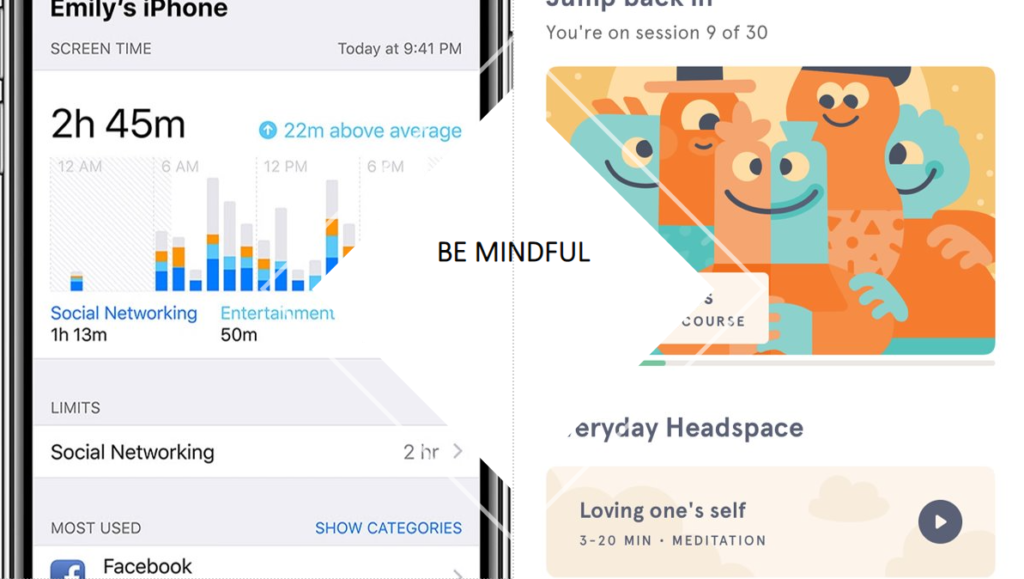
On your lunch break, try to go for a walk, watch TV, read, listen to podcasts, or just sit in silence! You need to recharge your mind properly. Studies find that on average, we spend 4 hours per day checking our smartphones. That amounts to 20 hours per day in a 40-hour work week.

Try out meditation apps like Headspace to take breaks between work, whether it’s one minute, 10, or 20 minute sessions.  Make sure your phone is on ‘Do Not Disturb’ during focus work. You could also create a playlist specifically for doing creative work.

Join a community

When I started off in my career, I found it really hard to find groups of like-minded people who wanted to discuss the same things as me – career advancement, leadership, motivation. So I created my own private Facebook group called Skyrocket your Career. This now has over 150 people, and all our testers and developers who want to share resources can learn from each other. If you want to be part of our community, check it out, because we’d love to welcome you!

Start living!

To quote Confucius, “we all have two lives. The second one starts when we realize we have only one.” So make sure you follow some of these hacks, implement them in your life, and see what works for you. That’s when the real transformation happens – and that’s how you can prevent burnout.

Even more resources:

Skyrocket Your Career

EuroSTAR Conference takes place online, September 28-30th. The 2021 programme will be released very soon – sign up to be the first to hear all the details.

Raj Subrameyer

Author: Raj Subrameyer

Raj Subrameyer actively contributes thought leadership and enrichment to the software community through conference talks, contributed articles, blogs, and YouTube videos; where he shares his experiences in development, testing, leadership and productivity. Contact Raj on LinkedIn  or Get career advice

Filed Under: EuroSTAR Conference, Leadership, People Tagged With: EuroSTAR Conference

Why Speak at the EuroSTAR Conference

January 21, 2021 by Suzanne Meade

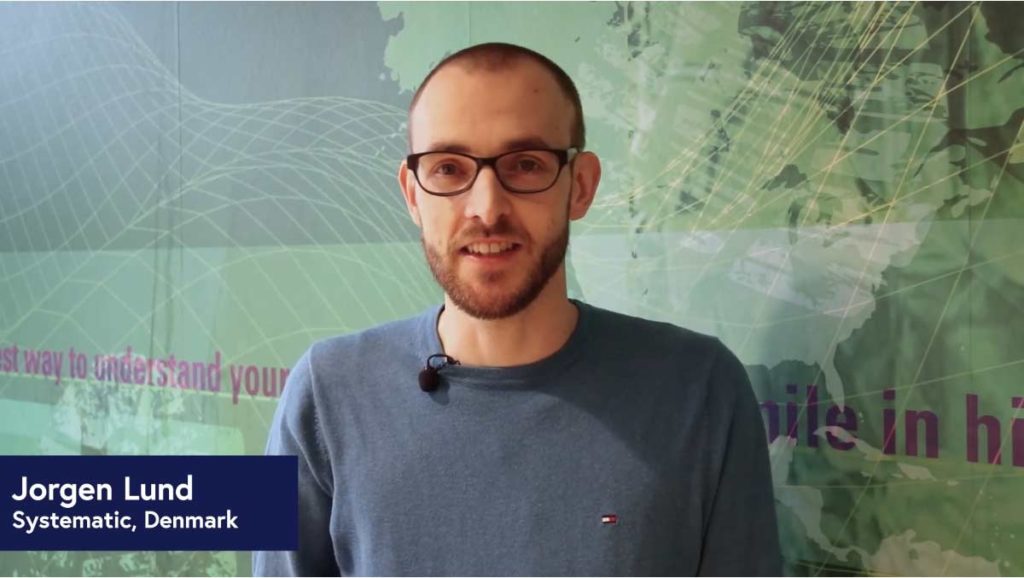
An experience talk from EuroSTAR 2020 speaker, Jorgen Lund:

Speaking at a conference is a daunting task for most people. There are so many inner voices telling you why you can’t or shouldn’t do it. I want to be that outer voice, telling you why you CAN and why you SHOULD!

My name is Jørgen. I’m a two-time, moderately successful speaker at EuroSTAR. I’m also suffering from some undiagnosed stage fright/anxiety.

Being anxious about doing public presentations is a common phobia – but we all experience it in different ways. I’ll tell you my story, and hopefully you can relate.

In school, I was a really obnoxious child. Sitting in the front row, raising my hand every time the teacher asked a question, and never being shy about pointing out others’ mistakes. I was also the smallest boy in the class, had a funny voice and some front teeth that were eager to see the world, until I had dental correction done in the 8th grade – making me an easy victim for kids to get back at me. Being good at school stuff was my one thing to hang my hat on.

But answering questions is one matter – you can pop your head up when you have something to say. Attending oral exams – when you’re in front of people who don’t know you, but judge you based on your knowledge and ability to present it, is another. I worried for days ahead. And in the moment, I couldn’t think clearly, my heart was racing, my speech stumbled, and my mouth dried up in seconds. In high school for an oral exam, I got so nervous that I vomited in a trash bin when I had to pick the exam question (fun fact: a friend told me, when I told this story, she had done the same thing – you’re not alone out there!).

I’m 40 now – and while school and high school are a long time ago, those traits are still part of me today. Every public speaking engagement is a new exam.  The good news is that it hasn’t stopped me from doing what I wanted to do. When I’ve opened up about my anxiety, I have found nothing but empathy and understanding – and I may have finally started realizing that many of the small mistakes that pile up in my head, are sometimes imperceptible to those listening.

I hope that by sharing my story and offering a few hints about my own EuroSTAR presentation, I can encourage you to quiet your inner critic for a short while and submit your story – big or small!

Why you CAN

First, a few words on psychology that has helped me see the world in a different way. I’m no expert – I only hold a YouTube degree in basic psychology. It helps me to understand my responses to certain situations – which is a good way for me to ‘hack’ my anxiety. I also have the attention span of a TED talk, so instead of recommending some books to collect dust on the shelf, I’ve included a few inspirational videos.

At EuroSTAR 2019, I was introduced to Carol Dweck’s theory on growth mindset vs. fixed mindset and the impact of a growth mindset’s ability for kids to thrive and succeed in school. A central part of a growth mindset is understanding that you’re always on a journey towards something. I think in many ways EuroSTAR embodies a growth mindset. Nobody attends to test if you know your stuff. People come to the conference to learn, connect, share, inspire and be inspired. I’ve met nothing but curious, helpful, friendly and compassionate people – from the delegates to the speakers, and the whole EuroSTAR staff. If you’re selected to speak, you are among friends all the way, who only want to help you succeed.

https://youtu.be/hiiEeMN7vbQ

The second part is about Imposter Syndrome. If you feel like you’re not skilled enough, not eloquent enough, or your ideas are not interesting to others to stand on that stage – there’s an above average chance that you’re doing just fine, and you’re just suffering from this common condition. Don’t let that nagging doubt convince you that you shouldn’t give it a go. Mike Cannon-Brookes, who’s the CEO of a ‘small’ Aussie tech company called Atlassian made a TED talk on the subject here:

https://youtu.be/ZkwqZfvbdFw

Jorgen Lund preview video of EuroSTAR 2021 talk - Why Speak at EuroSTAR

Why you SHOULD

Are you passionate about testing or other aspects of your work life? Then I’m sure there is someone out there who wants to hear about your passion!

EuroSTAR is a very diverse crowd. Some attendees have been around since the beginning – others are attending their first conference. Their projects and organizations are diverse as well. What’s trivial to some, will be a real eye-opener to others. Each year, the programme committee put together a program that has something for everybody – which means that what is near to your heart, is likely to appeal to somebody else as well.

Another reason why you should apply is, it’s good for you! You get to practice a lot of useful skills – writing a good abstract, creating a video to present your idea and showcase your speaking style (unless you’re part of the Tik Tok generation who grew up recording yourself) – and if you get selected, putting together a good presentation, and getting some experience under your belt in front of a crowd of wonderful people. And if you don’t get selected, maybe your idea will mature for another year and you’ll be clearer on your message, or you’ll get a new and even better idea that might not have come if you didn’t submit the first one!

It is likely to put you out of your comfort zone – but you’re never in too deep, and you’re always among friends. You don’t grow as a person if you don’t occasionally push the boundaries a bit!

My EuroSTAR Experience

By some miracle, I got selected to speak at EuroSTAR back in 2014. It wasn’t a great performance by any means, and the feedback reflected as much. It’s been nagging at the back of my head for a while. After some years of shying away, I applied again in 2019 where I didn’t get selected. I did attend the conference in 2019 as a delegate and really got hit by the EuroSTAR bug again. I wanted to go back! When the theme for 2020 was announced at the end of the conference, I was all in. Testing in the Wild. My biggest passion, making software that works for our military customers in the wild, was right in line with the theme.

I put all my energy into making a good abstract. I solicited help from some colleagues to zoom in on the key points of my presentation. I’ve shared my ideas with testers in my own department, testers in other departments, and colleagues in other job functions as well. It helped me get a better grasp of what was important, and whether it would be relevant to others as well.

JOrgen Luns Why Speak at EuroSTAR

The EuroSTAR team highly recommends submitting a video along with your abstract. This was another one of those mental barriers for me, but I enlisted the help of some colleagues in our marketing department to help me record it. Being comfortable in front of a camera and a crowd of one was a good, first step for me. I also sent the final result to my parents to see – for some reason it’s less scary for me to get up in front of a crowd of strangers than to present it to the people close to me.

I went into the registration system early to learn what information was required. At first, it was a bit overwhelming for me, so taking the time to letting the sections materialize really helped. I maintained an offline copy of the registration formular until I was ready to submit. The system does allow you to save a draft online, but I found it more accessible in a separate document – and easier to get feedback from my colleagues. There’s also some bits in there, like writing a bio and summarizing your speaking experience that takes a little time – don’t let it linger till the last minute.

It was a nerve-racking period for me, trying to put together the best possible presentation, and then enduring the excruciating waiting period until the speakers were announced. I had poured my heart and soul into it, and if it wasn’t gonna happen this year I would have been at a loss of what I could have done better. But in the end, it was all worth it, and getting accepted was a great confidence booster.

Since this post is already getting very long, I’ll spare you the details of how the preparation and presentation itself went – but in the end it turned out alright. I got a very respectable grade for my presentation. As a true imposter, I of course don’t trust any of the nice things people say to me – but anonymous reviews is a small window of truth!

After EuroSTAR, my colleagues in the marketing department were kind enough to put together a small video spot (shameless self/company promo alert). I can tell that I’m nervous in the video, but I feel that I’ve managed to not sound like a complete idiot – which is a major milestone for me! So even if it was a long and stressful journey, I can see the progress I’ve made

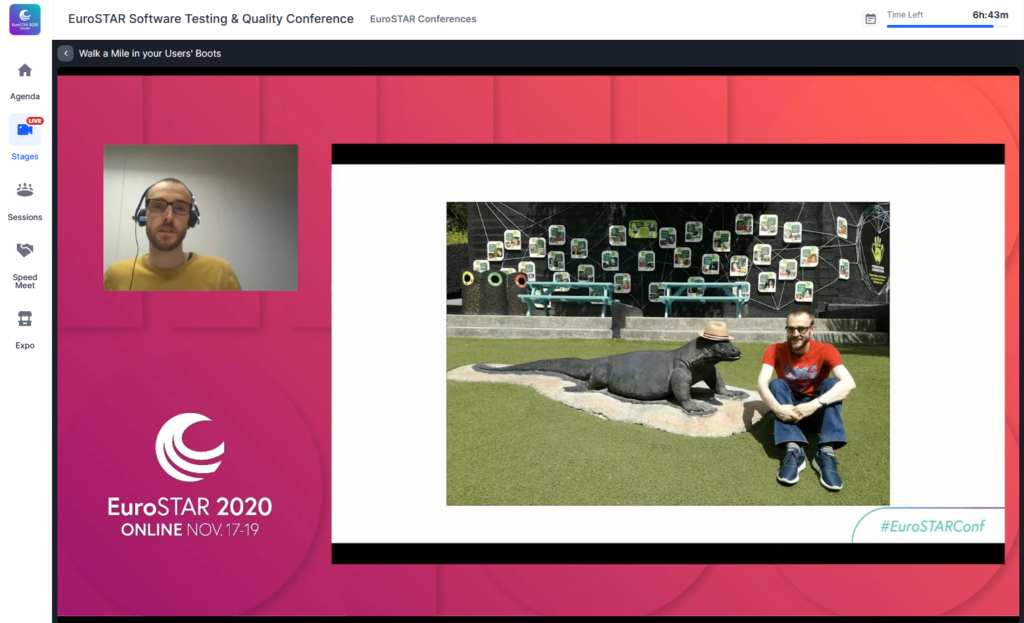
https://www.linkedin.com/posts/systematic_walk-a-mile-in-your-users-boots-activity-6737715389016375296-vGZ_

To sum it all up in the immortal words of the British speed metal band Dragonforce:

We all face our fears in the world,

We all hold our place in the (EuroSTAR) universe,

For eternity…

Check out the EuroSTAR Call for Speakers and consider submitting for this year. Submissions close on November 15th.

Author

JOrgen Lund EuroSTAR 2021 Speaker - Blog authorJørgen Lund, Systematic A/S, Denmark
After graduating with a master’s degree in Computer Science, I found my way into testing. Over the past 12 years, I have been part of building, testing, training, deploying and supporting software for our users – and I have used all of the knowledge gathered to become a better tester. Today, I work as a Senior Test Manager where I coach other Test Managers and Testers, implement strategic initiatives and train new employees in testing.

Filed Under: EuroSTAR Conference, People, Virtual Conference Tagged With: EuroSTAR Conference, software testing conference, speakers

A Different Me, Tom Chapman- The Lions Barber Collective

October 25, 2019 by Ronan Healy

On the 10th of October, the whole world recognised World Mental Health Day and this year’s theme is ‘Suicide Prevention’, as set by the World Federation for Mental Health. According to the World Health Organisation, every 40 seconds someone loses their life to suicide. More than 800,000 people die by suicide a year, making it the principal cause of death among people 15- to 29-years-old.

For our fourth episode of A Different Me, I spoke to Tom Chapman who is the founder and CEO of the organisation The Lions Barber Collective. The aim of the Lions is to provide a safe place for men to talk about their mental health in a safe place with the barbers helping to prevent suicide, one haircut at a time.

Tom’s idea started off by collecting images for a barber look book that would raise money for charity. When someone suggested raising awareness for suicide it hit Tom personally- he had recently lost a friend to suicide, someone that he didn’t even know was suffering and he realised he didn’t know of any charity locally that was supporting such an important issue.

Although it is great that we have a day dedicated to this very important issue, it is important that we take care of ourselves and others every day. The Lions Barber Collective is a group of international barbers that provide an informal way to talk about men’s mental health.

Barbers are in a unique position to help their clients; through the trust and bond they build with them. There is an incredibly strong relationship  between client and barber, where clients become friends and can share aspect of their lives with them, then walk out the shop and leave it behind knowing it goes no further because of client confidentiality and the fact that barbers are often not in their social circle.

The Lions Barber Collective has gone from strength to strength and has held some amazing fund raisers along the way all in the name of suicide prevention. We hope you enjoy Tom’s story of how The Lions Barber Collective has grown and has become such an amazing charity and movement, preventing suicide one haircut at a time.

Have a listen to all our episodes on A Different Me and sign up to be the first to hear all our new releases!

Filed Under: People Tagged With: diversity, podcast

  • Code of Conduct
  • Privacy Policy
  • T&C
  • Media Partners
  • Contact Us