• Skip to main content
Year End Offer: Save 30% + Teams Save Up to an Extra 25%!

EuroSTAR Conference

Europe's Largest Quality Engineering Conference

  • Programme
    • Programme Committee
    • 2025 Programme
    • Community Hub
    • Awards
    • Social Events
    • Volunteer
  • Attend
    • Location
    • Highlights
    • Get Approval
    • Why Attend
    • Bring your Team
    • Testimonials
    • 2025 Photos
  • Sponsor
    • Sponsor Opportunities
    • Sponsor Testimonials
  • About
    • About Us
    • Our Timeline
    • FAQ
    • Blog
    • Organisations
    • Contact Us
  • Book Now

speakers

How to get a Talk Accepted

August 25, 2023 by Suzanne Meade

The EuroSTAR 2024 Call for Submissions is open until 17th September, and our Programme Committee, Michael Bolton (Chair), Ru Cindrea, Bas Dijkstra, Baldvin Gislason Bern, and Tanja Vos. are calling for testers, developers and quality professionals to submit their talk proposals for the 2024 programme.

In this blog post, Michael shares tips on what style of talks he’s keen to add to the line-up.

Greetings friends,

Here are a couple of things that you might want to consider for EuroSTAR 2024 that could help your submission to fit the theme, or otherwise to be successful.

People are hungry for stories, so that’s what we’re looking for. The theme is a question “What are we doing here?” and that isn’t quite the same as “What have we done?” Consider stories about the testing that you’re doing at the moment, even if it’s work in progress.

Either way, your story need not be about successes. Your presentation can be failures you’ve experienced and problems you’ve encountered, whether you managed to resolve them or not. Some of the most interesting and compelling conference talks I’ve attended have involved trouble and getting around it.  Others have ended with “to be continued”. You may even have attendees coming to you with suggestions afterwards!

“What are we doing here?” could be about something that’s happening, at the conference, in the room where we’re gathering. Whether you’re doing a tutorial, a workshop, or a track talk, consider something experiential:  a quick exercise, a role play a game, or a puzzle to work through. Give people a chance to meet, chat, and collaborate.

Moreover, the EuroSTAR community is an enormous resource. Hundreds of people with diverse skills and rich experience are eager to share their ideas with you, and to offer help with puzzles and problems that you may be trying to work through. During the discussions, after your story of what we’re doing here, you may get terrific insights on what they’re doing there.

Before you submit, it can help to ask a colleague or friend to read your abstract and learnings, so you get immediate feedback on whether it engages them and captures their attention. Below you’ll hear from the EuroSTAR team as they give you insights on the overall programme selection process.

Until next time,

Michael

EuroSTAR 2024 Programme Chair

Start Submission

How are talks selected?

The EuroSTAR programme process is as transparent as possible. Once all the submissions are in, they are independently reviewed by a team of 40-50 community reviewers. Reviewers are members of the testing community that volunteer their time to help read a selection of talks and then score them for:

  • Engagement – Does the talk appeal to you? Will the attendees engage with it?
  • Original Ideas – Has it all been heard before or are there new ideas that will excite and energise the listeners?
  • Scope & Relevance to the theme – is it in keeping with the 2024 theme “What Are We Doing Here?”

Reviewers see only the talk details (not the speaker) so every submitter has an equal opportunity. If you are unsure of how to write a good submission, get in touch and we’ll help guide you.

Each talk has 5 reviews and then the scores are averaged. The top scoring talks will be the main basis for the programme. There will be some invited speakers (like all conferences) but the majority of talks come from the above blind review process.

If you’d like to be part of the review panel, please contact our Programme Manager, Siobhán.

If you are thinking of submitting a talk proposal, check out the full Call for Speakers detailing potential topics and what the EuroSTAR 2024 Committee are looking for.

Over 55% of the speakers at EuroSTAR 2023 were speaking for the first or second time, that’s in 31 years of EuroSTAR Conferences so there is always a mix of voices on the EuroSTAR stage. If you’ve submitted before and didn’t make the programme, don’t be afraid to reach out and ask for help.
Filed Under: EuroSTAR Conference Tagged With: Call for submissions, EuroSTAR Conference, speakers

Why Speak at the EuroSTAR Conference

January 21, 2021 by Suzanne Meade

An experience talk from EuroSTAR 2020 speaker, Jorgen Lund:

Speaking at a conference is a daunting task for most people. There are so many inner voices telling you why you can’t or shouldn’t do it. I want to be that outer voice, telling you why you CAN and why you SHOULD!

My name is Jørgen. I’m a two-time, moderately successful speaker at EuroSTAR. I’m also suffering from some undiagnosed stage fright/anxiety.

Being anxious about doing public presentations is a common phobia – but we all experience it in different ways. I’ll tell you my story, and hopefully you can relate.

In school, I was a really obnoxious child. Sitting in the front row, raising my hand every time the teacher asked a question, and never being shy about pointing out others’ mistakes. I was also the smallest boy in the class, had a funny voice and some front teeth that were eager to see the world, until I had dental correction done in the 8th grade – making me an easy victim for kids to get back at me. Being good at school stuff was my one thing to hang my hat on.

But answering questions is one matter – you can pop your head up when you have something to say. Attending oral exams – when you’re in front of people who don’t know you, but judge you based on your knowledge and ability to present it, is another. I worried for days ahead. And in the moment, I couldn’t think clearly, my heart was racing, my speech stumbled, and my mouth dried up in seconds. In high school for an oral exam, I got so nervous that I vomited in a trash bin when I had to pick the exam question (fun fact: a friend told me, when I told this story, she had done the same thing – you’re not alone out there!).

I’m 40 now – and while school and high school are a long time ago, those traits are still part of me today. Every public speaking engagement is a new exam.  The good news is that it hasn’t stopped me from doing what I wanted to do. When I’ve opened up about my anxiety, I have found nothing but empathy and understanding – and I may have finally started realizing that many of the small mistakes that pile up in my head, are sometimes imperceptible to those listening.

I hope that by sharing my story and offering a few hints about my own EuroSTAR presentation, I can encourage you to quiet your inner critic for a short while and submit your story – big or small!

Why you CAN

First, a few words on psychology that has helped me see the world in a different way. I’m no expert – I only hold a YouTube degree in basic psychology. It helps me to understand my responses to certain situations – which is a good way for me to ‘hack’ my anxiety. I also have the attention span of a TED talk, so instead of recommending some books to collect dust on the shelf, I’ve included a few inspirational videos.

At EuroSTAR 2019, I was introduced to Carol Dweck’s theory on growth mindset vs. fixed mindset and the impact of a growth mindset’s ability for kids to thrive and succeed in school. A central part of a growth mindset is understanding that you’re always on a journey towards something. I think in many ways EuroSTAR embodies a growth mindset. Nobody attends to test if you know your stuff. People come to the conference to learn, connect, share, inspire and be inspired. I’ve met nothing but curious, helpful, friendly and compassionate people – from the delegates to the speakers, and the whole EuroSTAR staff. If you’re selected to speak, you are among friends all the way, who only want to help you succeed.

https://youtu.be/hiiEeMN7vbQ

The second part is about Imposter Syndrome. If you feel like you’re not skilled enough, not eloquent enough, or your ideas are not interesting to others to stand on that stage – there’s an above average chance that you’re doing just fine, and you’re just suffering from this common condition. Don’t let that nagging doubt convince you that you shouldn’t give it a go. Mike Cannon-Brookes, who’s the CEO of a ‘small’ Aussie tech company called Atlassian made a TED talk on the subject here:

https://youtu.be/ZkwqZfvbdFw

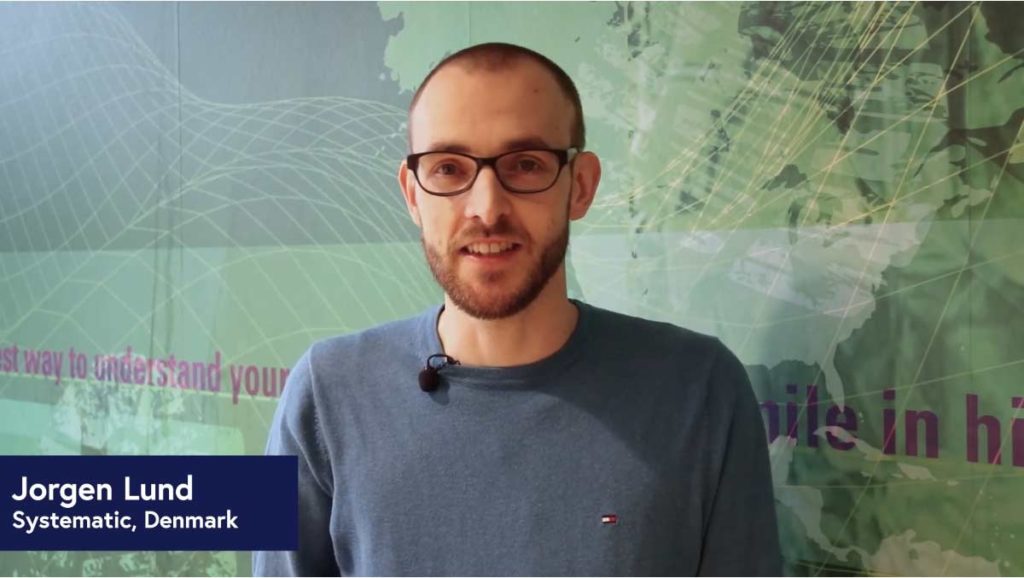
Jorgen Lund preview video of EuroSTAR 2021 talk - Why Speak at EuroSTAR

Why you SHOULD

Are you passionate about testing or other aspects of your work life? Then I’m sure there is someone out there who wants to hear about your passion!

EuroSTAR is a very diverse crowd. Some attendees have been around since the beginning – others are attending their first conference. Their projects and organizations are diverse as well. What’s trivial to some, will be a real eye-opener to others. Each year, the programme committee put together a program that has something for everybody – which means that what is near to your heart, is likely to appeal to somebody else as well.

Another reason why you should apply is, it’s good for you! You get to practice a lot of useful skills – writing a good abstract, creating a video to present your idea and showcase your speaking style (unless you’re part of the Tik Tok generation who grew up recording yourself) – and if you get selected, putting together a good presentation, and getting some experience under your belt in front of a crowd of wonderful people. And if you don’t get selected, maybe your idea will mature for another year and you’ll be clearer on your message, or you’ll get a new and even better idea that might not have come if you didn’t submit the first one!

It is likely to put you out of your comfort zone – but you’re never in too deep, and you’re always among friends. You don’t grow as a person if you don’t occasionally push the boundaries a bit!

My EuroSTAR Experience

By some miracle, I got selected to speak at EuroSTAR back in 2014. It wasn’t a great performance by any means, and the feedback reflected as much. It’s been nagging at the back of my head for a while. After some years of shying away, I applied again in 2019 where I didn’t get selected. I did attend the conference in 2019 as a delegate and really got hit by the EuroSTAR bug again. I wanted to go back! When the theme for 2020 was announced at the end of the conference, I was all in. Testing in the Wild. My biggest passion, making software that works for our military customers in the wild, was right in line with the theme.

I put all my energy into making a good abstract. I solicited help from some colleagues to zoom in on the key points of my presentation. I’ve shared my ideas with testers in my own department, testers in other departments, and colleagues in other job functions as well. It helped me get a better grasp of what was important, and whether it would be relevant to others as well.

JOrgen Luns Why Speak at EuroSTAR

The EuroSTAR team highly recommends submitting a video along with your abstract. This was another one of those mental barriers for me, but I enlisted the help of some colleagues in our marketing department to help me record it. Being comfortable in front of a camera and a crowd of one was a good, first step for me. I also sent the final result to my parents to see – for some reason it’s less scary for me to get up in front of a crowd of strangers than to present it to the people close to me.

I went into the registration system early to learn what information was required. At first, it was a bit overwhelming for me, so taking the time to letting the sections materialize really helped. I maintained an offline copy of the registration formular until I was ready to submit. The system does allow you to save a draft online, but I found it more accessible in a separate document – and easier to get feedback from my colleagues. There’s also some bits in there, like writing a bio and summarizing your speaking experience that takes a little time – don’t let it linger till the last minute.

It was a nerve-racking period for me, trying to put together the best possible presentation, and then enduring the excruciating waiting period until the speakers were announced. I had poured my heart and soul into it, and if it wasn’t gonna happen this year I would have been at a loss of what I could have done better. But in the end, it was all worth it, and getting accepted was a great confidence booster.

Since this post is already getting very long, I’ll spare you the details of how the preparation and presentation itself went – but in the end it turned out alright. I got a very respectable grade for my presentation. As a true imposter, I of course don’t trust any of the nice things people say to me – but anonymous reviews is a small window of truth!

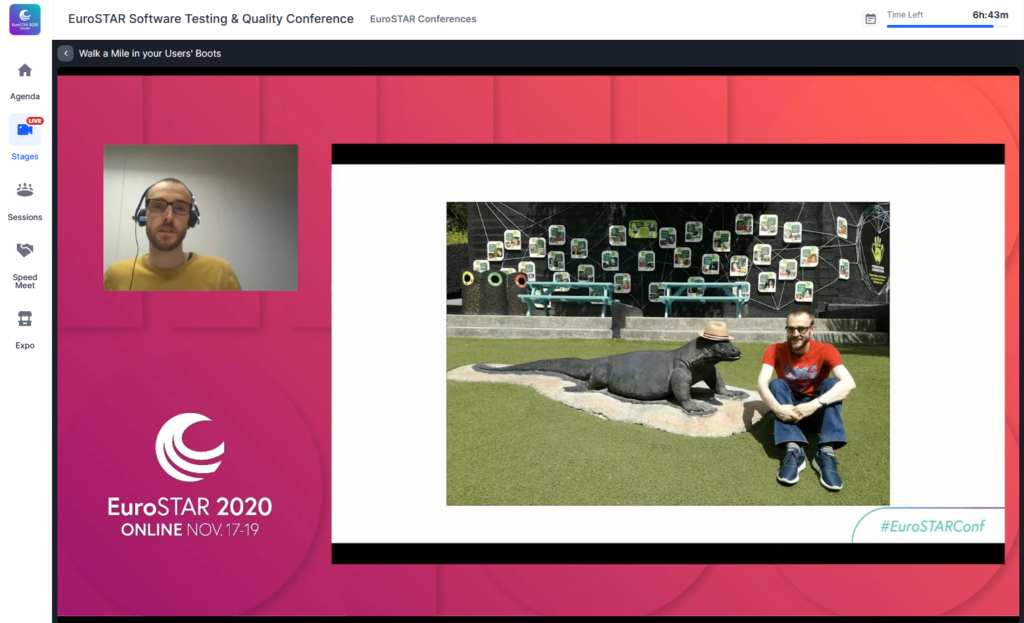
After EuroSTAR, my colleagues in the marketing department were kind enough to put together a small video spot (shameless self/company promo alert). I can tell that I’m nervous in the video, but I feel that I’ve managed to not sound like a complete idiot – which is a major milestone for me! So even if it was a long and stressful journey, I can see the progress I’ve made

https://www.linkedin.com/posts/systematic_walk-a-mile-in-your-users-boots-activity-6737715389016375296-vGZ_

To sum it all up in the immortal words of the British speed metal band Dragonforce:

We all face our fears in the world,

We all hold our place in the (EuroSTAR) universe,

For eternity…

Check out the EuroSTAR Call for Speakers and consider submitting for this year. Submissions close on November 15th.

Author

JOrgen Lund EuroSTAR 2021 Speaker - Blog authorJørgen Lund, Systematic A/S, Denmark
After graduating with a master’s degree in Computer Science, I found my way into testing. Over the past 12 years, I have been part of building, testing, training, deploying and supporting software for our users – and I have used all of the knowledge gathered to become a better tester. Today, I work as a Senior Test Manager where I coach other Test Managers and Testers, implement strategic initiatives and train new employees in testing.

Filed Under: EuroSTAR Conference, People, Virtual Conference Tagged With: EuroSTAR Conference, software testing conference, speakers

The 2020 EuroSTAR Programme is Here

May 11, 2020 by Fiona Nic Dhonnacha

The first speakers for EuroSTAR programme are announced! We’re so excited to share our biggest year yet.

Inspiring Keynotes

The EuroSTAR 2020 programme has been carefully crafted by our committee, and it’s going to be incredible. The keynote speakers are leading experts in their field, and ready to share their insights and experiences. Join Ronald Cummings-John on the true value of quality; Abby Bangser on unlocking the power of testing; and get help on your testing problems from Michael Bolton. We also have Jason Arbon talking AI testing limits (and superpowers!). Meanwhile, Tomasz Dubikowski gets real with microservices testing.

Interactive Tutorials

The programme also features half day intensive tutorials offering in-depth learning in the hottest testing topics. Fran O’Hara delves into agile, Fiona Charles shares powerful test techniques, Alan Richardson gets technical on web applications, and LOTS more. You’ll get actionable tactics to improve your work and get back to work motivated and refreshed.

Incredible Track Talks

The 2020 EuroSTAR programme keeps on giving and there are two days of track sessions, bursting with talented speakers ready to delight and inspire. Learn to thrive in test automation, deep dive into continuous delivery, learn new skills to become better testers, and lots more. Bring your curiosity. Take-home new perspectives.

Meet Some Great People

The community is still at the heart of EuroSTAR, and outside of the talks, the 2020 Online conference will include interactive sessions and conference favourites that you’ve come to expect. Solve problems at the Test Clinic, try some hands-on testing at the Test Lab and enjoy fun and games in the Community Huddle…all re-imagined for an online experience.

Ready to join us in November? Get your tickets here.

Filed Under: EuroSTAR Conference, Virtual Conference Tagged With: EuroSTAR Conference, speakers

Programme Chair Blog: Conferring: questions, discussions & sharing ideas

November 8, 2019 by Suzanne Meade

Continuing our series of EuroSTAR in poetry by our 2019 Programme Chair, Isabel Evans, as we approach the start of the conference, it is a great time to think about all the amazing people you are about to meet.

EuroSTARConf was created way back in 1993 to bring the testing and quality community together. It is THE largest software testing event in Europe and for some, it may be your first time at such a large event. First and foremost, we are your testing family. Everyone is here to revel in the shared learning and either get inspiration or help provide it. The EuroSTAR Community is truly amazing and you are going to love every minute of it!

If you are joining the conference for the first time, there are lots of people to meet including the world class line up of speakers. Isabel has given some thoughts on how to make the most of your time and tips on how to engage with the speakers.

Isabel Evans and Graham Freeburn

Haiku Poem from Isabel Evans

A conference is
for conferring. Ask. Listen. Speak.
Discuss. Explain. Hear.

There are thirty ways
to ask questions, eleven
ways to answer them.

You know them: Closed,
Open, Leading. Then Yes/no,
Full, Evasive, Lies.

Which ones help? Which
Hinder our dialogue?
Think before you speak.

Let’s be open
in our questions and answers,
speaking, listening.

Speakers like feedback:
Right time and place – constructive,
Thoughtful, engaged,

Give them praise – speaking
Is hard. Ask them about their
Topic and ideas.

Engaged dialogue
Constructively helps our growth
And progress, build us.

The 27th EuroSTAR Software Testing & QA Conference kicks off on Monday 11th November. We hope to see you there!

SEE TICKET OPTIONS

Filed Under: EuroSTAR Conference Tagged With: speakers

Programme Chair Blog: Which day is best for me at EuroSTAR?

September 19, 2019 by Suzanne Meade

Our 2019 Programme Chair, Isabel Evans loves literature and poetry and has been giving her take on the upcoming EuroSTAR Software Testing Conference through the medium of haiku poetry. See more about the beackground and haiku in our earlier Programme Chair blog 

EuroSTAR has been bringing software testers together for 27 years. The conference is led by the testing community, the need for connections and conversations. Each year it is like a homecoming for many of the most influential testers in our industry as they catch up with their EuroSTAR family and also meet new attendees, equally passionate about software quality. There are more than 350 companies attending EuroSTAR each year, many come every year but sometimes the people change. We are always conscious of creating a welcoming space for new attendees and alumni to network and be inspired.

A regular question from new delegates considering their first software testing conference is ‘Which day would be best for me to attend?’. A great question and of course we would say all four days 🙂 .. but .. if you have less time available, we do have single day and 2.5 day ticket options available.

Take a look at the conference programme and see what talks stand out for you. There are lots of topics to choose from and so much to learn from each of the incredible speakers. Isabel Evans is also on hand with some short haiku poems to give you insight in each day at the EuroSTAR Conference.

SEE 2019 PROGRAMME

Why go to the conference on Monday?

Monday – Full day – learn!

Seven tutorials – choose!

Immerse, educate

Why go to the conference on Tuesday?

More Tutorials

Tuesday, and keynotes and talks

A full day learning

Why go to the conference on Wednesday?

Wednesday, so much

To share – talks, workshops, keynotes

Confer, Discuss, Learn

Why go to the conference on Thursday?

On Thursday, we have

Talks, workshops, keynotes. All great!

All day! Join us! Do!

We hope this helps give you an idea of each day and as a added guide we have included a synopsis below.

SEE TICKET OPTIONS

Day by Day Schedule

The EuroSTAR conference programme is jam-packed of exciting talks from expert speakers. There are lots of ‘corridor track’ events and EuroSTAR Extras so stayed tuned for each announcement – Sign up to the EuroSTAR mailing list and don’t miss a thing!

[/vc_column_text][/vc_column][/vc_row][vc_row equal_height=”yes”][vc_column width=”1/4″][vc_column_text]

Mon, 11 Nov.

6 Full Day Tutorials

Sit Down Lunch

Evening Pub Quiz

[/vc_column_text][/vc_column][vc_column width=”1/4″][vc_column_text]

Tue, 12 Nov.

6 Half Day Tutorials

1 Keynote Talk

8 Track Sessions

Lightning Talks

Expo Opens at Lunch

Tester’s Party

Community Dinner

[/vc_column_text][/vc_column][vc_column width=”1/4″][vc_column_text]

Weds, 13 Nov.

2 Keynote Talks

Next Generation Keynotes

16 Track Sessions

2 Workshops

Expo Lunch

Networking Drinks

Awards Night

[/vc_column_text][/vc_column][vc_column width=”1/4″][vc_column_text]

Thu, 14 Nov.

2 Keynote Talks

10 Track Sessions

3 Workshops

Expo Lunch

Prize-Giving

[/vc_column_text][/vc_column][/vc_row][vc_row][vc_column][vc_row_inner][vc_column_inner][vc_column_text]

[/vc_column_text][/vc_column_inner][/vc_row_inner][/vc_column][/vc_row]

Filed Under: EuroSTAR Conference Tagged With: EuroSTAR Conference, speakers

EuroSTAR Conference Sessions To Attend – For Managers

June 5, 2019 by Ronan Healy

In this blog, the 2019 committee have recommended EuroSTAR sessions for an managers. Learn from the experts, discover how you can improve both your testing and management in an everchanging world. 

Do you agree with the committees picks?

Monday


Tutorial F – Unboring Test Management by Iris Pinkster-O’Riordain and Greet Burkels

In recent years Test Management diminished to something you don’t want to do. The main instigator for this change is the rise of Agile and DevOps, due to which management thinks that Test Management is not required. It can also be the ‘old-school’ impression that Project Managers can do Test Management. In any case, it is the speakers belief that Test Management tasks are still required to successfully finish projects when successful means: it solved a problem. Let’s not forget: not all projects are Agile or Devops or ever will be, and not all project managers have the time or knowledge to do test management tasks.

In this tutorial we will look at traditional Test Management tasks and see how they relate to different contexts. The ”unboring” part? Topics will be explained that give Test Management the extra sparkle and make it less “boring”. They will show that you have a lot more influence than you might think!


Tuesday


Tutorial H – Riskstorming – Build A Strategy That Matters by Beren Van Daele


Testing is a craft, but it is also and for many foremost a job. A job you do day in day out, evolving with all the rituals every employee develops over time. These rituals, together with all sorts of other external factors (deadlines, pressure, etc.) often means that we don’t have a test strategy or that we are no longer reconsidering the strategies we set out from the start. Having the right strategy in testing is important to stay as efficient and effective as you can be.

The RiskStorming session format is a wonderful way of generating a visible Test Strategy as a team that automatically focuses your plan to answer the important questions. It leverages the diversity of people around the table, their ideas and experiences, to share and learn from each other, in order to come up with a strategy that answers the following question:

How do we test -> the risks that impact -> the aspects of our Product that matter?


Tuesday Track 4 – Test Architects at Siemens are Working Well by Peter Zimmerer

This presentation explains the new key role Test Architect, provides practical guidance on the needed strategies, tactics, and practices, and shares our experiences and lessons learned:

– Why do we need a Test Architect?

– What is a Test Architect really?

– What are the responsibilities and tasks of a Test Architect?

– How can a Test Architect provide value and create impact on the business?

We are continuing our journey in this direction. At Siemens our target is to have nearly 50 certified Test Architects by the end of 2019. That means a tremendous upgrade and empowerment of testing, and an excellent starting point for working well!


Tuesday Track 8 – How To Become As Agile As Your Project by Maud Lundh

What happens when your working method and processes are turned upside down? A few years into my career, I was the test manager for a new project labeled as “extremely agile”. What I learned early on was that the way to develop a project from start to finish had changed.

The project used a new process called “Conceptual Development”, a design-driven, lean development process. “Conceptual Development” focuses on customer collaboration and pushing through frequent deliveries from concept through design all the way to development. With a more traditional agile process, requirements would have first been planned and developed, before being tested near the end of a delivery. Now we tested concepts and prototypes first, and every prototype and design was its own delivery. This new process opened up new possibilities of testing since everything was testable from the get-go.

With “Conceptual Development” it is important to fail quickly and test with actual users before a single line of code is written. This new way of lean startup created new challenges for our team. Everyone needed to implement “Design Thinking” in their work. So how did we approach this new way of working as a team? Did we learn new skills and techniques, or just adapt those we had in a new environment? And what were the results?


Wednesday

Wednesday Track 3 – Measuring Release Quality & Delivering Value by Marina Bechaalani 

Within a 2000+ employees company, it is very challenging to ensure that the needed quality is delivered to clients. Clients should have the same experience using the final product from release to release. My motivation for creating a metric started with a famous definition of quality by Jerry Weinberg, “Quality Is Value To Some Person” enriched later on by Michael Bolton with “at some time” and by James Bach with “who matters”:

“Quality Is Value To Some Person, At Some Time, Who Matters”

If we will not concretise and align upfront on the “values to persons who matter today”, we will miss looking at our releases quality in a common way and taking the needed joint decisions.

During the presentation the need for this new measurement will be discussed with the actions taken by all builders and consumers of the releases based on those measurements.


Wednesday Track 7 – The Future of Testing: More Awesome by Martin Karsberg

For the last year i have been part of a research project financed partly by the Swedish government to try to look and challenges with in the field of software testing. The project is a joint venture between my company, representing the industry and Research Institute of Sweden (RISE) Viktoria, representing Academia. The project was set up with focus on AI/ML with in the Automotive industry.

The project has been two fold. The first part has been a literature study to survey the current studies been published. Some 60+ papers was included in the study to get broad view. In the second part we did deep interviews with people in the industry to see how their everyday work map to the subjects that academia are conducting research on.

My talk will present the result of both part of the study. I will go though the top 3 challenges with in software testing from both perspectives. By doing this i hope to challenge the perception of where we are and what the future has in store for us, testers.


Wednesday Track 13 – Leadership: From Monolith to Pebbles by Adam Matlacz 

When working with medical products, the verification process can be a real pain – especially when dealing with completely new QA team, complex hardware/software setup and collaboration of multiple scattered teams.

My first release as a System Test Manager was a real struggle – stress, overtime, exceeding deadlines and a lot of uncertainty. But I’ve learned my lesson and focused on preparing and building the team with the right skill set and competencies. And what is the most important, now each team has its own leader with his responsibilities and me acting as a glue to hold them all together. Motivation, focus on details of the tasks and team velocity have increased tremendously. Work is less stressful and management more happy with the results. Thanks to the changes, we are finally working well.

I want to tell the story of fall and rise of a team in complex project and environment. I will show my framework for building teams in complex projects and organizations. The talk will tackle the issue of building a Rock Star QA team by the right distribution of leadership


Wednesday Track 16 – Good Intentions Out The Window by Jantien Van Der Meer

Your team has been working in an agile setting for some time now, and you’ve been doing quite well: Delivering high quality software in a predictable pace, continuously improving your product as well as your way of working. The team is happy with the way of working and the stakeholders are happy with the product that is being delivered. All is well.

But then something happens… Suddenly there is a change within the organisation. A major change in targets, unrealistic deadlines are introduced, extra functionality is pushed… and you notice a change within your team as well: The people who have been working so well together, now don’t seem to have time for each other anymore, let alone for continuous improvement. In fact, some of the things the team has agreed upon to be able to deliver better software, such as three amigo and pair programming sessions, are discarded because “there’s no time for that now”.

The result: a significant increase in findings, more rework, pointing fingers, an hostile environment where people are no longer cooperative. All good intentions went out the window. Was all the progress your team made for nothing? How could this have happened?

Last year, I found myself in this situation, asking similar questions. It did not only frustrate me, it also intrigued me, so I set out to find out what could have caused such a setback within our team. I consulted a specialist in the area of human behaviour and mental performance.


Thursday

Thursday Track 3 – Can’t Grow Without People by Martha Firlej

Three years ago I decided to change company and look for new opportunities. I never imagined that I would work for a huge Ukrainian software house with over 25 years of experience on the market. The one thing that surprised me the most when I joined, was the set knowledge model that was applied to every developer, business analyst and software tester at the company. I started to dig deeper into why it is the first company I know to build such a tool. The reason was simple, the company had experienced an unsustainable growth and there was a need to build a company-wide process/solution for people growth and company stability.

I would like to share the Knowledge Models that were developed and show how it looked till end of 2018. It supported growth from 500+ software testers in 2014 to 1000+ at the end of 2018


Thursday Track 8 – Finding & Developing Good Software Testers by Phil Royston

Doing testing well requires having enough people with the right skills and knowledge. But the challenges facing software testers are growing and at the same it seems to be getting harder to get sufficient talent into IT as a whole, never mind into software testing.

I feel I have been trying to meet these challenges throughout my software testing career, but most especially so in the last five years whilst founding and managing a software testing business. I would like to share the experiences and lessons I have learned not only from delivering testing services but also from building a company.


Thursday Track 10 – Ferries & Crusises – Testing & Releases by Derk-Jan de Grood

Backlog ordering can be cumbersome. In this workshop we learn how to order our backlog based upon business value and define a roadmap that delivers a workable release. The workshop is based upon a cruises and ferries operator that want to boost its business. Based upon a given backlog teams will learn how to sort their backlog in order to define the business value. As a next step we will use a customer journey to assess the result of the initial sorting and learn that release thinking will lead to a different approach but will yield in more business value and faster feedback for the business. We will explore the role of testing as a measure to create feedback and assess whether the roadmap should be altered to optimize for testing. In the 3rd round the teams will enhance their roadmap in order to reduce the time to market of their initial MVP, to create a faster feedback loop for testing and to check whether the technical solution aligns with the company goals.


Join this session if you want to gain a better understanding in how to plan for business releases and MVP’s that yield value and want to participate as a tester in this process to ensure that testing is embedded in the approach.

Filed Under: Uncategorized Tagged With: speakers

  • Code of Conduct
  • Privacy Policy
  • T&C
  • Media Partners
  • Contact Us