• Skip to main content
EuroSTAR 2027 - Sign up for early access

EuroSTAR Conference

Europe's Largest Software Testing Conference.

  • Programme
    • Call for Speakers
    • 2026 Programme
    • Community Hub
    • Awards
  • Attend
    • Why Attend
    • Bring your Team
    • Testimonials
  • Sponsor
    • Sponsor Opportunities
    • Sponsor Testimonials
  • About
    • About Us
    • Our Timeline
    • FAQ
    • Blog
    • Organisations
    • Contact Us
  • Book Now

EuroSTAR Conference

Talking to developers about testing

June 21, 2022 by Fiona Nic Dhonnacha

Thanks to PractiTest for providing us with this blog post:

Let’s start by reminding ourselves why we need to talk with developers about testing.

According to the 2022 State of Testing report by PractiTest and Tea-time with testers, 86% of organizations now report working in an Agile or Agile-like approach. Close to 40% of organizations are working in DevOps methodology. And while the more traditional Waterfall approach is still practiced at 17% of organizations, it continues to decline.

This means that the traditional testing roles and teams, as we used to know them, are gradually disappearing, and instead, testing is becoming the responsibility of an entire agile team that also includes developers. Hence, it is of no surprise that in 77% of organizations testing is executed by testers and non-testers alike.

This shift often encounters resistance from developers with various claims about lack of knowledge on how to test, being too busy to do so, the perception that it’s a waste of their expensive time, or simply lack of desire to do so.

In order to help you bring everyone on board with the concept of product quality being the team’s responsibility we have prepared a 5 steps guide to help you:

Talking to developers about testing - communication

1. Communication

The business environment is no different than others: when it comes to human interaction, communication is the basis for a successful relationship. In order to get everyone on board, you need to start with making people understand that performing testing is not a punishment, but rather a contribution to the company’s bottom line, due to the ability to deliver faster with higher quality that will meet customers’ expectations. It requires executive sponsorship, to support the required change both in culture and in methodology.

Communication is a two-way channel, and as a result, it’s also about listening, understanding, and addressing the developers’ concerns. Pay close attention to the developers’ feedback and take it into account in order to maintain an open communication environment.

Talking to developers about testing - coaching and mentoring

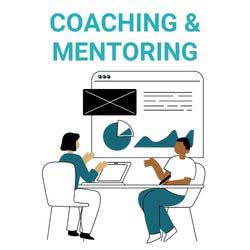
2. Coaching & Mentoring

One potential reason for people to object to a change, is their fear of dealing with the unknown and the concern of not excelling in their performance. That’s why we need to dedicate time and effort to guide developers with essential information about testing. We need to convey to developers that testing is not ‘simple’ work. We want them to understand the software testing process, implement test management platform usage, and so forth.

In addition, invest some time in short pre & post briefing sessions. These meetings should include the developer of the tested feature, the testing developer, and a product team member. By doing so, we will bring a better understanding and efficiency to the process.

3. Shift left

Adopting Agile and DevOps methodologies has also created a shift in what is tested and when. We see a major shift left with the introduction of Behavior Driven Development (BDD) support and Test-Driven Development (TDD).

  • BDD/TDD are approaches that are focused on shift left. It aligns people and generates most of the tests before the testing is actually performed. Mistakenly, the common thinking is it’s used only for automation, but it can also be applied in manual testing.
  • Testing as a part of the user story – this means that user stories should also include testing elements.
  • Personas – a representation of the typical users that are going to make use of our development and their characteristics. For example, in an application that aims for the elderly, we need to think about them when creating the scenarios.
  • Testing sessions during development – you can have pair testing and have sessions while features are being written. It doesn’t have to be completely built to be shifted left.
  • Dashboard for unit/integration – include in your dashboard unit/integration test results like any other testing. This will place developers’ unit/integration tests at the same level as tests executed by testers.
  • Stability – the features shouldn’t be stable only before the release, it should be stable all the time. It is very important, it signals developers that they are already testing if they open their eyes.

4. Other testing

Sometimes it is easier for developers to relate to testing which isn’t the main core of the functional testing. The easiest way to use the “other testing” is simply to ask the developers and use their own ideas. It’s significantly easier to implement your ideas instead of someone else’s. We can also use developers’ knowledge to improve our automation framework and make the testing process closer to their hearts.

Specialized testing is another great way to leverage our developers’ knowledge to contribute to the testing efforts. Testing types like security, chaos, and performance are simpler to developers than testers. Developers would have a strong motivation to execute those specific specialized tests.

Talking to developers about testing - transparency and visibility

5. Transparency & Visibility

This is extremely important, and yet, it is amazing to see how often this is left aside. Transparency and visibility have a massive added value when we involve different people in the process.

  • End-to-end dashboards – if you are going to have multiple testing types such as unit tests, functional testing, and integration tests, you should have everything in the same place and give the same legitimacy to all tests. The moment you see that “my tests” are also included in the dashboards, that’s when you understand the importance of the tasks and your contribution to the mutual goal.
  • Count every test I have – regardless of the type or complexity.
  • Add testing to standups – a lot of time people do talk about testing in standups but we leave it to the last minute and don’t talk about challenges other than sharing ongoing activities.
  • Celebrate achievements – even in testing, if we have a developer that found a show stopper it is important to celebrate that because it has a positive effect on the staff members.
  • Testing retrospective – especially when a bug slipped and was found in production, it has a lot of value when we learn from it. Our victories and errors are equally important and valuable.

Summary

In conclusion, with most organizations working in an Agile or Agile-like environment, the software testing process is no longer exclusively assigned to testers, and other staff members like developers are taking part in the testing process. Developers have great expertise and in-depth knowledge that could substantially contribute to testing efforts. Therefore, you should follow the 5 steps mentioned above in order to effectively make them an integral part of the testing process.

Practitest is an exhibitor at EuroSTAR 2022.

Author

Joel Montvelisky, Co-Founder and Chief Solution Architect at PractiTest.

Joel Montvelisky, Co-Founder and Chief Solution Architect at PractiTest.

Joel has been in testing and QA since 1997, working as a tester, QA Manager and Director, and a Consultant for companies in Israel, the US and the EU. Joel is a Forbes council member, a blogger and is constantly imparting webinars on a number of testing and Quality Related topics. In addition, Joel is the founder and Chair of the OnlineTestConf, the co-founder of the State of Testing survey and report and a Director at the Association of Software Testing.

Filed Under: Software Testing Tagged With: 2022, EuroSTAR Conference

Digitalizing the future of testing

April 27, 2022 by Fiona Nic Dhonnacha

Thanks to Sophie Gustafson and Matt Holitza for sharing the below article on the UiPath Test Suite:

It’s been over 20 years, and not much has changed: testers continue to face the challenge of needing to test more technologies, both faster and more frequently. On top of this, testers must still mostly do their job manually because testing tools haven’t lived up to their promise – automations are fragile and require continuous maintenance.

Yet the modern digital business needs to deliver customer value continuously, rapidly, and with high quality, no matter if the value is delivered via an application, a process automation, or a mobile experience. So how do we revolutionize the state of testing to support and align with the demands of current businesses? It’s obvious – the future of testing is digital.

In less than two years, UiPath Test Suite has been named a leader in Cloud Testing by IDC. How did we make it to the top? We built upon a proven, production-grade automation technology, enabling us to completely disrupt the software testing market. Test Suite is the only testing solution that supports the next-generation ‘Digital Tester’ with production-grade, low-code automation and AI power tools to make testing more precise, efficient, and rewarding.

No matter the testing role, Test Suite helps empower all digital testers, liberate them from their legacy tools, and transform their QA processes.

Empower the digital tester

With its low-code IDE and enhanced capabilities like AI Computer Vision and native support for testing virtually any technology, including Citrix, SAP, mobile, and APIs, Test Suite enables anyone and everyone to automate their processes. Our platform offers the ability to synthetically generate test data for a more seamless test data management experience, as well as enforce test automation standards with rules and definitions.

Digitalizing the future of testing

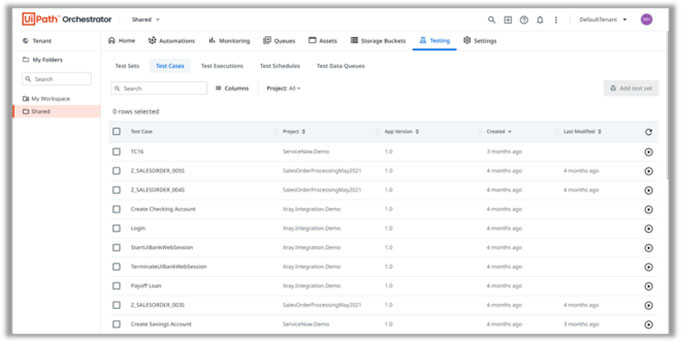
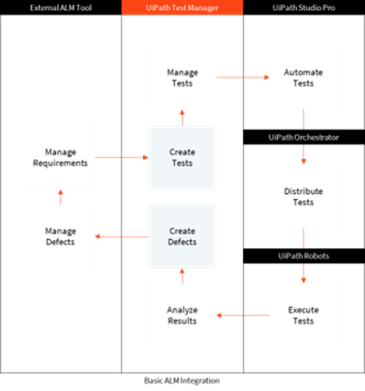
Using UiPath’s Orchestrator as a control center, testers can engage in production-grade continuous test execution through scheduled test sets and CI/CD integrations. And we’ve made automated testing even easier – testers can use our Test Discovery capabilities like Process Mining and Task Mining to target and prioritize specific tests based on actual production usage. Additional digital tools like Test Assistants and Task Capture also aid in eliminating time-intensive, mundane tasks.

Liberate from legacy

Digitalizing the future of testing

If you have existing testing tools or assets, we’ve got you covered – our open platform seamlessly connects into your DevOps toolchain.

With UiPath migration services, you can migrate test management artifacts, and, depending on your technology and other factors such as customizations, you may also have the option to gradually migrate your existing automation assets. You can also choose to have existing tools co-exist

Transform QA

You can say goodbye to tedious QA processes by leveraging our Enterprise Automation platform that allows for sharing and reuse across your cross-functional business. By expanding and scaling your automations, your testing components and objects will improve and become more resilient, transforming the QA process from a cost center to a value contributor.

UiPath is a Gold Partner at EuroSTAR 2022. It’s our first in-person event in 2 years – and it’s going to be a massive celebration of testing! Learn from 70 testing experts, and connect with your peers at Europe’s best testing event. Get your ticket now – book your individual ticket, or book a group and save up to 30%. See you in Copenhagen.

Authors

Sophie Gustafson, Content Strategist, UiPath Test Suite

Sophie Gustafson recently joined UiPath as a Content Strategist on the product marketing team for Test Suite. Sophie has previous experience working in the consulting and tech industries, specializing in content strategy, writing, and marketing.

Matt Holitza, Product Marketing Lead, UiPath Test Suite

Matt Holitza has worked at UiPath for two years and is currently the global Test Suite product marketing lead. Matt spent the first ten years of his career as a manager of a test automation team.

Filed Under: Uncategorized Tagged With: EuroSTAR Conference

Native quality management: how to adapt to a quality-centric culture

April 11, 2022 by Fiona Nic Dhonnacha

This article was provided by José Domingues, Head of Marketing at Xray.

“A company with a highly developed culture of quality spends, on average, $350 million less annually fixing mistakes than a company with a poorly developed one.”

Harvard Business Review

Historically, software development and quality assurance were one and the same. If you built it, you also tested it. But then software grew up, and as it got more and more complex, dev and QA needed to split up in order to do their job right.

But instead of these two teams remaining close friends, they grew far apart. Each in their own world, operating in different environments, using their own workflows, speaking different languages.

Who paid the price? The software. Now, complex, disconnected workflows weigh us down, slowing down our releases. Critical tests are missed, compromising our coverage. And more than anything else, we’re just not on the same page – even simple tasks are frustrating when each team needs to translate into their own language just to get stuff done.

How can we expect our software to be at the highest quality, when quality and development are so disconnected?

Adopt a “native quality management” approach to testing and development that prioritizes quality every step of the way.

Let’s see how to do just that.

Measure your “quality maturity” and the time and cost it takes to fix bugs

In August 2013, Amazon experienced a software glitch that shut down the website for 40 minutes. Amazon lost $4.8M or $120,000 per minute due to this glitch. As a result, Amazon executives prioritized quality management to prevent any similar catastrophes in the future.

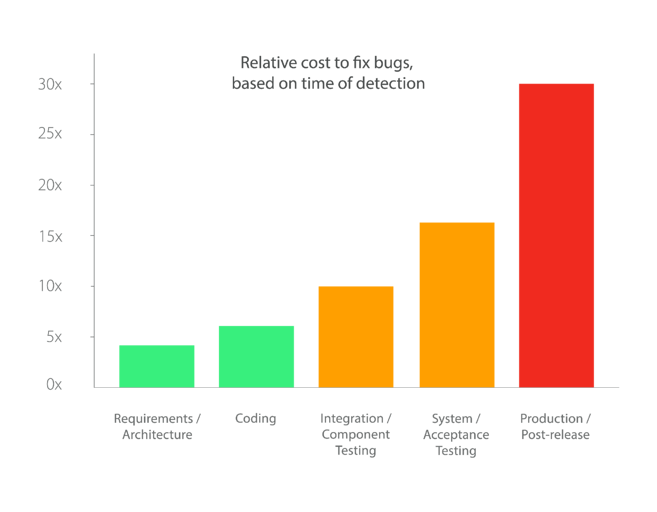
In the report “The Economic Impacts of Inadequate Infrastructure for Software Testing by NIST (National Institute of Standards and Technology), the relative cost to fix bugs based on the time of detection significantly increases as you progress through the software development lifecycle.

By the time a bug slips through all the way to production and post-release, it can be up to 30x more expensive to fix than if it was caught during the requirements/architecture phase.

native quality management by Xray graph illustrating the cost of failure

Now more than ever, you need to understand how much quality impacts your organization. A method you can use to assess your “quality maturity” is to measure the time and cost it takes to fix bugs.

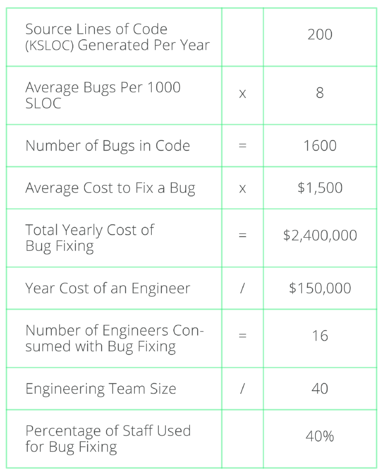
In the book, How Google Tests Software – Help me test like Google, authors James Whittaker and Jason Arbon show how Google quantified the cost of poor software quality and how long it took engineers to fix bugs.

They used the following model to calculate the cost of bug fixes:

native quality management by Xray graphic calculating the cost of failure

Plugin your own numbers and try this technique to gain a clear indication of how much time you waste fixing bugs, so you focus on preventing them in the first place

By now you understand that you can’t ignore software quality. Testing needs to evolve to fit the growing demands of rapidly released software.

So, how do you adapt to avoid costly errors?

Evolve into a “Quality-Centric Culture” that prioritizes quality every step of the software development lifecycle.

Transform to a culture of quality vs testing

Your team needs to collaborate and adapt to deliver quality. Shift the focus from a specific role or team that does testing, to a unified organization focused on creating quality.

First, let’s understand the meaning of Quality. In the book Leading Quality: How great Leaders Deliver High-Quality Software and Accelerate Growth by Ronald Cummings-John, he describes “Quality (as) subjective; it’s determined by whoever is using the product at the time…Quality is relative; it changes over time.”

To begin, understand what is the “Quality Narrative” in your organization. Leading Quality: How Great Leaders Deliver High-Quality Software and Accelerate Growth by Ronald Cummings-John, tells us how we can adapt the quality-first narrative in our organization.

Ask your team the following questions:

  • Who owns quality in the team?
  • What is the perceived role of quality and testing?
  • What does quality mean to us and to our customers? Are we aligned?
  • How important is quality when it comes to releasing a product?
  • How do we define risk and what is our threshold for risk?

By answering some of these questions, you gain a better handle of how quality is perceived in your organization, and how you can improve it.

The shift from a testing culture to a quality culture has a lot to do with mindset. When you understand this shift in mindset, you can use tools to support you.

What is Native Quality Management?

With the rise of Agile, DevOps, and Continuous Testing, we understand that QA and development teams need to collaborate and work together.

With Native Quality Management, all the tools, tests, and processes used by QA are built natively into your development environment like Jira. That way, every test is accounted for, every task lives in the same workflow, and everyone speaks the same language.

Many organizations are embracing this new, holistic approach that naturally embeds quality into the development workflow.

What you get with Xray – Native Test Management:

Xray weaves test management into every stage of development, so quality now comes naturally:

Keep tabs on all your tests: Xray indexes tests in real-time, so you run tests with full control of the entire process. That way, you get total coverage, catch problems fast and keep releasing quality software with confidence.
Learn where tests went right (and wrong): With detailed traceability reports, you know which tests went wrong and where — so you pinpoint what to fix, and easily collaborate with developers to fix it.
Focus on quality, at scale: Pull off complex, large-scale testing projects without missing a beat. With smart orchestration and native integration with frameworks like Cucumber and JUnit, you easily manage all testing across even the largest code-bases.

The next wave: the software quality lifecycle

Our native quality management approach brings the promise of all these new quality assurance technologies back to development teams and most importantly, any company that develops software. Finally, quality and development work alongside each other — just as they should — enabling companies to release stellar software day after day.

Imagine all development requirements naturally linked to your testing, so you never overlook a test again. Imagine the same naming and terminology across all dev and QA tasks so both teams work seamlessly side by side.

Imagine all activity managed in one single environment sharing one familiar workflow, giving your teams more control, efficiency, and speed than ever before.

But don’t take our word for it. The hundreds of raving reviews from leading organizations worldwide speak for themselves. And they all say the same thing – Native Quality Management is the best way to make sure you deliver the best software. Period.

Xray is a Platinum Partner at EuroSTAR 2022. It’s our first in-person event in 2 years – and it’s going to be a massive celebration of testing! Learn from 70 testing experts, and connect with your peers at Europe’s best testing event. Get your ticket now – book by April 22nd and save 10% on individual tickets; up to 35% on group bundles. See you in Copenhagen.

Author

José Domingues

José Domingues is Head of Marketing at Xray.

Filed Under: Uncategorized Tagged With: EuroSTAR Conference

Why end-to-end automation testing is crucial for effective DevOps

April 8, 2022 by Fiona Nic Dhonnacha

Thanks to Copado for sharing their insights on automation and DevOps.

One big DevOps misconception is that it is about technology. While a key component, technology alone can’t solve all your software development lifecycle problems. DevOps also requires your business to embrace a new culture. Implementation strategies will differ based on an organization’s size and systems, but most philosophies have a common thread. Almost every expert will agree that end-to-end automation is vital for DevOps. Not only does it let you make the most of DevOps technology, it helps you build a more proactive, transparent DevOps culture.

Automation enhances all components of effective DevOps

If you want to break down the components of effective DevOps, you’ll have to consider both culture and technology. Part of implementing end-to-end automation is looking for how it can add value to each component, supplementing other technologies and helping you build a culture of DevOps.

Culture

  • Proactivity: DevOps is a proactive strategy as it seeks to reduce problems before they happen. Stakeholders are empowered to come up with resolutions without having to clear them with everyone. Automated testing lets you keep pace with development so you have time to analyze results and fix potential defects early on. 
  • Goal-oriented: DevOps practices aren’t an end unto themselves. They center on an end goal, whether that is improving productivity, reducing bugs, or supporting staff. The developers select the goal and then work backward from it to come up with better strategies, including leveraging automation to eliminate bottlenecks. 
  • Accountability: A culture of accountability should not be mistaken for a culture of blame. With a strong culture, employees will readily communicate problems rather than cover them. Automating tests and validation gives employees more room to explore and innovate, free from the fear one small mistake will bring the whole project crashing down. 
  • Communication: Stakeholder alignment is critical in DevOps approaches. Everyone involved needs to understand the goals of the project, what is required of them, and how they can further the mission of the company. With automation comes reporting, which can improve transparency and facilitate communication between teams.

Technology

  • CI/CD: Continuous integration and continuous delivery pipelines are crucial for DevOps as they ensure the timely delivery of updates and improvements. It also allows for easier detection of errors due to how often code repositories are checked and tested. 
  • Continuous testing: Continuous testing goes right along with CI/CD and automation. A test accompanies every line of code so you can ensure that it performs as expected. With continuous testing, you locate issues earlier and prevent widespread problems. 
  • Version control: You must track the changes made in your code and ensure everyone follows the same standards. Version control makes these changes transparent and easier to understand. When there is a problem, you can locate and isolate it. 
  • Automation tools: Manual steps are not scalable – and that’s vital in a DevOps environment. If a process is high-volume, repeatable, and predictable, you want to find a way to automate it so your developers can focus on higher-value tasks. You can use automation to support your CI/CD, continuous testing, and version control systems at scale

DevOps will mean different things to different organizations. However, all the above components should be included, regardless of industry type or software needs. With the above, you set the foundation for end-to-end automation and position your organization to make the most of its benefits. 

Where end-to-end automation testing fits in 

End-to-end automation has applications throughout the development lifecycle, but one of its key uses is to speed up testing. Testing is a necessary but time-consuming part of any DevOps cycle. The size of modern systems and software make it impossible to adequately scale up manual testing.

Robotic process automation is an ideal tool for this. RPA-based testing can be integrated into the CI/CD pipeline. As you deliver changes, you’re also providing the tests that verify their efficacy. Testing is one of the most common bottlenecks in the CI/CD pipeline, but RPA helps overcome these issues proactively. Of course, when you’re considering these tools, it’s important to choose options that are:

  • System agnostic: You should not have to use a different test for every platform, app, or cloud you work in. Any end-to-end automation testing tool must be system agnostic to support the diversity of your infrastructure. 
  • Low- or no-code: Development is no longer an isolated part of an organization. Our world runs on software. The people who handle your big picture goals and business needs should create solutions within the software that works for them. However, they should also be following strong DevOps principles. A low code or no code testing solution helps them make sure that their programs run without bringing in an expert. 
  • Self-healing: Your software will change over time. That means your tests will need to change too. A self-healing test automation tool will notice these changes and adapt your tests to ensure they continue to work through updates. This component makes these programs truly scalable to keep up with rapid system growth.  
  • SaaS-based: A software as a service solution is best for deploying end-to-end automation. It comes with its own infrastructure, so you don’t have to worry about a long ramp-up to get your program up and running.

End-to-end automation will support your DevOps principles with continuous testing in a CI/CD pipeline and beyond. Tests are a crucial but time-consuming part of any software development initiative. By leveraging a program that runs on RPA, you can reinforce the scalability and flexibility that DevOps philosophies demand.  

Copado is a Gold Sponsor at EuroSTAR 2022. It’s our first in-person event in 2 years – and it’s going to be a massive celebration of testing! Learn from 70 testing experts, and connect with your peers at Europe’s best testing event. Get your ticket now – book by April 22nd and save 10% on individual tickets; up to 35% on group bundles. See you in Copenhagen.

Filed Under: Uncategorized Tagged With: EuroSTAR Conference

15 things you’ll learn from EuroSTAR speakers

April 5, 2022 by Fiona Nic Dhonnacha

It’s our first in-person event in 2 years, and we’re so excited to bring the entire testing community together again! This year the EuroSTAR conference is bigger and better than ever before. We’ve got a programme packed with inspiring keynotes, interactive tutorials, and buzzing track talks – brought to you from 70 world class speakers.

You’ll benefit from soaking up all that incredible knowledge, and gain practical takeaways, new ideas, and fresh perspectives that you can bring home with you after the conference. We’ve put together just a small taste of what you can expect this year. Get your EuroSTAR ticket now, and start planning your conference diary.

1. Understand that testing is never finished

It is hard to understand one thing in isolation: things need to be connected to each other in order to generate a good understanding. This means your understanding of testing is never finished, as you learn more about the product and its relations – and the relations is key. Get a broader understanding and see examples of learning paths in a complex world at Rikard Edgren’s keynote. Get comfortable with the feeling that testing is difficult, and the fact that it should be. You’ll also gain a deeper understanding of your software, your situation – and all the relations.

2. Get ready to meet the needs of the next economy

Smita Mishra shares what she’s learnt about the next economy, and what technology changes we are seeing across users. How does this impact what testers do? Do we understand the users of these new technologies? Are we ready to meet the needs of our customers of the next technology? Get answers to these questions, and a whole lot more. Let’s learn what the world thinks could be technology risks, and how testers can align better to the new world view. This session will also encourage you to look at your immediate and near future testing strategy, as well as your team construct.

3. Learn how to go through a digital transformation

Every day, more and more organizations are taking on “digital transformation”, leaning on software and machinery to perform jobs, make decisions and solve problems. Machines do work that has traditionally been done by humans, or that couldn’t be done by ordinary humans unaided by machinery. Every day, the reach of what machines can do is extended by technological advancements, growing bodies of data and by human ambition. As software changes, our testing has to respond. Michael Bolton shares what you need to address when going through a digital transformation.

15 things you'll learn at EuroSTAR

4. Scale your team like a pro

As your team scales, the nature of challenges will change, Just like a bonsai tree, you can’t leave a team’s growth and shape to chance without a plan. One of the major components that a bonsai represents is that of balance. How can you achieve the right balance in a remote, multicultural team, and achieve your purpose ? Seema Prabhu shares her experience with her team changing shape as they scaled, the lessons learnt, and tools she wished she had during this phase of growth.

5. Learn how to respond to external changes

The world is constantly changing, and everything is impermanent. Most especially after the last two years, we have really been forced to come to terms with how quickly and drastically things can change. How will external changes shape our teams and our work? How can we shape ourselves proactively in order to respond to changes, make changes of our own, and even thrive? Alex Schladebeck looks at what factors are at work now, and what known and unknowns we have. You’ll also learn what kinds of effects they will have on how we work, and the roles of testers and software professionals.

GET TICKETS

6. Sell and shift your testing at work

As testers who have an exploratory approach to testing, it can be challenging to gain acceptance and buy-in from leadership. Often, people you are trying to sell to are left asking, “What the hell kind of testing is that?”… and not in a good way. Nancy shares her experience with exploratory testing, and shifting testing to new methods. This high energy session will send you back to the office with the tools you need to help sell and shift your testing at work.

7. Develop your critical thinking skills

We expend huge efforts in training people in various testing skills. Yet, we often fail to train ourselves in the most important testing skill of all – how to think critically about what we are testing. When we test, we are vulnerable to cognitive biases and thinking traps that can catch out even the most seasoned tester. In this workshop, Andrew Brown shares the training course he’s developed, to show you how to improve your testing by enhancing your critical thinking skills, and addressing biases and thinking traps.

8. Set up and write your own automatic accessibility tests

Accessibility testing tools are of great help in making an accessible website, and shaping a more inclusive web. In this workshop you’ll learn how to set up and write your own automatic accessibility tests using Axe and Cypress, and cover some of the most common accessibility errors that can be discovered automatically – and how to fix them. This workshop will be presented ensemble style – mob testing with small groups where the whole group works on the same thing, at the same time, in the same space, and at the same computer.

9. Use defects to your benefit

We already know that zero defect products don’t exist. Defects that are caught in production can be costly to fix, BUT they are the client’s most concrete feedback on quality. Murex decided to accept the challenge and benefit from this feedback to shape their testing. But how can you benefit from clients’ reported defects to strengthen your test suites? Find out how Murex created a new process to get to the root cause, and take actions on the identified gaps. Plus, the ups and downs of the journey, and how they managed to transform a small team initiative into a global objective.

15 things you'll learn at EuroSTAR

10. Navigate the new normal

Learnings from the past 1.5 years requires us to answer a fundamental question: how do we shape a post pandemic testing career? After all, there have been seismic shifts in customer behavior, technology solutions, business models and ways of working. It’s changed everything, especially testing. Ryan Volker will help you navigate the new normal, and get you better equipped to design your post pandemic career. Learn what changes will stick around – and how you can profit from it, plus how new work and old work will shape your future testing.

11. See why failure is a good thing

Fail. Red Build. Outage. Regression… if you’ve ever worked in DevOps, these phrases probably fill you with dread… but they shouldn’t! Failure is vilified, it’s judged, sometimes it’s punished… And it’s the default. Success is the exception. Dylan Lacey is here to show you that failure is a good thing, and how confidence without failure is false confidence. He’ll present concrete examples of how failure helps organisations be more confident. Learn how to have more failures, failure anti-patterns, and pernicious failure psychology.

get tickets

12. Go from survive to thrive

A new job, in a new industry, a new city, a new tech stack, and no PC… sound overwhelming?  Chris Armstrong started a new job just like this – and with no PC he had no email or access to training/onboarding/tests/codebase. He wasn’t even introduced to the team. He had a copy of industry-standard documentation, and his boss went on leave. What would you do? Chris shares how he turned this situation around, and how he now ensures that new starters he works with don’t ever have to go through what he did. This is how you go from surviving to thriving.

13. Learn about the 8 testing senses

Tools become extensions of our perceptions, our cognition, and our physical movements. Good tools enhance our flow as we work. Poor tools impede our flow, and even become blockers. In understanding interactions between people, their tools, and their real and virtual worlds, Isabel Evans asks: what if we engage with not just five but all our eight senses? Learn how tools tell us what to do, how tools become an extension of our bodies, and how tools use or ignore our senses. This affects what we think about when testing products, and when choosing our own tools for supporting testing.

14. Automate BDD scenarios with SpecFlow

This workshop helps you to speed up with automating BDD scenarios with SpecFlow, the official Cucumber implementation for .NET. Gáspár Nagy will start with a very brief introduction to BDD/ATDD, and what are the most important characteristics of good BDD scenarios, before jumping into coding in order to learn about the most important features of SpecFlow.  You’ll get plenty of hands-on exercises where you can practice how to automate and execute BDD scenarios with SpecFlow, and see how the test-first approach can help you to get quick feedback about the quality.

15. Get into a T-shape

Software development is in continuous change, and so is testing. As a tester our role has evolved into multiple forms, mostly focusing on being more T-shaped. But how do you become more T-shaped, and what is T-shaping? Gerard talks through the various forms of T-shaping within DevOps engineering, like CI/CD enabling, software development, and operations, and show you how you can become more T-shaped – by learning that achieving knowledge is about setting goals

Whew. That’s just a tiny taster of what’s on offer at EuroSTAR this year. This is a space where you can ask questions, share your ideas, and get help from the testing community to solve your problems. You’ll walk away with the knowledge you need to take your testing to the next level.

Book your ticket now and get 10% off with our Early Bird offer – this ends April 22nd, so book now.

Filed Under: Uncategorized Tagged With: EuroSTAR Conference

Be A EuroSTAR Volunteer

March 29, 2022 by Ronan Healy

The EuroSTAR Volunteer programme is back. Along with out live event, we are delighted to welcome back our volunteers for the EuroSTAR 2022 Conference.

Taking place from 7-10 June in Copenhagen, the EuroSTAR Conference will take place in the Bella Centre. With over 70 sessions, exhibition space and social events taking place, there is lots to see and be part of at the event. So let’s take a look at the roles you can be part of at the event.

Huddle

The Huddle is the home of the “corridor talks” at EuroSTAR. Located in the heart of the Exhibition space, the Huddle is home to lots of events across the Conference.

A scene from the Huddle in 2019

At the Huddle you will find activities like Couch Sessions, 1st Timers welcome, Games and Giveaways, the famous Soapbox sessions and lots more. You should volunteer for this area if you like engaging with people, sharing knowledge and sharing experiences.

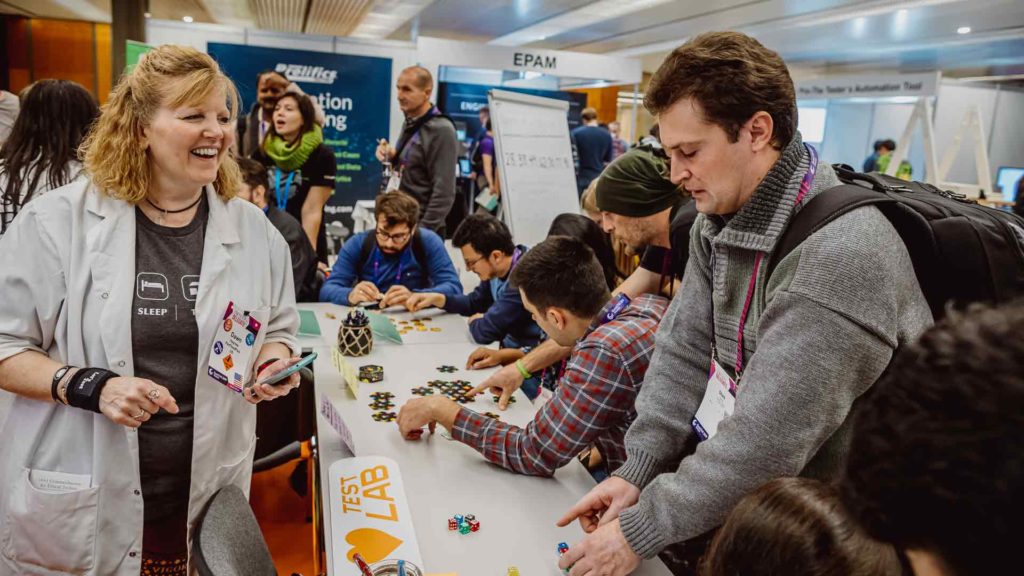
Test Lab

The Test Lab is the home of Testing at the Conference. Growing stronger after 14 years in existence, the Test Lab is led by our Lab facilitators each year who set the challenges for delegates.

Test Lab at EuroSTAR 2019

If you like the challenge of figuring out puzzles and testing robots, and other testing challenges, then this is a place for you.

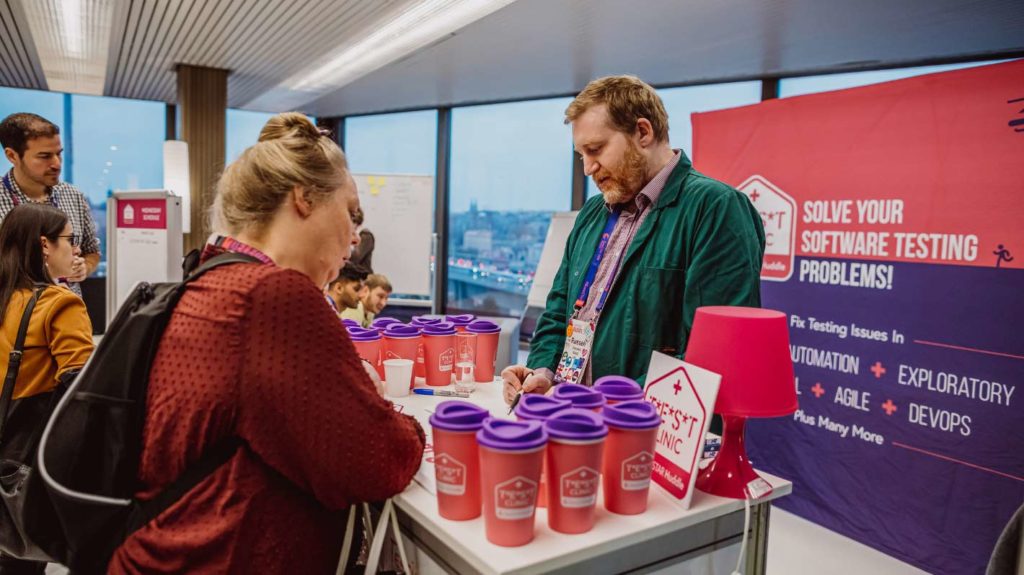
Test Clinic

The Doctors of the Test Clinic are at the Conference to solve the problems of all delegates at the Conference. They are experts in their area of testing helping testers with the issues that they have.

Test Clinic doctor at EuroSTAR 2019 helping an attendee

You should apply for the Test Clinic if you are very knowledgeable in testing, or a particular area of testing. If you love helping others out and solving problems for testers, then this role is for you.

Cadets

The EuroSTAR Cadets get involved in every aspect of the Conference. They are in the exhibition space, directing delegates to rooms, helping out in the tutorials or being part of the EuroSTAR team.

Anyone who would like to apply for the Cadets, should be interested in being part of the whole Conference experience and doesn’t mind adopting to different roles throughout the day.

As part of the Volunteer roles, you will have access to the event with the opportunity to attend sessions. Catering will be provided throughout the week. You will get to be part of a great team and experience the Conference from a new perspective.

You can apply to volunteer at EuroSTAR 2022 here.

Filed Under: EuroSTAR Conference Tagged With: 2022, EuroSTAR Conference

Feelings from the EuroSTAR Testing Excellence Award Winner

November 12, 2021 by Ronan Healy

Amazed

Just a few days ago, I finally got the actual piece of glass art, the Award. It is an amazingly large glass vase, fittingly so, as the recognition of getting the EuroSTAR Testing Excellence Award is a large event in one’s life too. The vase will now take a special place on my desk, reminding me of the amazing honour I’ve been granted.

Humbled

It was so humbling to learn that so many of my peers thought my efforts for software testing profession and the field were worthy of recognition. Hearing the praise, now in social media, still makes me feel humble. Especially so, coming from Finland where we are culturally not that used to giving or receiving praise, or even a simple thank you. You know, we just must endure, through whatever hardship that may fall on our way.

Grateful

Having just pushed through several challenges in the publishing process of my book Dragons Out!, I feel really gratified to get this level of response. While there are lots of small successes in any book project there are also small challenges. And somehow those challenges sometimes overwhelm you. To overcome them, a proportionally larger success is needed. I’m so gratified this award is now here – it feels it made the book project worth it.

Unreal

When lots of things nowadays happen online, disconnected, out of sync, things start feeling unreal. Yes, there’s this great EuroSTAR award. But I wasn’t even there in the EuroSTAR due to schedule conflict! I was at an ISTQB General Assembly in Belgrade. How come I receive this recognition like that? One minute I don’t have it, and next moment I have it. Unreal. Yes, we recorded the thank you speech earlier and that felt similar to receiving the award live, but that’s not the same as standing in front of a thousand-person crowd at live EuroSTAR. Then again, the offline nature of the EuroSTAR made the thank you speech recording possible.

Tired

So many online conference speeches. Where’s the feedback loop? Where’s the applause? Where are the smiles? Where is that intriguing discussion with fellow learners? I feel a bit tired of the online routine but at the same time I’m really satisfied that these opportunities exist. I wouldn’t have the time and money to go to nearly as many places physically. Still, getting some more personal contact would feel good. We are getting there of course, as so many of us are now fully vaccinated and conferences start going back to physical locations.

Happy

Mostly though, I’m really happy at being recognized for my 25 years of work for the software testing field, and especially for my Dragons Out book project. I’m happy to have done it. I’m happy people are buying the books and like them. I’m happy to hear fantastic praise from readers, children and adult alike. I’m happy to start thinking about the next steps to educate children in software testing.

Determined

I’m more than determined to keep explaining about the fun of software testing to children. I’m determined to keep preaching about the need to add software testing education to all levels are our educational institutions, starting from elementary schools. I’m determined that my approach of coupling fantasy storytelling to software testing exercises works well and can change the world.

Convinced

I feel that software testing can indeed be a lifetime profession. I’m convinced that there are so many angles and opportunities in the testing field that even the most change-prone person can find the variety they look for. I’m convinced the world needs more and more testing even though testing is more and more integrated into rest of the software development work.

Thankful

Getting all this great feedback, through the award, through the book, through the social media makes me very thankful to have all these fantastic people around me. That passionate colleague who keeps finding new ways to educate management about importance of testing. That interested listener at one of my speeches who thanks for an eye-opening approach to software testing. That 10-year-old girl who at the book fair chooses my book over all the hundreds of books on display and continues to talk about the coding classes she now has at her school. That true friend who trusts that I will do fantastic things no matter what.

Open

I am open to any ideas to take the software testing matters further. There are many approaches. There are many people. There are many super ideas. All of these have a role to play in getting some more testing done, in getting yet more appreciation for our industry, in making the world a little bit better place. It’s great to hear of all the opinions and ideas. Maybe some of those will make it to my next book.

Positive

I feel we can make it happen. We can make better software, and better products, that can help create a more sustainable world for us to live in. We can prevent disasters, we can make those awesome experiences that create faithful customers, we can find solutions we all need, we can learn. Through better testing, through better quality. I am positive about it.

Kari Kakkonen
Kari Kakkonen was the 2021 winner of the EuroSTAR Testing Excellence Award. Kari has made his mark on software testing ever since stepping out of the university, leaving his mark in software testing world through testing, managing, productizing, training, coaching, preaching at a number of companies and associations. Kari presently trains testing at Knowit, manages funds at FiSTB, serves in Board of Directors of TMMi, helps out at ISTQB, and runs his book project Dragons Out at his company Dragons Out Oy. Kari is happy married with a son and a puppy, singing and snowboarding away when given a chance.

Filed Under: EuroSTAR Conference Tagged With: EuroSTAR Conference

EuroSTAR 2021 Day 3 – Sketchnotes

October 1, 2021 by Ronan Healy

Wow, the last day of the 2021 edition of the EuroSTAR Conference was over in a blink. There were also offered several side events that took place in between the conference talks like tool demos, AMAs and a feedback round at the end of the day.

A special program point was the EuroSTAR 2021 Software Testing Awards ceremony. Here the winners of the awards for Best Tutorial, Best Conference Paper and the 2021 EuroSTAR Testing Excellence Award have been announced.

And last, but not least, the programme committee and location for the 2022 edition of the EuroSTAR Conference have been presented. Copenhagen in summer – how cool is that?

But now, let me show you my sketchnotes of the day and do a quick summary of the talks.

Digital happiness in the age of customer obsession

Michiel Boreel
As the world is constantly changing and with it the people and their needs, opinions an mentality, Michiel wanted us to think more about Positive Computing. Focusing on happiness as a goal of technology.

We tend to think that from trust to distrust it’s a continuum, but actually they are two different emotions that happen at the same time. Overall, trust is declining. We don’t trust organisations anymore. Also, platform trust increases (ex. Airbnb, Uber) as these platforms provide the trust that is required for the economic transaction.

People born from 1998 to 2019 build the new synthetic generation. These people don’t see a difference between online and offline. They are:

  • Post-technological: it’s not an innovation anymore, but seen as given
  • Post-hierarchical: they trust influencers more than companies
  • Post-realistic: with AI working on images and videos, reality can be altered
  • Post-materialistic: they are confronted with crisis and want to solve the issues. Now not wealth but purpose is a valued goal

Companies have to ask themselves if they are woke – are they connected to the changes that happen in society? How can you transform and get a sense of purpose? Organisations need a new story clearly articulating their valuable role in digital society.
Digital happiness in the age of customer obsession

Escape “brain hijack” – dealing productively with conflict and disagreement

Marielle Roozemond
First, let’s define disagreement and conflict. Disagreements are about the content side of issues and people take a rational approach to them. Conflicts are about the content and the values side of issues and people take an emotional approach to them. Going up the escalation stairs, it’s not a very long way from win-win situations over win-lose situations to disfunction.

A highjacked brain focuses on the argument while fewer things get to the higher levels of your brain. You have a lower empathy and you might act not like you. If so, you need to try to de-escalate on purpose and to re-activate thinking with the higher levels of your brain.

Marielle proposed 4 tools to do so:

  • Activate curiosity
  • Activate exploration
  • Recognize and sidetrack signals from amygdala
  • Change your convictions about disagreement and conflict
Escape brain hijacking - dealing proactively with disagreement and conflict

Building relationships. A Tester’s Guide to the enterprise world

Lukasz Pietrucha
Building relationships is crucial, not only, but especially when working as a tester. Lukasz has a 5 pillar concept that he presented to us:

  1. Start with the research: learn about business, know goals & objectives, study user reviews
  2. Build the connection: identify champions, carefully select meetings, socializing
  3. Adoption through small and simple steps: come up with a plan, POC/MVP, listen a lot, frequent reporting
  4. Become an influencer: share what you know, ownership/proactiveness, shape the reality – build your reputation, be visible
  5. Survive the storms: sometimes you need time, attach to business needs, learn from failures – build future fundamentals
Building relationships - a testers guide to the enterprise world

Using requirements as call to … conversations

Irja Straus
Testing begins before a single line of code is written. Testing assumptions can be helpful to determine opportunity costs and time to market. Keep in mind that correct and perfect requirements are a myth, they are prone to misunderstanding. BUT: They are a great conversation starter.

Irja likes to use “dogfooding” to get the to ground of the requirements – this basically means using your own product. The more disgusting it is, the more rewarding it gets, as you can discover more problems along the way.

Ask yourself if you have enough data that shows, that you need to build a certain feature. Will users understand what is happening and if not, how can we help them recover in case of failure? Try to simplify the workflow and think about if you could set the expectations.

A good approach is to collaborate earlier. Understand the business context, learn related skills and adapt practices that serve YOUR business. A good way of doing this is by doing product reviews. Ask the questions about design and requirements to avoid asking them after development when it’s too late/expensive to change anything.

Irja wants us to remember the following 3 things:

  • Consider requirements as call to conversations to understand the purpose
  • Consider learning different skills from your “monsters”
  • Consider YOURSELF and what works for YOU
Using requirements as call to conversations

The Automationist’s Gambit

Maaret Pyhäjärvi
Some time ago Maaret learned about the Queen’ Gambit – a chess move in which white appears to sacrifice the c-pawn but then black not being able to retain pawn without incurring disadvantage in the end. She then thought about the Automationist’s Gambit – opening by sacrificing material to win in the end. Automation might not test everything, but still be very valuable. Even if at first your automation tests aren’t perfect, start small, learn the basics and then get better every day.

Traditionally test design and test execution as well as manual and automated tests were seen as separate things. With (contemporary) exploratory testing this has changed. In test execution a good example is regression testing: automation serves as a little spider web and if something hits the web, you can manually check that part. For test design approval testing is a good example: the computer, the automation, creats the paths, and the human, manually, observes them and either approves or diapproves these paths. So you can’t automate well without exploring. You can’t explore well without automating.

Test automation in the frame of exploratory testing can serve for:

  • documenting
  • extending reach
  • alerting to attend
  • guiding to detail
The Automationists Gambit

Frustrated? It might be your fault!

Jeffrey Fredrick & Douglas Squirrel
Our mind generates an illusion of certainty. We’ve been conditioned to act as though the illusion is reality. Our lack of skill in navigating our mutual illusions creates suffering. We have the option to learn to do better. All of us know what is required to get to a good decision, and yet our actual behaviour is different, especially when stakes are high. We want our idea to win, we see difference as threat and we don’t listen to others and don’t share all we know.

Jeffrey and Douglas presented the 4R Model for Conversational Analysis:

  1. Record: fold a paper in half – on the right side write down the visible part of the conversation, on the left side write down the unvisible part, meaning your thoughts and feelings
  2. Reflect: Be curious and ask if your questions are genuine, be transparent and think about what things from the left side could be on the right and think about the triggers that set of a negative reaction for you
  3. Revise: How could you’ve been curious and transparent – write down a revision
  4. Roleplay: Roleplay your revision and see how it sounds and feels

Through practice we can learn how to act in ways that encourage mutual learning. The result is higher performance of groups, better working relationships and improved well-being. If you don’t take time to practice and remain frustrated, it might be your fault.
Frustrated - it might be your fault

Continuous quality: The secret of the Pharaos

Adonis Celestine
When thinking about pyramids, it is astonishing that they are still standing, even after such a long time. This is because of their great quality. Adonis talked about the strategies of the pharaos and what we can learn from them for building continuous quality into our products.

The first strategy is the attention to details. The pharaos measured all stones, each and every one. Details define the quality, like Netflix customizing their pages for their users or Disney even engraving manholes in their parks with their logo. But details can also become the devil. Think about things like zero defect strategy, doing it right the first time, test coverage, questions about if the sprint can be completed or if the user stories have been automated.

The second strategy is thinking about the big pictures. The stones of a pyramid have to be placed in the right order. In quality assurance you have to use the following types of thinking:

  • Purpose thinking: what is the real objective, ask the 5 whys – people don’t buy WHAT you do, they buy WHY you do it
  • People thinking: it takes people to make the dream a reality, so think about what your users want
  • Product thinking: what is the innovation and technology that makes a change in the world, you have to find products for your customers, not customers for your product

And the last strategy is to balance micro and macro views, meaning connecting the big picture to the details throughout your whole pipeline.
Continuous quality - the secret of the pharaos

Engagement is a state of mind

Janet Gregory
The final keynote of the EuroSTAR Conference 2021 was held by Janet Gregory. She thinks that as a tester our role is to be engaged, which requires a special mindset. There is passive and active engagement, watching vs. taking part. Use uncertainty as an opportunity to grow.

Technical engagement is about practical skills to do your job, infrastructure, pipelines, tools, automation and domain complexity. Ask how well your product is built, what system/devices it runs on, if behaviour can be simulated, how the product interacts with the world around it. Ask if you have the right data and if you practice observability.

In human-centric engagement there are hidden assumptions, cognitive biases, different perspectives and cultures and all this also affects our testing. We engage with people like our teams, other teams, stakeholders or customers at different levels like sharing, mentoring, teaching or in conflict. Therefore we need to pay attention and be mindful when we work with people. Honour yourself, the people involved and the context you are in.

To be socially connected, you need a culture of helpfulness, collaborators and to build trust. As a tester you have to remember that testing isn’t a solitary job, relationships with others don’t just happen, you need to interact with your customer and that knowledge is meant to be shared.

So the skills for engaging with people are:

  • communication
  • listening
  • emotional awareness
  • adaptability
  • empathy
  • facilitation
  • critical thinking
  • collaboration
Engagement is a state of mind

I can’t believe the EuroSTAR Conference 2021 is already over. Hopefully I’ll get the chance to attend the next edition and once again share my sketchnotes with all of you.

About The Author

Profile Photo

Katja Budnikov is a software tester and sketch noter from Northern Germany. Katja is passionate about software testing and sketch noting! She loves attending events like EuroSTAR and sharing her experience and learnings with others on her blog Katjasays.com. Katja first started sketchnoting in 2016. First analogue with pen and paper and now digitally with an iPad and Apple Pencil.

In her work life Katja started out in online marketing, then specialized in search engine optimisation and is now a quality assurance specialist in both manual and automated software testing. Away from work Katja loves photography, especially taking photos of nature, including many of her dog Auri, a young Australian Shepherd, who is super cute and fun to take photos of. She loves to spend time with her dog and partner, going out for walks, traveling and eating cake at a nearby coffee shop with a beautiful garden.

Filed Under: EuroSTAR Conference Tagged With: EuroSTAR Conference

  • « Previous Page
  • Page 1
  • …
  • Page 12
  • Page 13
  • Page 14
  • Page 15
  • Page 16
  • …
  • Page 19
  • Next Page »
  • Code of Conduct
  • Privacy Policy
  • T&C
  • Media Partners
  • Contact Us

part of the