• Skip to main content
EuroSTAR 2027 - Sign up for early access

EuroSTAR Conference

Europe's Largest Software Testing Conference.

  • Programme
    • Call for Speakers
    • 2026 Programme
    • Community Hub
    • Awards
  • Attend
    • Why Attend
    • Bring your Team
    • Testimonials
  • Sponsor
    • Sponsor Opportunities
    • Sponsor Testimonials
  • About
    • About Us
    • Our Timeline
    • FAQ
    • Blog
    • Organisations
    • Contact Us
  • Book Now

Ronan Healy

[Pro]Test TeamSTAR Meet-up 2019

September 10, 2019 by Ronan Healy

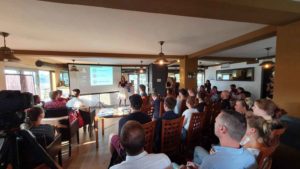
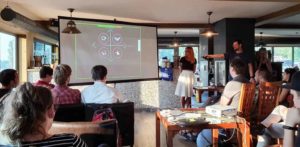
EuroSTAR strives to bring the testing community together, to network and connect and further develop the community. The TeamSTAR competition enables just that. And this year, the competition has been hotter than ever! [pro] Test!, a QA community based in Prague, hosted a TeamSTAR meetup on Aug. 27th in their town. They had a speaker present to the meet-up. It looked like an incredible event.  Here’s what they had to say about the event.

[pro] Test! 76. Leadership

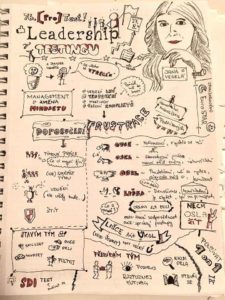
In today’s world of innovation, new mindset and agile environment, the technical side is no longer enough. The Test Leaders and Test Managers are among the Test Leaders who are in charge of one or more Tester Teams. Jana Veselá from Inventi came to share her experience and knowledge of leadership with us.

She spoke about the typology of team members, how to choose the team correctly and how to get the best results from the team.

And it was really cool! We also liked the Yellow Spa and the weather was nice.

This event was created with the support of EuroSTAR Conference , which is held in Prague this year. Hopefully I’ll see you there #EuroSTARConfs

proTest TeamSTAR meetup proTest TeamSTAR meetup

proTest TeamSTAR meetup(6) proTest TeamSTAR meetup

proTest TeamSTAR meetup(6) proTest TeamSTAR meetup

Author: Lucie Nova. Source of blog: Pro-Test. 
Filed Under: TeamSTAR Tagged With: teamstar

How to Network at a Conference

August 23, 2019 by Ronan Healy

It can be quite daunting attending a conference for the first time or attending a conference on your own. People talk about how important networking is, but when there are so many people, it can be difficult to know where to start. A good conference makes you push past your comfort zone. Making connections and meeting new people is a great way to improve your conference experience.

We have compiled some top tips to help you discover how to network at a conference. One of the best ways to start networking is in the Expo area. Here are some great ice breakers..

Stickers

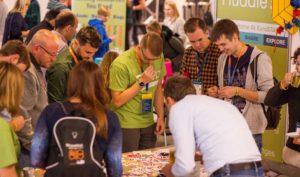
At EuroSTAR, stickers become a great conversation starter.  Go the Community Huddle to find the sticker table to personalise your conference badge with stickers that represent you.  It makes it very easy to strike a conversation to see you have something in common with someone.

Networking at a conference in the Community Huddle - Sticker table

Swag

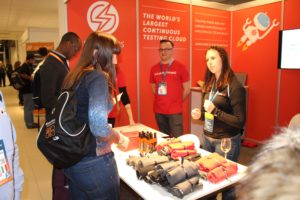
Who doesn’t love free stuff?! Go on the hunt for some cool conference swag in the expo. You’ll never know who you’ll end up talking to while you’re searching for some free goodies. The exhibitors always have plenty of cool stuff to giveaway. View who will be exhibiting at the EuroSTAR Conference in Prague.

EuroSTAR Expo SWAG SauceLabs

Games

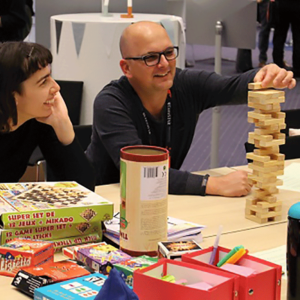
There’s always something going on the expo. Explore the expo to see what’s going on. Whether it’s the Huddle, the Test Lab, Expo stands, there are so many games and opportunities to chat to people while playing. It’s a great way to break the ice. Whether it’s a game of exploding kittens, a game of fishing in the duck pond. Also – there are plenty of prizes up for grabs!

Network at EuroSTAR Conference in the Community Huddle

Visit the Huddle

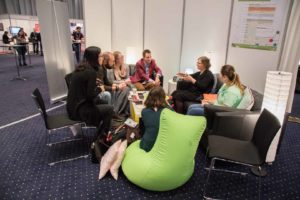
Visit the Community Huddle to help you meet new people. There are always events going on (the schedule will be released in October). You can meet speakers, other attendees, volunteers. Attendees hang out here for some down time in-between and during sessions also.

Grab a Tea or Coffee

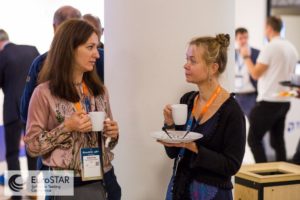
You may have to queue for coffee, so while in the queue be sure to strike up a conversation with the person next to you. OR if you don’t want to wait, some of the exhibitors have coffee machine in their stands so go find them!

EuroSTAR Conference Expo Networking Tea & Coffee Break

So there’s our top tips & ice breakers for how to network at a conference. Some information is for the EuroSTAR Conference, but these tips can be brought to any conference you attend!

Book your ticket to #EuroSTARConf today and join the testing community in November for 4 days of testing excellence. 

Filed Under: EuroSTAR Conference

Benefits of Volunteering at a Conference

August 21, 2019 by Ronan Healy

Final call for volunteers for the EuroSTAR Conference, Prague 📢 The Volunteer Programme closes Aug. 31st. Lets celebrate testing this November at #EuroSTARConf! We are looking for dedicated and passionate people to be part of the conference team.  Volunteers are core members of the conference and strongly influence the success of the event.  We have compiled a list of the top reasons and benefits of volunteering at a conference.

Upskill

Conferences develop your career, your skills, your thought-processes and expose you to new elements of your industry.  Learn from industry experts through the entirety of the conference. Whether its in a track talk, a tutorial, talking to an exhibitor, attending a couch-session, hands-on testing in the test lab, or solving your problems in the test clinic, EuroSTAR provides 110+ hours of learning.

Work Experience

Volunteering always stands our on your CV. Especially if its in an industry that you would like more experience and to work in. Make your CV stand out by putting EuroSTAR Conference on it. 

Networking

How often are you in a room with 1,000+ individual that share similar interests, passions, challenges as you? Networking unlocks so many opportunities. Whether its meeting the people you chat to on twitter, making new friends, meeting an expert, or even a new potential job opportunity. The more you network the better! Check out this year’s awesome networking events in Prague.

Budget

Attending conferences can be quite expensive. It can often be difficult to get approval of budget to attend a conference (we can help secure approval). By volunteering, you get access to the conference for free, with the freedom to attend sessions when you’re not on the schedule.

Attending Sessions

Volunteering is a two-way exchange. You put time into volunteering, in return you can attend your favourite sessions! View the programme to decide which talks you want to attend well in advance of arriving.

Reach beyond your comfort zone and volunteer at a conference, it’s an incredible experience with great memories! Volunteer for #EuroSTARConf, Prague. Entries close 31st Aug, so don’t miss your chance to be part of this year’s conference team! Enter volunteer programme today.


Volunteer at Eurostar software testing conference. Benefits of volunteering at a conference

Filed Under: EuroSTAR Conference

Host a Testing Meet-up

August 9, 2019 by Ronan Healy

Have you ever thought about hosting a local meet-up? Here is the kick-start you need to host your first local software testing meet-up!

It can be difficult to start the planning process. So here is a quick and simple, step-by-step guide to help you get started. With the help of the TeamSTAR Competition, your first meet-up is destined for complete success!

Take the 1st step by choosing the event idea. Here are some meet-up ideas:

🌟Coffee shop meet-up
🌟Storytelling session
🌟Speaker presentation
🌟Inclusion & diversity discussion
🌟Working well
🌟Pizza and beer
🌟Software testing Scrabble

Step 2 is to register your event on Meet-up.com. This is a great way of letting people in your locality know about your event and to confirm attendance.

Step 3 is to Enter the TeamSTAR Competition (Register before Sept. 13th) You will receive an awesome goodie box to share with attendees, along with the chance to win 4 tickets to #EuroSTARConf

Step 4 – Get Social! Use your own social media channels to promote the event online and spark an interest in your local area. Take pictures, videos, Instagram stories, tweets using #EuroSTARConnects, so we can see all your hard-work. We will help by re-sharing all your posts.

Final step – Do a write up, tell the world how successful your first meet-up was, what was discussed, what was done, who was there etc. Spark the interest for the next event!

There you have it, your first software testing meet-up! Best of luck with starting your first testing meet-up, we can’t wait to hear all about it.

Register a testing meeting with us before Sept 13th to be part of the TeamSTAR CompetitionTeamSTAR Meetup Competition EuroSTAR Conference

Filed Under: Competitions Tagged With: blog, teamstar

EuroSTAR Conference Sessions To Attend – For Managers

June 5, 2019 by Ronan Healy

In this blog, the 2019 committee have recommended EuroSTAR sessions for an managers. Learn from the experts, discover how you can improve both your testing and management in an everchanging world. 

Do you agree with the committees picks?

Monday


Tutorial F – Unboring Test Management by Iris Pinkster-O’Riordain and Greet Burkels

In recent years Test Management diminished to something you don’t want to do. The main instigator for this change is the rise of Agile and DevOps, due to which management thinks that Test Management is not required. It can also be the ‘old-school’ impression that Project Managers can do Test Management. In any case, it is the speakers belief that Test Management tasks are still required to successfully finish projects when successful means: it solved a problem. Let’s not forget: not all projects are Agile or Devops or ever will be, and not all project managers have the time or knowledge to do test management tasks.

In this tutorial we will look at traditional Test Management tasks and see how they relate to different contexts. The ”unboring” part? Topics will be explained that give Test Management the extra sparkle and make it less “boring”. They will show that you have a lot more influence than you might think!


Tuesday


Tutorial H – Riskstorming – Build A Strategy That Matters by Beren Van Daele


Testing is a craft, but it is also and for many foremost a job. A job you do day in day out, evolving with all the rituals every employee develops over time. These rituals, together with all sorts of other external factors (deadlines, pressure, etc.) often means that we don’t have a test strategy or that we are no longer reconsidering the strategies we set out from the start. Having the right strategy in testing is important to stay as efficient and effective as you can be.

The RiskStorming session format is a wonderful way of generating a visible Test Strategy as a team that automatically focuses your plan to answer the important questions. It leverages the diversity of people around the table, their ideas and experiences, to share and learn from each other, in order to come up with a strategy that answers the following question:

How do we test -> the risks that impact -> the aspects of our Product that matter?


Tuesday Track 4 – Test Architects at Siemens are Working Well by Peter Zimmerer

This presentation explains the new key role Test Architect, provides practical guidance on the needed strategies, tactics, and practices, and shares our experiences and lessons learned:

– Why do we need a Test Architect?

– What is a Test Architect really?

– What are the responsibilities and tasks of a Test Architect?

– How can a Test Architect provide value and create impact on the business?

We are continuing our journey in this direction. At Siemens our target is to have nearly 50 certified Test Architects by the end of 2019. That means a tremendous upgrade and empowerment of testing, and an excellent starting point for working well!


Tuesday Track 8 – How To Become As Agile As Your Project by Maud Lundh

What happens when your working method and processes are turned upside down? A few years into my career, I was the test manager for a new project labeled as “extremely agile”. What I learned early on was that the way to develop a project from start to finish had changed.

The project used a new process called “Conceptual Development”, a design-driven, lean development process. “Conceptual Development” focuses on customer collaboration and pushing through frequent deliveries from concept through design all the way to development. With a more traditional agile process, requirements would have first been planned and developed, before being tested near the end of a delivery. Now we tested concepts and prototypes first, and every prototype and design was its own delivery. This new process opened up new possibilities of testing since everything was testable from the get-go.

With “Conceptual Development” it is important to fail quickly and test with actual users before a single line of code is written. This new way of lean startup created new challenges for our team. Everyone needed to implement “Design Thinking” in their work. So how did we approach this new way of working as a team? Did we learn new skills and techniques, or just adapt those we had in a new environment? And what were the results?


Wednesday

Wednesday Track 3 – Measuring Release Quality & Delivering Value by Marina Bechaalani 

Within a 2000+ employees company, it is very challenging to ensure that the needed quality is delivered to clients. Clients should have the same experience using the final product from release to release. My motivation for creating a metric started with a famous definition of quality by Jerry Weinberg, “Quality Is Value To Some Person” enriched later on by Michael Bolton with “at some time” and by James Bach with “who matters”:

“Quality Is Value To Some Person, At Some Time, Who Matters”

If we will not concretise and align upfront on the “values to persons who matter today”, we will miss looking at our releases quality in a common way and taking the needed joint decisions.

During the presentation the need for this new measurement will be discussed with the actions taken by all builders and consumers of the releases based on those measurements.


Wednesday Track 7 – The Future of Testing: More Awesome by Martin Karsberg

For the last year i have been part of a research project financed partly by the Swedish government to try to look and challenges with in the field of software testing. The project is a joint venture between my company, representing the industry and Research Institute of Sweden (RISE) Viktoria, representing Academia. The project was set up with focus on AI/ML with in the Automotive industry.

The project has been two fold. The first part has been a literature study to survey the current studies been published. Some 60+ papers was included in the study to get broad view. In the second part we did deep interviews with people in the industry to see how their everyday work map to the subjects that academia are conducting research on.

My talk will present the result of both part of the study. I will go though the top 3 challenges with in software testing from both perspectives. By doing this i hope to challenge the perception of where we are and what the future has in store for us, testers.


Wednesday Track 13 – Leadership: From Monolith to Pebbles by Adam Matlacz 

When working with medical products, the verification process can be a real pain – especially when dealing with completely new QA team, complex hardware/software setup and collaboration of multiple scattered teams.

My first release as a System Test Manager was a real struggle – stress, overtime, exceeding deadlines and a lot of uncertainty. But I’ve learned my lesson and focused on preparing and building the team with the right skill set and competencies. And what is the most important, now each team has its own leader with his responsibilities and me acting as a glue to hold them all together. Motivation, focus on details of the tasks and team velocity have increased tremendously. Work is less stressful and management more happy with the results. Thanks to the changes, we are finally working well.

I want to tell the story of fall and rise of a team in complex project and environment. I will show my framework for building teams in complex projects and organizations. The talk will tackle the issue of building a Rock Star QA team by the right distribution of leadership


Wednesday Track 16 – Good Intentions Out The Window by Jantien Van Der Meer

Your team has been working in an agile setting for some time now, and you’ve been doing quite well: Delivering high quality software in a predictable pace, continuously improving your product as well as your way of working. The team is happy with the way of working and the stakeholders are happy with the product that is being delivered. All is well.

But then something happens… Suddenly there is a change within the organisation. A major change in targets, unrealistic deadlines are introduced, extra functionality is pushed… and you notice a change within your team as well: The people who have been working so well together, now don’t seem to have time for each other anymore, let alone for continuous improvement. In fact, some of the things the team has agreed upon to be able to deliver better software, such as three amigo and pair programming sessions, are discarded because “there’s no time for that now”.

The result: a significant increase in findings, more rework, pointing fingers, an hostile environment where people are no longer cooperative. All good intentions went out the window. Was all the progress your team made for nothing? How could this have happened?

Last year, I found myself in this situation, asking similar questions. It did not only frustrate me, it also intrigued me, so I set out to find out what could have caused such a setback within our team. I consulted a specialist in the area of human behaviour and mental performance.


Thursday

Thursday Track 3 – Can’t Grow Without People by Martha Firlej

Three years ago I decided to change company and look for new opportunities. I never imagined that I would work for a huge Ukrainian software house with over 25 years of experience on the market. The one thing that surprised me the most when I joined, was the set knowledge model that was applied to every developer, business analyst and software tester at the company. I started to dig deeper into why it is the first company I know to build such a tool. The reason was simple, the company had experienced an unsustainable growth and there was a need to build a company-wide process/solution for people growth and company stability.

I would like to share the Knowledge Models that were developed and show how it looked till end of 2018. It supported growth from 500+ software testers in 2014 to 1000+ at the end of 2018


Thursday Track 8 – Finding & Developing Good Software Testers by Phil Royston

Doing testing well requires having enough people with the right skills and knowledge. But the challenges facing software testers are growing and at the same it seems to be getting harder to get sufficient talent into IT as a whole, never mind into software testing.

I feel I have been trying to meet these challenges throughout my software testing career, but most especially so in the last five years whilst founding and managing a software testing business. I would like to share the experiences and lessons I have learned not only from delivering testing services but also from building a company.


Thursday Track 10 – Ferries & Crusises – Testing & Releases by Derk-Jan de Grood

Backlog ordering can be cumbersome. In this workshop we learn how to order our backlog based upon business value and define a roadmap that delivers a workable release. The workshop is based upon a cruises and ferries operator that want to boost its business. Based upon a given backlog teams will learn how to sort their backlog in order to define the business value. As a next step we will use a customer journey to assess the result of the initial sorting and learn that release thinking will lead to a different approach but will yield in more business value and faster feedback for the business. We will explore the role of testing as a measure to create feedback and assess whether the roadmap should be altered to optimize for testing. In the 3rd round the teams will enhance their roadmap in order to reduce the time to market of their initial MVP, to create a faster feedback loop for testing and to check whether the technical solution aligns with the company goals.


Join this session if you want to gain a better understanding in how to plan for business releases and MVP’s that yield value and want to participate as a tester in this process to ensure that testing is embedded in the approach.

Filed Under: Uncategorized Tagged With: speakers

EuroSTAR Sessions You Should Attend As An Experienced Tester

May 31, 2019 by Ronan Healy

In this blog, the 2019 committee have recommended for an experienced testers. This journey is for people who want to look outside of “standard testing”, someone who has been around long enough and has seen lots of test design techniques, exploratory testing etc.

Monday


Tutorial D – Designing for Inclusiveness – Workshop on Accessibility by Parimala Hariprasad  & Jyothi Rangaiah.

Does your website or mobile app create an inclusive experience for people? Does your organization incorporate accessibility standards for all its products? Did you know that accessibility is a legal mandate and a fundamental expectation in many countries? If the answer is yes, this workshop is for you.

The main objective of the workshop is to make testers become efficient in solving accessibility problems for differently abled people using technology in varying capacities in their daily lives.The workshop includes helping the participants recognize problems, glorify their strengths, acknowledge their weaknesses and focus on problem solving for differently abled people in the technology world. This can be achieved by a combination of training, demos and hands-on testing exercises.


Alternative: Optimising agile testing to your context by Fran O’Hara


Tuesday


Tutorial J – Working Well with PCT by Rik Marselis

In my opinion testing conferences should be about … testing. Most testers know how to (or instinctively do) apply boundary value analysis and some other basic approaches and techniques. But what about some more advanced test design techniques?


This half-day tutorial is dedicated to just one test design technique: The Process Cycle Test. This technique is very useful when testing business processes, for example in an acceptance test. The test cases that you create can be proven to test every path in the business process. Or if you want to achieve better coverage (also called a higher test-depth-level) you can test all combinations of 2 (or 3 or 4) consecutive paths.


Alternative: Using quality characteristics for powerful testing and reporting by Henrik Emilsson and Rikard Edgren


Tuesday Track 2 – Immanual Kant and deep rationality of testing by Anders Dinsen 


Interacting with things always involves the complexity of experiencing and learning.

Kant’s philosophy supports the thinking, imagining, and rational tester to collaboratively engaging the team to educate people who matter on things that matter. The outcome we search for is driving collaboration and development in the organization.

After the talk, we’ll be able to say “transcendental knowledge” and understand what it means; we’ll understand the basics of Kant’s philosophy; we’ll know why intuitions sometimes matter more than facts when people collaborate about experiencing and learning; finally, we’ll see the power of narratives as the rational way to express what’s real and what’s not and helping stakeholders gain trust and good gut feeling about the system.


Tuesday Track 8 – How To Become As Agile As Your Team by Maud Lundh

What happens when your working method and processes are turned upside down? A few years into my career, I was the test manager for a new project labeled as “extremely agile”. What I learned early on was that the way to develop a project from start to finish had changed.


The project used a new process called “Conceptual Development”, a design-driven, lean development process. “Conceptual Development” focuses on customer collaboration and pushing through frequent deliveries from concept through design all the way to development. With a more traditional agile process, requirements would have first been planned and developed, before being tested near the end of a delivery. Now we tested concepts and prototypes first, and every prototype and design was its own delivery. This new process opened up new possibilities of testing since everything was testable from the get-go.

With “Conceptual Development” it is important to fail quickly and test with actual users before a single line of code is written. This new way of lean startup created new challenges for our team. Everyone needed to implement “Design Thinking” in their work. So how did we approach this new way of working as a team? Did we learn new skills and techniques, or just adapt those we had in a new environment? And what were the results?

Maybe more importantly, what did we learn?


Wednesday


W5 – Story Telling for Testers; A Crash Course by René Tuinhout

Why is one storyteller more effective than another?

And can you learn to tell stories more effectively?

You can indeed! 

We’ll start this crash course with a short introduction into storytelling. Then we’ll do a number of exercises to get acquainted with the storytelling basics.

Questions like: How to set up a good story? How to enthrall an audience? and How to create a powerful story for an audience with a varied background? will be covered in this high-speed-talk.


W14 – Reframing Software Testing In The Light of AI by Dr. Chris McKillop

This workshop gives a firm grounding in what AI is, and what AI is not. We explore the deceptive nature of some AI, and the social and personal consequences of poorly designed and implemented AI. AI means that software is moving from deterministic outcomes, to a variable range of outcomes, which adds additional complexities, and responsibilities, on testing in the new future of AI. This tutorial gives you the knowledge and techniques to evolve your practice and update your skill set.

 AI is changing the nature of software, as well as the human processes involved in developing it, as immense, rich, and complex data sets become an intrinsic part of the systems we develop. This tutorial will give you the tools you need to improve the efficiency and precision of your testing practice.


Thursday


TH2 – My AI Was Wrong by Laurent Bouhier

“My AI was wrong,” but isn’t it more like “I was wrong about my AI”?

The difficulty in testing AI comes from the ambivalence of this proposal. To differentiate between the 2 assumptions mentioned, the presentation will briefly show what an AI is (historical), how it learns (machine learning) and how it can be misled, voluntarily or not (cognitive bias or learning bias), and in which sectors of our daily lives they intervene today, and all this with playful illustrations. This is to emphasize the difficulty of testing AI, on the one hand because of the unpredictability of the expected result (problem of the “classical” test oracle) and on the other hand by the shortening of the development cycle of all these new features (IoT, Robotics…).


TH5 – When SciFi Becomes Reality: Deep Learning & IoT by Jaroslaw Hryszko

In 1961, Stanislaw Lem, the author of science-fiction novels, raised an interesting problem in one of his books – when the number of computers in the world exceeds the ability of people to control them, the correctness of their operation will have to be verified also by machines: computers will test computers.

In my speech, I would like to present in a simple and funny way the idea of applying deep learning in the process of testing complex IoT systems. I want to explain a general idea and then I will show solutions and tools that allow for effective testing of the Internet of Things, like TensorFlow – an open source library available for everyone.


Th11 – Guess the Number by Rikard Edgren & Henrik Emilsson

In this workshop we will do an exercise called Guess The Number.


It is a simple, but difficult exercise consisting of a Windows executable with a command-line interface, so many of you must bring computers. We will split up in groups, because it is even more difficult on your own. It stimulates logical thinking, critical thinking, and creativity.

Most of you probably won’t solve the exercise in an hour, but we will break at that time so we can do a proper debrief. You will not get actual hints, but might get inspiration about how to think. Some of you will be frustrated, or even upset, but that is not dangerous. It can be solved in 10 minutes; if that happens, we will pat your back and you can watch the others struggle.

Filed Under: EuroSTAR Conference

Real Customer Case Study Winner 2018: Xpand IT

January 7, 2019 by Ronan Healy

2018 was the third installment of the vendor-led case study which featured on the 2018 EuroSTAR Software Testing Conference as part of our Real Customer Case Study. This initiative was specifically designed to give EuroSTAR exhibitors an opportunity to feature on the programme and bring them close to the action. This route is a simplified version of the call for speakers and gives an exhibitor a 1/30 chance of being part of the highly sought after 2018 programme. 

Xpand IT were the 2018 winners with their test management tool, XRAY. This tool completely changed the dynamics of their customer Swiss Federal Railways (SBB). To find out more check out their session (which turned out to be one of the most popular sessions at EuroSTAR 2018) below:

 About The Tool

Xray is a complete Test Management Tool for managing both manual and automated tests and is seamlessly integrated with Jira. It is a full-featured app that does not require any other software n order to run. It supports the entire testing life cycle: test planning, test specification, test organization in flat or hierarchical way, test execution and test reporting. Xray also supports automated tests that can be run with Cucumber and has integration with other test automation frameworks like JUnit, NUnit or Robot.

With over 4.000 customers in 65 countries, Xray is the fastest growing Test Management app for Jira.


Customer Background

SBB is the backbone of the Swiss public transport system, and day-to-day rail operations are the basis of what they do.



Switzerland opened its federal railway system in 1902. Today, more than 33.000 employees in 140 different professions, along with 600 self-developed and several off-the-shelf applications work together to operate an internationally integrated railway network. Despite the size, SBB maintains the world’s most accurate arrival and departure schedule. The Swiss railway system is a model for other railways around the globe.


Customer Challenge

SBB  used HP ALM for 12 years. It had more than 100.000 test cases, many more test runs and 1.000+ trained employees helped ensure that operations stay on track. However, users started to boycott the tool due to the lack of integration in SBB’s existing toolchain and because of all the communication problems that arouse around using other terms for the same things.”

Besides the general IT problems of a big company like SBB, software testers were facing the typical challenges of IT departments that grew too fast and were forced to have management overhead for controlling these many employees. Strictly sticking to IEEE829, they first had to write a test plan for that specific project or team, quickly realizing the master test plan or overall test strategy was not helping or even forcing them to spend time in ways that would not benefit neither the project during its run time nor the company on the long run.

The Approach & Solution

Since SBB’s Agile Transformation, several kinds of experiments are allowed without manager approval, as long as you stay within certain constraints, so they started to search for a test management tool that would improve the collaboration within the team and be less expensive.

But before buying a new tool, the stakeholders made their interests clear:

a) Reduce number of floating user licenses in old tool to gain money for the new tool

b) Protect the already existing test cases and test results

c) provide a stable and easy process on how to train users on the new tool and how to support them

So, after calculating business cases and setting up internal online documentation and support contacts, SBB purchased an XRAY unlimited company license.

By using Xray, SBB was able to work with Jira in all their test management processes. The tool allowed testers to manage all their tests and executions as Jira entities with all the power of the customized screens, fields and workflows, not just regarding the manual testing but also the automated testing. It also had an included REST API that would help SBB in their current and future integrations with several testing frameworks used in load tests, Functional Testing, UI Testing, security testing and others, as well a direct integration with CI tools like Jenkins and Bamboo.

Reporting and Requirement Traceability was something very important for SBB and now test managers and project managers are able to check the test coverage status directly from the issue screen in Jira as well as having a dedicated Requirement Traceability Matrix Report.

With more than 100.000 test cases, XRAY offered the ability, not just to organize tests in a flat way for those teams who would like a more agile like approach, but also to organize them in the Test Repository with tree-like organization at the project level. This way users can hierarchically organize Tests within folders and sub-folders, similar to what was found in older tools. Regarding the planning executions, Xray offered the ability to create test plans for tracking a set of tests and planned or ad hoc test executions; all this with the possibility to have consolidated results.

XRAY helped Swiss Federal Railways move 25.000+ test cases from HP ALM in just 6 months, and paid for itself in only 3 months. XRAY has cutting-edge UX and integrations into the rest of the development toolchain. Now, even teams without a prior test management tool come to XRAY.

Takeaways 

With the new tool many things came unexpected, but luckily for SBB it went far better than expected.

“Give the teams the tools they need, the tools that enable collaboration, ease human-to-human communication and help decrease misunderstandings. When team members have more transparency, they develop more respect for the work of others and therefore have a better understanding what really drives the other persons in the team”, says Andreas Wieczorek, Senior Test Manager and Team Leader at SBB.

What really impressed SBB the most was that all the different specialists outside the teams, normally refusing to even read test cases, are now eager to catch a test case that is freshly written or even write it by themselves. “Those people love test cases, and what drove them away was a tool lacking every collaboration feature.”

Team members now freely contribute to the growing user number of XRAY: be it translations, finding solutions for issues other teams have or helping them to set it up or even organize calls with the supplier and do internal know how transfer meetings.

“For me personally, the agile movement within SBB plays a big part of it, but the integration of new tools that put collaboration as first priority is equally necessary”, notes Andreas.

Filed Under: EuroSTAR Conference Tagged With: EuroSTAR Conference, Expo, software testing conference

  • « Previous Page
  • Page 1
  • Page 2
  • Page 3
  • Page 4
  • Code of Conduct
  • Privacy Policy
  • T&C
  • Media Partners
  • Contact Us

part of the