• Skip to main content
EuroSTAR 2027 - Sign up for early access

EuroSTAR Conference

Europe's Largest Software Testing Conference.

  • Programme
    • Call for Speakers
    • 2026 Programme
    • Community Hub
    • Awards
  • Attend
    • Why Attend
    • Bring your Team
    • Testimonials
  • Sponsor
    • Sponsor Opportunities
    • Sponsor Testimonials
  • About
    • About Us
    • Our Timeline
    • FAQ
    • Blog
    • Organisations
    • Contact Us
  • Book Now

Expo

Data Testing VS Application Testing

March 12, 2024 by Lauren Payne

Introduction

This blog will explore the critical distinctions between application testing vs data testing, common mistakes with data testing, and reveal the consequences of neglecting it.  
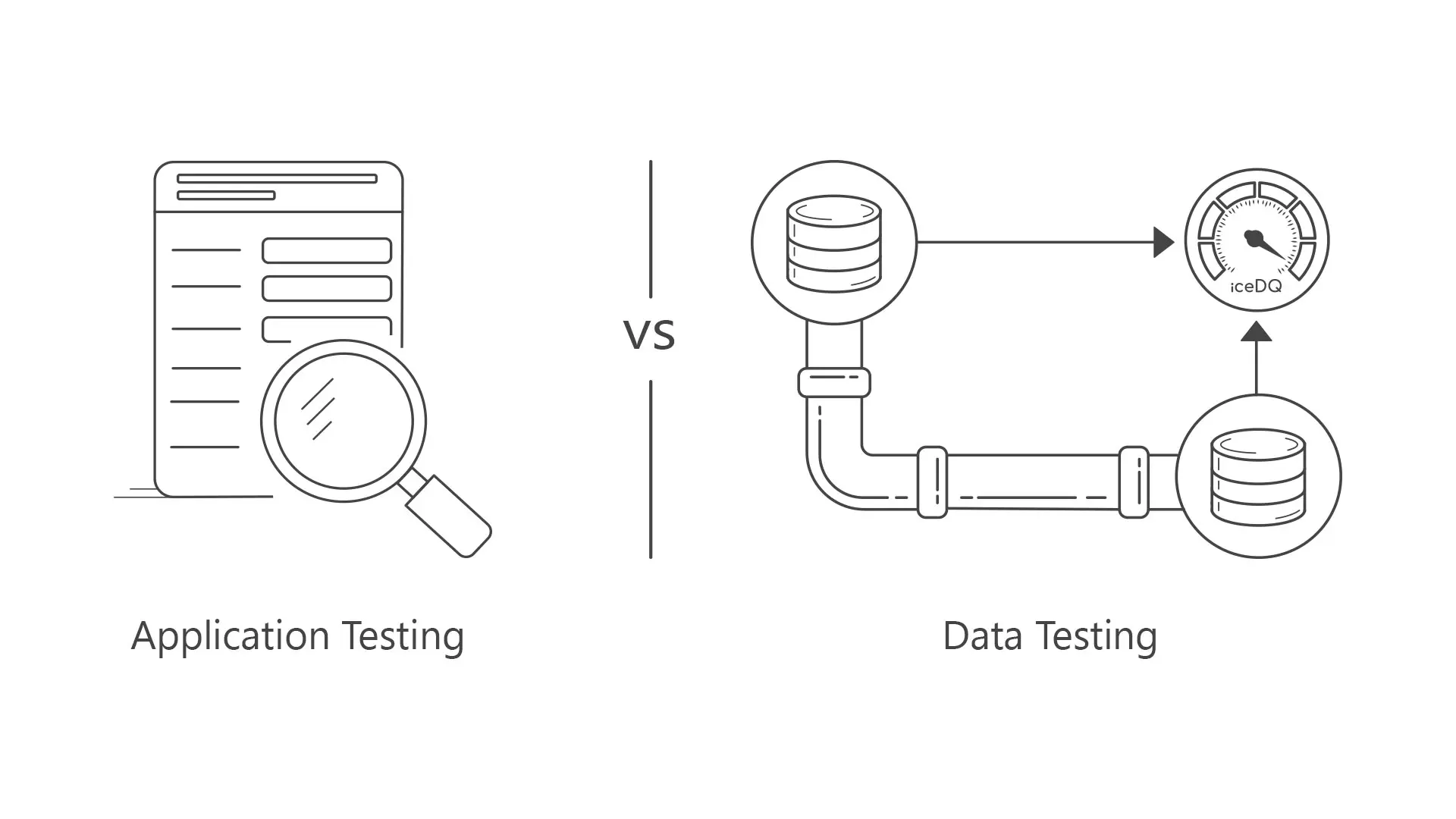
Testing is a critical step for any software development project. Web applications, or mobile apps are tested to ensure proper functionality of the UI. But what about data-centric projects such as data warehouses, ETL, data migration, and big data lakes? Such systems involve massive amounts of data, have long running processes, and unlike applications, they lack screens. In such projects how does testing work? 

Data Testing vs Application Testing 

At a high-level data testing and application testing both share a common goal of ensuring functionality of a system, however on a closer look, it reveals that they have very distinct focuses and methodologies. Here is a quick list of differences for your reference. 

Project Types:  

  • Application testing spans a wide spectrum of web apps and mobile apps.  
  • On the other hand, data testing zeroes in on projects like data migration, Data pipelines, data warehouses. 

Testing Objective and Focus: 

  • Application Testing addresses everything from user interface intricacies to scripting, APIs, functions, and code integrity.  
  • For data testing, the emphasis is on ETL/data processes, process orchestration, and unique attention to data integrity sets it apart as a specialized discipline.  

Data Volume: 

  • Application Testing spans various dimensions, one of them being data. But in the scope of application testing data involvement is extremely limited to a few records created by a transaction. 
  • Data testing however, puts a spotlight on the critical nuances of data. The contrast is stark: compared to application testing, data testing involves millions and billions of records. 

Certification: 

  • In application testing the certification focus is on code integrity. 
  • Data testing is essentially designed to certify data integrity. 

Expected vs. Actual: 

  • Application testing compares the actual behavior of user interfaces and scripts vs expected. 
  • Data testing navigates the complex terrain of data integrity, migration accuracy, and the nuances of big data. 

Performance Testing: 

  • In application testing the focus is on the speed at which the UI or the underlying functions respond to a request. It is in the realms of microseconds. On the other hand, performance testing for Data is in minutes and hours. 
  • For data testing the performance is usually calculated by rows processed per second. It is usually computed in the time required to read data, transport data, process data and load data in a target database. The loading time is further calculated in terms of update, insert, and delete speed. 

Employee Skillsets: 

  • Both processes demand a skill set that combines technical acumen and a deep understanding of the tools at play. Application Testing requires proficiency in user interface testing, scripting, and tools like Selenium/JMeter. Application testing requires understanding screen behavior, and utilizing tools tailored to the unique challenges presented by data. 
  • In contrast, data testing necessitates expertise in handling data sources and target data, SQL, Data Models, and Reference data. Proficiency in scripting and code-level understanding is essential for application testing, while data testing demands a command over SQL for effective data manipulation and validation. 

Testing Tools: 

  • Application testing often employs tools like Selenium and JMeter. 
  • Data testing leverages specialized tools like iceDQ for comprehensive data quality assurance. 

Top Data Testing Mistakes

At the heart of the issue lies a fundamental misunderstanding – the perception that application testing and data testing can be treated interchangeably. 

  1. Ignore Data Testing: Organizations often neglect data testing. A QA professional with an application background does not understand data testing, while the data engineers are not classically trained in testing.  
  1. Lack of Dedicated Data Testing Team: The lack of a dedicated team will result in knowledge gaps. Dedicated teams is essential to properly train and acquire proficiency.  
  1. Application Testers for Data Testing: Just because someone is skilled in application testing does not mean that the person will have the know-how of data testing.
  1.  Manual Data Testing: Automation has become the mantra for efficiency in software testing, but this mantra is often focused more on application testing. Automated UI tests and functional checks take centre stage, leaving data testing to be more of a manual process. The absence of automation in data testing not only hampers efficiency but also introduces the risk of human error. 
  1. Data Sampling: In the absence of automation, organizations resort to manual data testing, a daunting task when faced with millions of records. Manual testing becomes a mammoth task to undertake, prone to errors, inconsistencies, and a significant drain on resources. The sheer volume of data makes it humanly impossible to ensure comprehensive testing, forcing the testing team to resort to testing sample data rather than the entire dataset. 
  1. Misuse of application testing tools for data testing: While tools like Selenium and JMeter excel in UI and functionality checks, testing data pipelines demands specialized tools. The mismatch not only results in inefficiencies but also fails to address the unique challenges posed by data-centric projects. 
  1. Low /No Budget for Data Testing: Organizations, in pursuit of flawless user experiences, often channel a significant portion of resources towards application testing tools and frameworks.  Meanwhile, data testing, which operates in the complex terrains of data migration testing, ETL testing, data warehouse testing, database migration testing and BI report testing is left with a fraction of the QA budget. 
  1. In-house Scripts or Frameworks: Some organizations realize the distinct nature of data testing and attempt to build in-house frameworks. However, this approach often has more disadvantages than advantages. In-house frameworks, while tailored to specific needs, may lack the scalability required for projects dealing with millions of records and complex data structures. The inefficiencies in this approach become apparent with the growth in data volumes and complexity.  

Consequences of Ignoring Data Testing 

  1. Cost and Time overruns 
  1. Complete failure of projects 
  1. Data Quality issues in Production 
  1. Compliance and regulatory risks 
  1. Reputation Risks 

Conclusion

To summarize the difference, while Application Testing and data testing share the overarching goal of ensuring the robustness of a system, they operate in distinct realms. Application Testing spans the broader landscape of application functionality, whereas data testing homes in on the intricate dance of data within the system. Understanding and appreciating these differences is crucial for organizations aiming to fortify their digital transformation.  

Recognizing the critical distinctions between application testing and data testing is the first step towards comprehensive Quality Assurance. Organizations must recalibrate their approach, acknowledging the unique requirements of data testing and allocating resources, budgets, and automation efforts accordingly.  

Embracing specialized tools like iceDQ which is a low code-no code solution for testing your data-centric projects is key to building software that stands the test of both user experiences and data integrity. 

For more details please visit our blog: https://bit.ly/3SWpgYs 

Author

Sandesh Gawande is the CTO at iCEDQ (Torana Inc.) and a serial entrepreneur.

Since 1996, Sandesh has been designing products and doing data engineering. He has developed and trademarked a framework for data integration – ETL Interface Architecture®. He consulted various Insurance, Banking, and Healthcare. He realized, while companies were investing millions of dollars in their data projects, they were not testing their data pipelines. This caused project delays, huge labor costs, and expensive production fixes. Herein lies the genesis of the iCEDQ platform.

iCEDQ is an EXPO Gold Sponsor at EuroSTAR 2024, join us in Stockholm

 

Filed Under: Application Testing, EuroSTAR Expo, Gold Tagged With: 2024, EuroSTAR Conference, Expo

Myth vs. Reality: 10 AI Use Cases in Test Automation Today

March 5, 2024 by Lauren Payne

For decades, the sci-fi dream of simply speaking to your device and having it perform tasks for you seemed far-fetched. In the realm of test automation and quality assurance, this dream is inching closer to reality. With the evolution of generative AI, we’re prompted to explore what’s truly feasible. Embedding AI into your quality engineering processes becomes imperative as IT infrastructures become increasingly complex and integrated, spanning multiple applications across business processes. AI can help alleviate the daunting tasks of knowing what to test, how to test it, creating relevant tests, and deciding what type of testing to conduct, boosting productivity and business efficiency.

But what’s fact and what’s fiction? The rapid evolution of AI makes it hard to predict its capabilities accurately. Nevertheless, we’ve investigated the top ten key AI use cases in test automation, distinguishing between today’s realities and tomorrow’s aspirations.

1. Automatic Test Case Generation

Reality: AI can generate test cases by analyzing user stories along with requirements, code, and design documents, including application data and user interactions. For instance, large language models (LLMs) can interpret and analyze textual requirements to extract key information and identify potential test scenarios. This can be used with static and dynamic code analysis to identify areas in the code that present potential vulnerabilities requiring thorough testing. Integrating both requirement and code analysis can help generate potential manual test cases that cover a broad set of functionalities in the application.

Myth: But here’s the caveat: many tools on the market that enable automated test case generation create manual tests. They are not automated. To create fully automated, executable test cases is a use case that remains a myth and still requires further proof. Additionally, incomplete, ambiguous, or inconsistent requirements may not always generate the right set of tests, and this requires further development. Test cases may not always cover edge cases or highly complex scenarios, nor are they able to cover completely new applications. Analysing application and user interaction data may not always be possible. As a result, human testers will always be required to check the completeness and accuracy of the test suites to consider all possible scenarios.

2. Autonomous Testing

Reality: Autonomous testing automates the automation. Say what? Imagine inputting a prompt into an AI model like “test that a person below the age of 18 is not eligible for insurance.” The AI would then navigate the entire application, locate all relevant elements, enter the correct data, and test the scenario for you. This represents a completely hands-off approach, akin to Forrester’s level 5 autonomous state.

Myth: But are we there yet? Not quite, though remarkable technologies are bridging the gap. The limitation of Large Language Models (LLMs) is their focus on text comprehension, often struggling with application interaction. For those following the latest in AI, Rabbit has released a new AI mobile phone named r1 that uses Large Action Models (LAMs). LAMs are designed to close this interaction gap. In the realm of test automation, we’re not fully there. Is it all just hype? It’s hard to say definitively, but the potential of these hybrid LAM approaches, which execute actions more in tune with human intent, certainly hints at a promising future.

3. Automated Test Case Design

Reality: AI is revolutionising test case design by introducing sophisticated methods to optimise testing processes. AI algorithms can identify and prioritise test cases that cover the most significant risks. By analyzing application data and user interactions, the AI can determine which areas are more prone to defects or have higher business impact. AI can also identify key business scenarios by analysing usage patterns and business logic to auto-generate test cases that are more aligned with real-world user behaviors and cover critical business functionalities. Additionally, AI tools can assign weights to different test scenarios based on their frequency of use and importance. This helps in creating a balanced test suite that ensures the most crucial aspects of the application are thoroughly tested.

Myth: However, AI cannot yet fully automate the decision-making process in test suite optimisation without human oversight. The complexity of certain test scenarios still requires human judgment. Moreover, AI algorithms are unable to auto-generate test case designs for new applications, especially those with highly integrated end-to-end flows that span across multiple applications. This capability remains underdeveloped and, for now, is unrealised.

4. Testing AI Itself

Reality: As we increasingly embed AI capabilities into products, the question evolves from “how to test AI?” to “how to test AI, gen AI, and applications infused with both?” AI introduces a myriad of challenges, including trust issues stemming from potential problems like hallucinations, factuality issues, and explainability concerns. Gen AI, being a non-deterministic system, produces different and unpredictable outputs. Untested AI capabilities and AI-infused applications can lead to multiple issues, such as biased systems with discriminatory outputs, failure to identify high-risk elements, erroneous test data and design, misguided analytics, and more.

The extent of these challenges is evident. In 2022, there were 110 AI-related legal cases in the US, according to the AI Index Report 2023. The number of AI incidents and controversies has increased 26-fold since 2021. Moreover, only 20% of companies have risk policies in place for Gen AI use, as per McKinsey research in 2023.

Myth: Testing scaled AI systems, particularly Gen AI systems, is unexplored territory. Are we there yet? While various approaches and methodologies exist for testing more traditional neural network systems, we still lack comprehensive tools for testing Gen AI systems effectively.

AI Realities in Test Automation Today

The use cases that follow are already fully achievable with current test automation technologies.

5. Risk AI

It’s a significant challenge for testers today to manage hundreds or thousands of test cases without clear priorities in an Agile environment. When applications change, it raises critical questions: Where does the risk lie? What should we test or prioritize based on these changes? Fortunately, risk AI, also known as smart impact analysis, offers a solution. It inspects changes in the application or its landscape, including custom code, integration, and security. This process identifies the most at-risk elements where testing should be focused. Employing risk AI leads to substantial efficiency gains in testing. It narrows the testing scope, saving considerable time and costs, all while significantly reducing the risk associated with software releases.

6. Self-Healing

By identifying changes in elements at both the code and UI layer, AI-powered tools can auto-heal broken tests after each execution. This allows teams to stabilize test automation while reducing time and costs on maintenance. Want to learn more about how Tricentis Tosca supports self-healing for Oracle Fusion and Salesforce Lightning and Classic? Watch this webinar.

7. Mobile AI

Through convolutional neural networks, mobile AI technology can help testers understand and analyze mobile interfaces to detect issues in audio, video, image quality, and object steering. This capability helps provide AI-powered analytics on performance and user experience with trend analysis across different devices and locations, helping to detect mobile errors rapidly in real time. Tricentis Device Cloud offers a mobile AI engine that can help you speed up mobile delivery. Learn more here.

8. Visual Testing

Visual testing helps to find cosmetic bugs in your applications that could negatively impact the user experience. The AI works to validate the size, position, and color scheme of visual elements by comparing a baseline screenshot of an application against a future execution. If a visual error is detected, testers can reject or accept the change. This helps improve the user experience of an app by detecting visual bugs that otherwise cannot be discovered by functional testing tools that query the DOM.

9. Test Data Generation

Test data generation using AI involves creating synthetic data that can be used for software testing. By using machine learning and natural language processing, you can produce dynamic, secure, and adaptable data that closely mimics real-world scenarios. AI achieves this by learning patterns and characteristics from actual data and then generating new, non-sensitive data that maintains the statistical properties and structure of the original dataset, ensuring that it’s realistic and useful for testing purposes.

10. Test Suite Optimisation

AI algorithms can analyze historical test data to identify flaky tests, unused tests, redundant or ineffective tests, tests not linked to requirements, or untested requirements. Based on this analysis, you can easily identify weak spots or areas for optimization in your test case portfolio. This helps streamline your test suite for efficiency and coverage, while ensuring that the most relevant and high-impact tests are executed, reducing testing time and resources.

What about AI’s role in performance testing, accessibility testing, end-to-end testing, service virtualization, API testing, unit testing, and compatibility testing, among others? We’ve only just scraped the surface and begun to explore the extensive range of use cases and capabilities that AI potentially offers today. Looking ahead, AI’s role is set to expand even further, significantly boosting QA productivity in the future.

As AI continues to evolve, offering tremendous benefits in efficiency, coverage, and accuracy, it’s important to stay cognizant of its current limitations. AI does not yet replace the need for skilled human testers, particularly in complex or nuanced scenarios. AI still lacks the human understanding needed to ensure full software quality. Developing true enterprise end-to-end testing spanning multiple applications across web, desktop, mobile, SAP, Salesforce, and more requires a great deal of human thinking and human ingenuity, including the capability to detect errors. The future of test automation lies in a balanced collaboration between AI-driven technologies and human expertise.

Want to discover more about Tricentis AI solutions and how they can cater to your unique use cases? Explore our innovative offerings.

Tricentis offers next-generation AI test automation tools to help accelerate your app modernisation, enhance productivity, and drive your business forward with greater efficiency and superior quality.

Author

Simona Domazetoska – Senior Product Marketing Manager, Tricentis

Tricentis is an EXPO Gold Sponsor at EuroSTAR 2024, join us in Stockholm

Filed Under: EuroSTAR Conference, Gold, Sponsor, Test Automation, Uncategorized Tagged With: 2024, Expo, software testing tools, Test Automation

Software Testing In Regulated Industries

February 27, 2024 by Lauren Payne

In today’s landscape of digital adoption and the rapid growth of software technologies, many domains leveraging technology are within regulated industries. However, with the introduction of more technology comes the need for more software—and more software testing. This article will touch on the unique attributes, challenges, and considerations of software testing within these regulated domains.

Defining “regulated” industries

While many industries have specific guidelines and domain nuances, we will refer to “regulated” industries as those that are governed by overarching regulatory compliance standards or laws. 

These governance standards in most cases impact the depth, agility, and overall Software Development Lifecycle (SDLC) on how these standards are developed into requirements and then validated.

Below is a sampling of some of these domains:

  • Healthcare
  • Manufacturing
  • Banking/Finance
  • Energy
  • Telecommunications
  • Transportation
  • Agriculture
  • Life sciences 

Unique requirements

Common characteristics that teams will likely encounter when analyzing the software quality/testing requirements in these environments include:

  • Implementation of data privacy restriction laws (like HIPAA)
  • Detailed audit history/logging of detailed system actions

  • Disaster recovery and overall data retention (like HITRUST)
  • High standards for traceability and auditing “readiness”
  • Government compliance and/or oversight (like the Food and Drug Administration / FDA)

These common regulatory requirements are critical for planning and executing testing and establishing a quality of recording artifacts essential to supporting auditing and traceability.

Testing considerations & planning

Many testers and their teams are now being proactive in using paradigms such as shift-left to get early engagement during the SDLC. As part of early requirements planning through development and testing, specialized considerations should be taken within these regulated industries.

Requirements & traceability

  • The use of a centralized test repository for both manual and automation test results is critical
  • Tests and requirements should be tightly coupled and documented
  • Product owners and stakeholders should be engaged in user acceptance testing and demos to ensure compliance
  • Test management platforms should be fully integrated with a requirement tracking  platform, such as Jira

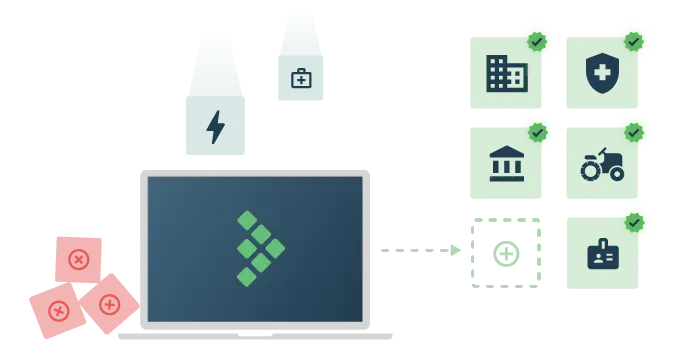
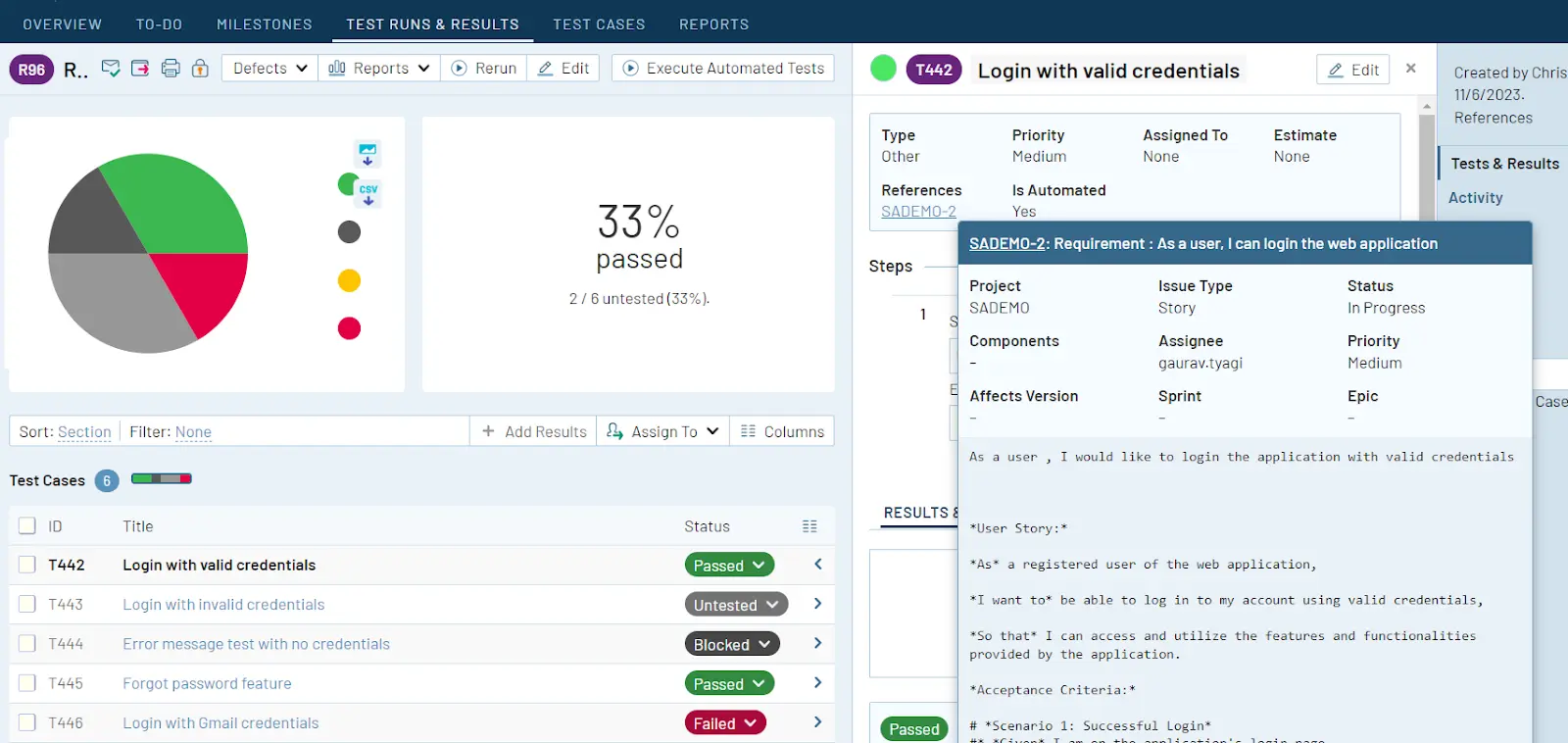
Image: The TestRail Jira integration is compatible with compliance regulations and flexible enough to integrate with any workflow, achieving a balance between functionality and integration.

Once teams have solidified a process for defining and managing requirements and traceability, it becomes imperative to ensure that the quality of test records is not only accessible but also restricted to those who require it. 

This controlled access is crucial, particularly in auditing situations, where the accuracy and reliability of test records may play a critical role. This approach for access controls is commonly referred to as the “least privilege” principle.

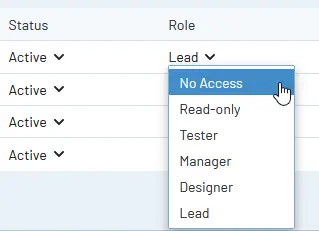
Image: With TestRail Enterprise role-based access controls, you can delegate access and administration privileges on a project-by-project basis

Test record access controls

  • Limit test management record access to the minimum required for team members
  • Ensure only current active team members have test record access
  • Implement a culture of peer reviews and approval to promote quality and accurate tests

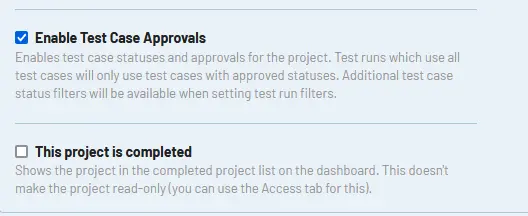
Image: TestRail Enterprise teams can implement a test case approval process that ensures test cases meet organizational standards.

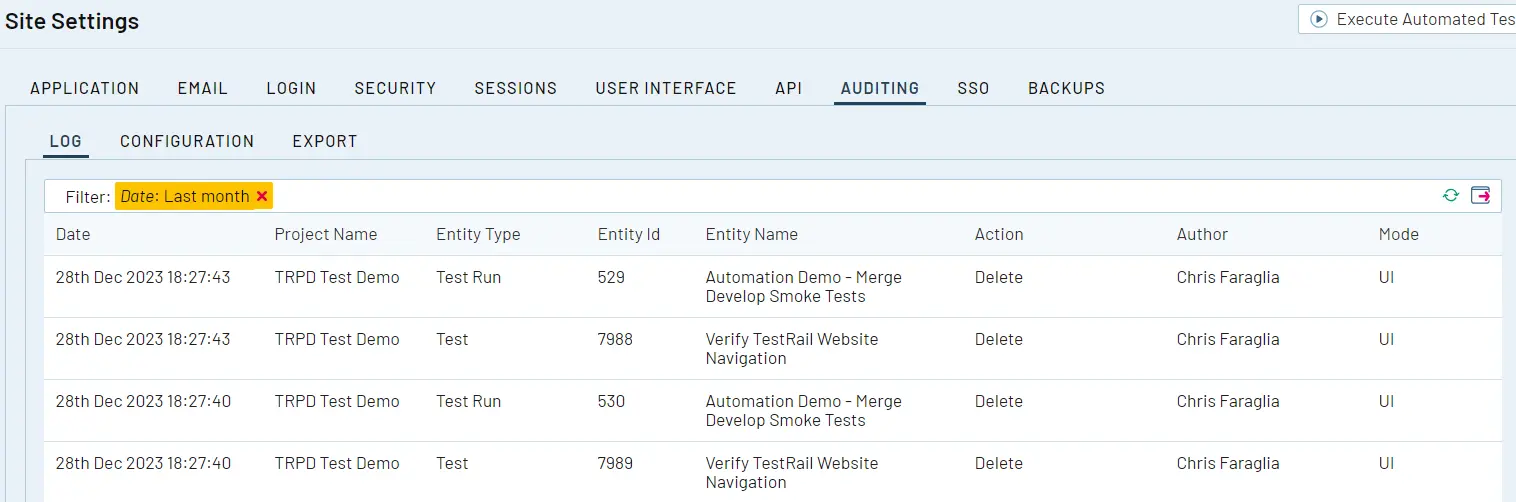
As test cases and test runs are created manually or using test automation integrations like the TestRail CLI, it is important to maintain persistent audit logging of these activities. Within regulated industries, audit requirements and “sampling” may require investigation of the history and completeness of a given test that was created and executed against a requirement.

Image: TestRail Enterprise’s audit logging system helps administrators track changes across the various entities within their TestRail instance. With audit logging enabled administrators can track every entity in their installation.

Audit history

It’s important to maintain a log that allows viewing of historical data on test case creation and execution. This supports audit readiness for requirements validation traceability.

Lastly, as teams focus on the development, testing, and delivery of software, we have to be mindful of disaster recovery and data retention of the artifacts we create. 

In the same thought process as disaster recovery of a given system under test, the quality of records for testing and release must persist to support compliance requirements and audits. Although centralized test management platforms with integrated restore capabilities are preferred, various tools and processes can be used to achieve this.

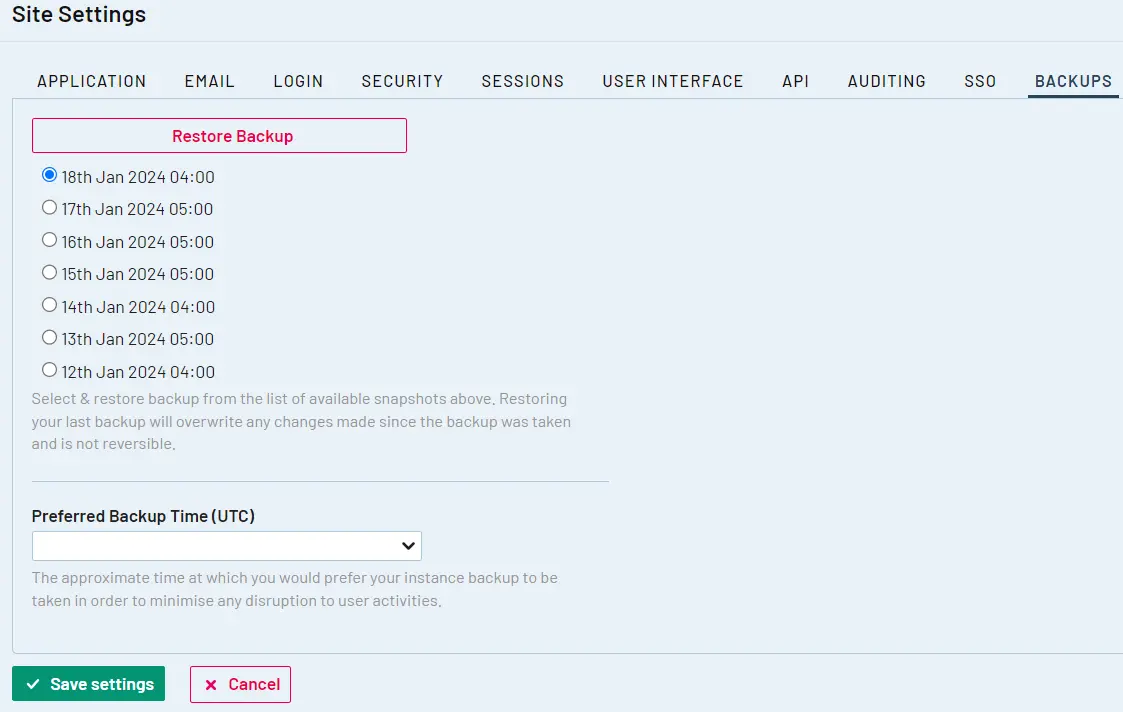
Image: TestRail Enterprise’s configurable backup and restore administration features enable administrators to specify a preferred backup time window, see when the last backup was completed, and restore the last backup taken.

Self-assessments & internal auditing

For all teams that are iterating on engineering, testing, and overall SDLC improvements, it’s important to dedicate time to perform self-assessments. 

Self-assessments in the context of software testing and quality in regulated environments can be a highly effective tool for identifying process gaps and shortcomings. 

Self-assessment/audit evaluation criteria

Examples of critical areas to include in your self-assessments or audit readiness exercises include:

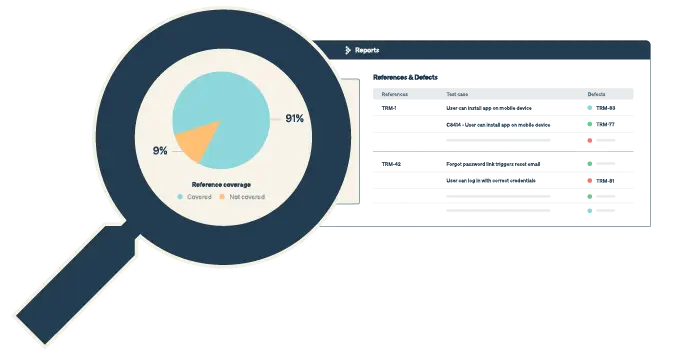
  • Having full traceability via linkage of all tests to the corresponding requirements​ artifact (such as a Jira issue or defect)
  • Tests that have been planned and executed are linked to a given release event/designation
  • Failed tests for a given release or sprint are linked to a defect artifact (such as a Jira defect)

Once a self-assessment or internal audit is performed, ensure that the team collects actionable information such as improvements to requirements traceability or more detailed disaster recovery documentation that can be used to improve the overall SDLC with a focus on core compliance best practices and standards.

Bottom line

Additional considerations and requirements must be made across the SDLC when operating teams within regulated industries. The early inclusion of these additional requirements with all team members is critical to ensuring compliance and overall success in audits and other regulatory assessments. 

Key Takeaways

  • Focus on traceability, ensure linkage of tests to requirements
  • More focus on security and access controls testing
  • Centralize all test artifacts in a repository with backups/data retention
  • Plan and execute disaster recovery validation

Watch the Testing In Regulated Industries webinar on the TestRail Youtube channel for more information on the unique challenges and characteristics of software testing in regulated industries!

Author


Chris Faraglia
, Solution Architect and testing advocate for TestRail.

Chris has 15+ years of enterprise software development, integration and testing experience spanning domains of nuclear power generation and healthcare IT. His specific areas of interests include but are not limited to test management/quality assurance within regulated industries, test data management and automation integrations.

TestRail is an EXPO Gold Sponsor at EuroSTAR 2024, join us in Stockholm.

Filed Under: Gold, Software Testing, Sponsor, Uncategorized Tagged With: 2024, EuroSTAR Conference, Expo

How to overcome common challenges in Exploratory Testing

February 20, 2024 by Lauren Payne

Exploratory testing involves testing system behaviour under various scenarios, with a predefined goal but no predefined tests. This focus on discovering the unknown makes exploratory testing both powerful and challenging.

“Exploratory testing is a systematic approach for discovering risks using rigorous analysis techniques coupled with testing heuristics.”

-Elisabeth Hendrickson

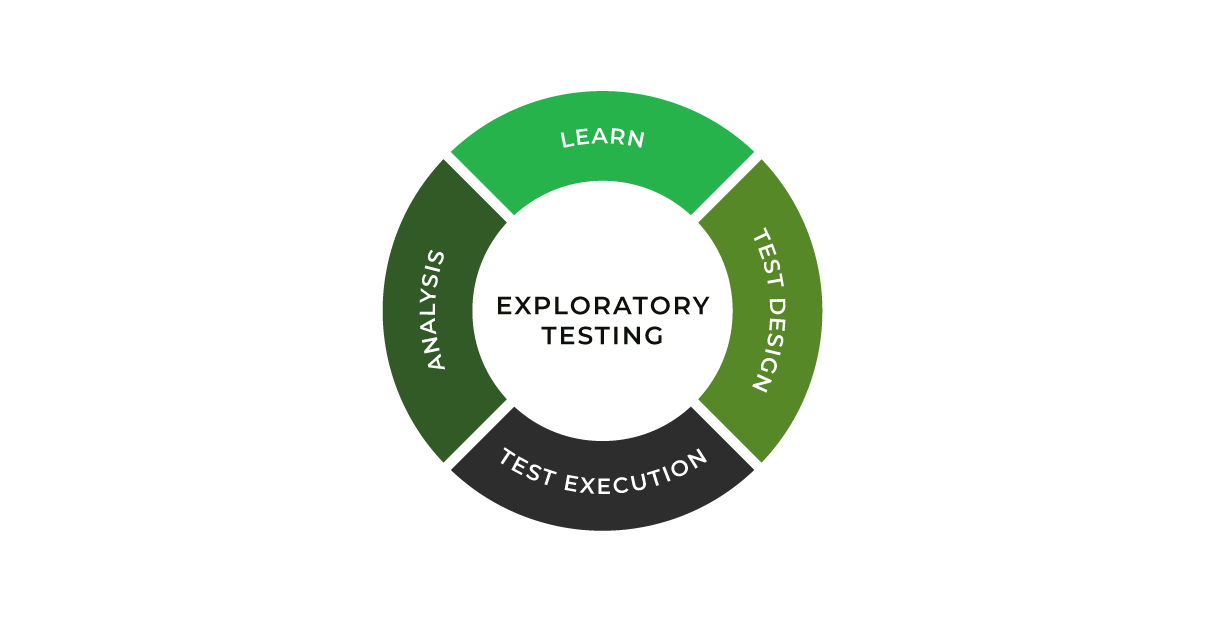
Although exploratory testing (ET) is not a new concept, its significance has increased exponentially in the dynamic field of software development. With its simultaneous learning, test design, and execution processes, ET represents a shift from the traditional, script-based testing methodologies. This approach is particularly beneficial in handling the complexities and unpredictabilities of modern software projects. It prepares testers to actively engage with the software, uncovering potential issues that scripted tests might overlook.

In exploratory testing, catching bugs is an adventure – a journey through the unknown aspects of software, where each test can reveal new insights. In the Agile world with rapid development cycles, exploratory testing stands out as a dynamic and responsive testing strategy, essential for ensuring software quality in a fast-paced environment.

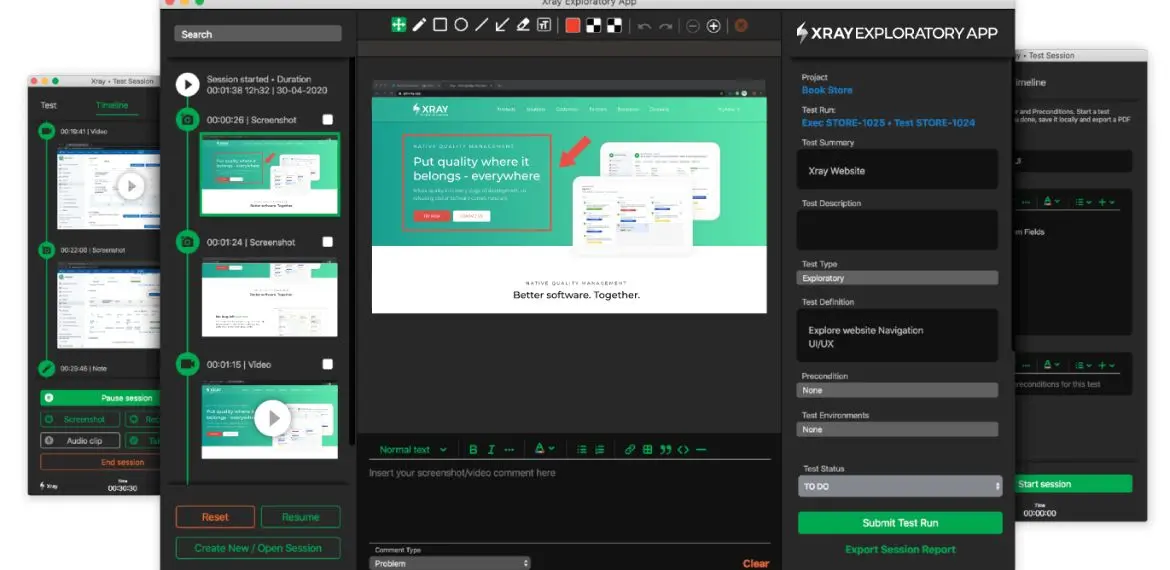
Despite its advantages, exploratory testing has challenges that can interfere with its effectiveness. Testers often encounter hurdles in planning and adapting to newly discovered information, managing frequent context switches, maintaining comprehensive documentation, and effectively measuring the success of their testing efforts. Addressing these challenges is crucial for harnessing the full potential of ET. This blog will explore these common challenges and discuss how the Xray Exploratory App provides innovative solutions, enhancing the exploratory testing process and enabling testers to deliver high-quality results efficiently.

How to overcome challenges with Xray Exploratory App

The Xray Exploratory App proves to be a vital resource for successfully navigating these challenges. The tool supports the unique factors of exploratory testing, empowering testers to optimize their testing strategies while maintaining the flexibility and adaptability that exploratory testing demands. 

Planning and Learning

One of the primary challenges in exploratory testing is the balance between planning and learning. While ET is less structured than traditional testing, it still requires a level of planning to be effective. Xray Exploratory App facilitates one of the measures to counter this challenge and optimize your ET adoption –  session-based test management (SBTM). 

Testers must continuously learn from the software they are testing and adapt their approach accordingly. This requires understanding the project’s goals and the ability to quickly assimilate new information and apply it to testing strategies. One of the elements that helps with gaining the skills and experience is the structure of knowledge sharing. For example, if charters are handled as Jira stories, you get a centralized storage (a library of templates, of sorts) that has good examples which help educate any team member about the system and previous ET efforts.

Context Switching

Testers in an exploratory setting often deal with context switches. They must juggle different aspects of the software, switch between various tasks, and respond to new findings in real-time. Managing these switches efficiently is crucial to maintain focus and avoid overlooking critical issues. Beyond common techniques like Pomodoro, you can leverage two key features of Xray Exploratory App – saving sessions locally and editing the detailed Timeline with all your findings.

Proper Documentation

Unlike scripted testing, where documentation is predefined, exploratory testing requires testers to document their findings as they explore. This can be challenging as it requires a balance between detailed documentation and the fluid nature of exploratory testing. Testers need to capture enough information to provide context and enable replication of failure and future test repeatability without getting bogged down in excessive detail.

Xray Exploratory App addresses this challenge with the easily created chronological history of not just text notes but also screenshots, videos, and issues/defects created in Jira during the session (which accelerates the feedback loop).

Reporting and Measuring Success

Another significant challenge in exploratory testing is effectively reporting and measuring success. Traditional testing metrics often do not apply to ET, as its dynamic nature does not lend itself easily to quantitative measurement. Defining meaningful metrics to capture the essence of exploratory testing’s success is crucial for validating its effectiveness and value within the broader testing strategy. In many cases, such definitions would be very company-specific.

The good news – the seamless integration between Xray Exploratory App and Xray/Jira allows you to leverage centralized test management features, such as real-time reporting on several possible metrics (e.g. number of defects, elapsed time). That improves visibility and allows to clearly determine the status of not only exploratory testing, but all testing activities.

For instance, if we want to track defects/issues resulting from exploratory testing, we can see them linked to the test issue in Jira/Xray, which will then allow us to check them in the Traceability report. 

Overall, these challenges, though daunting, are manageable. With the right approach and tools, testers can navigate the complexities of exploratory testing, turning these challenges into opportunities for delivering insightful and thorough software testing.

Future outlook of Exploratory Testing

Exploratory Testing is becoming more acknowledged as an indispensable part of the testing strategy, especially given the limitations of conventional scripted testing. The ability of ET to adapt and respond to the complexities and nuances of modern software development is exceptional. As we look towards the future, several key trends are emerging that are set to shape the landscape of exploratory testing.

Artificial Intelligence (AI)

AI has the potential to significantly transform exploratory testing by automating certain aspects of ideation and, more so, data analysis processes. Leveraging AI in software testing in the correct way can enhance the tester’s capabilities, enabling them to focus on more complex testing scenarios and extract deeper insights from test data. AI can assist in identifying patterns and predicting potential problem areas, making ET more efficient and effective.

Integrations with other tools

The future of exploratory testing will see greater integration with various development, testing, and business analysis tools. This compatibility will streamline the testing process, enabling seamless data flow and communication across platforms. One of the pain points this trend will aim to address is losing time in writing automation scripts as a result of ET. Such integrations will enhance the overall efficiency of the testing process, allowing testers to leverage a wider range of tools and resources during their exploratory sessions more easily.

Enhanced collaboration

As software development becomes more collaborative, exploratory testing also adapts to facilitate better teamwork. Tools like the Xray Exploratory App incorporate features that promote collaboration among testers and between testers and other stakeholders. This collaborative approach ensures a more comprehensive understanding and coverage of the software, leading to better testing outcomes.

Compliance and reporting

Exploratory testing is being used more and more in ensuring compliance, areas like Non-Functional Requirements testing (security and performance), to help find more convoluted flaws and bottlenecks in intricate software systems. The trend is not surprising as the cost of compliance is increasing, both from the customer and the regulatory perspective. 

With the increasing emphasis on compliance and accountability in software development, exploratory testing has to evolve to provide more robust reporting and documentation capabilities. The ability to generate detailed and meaningful reports is essential, and tools like Xray are focusing on enhancing these aspects to meet the growing compliance demands.

The Xray Exploratory App is at the forefront of these changes, continually adapting and evolving to meet the future demands of exploratory testing.

Chart new heights in testing with Xray Exploratory Testing App

Exploratory Testing has become indispensable in our increasingly sophisticated and customer-centric digital landscape. Its importance has expanded across various sectors, including e-commerce, healthcare, and finance, highlighting the universal need for high-quality software experiences. The unique approach of ET, with its focus on discovering the unknown through rigorous analysis and testing heuristics, positions it as a key strategy in addressing the complexities of modern software systems.

The Xray Exploratory App stands out as a vital resource in harnessing the full potential of exploratory testing. The tool enhances the testing process by addressing the everyday challenges of planning, context switching, documentation, and reporting. It enables testers to navigate the intricacies of ET with greater efficiency and effectiveness, ensuring comprehensive coverage and insightful test results.

Explore the capabilities of the Xray Exploratory App and see firsthand how it transforms the exploratory testing experience. Dive into the world of enhanced software testing with Xray and discover the difference it can make in delivering superior software quality.

Author


Ivan Filippov
, Solution Architect for Xray.

Ivan is passionate about test design, collaboration, and process improvement.

Xray is an EXPO Platinum partner at EuroSTAR 2024, join us in Stockholm.

Filed Under: Exploratory Testing, Platinum, Software Testing, Sponsor, Uncategorized Tagged With: 2024, EuroSTAR Conference, Expo, software testing conference, software testing tools

Unlocking Success: Top 7 Trends for Attracting Visitors to Your EXPO Booth in 2024 

January 25, 2024 by Lauren Payne

As we stride into 2024, the landscape of software testing continues to evolve as the EuroSTAR and AutomationSTAR conferences continue to grow, demanding innovative strategies to stand out in the crowd. Here are the top seven trends for 2024 that will redefine how you attract visitors to your booth at Europe’s largest testing software testing conferences this June: 

Clare’s 7 Top Trends To Follow:

1. Interactive Booth Experiences: Engage your audience with interactive experiences. From live product demos to hands-on testing challenges, creating a dynamic and participatory environment at your booth will draw inquisitive minds. 

2. Virtual and Augmented Reality (VR/AR): Embrace the future with VR/AR experiences. Let visitors immerse themselves in solutions your product or service can achieve through virtual or augmented reality, providing a memorable and futuristic encounter. 

3. Killer Swag: Elevate your EXPO booth experience by offering killer swag that not only grabs attention but also leaves a lasting impression. Unique, high-quality swag items act as powerful magnets, drawing attendees to your booth. From trendy wearables to functional gadgets, thoughtful swag creates buzz, fosters engagement, and serves as a tangible reminder of your brand. In a sea of booths, having killer swag sets you apart, turning curious passersby into enthusiastic visitors and potential long-term connections. 

4. Networking Hubs: Transform your booth into a networking hub. Provide comfortable seating, charging stations, and conducive spaces for impromptu meetings. Networking hubs create an inviting atmosphere that encourages meaningful conversations. 

5. Gamification for Engagement: Infuse an element of fun into your booth with gamification. Create interactive games or challenges related to software testing concepts. Attendees love the opportunity to learn while having a good time. Get involved in the annual EXPO prize-giving and display your AMAZING prize on your booth over the 3 days to attract attention and collect leads via the sign up. 

6. Short Demo Sessions: Elevate your booth’s presence by hosting 3–5-minute demo sessions during the networking breaks. Conduct brief, impactful presentations on emerging trends, best practices, or case studies about your products and services. Position your booth as a knowledge hub within the conference. 

7. Social Media Integration: Leverage the power of social media to amplify your booth’s visibility. Follow and use the event-specific hashtags #esconfs and encourage attendees to share their experiences online, and host live Q&A sessions. Utilise social media platforms to foster engagement before, during, and after the conference. 

Embracing these trends ensures your booth becomes a magnetic destination withing the EuroSTAR EXPO, attracting a diverse audience of software testing professionals. Stay ahead of the curve, make lasting impressions, and turn visitors into valuable connections at EuroSTAR in 2024. 

For more information on how EuroSTAR can help you achieve your business goals, check out the EuroSTAR 2024 EXPO brochure or book a call with me.

Clare Burke

EXPO Team, EuroSTAR Conferences

With years of experience and a passion for all things EuroSTAR, Clare has been a driving force behind the success of our EXPO. She’s the wizard behind the EXPO scenes, connecting with exhibitors, soaking up the latest trends, and forging relationships that make the EuroSTAR EXPO a vibrant hub of knowledge and innovation. 

t: +353 91 416 001 
e: clare@eurostarconferences.com 

Filed Under: EuroSTAR Conference, EuroSTAR Expo, Gold, Platinum, Sponsor Tagged With: EuroSTAR Conference, Expo

What you can expect at the EuroSTAR 2021 Expo

September 16, 2021 by Fiona Nic Dhonnacha

The 29th annual EuroSTAR Conference is almost here, and we can’t wait to bring you 3 awesome days of testing, learning, and connecting with the global testing community.

A very important part of the conference is the Expo area: it’s a great place to visit between sessions, and draws some of the biggest companies in the world armed with solutions for you. Stay on top of what’s new in testing tools, check out tons of cool demos, get 1:1 help on video chat, add new processes to your testing toolkit… and of course, win prizes and bring home some cool swag.

Visit the Expo booths throughout the conference to find out how you can get your hands on the incredible prizes below – we’ll see you there!

A big thank you to our Platinum Partners Inspired Testing, Tricentis and Xray; Gold Sponsors Digitate, mabl, Saucelabs and Test Rail; and all our brilliant exhibitors. Check out all of our 2021 exhibitors.

Remember – you can save 20% on your EuroSTAR 2021 Ticket with one of our Expo Partner Codes – see their individual partner pages for more!
GET YOUR TICKET TO EUROSTAR

Inspired Testing

Platinum Partners at EuroSTAR 2021, Inspired Testing are a pure play testing company that can help you deliver exceptional software. Join Clinton, Lloyd and Steve at the Inspired Testing booth and enter their draw to win a Star Wars: Millennium Falcon Lego Set*.

Tricentis

The Tricentis team will be on hand to discuss and demonstrate how their AI-based, automation platform dramatically increases software release speed. They also have have a fantastic prize of Air-pods Pro* for attendees who enter their draw.

Xray

Helder, Ines and Tonislava are delighted to be back at EuroSTAR and they have a €100 Amazon gift card for one lucky visitor to their booth. Visit them during EuroSTAR and discover why Xray are the #1 Manual & Automated Test Management App for Quality Assurance in Jira.

GET YOUR TICKET TO EUROSTAR

Digitate

Call to the Digitate booth at EuroSTAR 2021 and enter their draw to win a subscription to Masterclass. Digitate is a leading software provider bringing agility, assurance, and resiliency to IT and business operations and their team are looking forward to meeting you.

Mabl

Mabl enables software teams to increase test coverage, speed up development and improve application quality. This is their third EuroSTAR and you’ll get to meet Eddie, Jordan, Reed and Leah. If you fancy a getaway, they have a €200 Airbnb gift card up for grabs.

Sauce Labs

Having run more than one billion tests on the Sauce Labs cloud, the team; Madeline, Frederico and Hector are looking forward to meeting everyone. They have some saucy swag* available for our EuroSTAR attendees so don’t forget to stop by and say hi!

Test Rail

The TestRail Team is excited to be part of EuroSTAR! Stop by TestRail’s booth to learn how to build a better testing process, increase coverage, and ship releases with more confidence (and enter to win your very own International Space Station Lego Set!).

GET YOUR TICKET TO EUROSTAR

Applause

If you like to shop online, you should chat with Tom and Niki from Applause as they have not one but four €50 Amazon Gift Cards to giveaway. Visit their booth and find out why Applause is a worldwide leader in enabling digital quality.

Eficode

The leading DevOps company in Europe, the Eficode team, Timo and Kalle, are excited to be exhibiting at EuroSTAR for the first time. They love learning as much as we do and have free seats for lucky attendees to access the Eficode Academy training!

EPAM

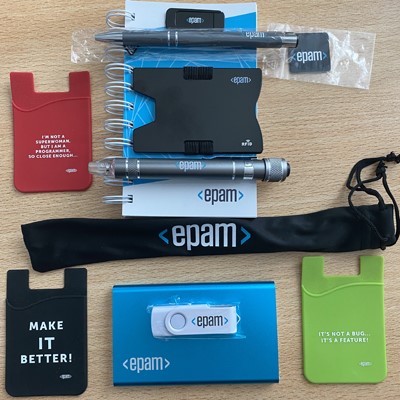
Win some cool EPAM merch including a mini screwdriver set & light, notebook camera cover, 8gb pendrive, pen, self-adhesive screen cleaner, 4000 mAh powerbank, variety of card holders, metal straw. Jozsef, Pavel and Elizaveta are looking forward to meeting you.

Global App Testing

Global App Testing is a trusted partner for Facebook, Google, Microsoft, Instagram and many more. Swing by to meet Daniel, Fahim and Michael during EuroSTAR 2021 and you could win a pair of VR Goggles*.

Inflectra

Join the Inflectra team at their booth and enter their draw for a pair of Apple Air-pods*. In addition to the cool prize you’ll hear what makes them a market leader in test management, test automation, application lifecycle management, and enterprise portfolio management space.

GET YOUR TICKET TO EUROSTAR

Leapwork

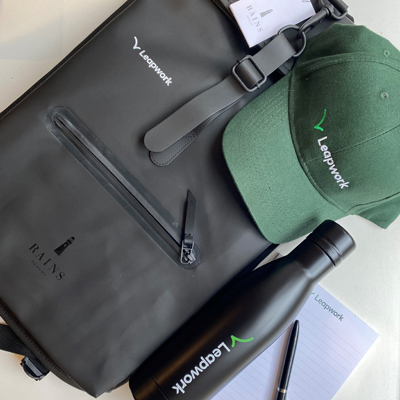
The Leapwork team will demonstrate how Leapwork breaks down the barriers between humans and computers with an entirely visual no-code system. Plus they have a RAINS backpack* & some swanky swag for the EuroSTAR attendees who enter their booth draw.

Noesis

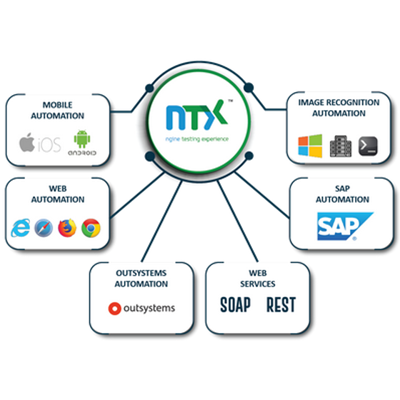
The Noesis team will be on hand at EuroSTAR to discuss how their services and solutions support clients in digital transformation. This year they are offering a free trial of their NTX tool (Ngine Testing Experience) which you can claim on their booth.

Parasoft

Stop by the Parasoft booth at EuroSTAR and enter their draw to win an IPA tasting session* with a private virtual brewery tour for your team (up to 10 people).  Learn how Parasoft supports the embedded, enterprise, and IoT markets.

SmartBear

Cliodhna, Edwin and Colin are excited to chat with you about SmartBear tools; Swagger, Cucumber, ReadyAPI, Zephyr, TestComplete – used by 7 million developers, testers, and operations engineers. They have a €200 gift card for one lucky EuroSTAR attendee!

*Please note that photos are representations only. All prize details will be provided by each partner and these photos do not indicate the exact make or model of what is being provided.

The EuroSTAR Conference hosts the largest software testing expo of testing tools and service providers. You’ll get to meet and speak with a host of solutions providers who can help your team deliver on projects and achieve company targets. Chat with them in their virtual booth and stop by their demo sessions which offer learning opportunities to all attendees.

This is all part of three jam packed days at EuroSTAR 2021. Kicking off on Tuesday 28th September with 14 half day tutorials, followed by Wednesday and Thursday’s line up of inspiring keynote speakers, energetic lightning talks, engaging track talks from across the globe and a wide variety of bonus community sessions.

EuroSTAR Limited Edited T-Shirts

On top of all of the fantastic partner giveaways at EuroSTAR this year, we also have a number of limited edition EuroSTAR 2021 ‘Engage’ t-shirts. If you want to get your hands on one of these, watch out for pop up opportunities during all 3 days of the conference. Hint… the more you engage the more chance you’ll have 🙂

If you haven’t yet bought your ticket, check out our Expo partner pages linked about for a 20% discount code.

See you there!

Filed Under: EuroSTAR Conference, EuroSTAR Expo, Virtual Conference Tagged With: Expo

How to make the most of exhibiting at EuroSTAR Online

June 11, 2020 by Ronan Healy

Join these industry leaders in our Expo.

Exhibiting at EuroSTAR is one of the most cost-effective ways of getting your products and services in front of customers- as long as you’re ready to work hard to maximise your presence! On average, 75% of visitors to an exhibition are there to buy, or plan to buy in the future. The EuroSTAR audience is a highly qualified audience – so make sure your pitch is just right for them.

Exhibiting at EuroSTAR Online allows you to truly interact with potential customers and showcase your products to influential decision makers. Industry research and reports show that virtual events attract double the attendance of the previously planned live event.

To maximise on this opportunity, you first need to decide why you are exhibiting, and what you want to achieve. Have some specific, measurable targets in mind – for example,  get 300 qualified sales leads, or conduct 50 research interviews.

 Download Expo Brochure

Make sure your online presence is smart, attractive, visible and reflects well on your company. For physical events, it’s good to have one person in charge of every aspect of the event. EuroSTAR is happy to work with your whole team to familiarise you  with the virtual world.

Some studies suggest that 80% of stand success is down to your staff, so train them thoroughly and ensure they are working hard throughout the day. If you can invite people, do. Use social media, email messaging, and your website to get the message out and invite potential customers to your stand. Don’t forget, EuroSTAR Online has a free Expo Access ticket available to everyone. It is good to formulate a plan for how you will follow up all of your leads.

It’s important to let people know you are there during the conference – make the most of your virtual speaking slot, and run a prize giveaway to encourage visitors to your booth – we will provide you with all the reporting and analysis  information of those who visited and interacted with your booth! It’s easier than ever to get in-depth information on your prospective leads.

Standard best practices suggest asking open-ended questions to encourage prospects to talk about their business, issues and needs. Exhibiting at EuroSTAR Online offers you the ability to video chat with prospects at your booth.Similarly to physical events, your aim is to speak to as many prospects as possible.
Once you get the information of the visitors to your stand, have a clear nurture journey prepared. Listen to your prospect and sell the benefits, not the features, of your products or services. Make sure you can explain how your business can solve their problems. EuroSTAR Online is a three-day event, so have daily team debriefs to help you understand what you can do better the following day.

Classify all leads – don’t just take details; ensure you know who the person is and what they’re looking for, so your follow-up is personal and relevant. Remember why you are there – stay focused on your objectives. Talk less and listen more to draw more insights out of your prospect. At the end of the event, conduct a show debrief with the stand team, and identify what went well and what didn’t.
52% of EuroSTAR attendees are decision makers, so be sure to follow up leads with a personalised message or call. You may need to contact them on average six times before they convert. Make use of all the information you have gathered. For example, use attendee feedback to drive future product development.

I hope you’ve found this helpful, and keep an eye out for more articles on making the most of your partnership with EuroSTAR. If you have any questions, contact me at conor@eurostarconferences.com.

Sign up as a 2020 EuroSTAR Online Sponsor Here.

Filed Under: EuroSTAR Expo, Virtual Conference Tagged With: Expo

Expo Hero Winners

June 24, 2019 by Suzanne Meade

The EuroSTAR Conference experience is second to none. For over 25 years, EuroSTAR has provided a welcoming space for the largest European gathering of testers and quality assurance professionals.

In addition to the unbeatable learning sessions, EuroSTAR encompasses the largest Software Testing Expo in Europe. Within the Expo, each company that exhibits also contributes to the overall atmosphere of the conference. Over the years, many Expo partners have helped to enhance the delegate experience with unique activities and experiences.

This year, we wanted to ‘up the game’ so we put it to the testing community of test tool and service providers to tell us what unique activities or experiences they could bring to #EuroSTARConf 2019. We raised the stakes by offering an Expo exhibitor package worth €5,500!

Wow did the community respond!!!

We received so many entries and suggestions it was a massively difficult decision for the team to decide the winner. Eventually after hours locked away in a boardroom (with no coffee!!!), the winner was announced …

2019 EuroSTAR Expo Heroes
mabl logo

We are delighted to be welcoming mabl to the EuroSTAR Software Testing Conference in Prague. We loved their energy and approach to the challenge and know our delegates will too! The team at mabl really thought about the experience element and they also took note of our 2019 conference theme of ‘Working Well’.

Working Well is about balance. Software engineers, QA professionals and testers need to be able to “balance” speed and quality, particularly in DevOps. To help emphasise the need for balance (and keeping it fun), mabl are going to have a balance board at their Expo booth.

Yes, you read that correctly! All EuroSTAR attendees can try it out and see if they can balance successfully! There are raffle tickets given to all successful balancers with a cool prize up for grabs at the end. The longer you stay on, the more raffle tickets you are given! How fun is that?

We loved this idea and how it fits with the conference and our eternal search for balance in this hectic working world. We hope you will join us in Prague and pay a visit to the mabl booth in the EuroSTAR Software Testing Expo.

mabl balance board

mabl will be joining a wide range of test tool and services providers at EuroSTAR – check out the additional Expo partners.

If you haven’t been before, the annual EuroSTAR Software Testing Conference is an amazing celebration of the craft of testing in Europe. It is the largest conference on testing in Europe with the biggest variety of topics. The conference takes place in November in a different European city each year. The conference is held over 4 days with over 60+ sessions including tutorials, workshops and talks as well as non-stop networking.

At EuroSTAR, we believe in the power of community and we help the testing community to build powerful connections!

Filed Under: EuroSTAR Conference, EuroSTAR Expo, Test Automation, Uncategorized Tagged With: Expo, software testing conference, software testing tools, software tools, Test Automation

  • « Previous Page
  • Page 1
  • …
  • Page 5
  • Page 6
  • Page 7
  • Page 8
  • Next Page »
  • Code of Conduct
  • Privacy Policy
  • T&C
  • Media Partners
  • Contact Us

part of the